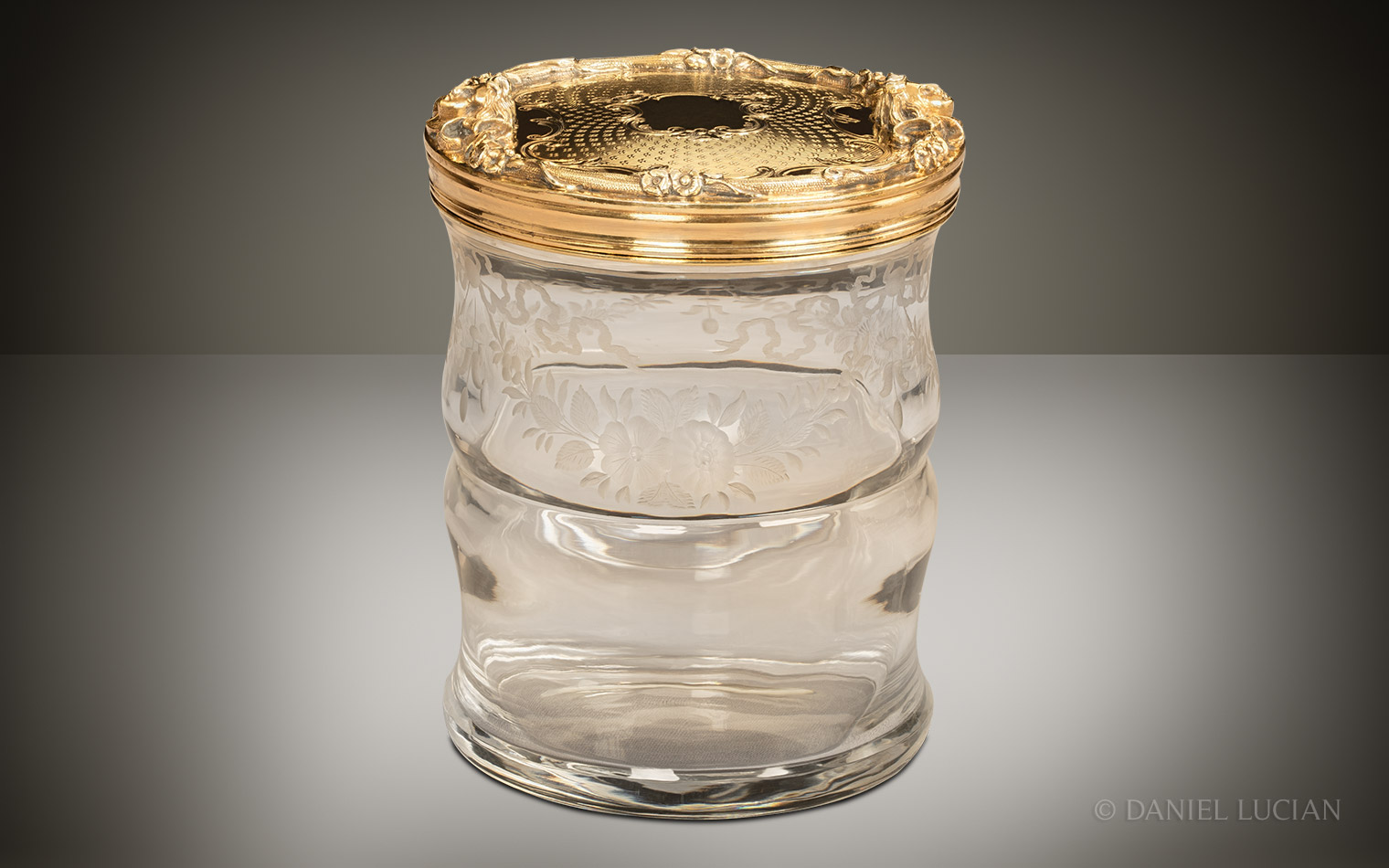
Cut and Engraved Glass
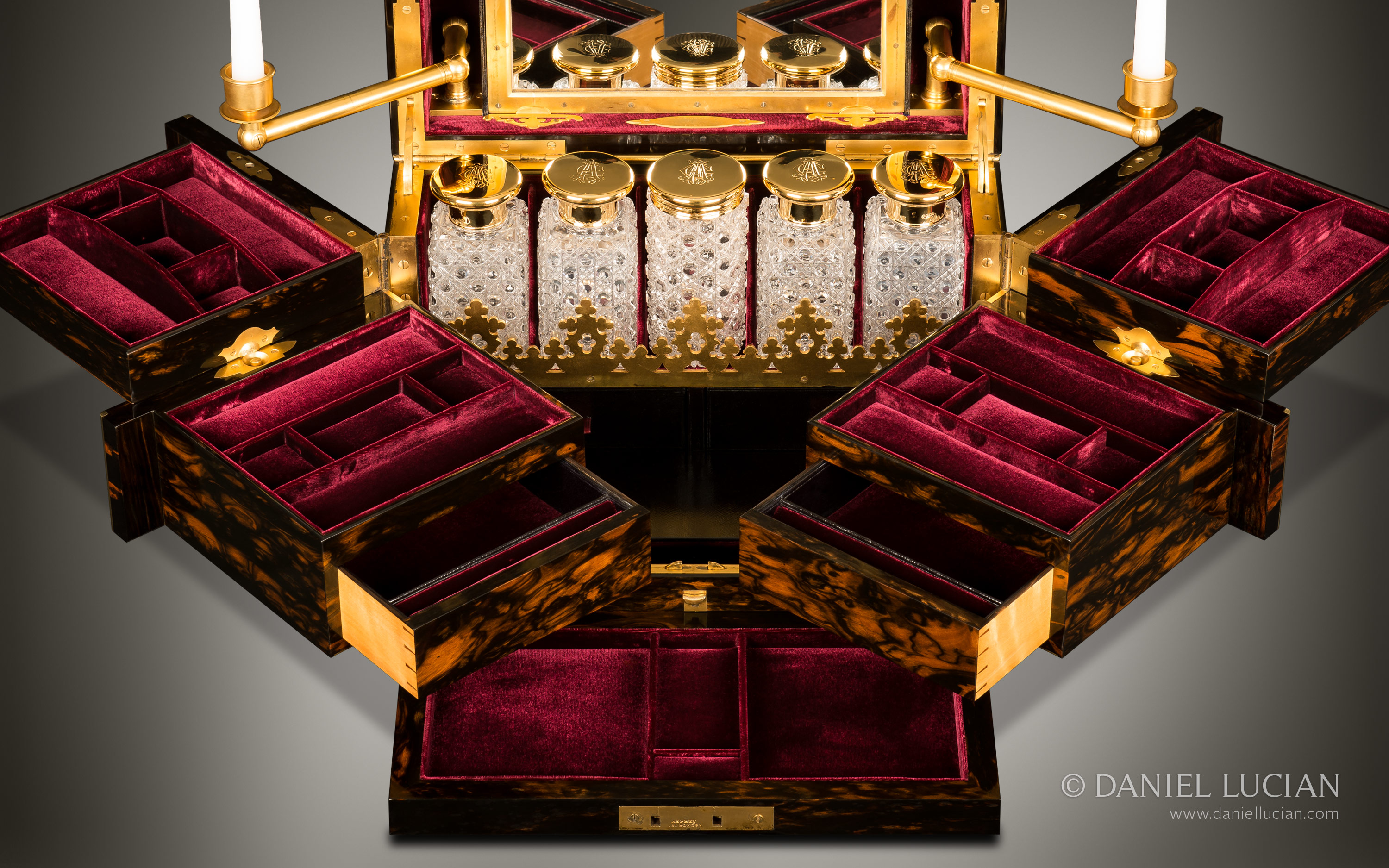
Glass bottles and jars fitted within nineteenth-century dressing cases were often decorated by cutting or engraving their surfaces. Although closely related, the two techniques produced very different effects.
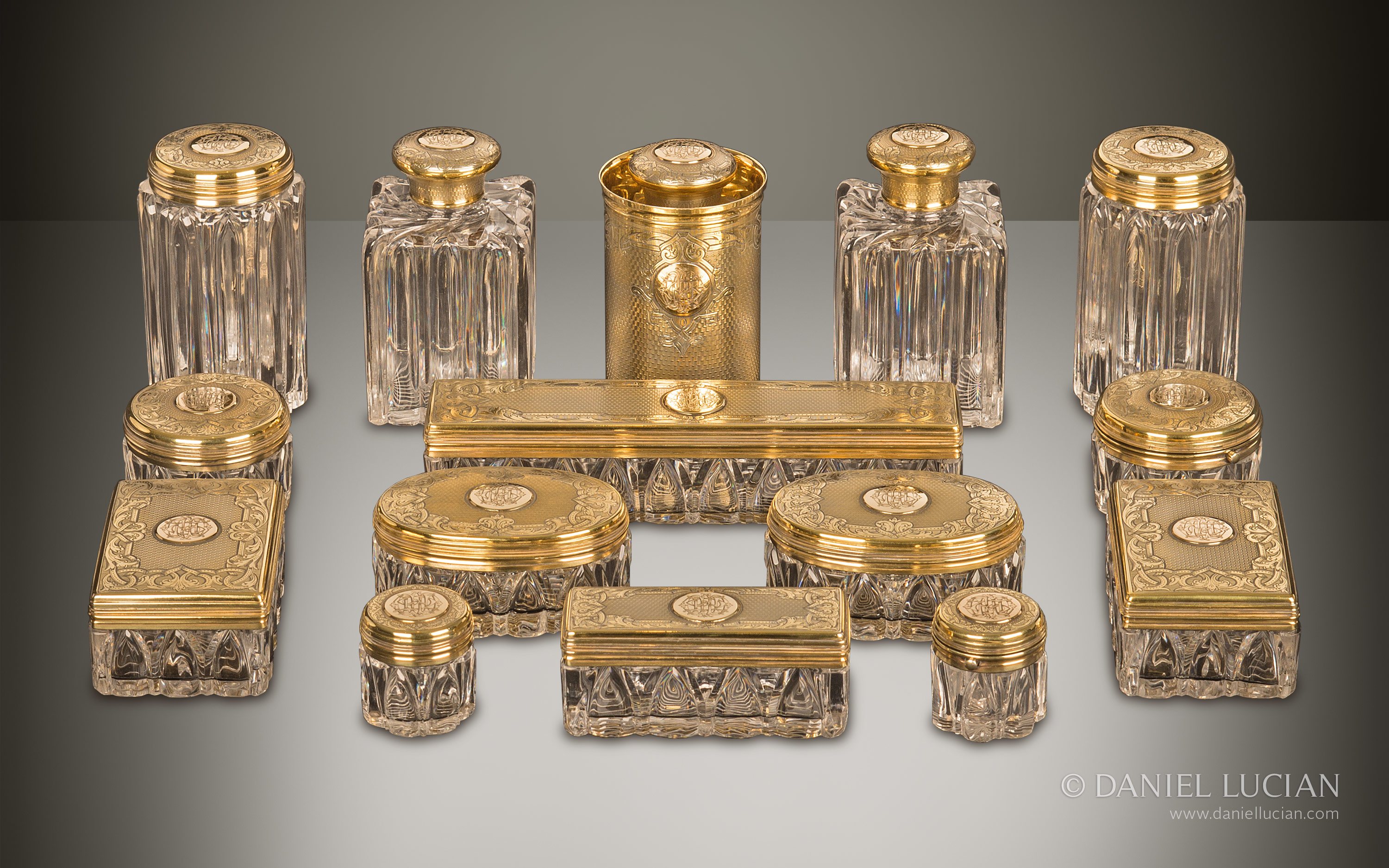
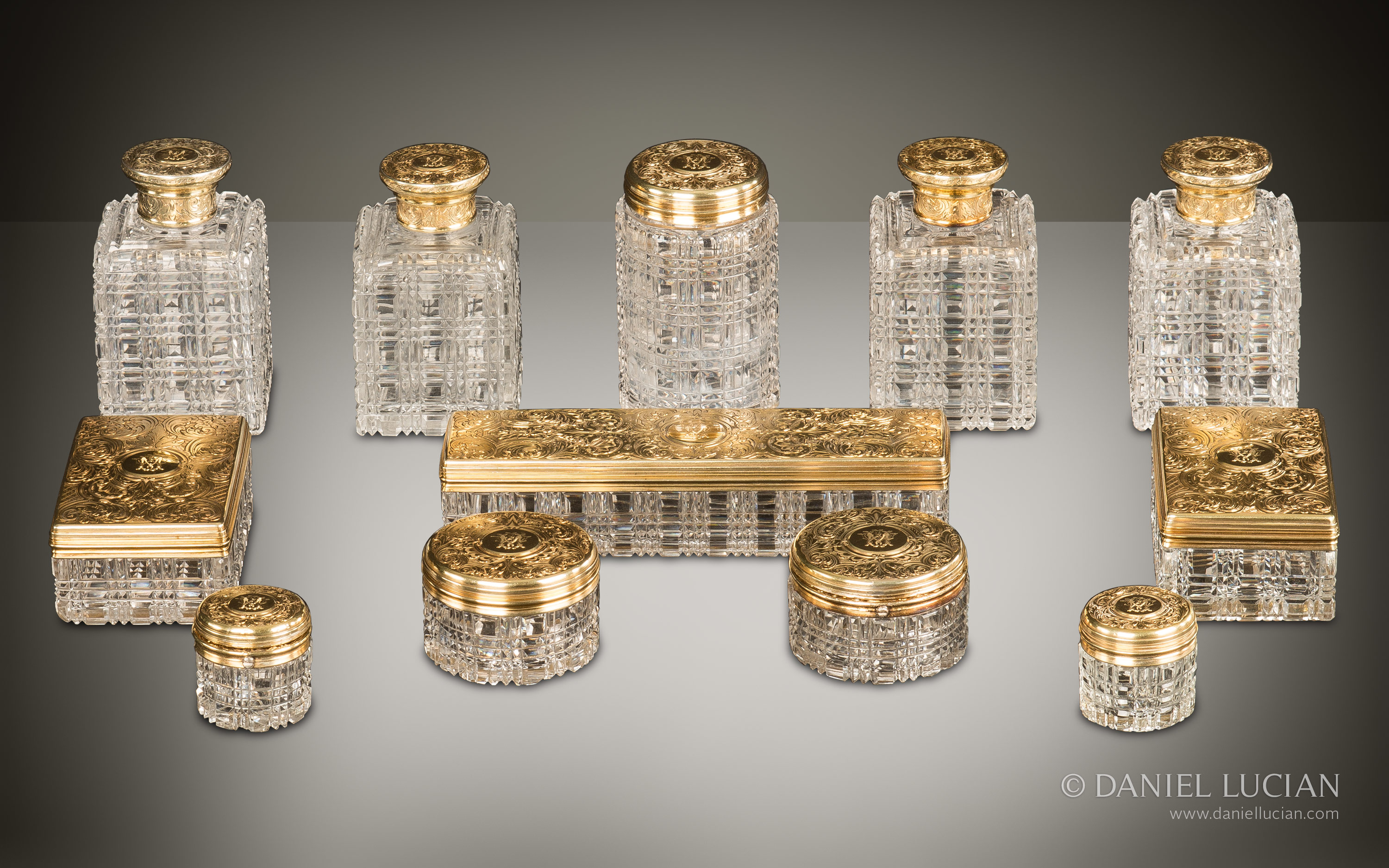
Cut glass was produced by grinding decorative patterns into relatively thick glass. The object was held by hand against rotating wheels, with water and abrasives used to grind away the surface. The principal pattern was first formed using relatively coarse wheels before progressively finer wheels and abrasives were used to smooth and polish the cuts. The cutter controlled the depth, angle and position of each cut by manipulating the glass directly against the rotating wheel.
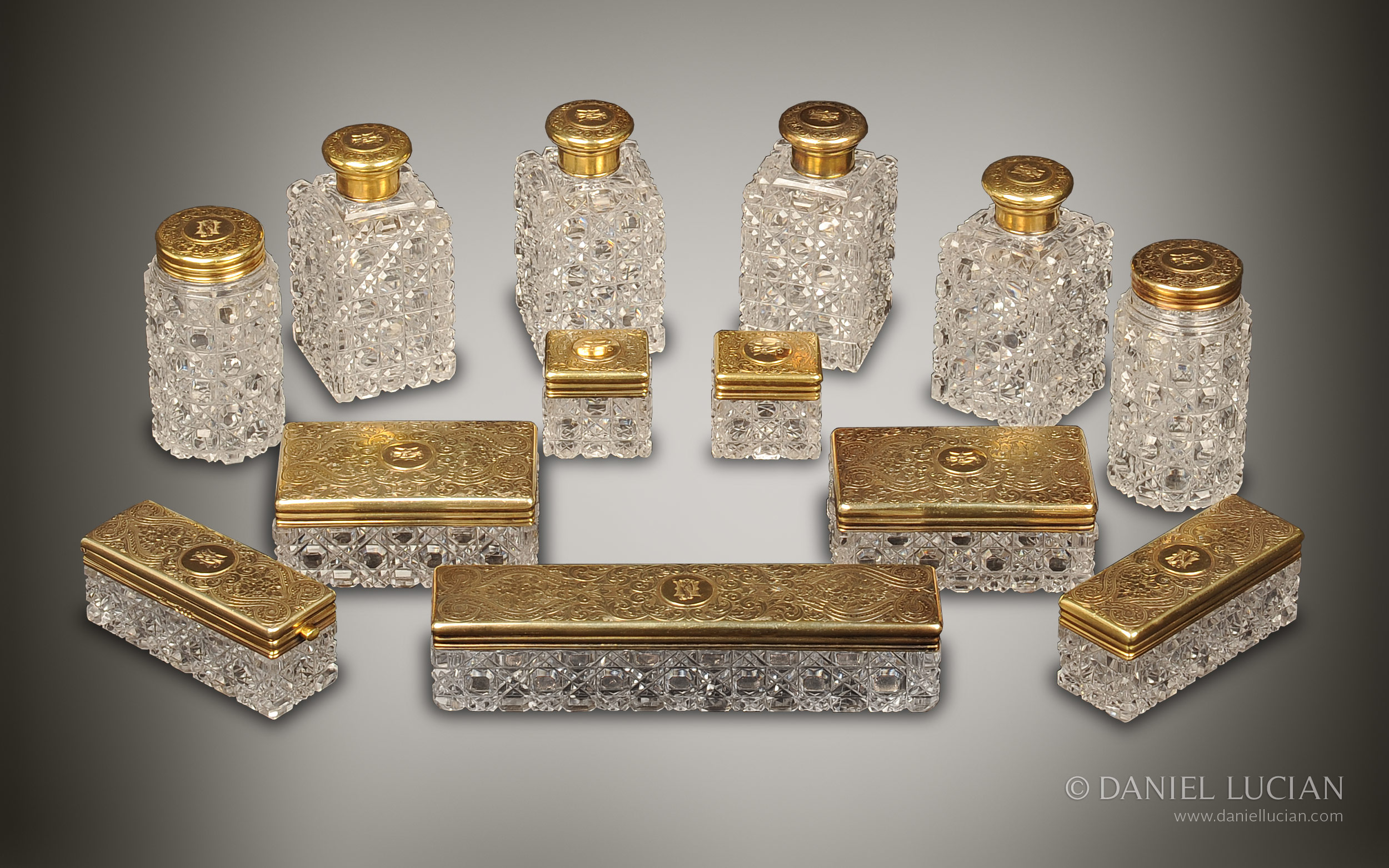
Deep geometric patterns such as hobnail required a considerable amount of glass to be removed. A carefully arranged series of intersecting cuts was made across the surface, leaving small flat-topped projections standing between the surrounding sloping facets. Repeated across the glass, these produced the strongly geometric pattern and brilliant play of reflected and refracted light characteristic of hobnail cutting.
Glass could also be decorated using much finer copper-wheel engraving. In this process, small rotating copper wheels carrying an abrasive were used to grind shallow designs into the surface. Wheels of different sizes and profiles allowed the engraver to create fine lines, broad leaves, flower petals and areas of subtle shading. The engraved surfaces were generally left matt, creating a delicate frosted contrast against the surrounding polished glass.
The bottles and jars found in dressing cases could therefore range from deeply cut geometric designs to much finer engraved decoration. Ladies’ cases often incorporated particularly elaborate examples, while those intended for gentlemen were generally more restrained.