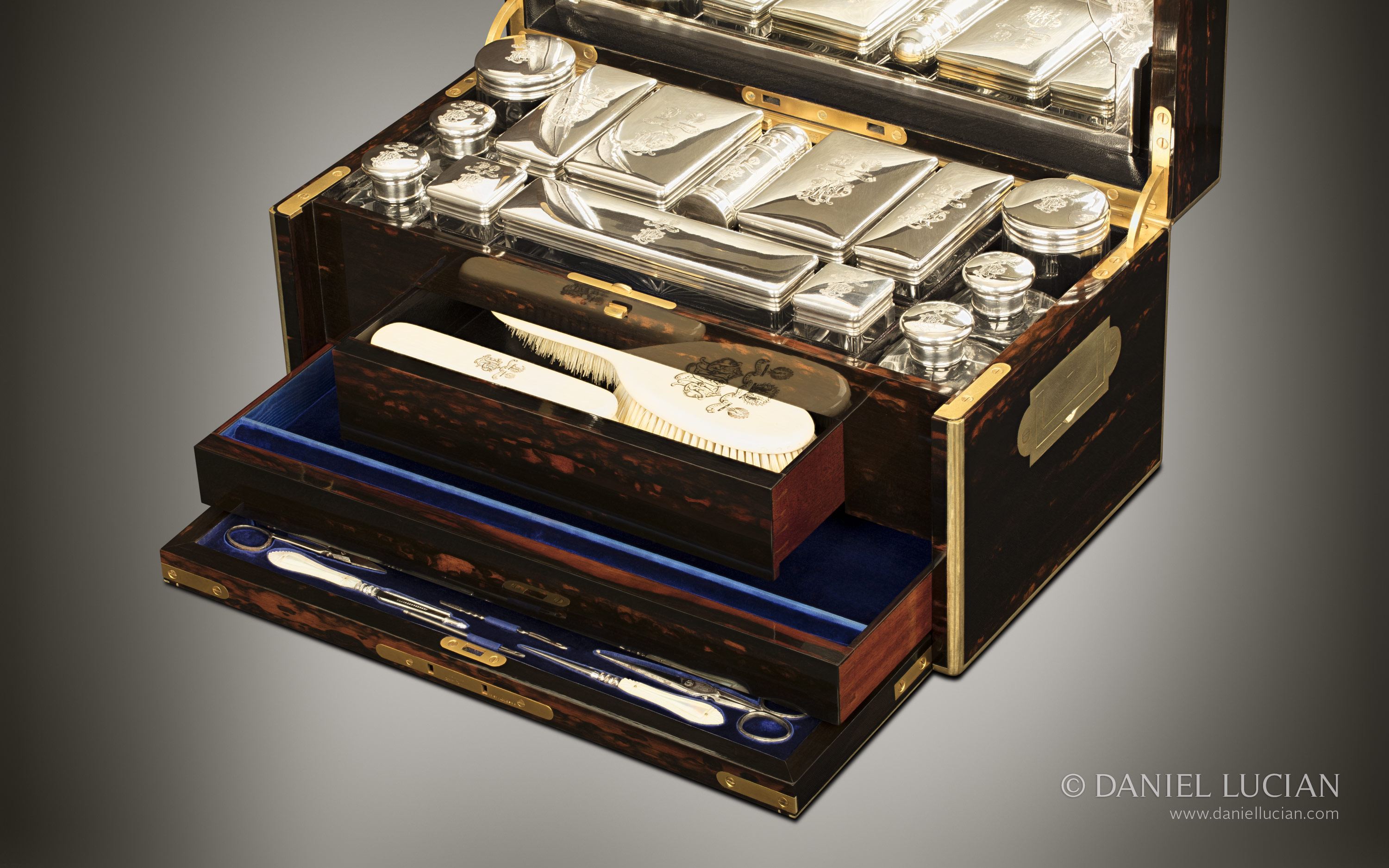
Dressing Case Bottles and Jars
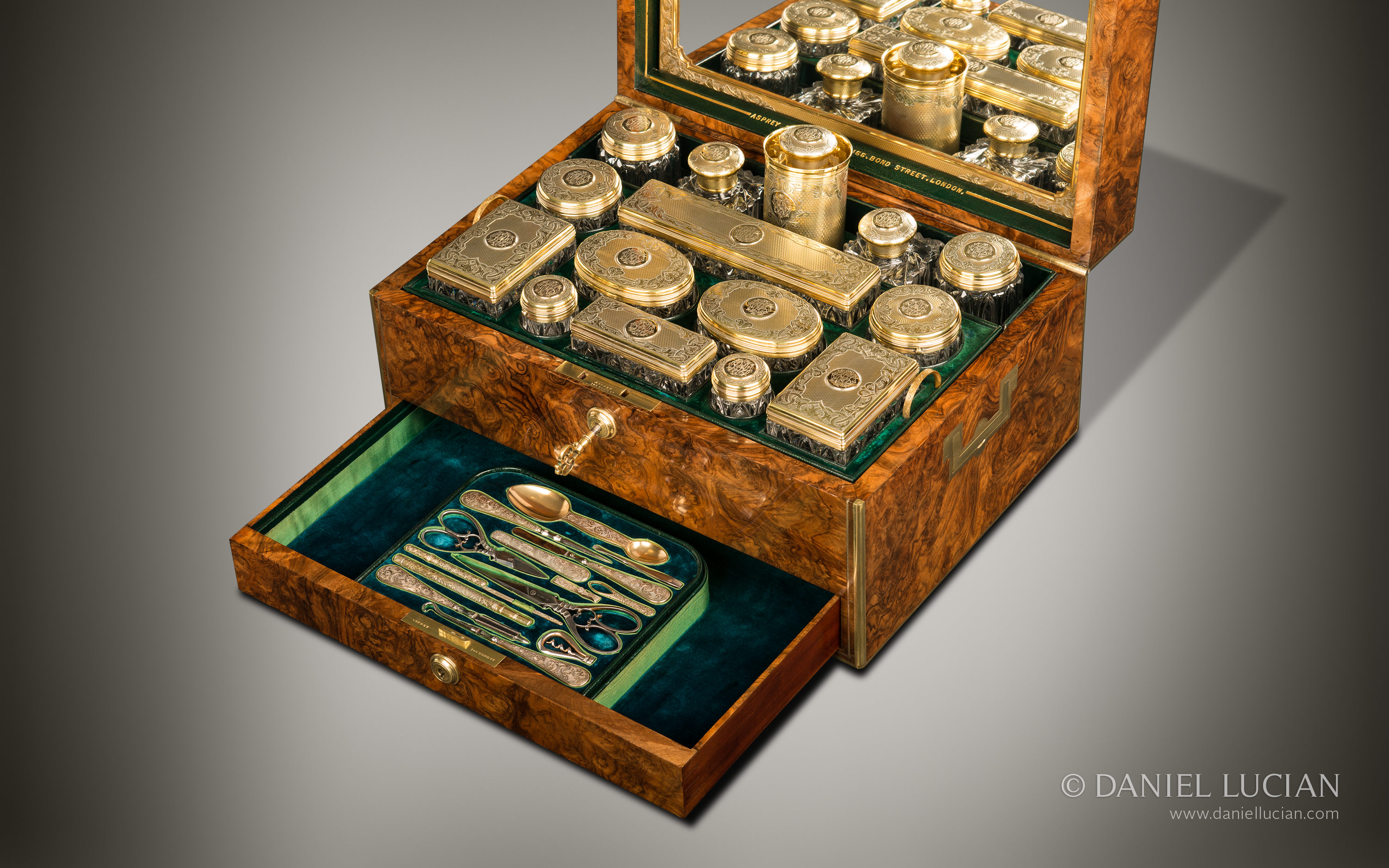
During the late eighteenth and early nineteenth centuries, dressing-case bottles and jars tended to be relatively plain in appearance, with greater emphasis placed on practicality and function. By the Regency period, however, increasing attention was being given to the appearance of the glassware and to the design and decoration of its lids and mounts.
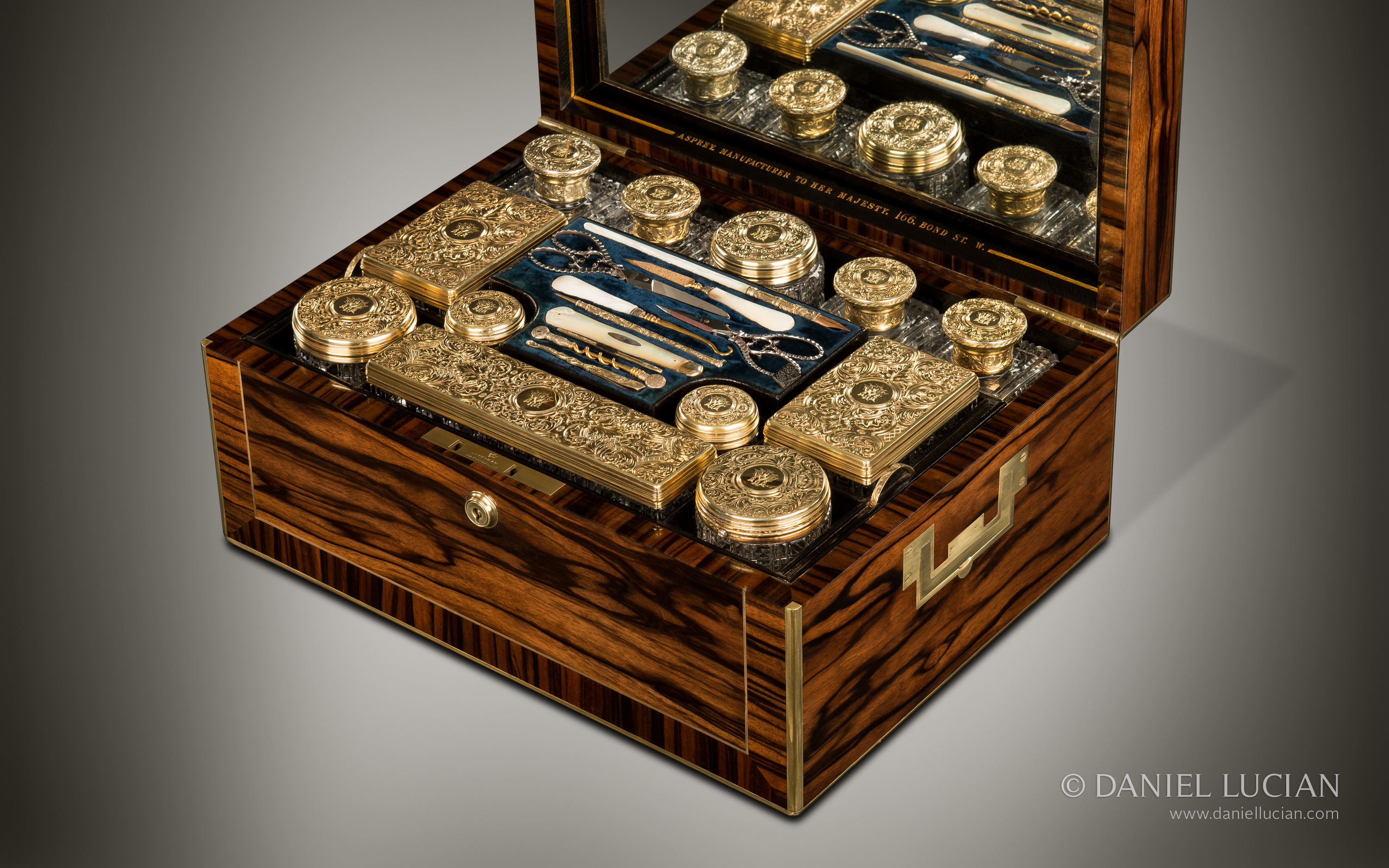
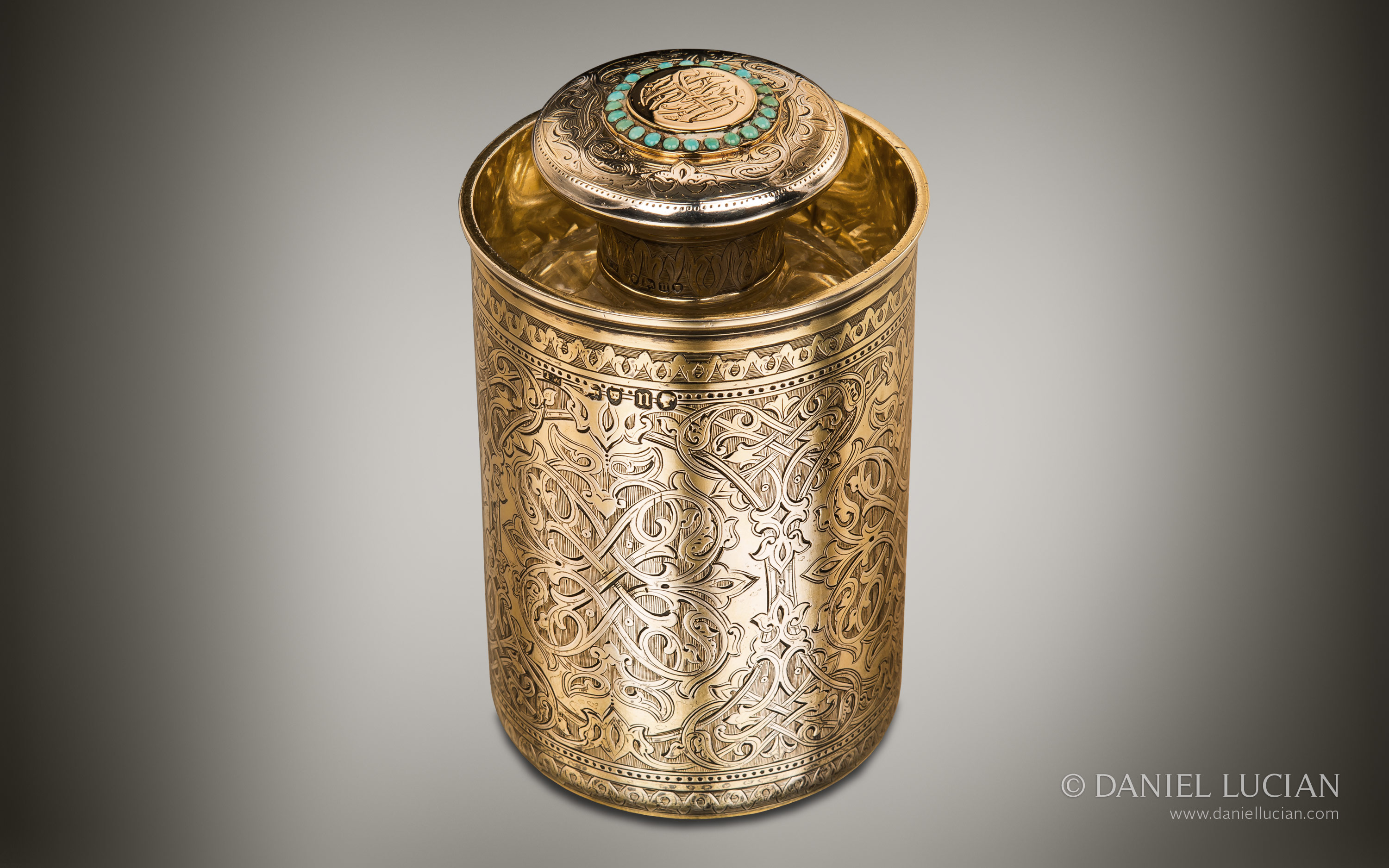
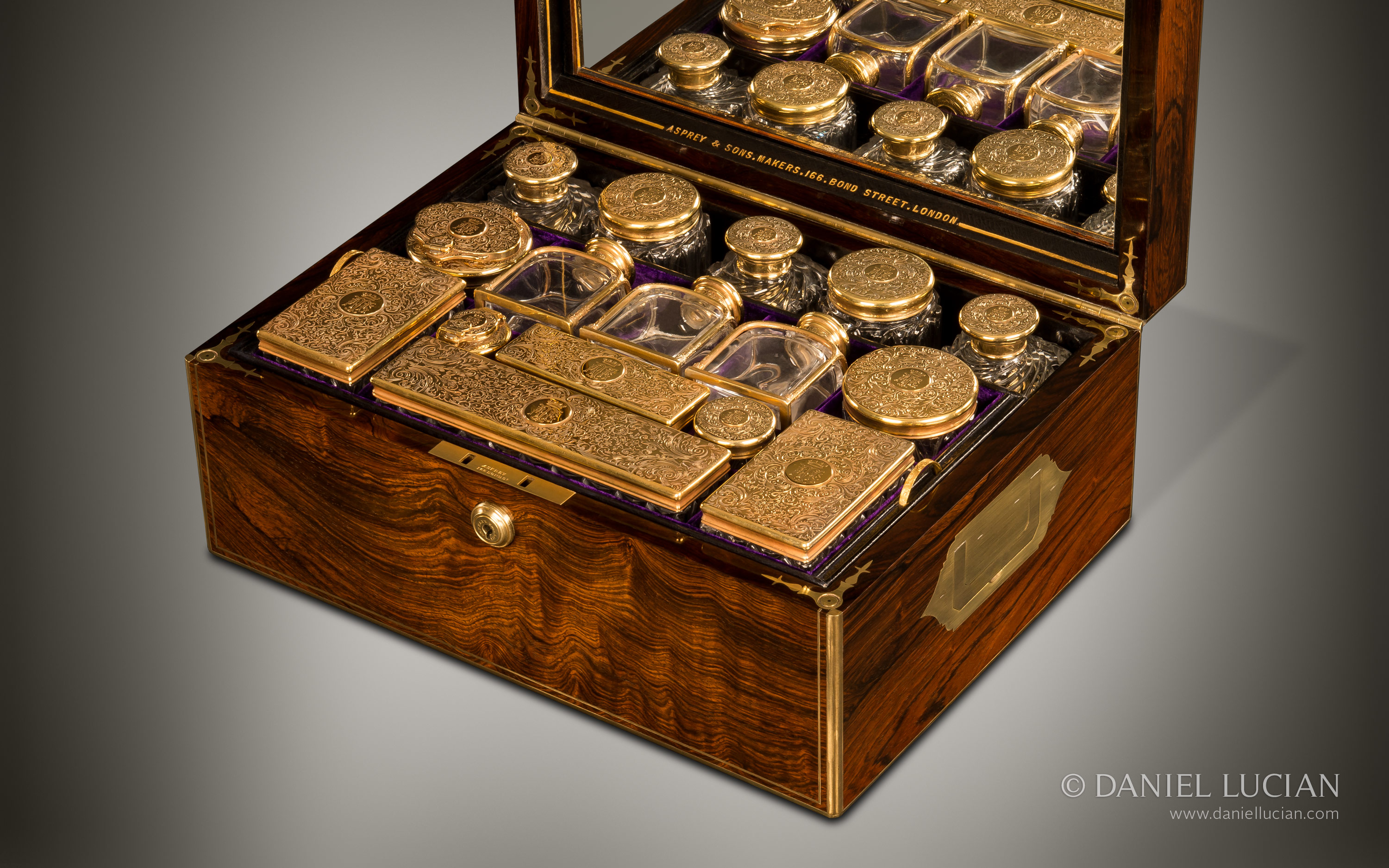
As ladies’ dressing cases became increasingly elaborate during the 1830s and 1840s, their fittings followed suit. Bottles and jars were more intricately cut, while silver mounts could be engraved, gilded, chased or pierced, and occasionally set with coral, amber, turquoise or gold. Practicality remained important, but appearance and displays of refinement became increasingly significant.
The number and variety of bottles and jars could also contribute considerably to the complexity and value of a dressing case.
These glass fittings were designed to contain perfumes and colognes, powders and pastes, pomades, tooth powders, soaps, inks and numerous creams, lotions and preparations. Other containers were designed for specific purposes, including toothbrushes, matches, smelling salts and, more rarely, spirits.
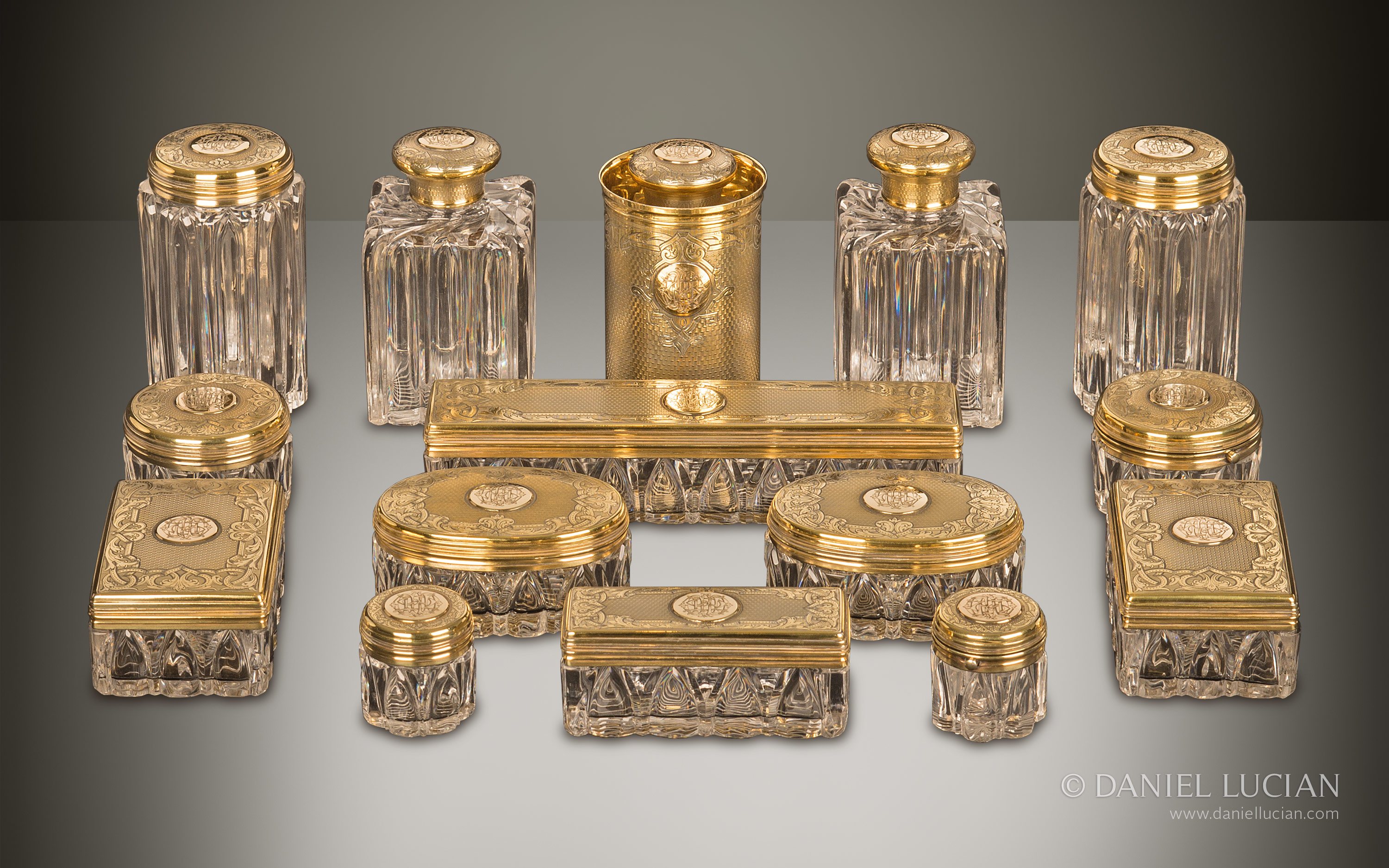
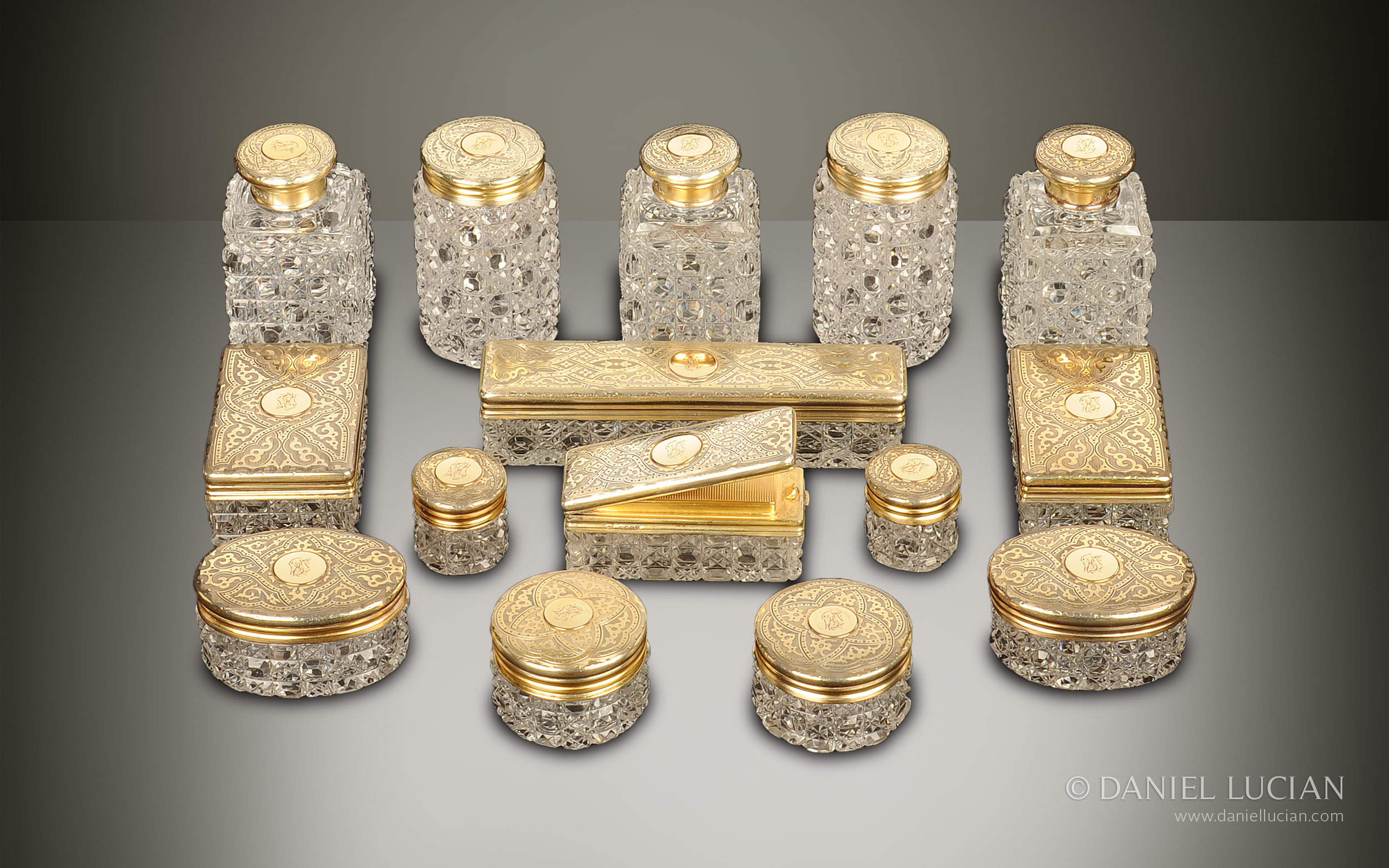
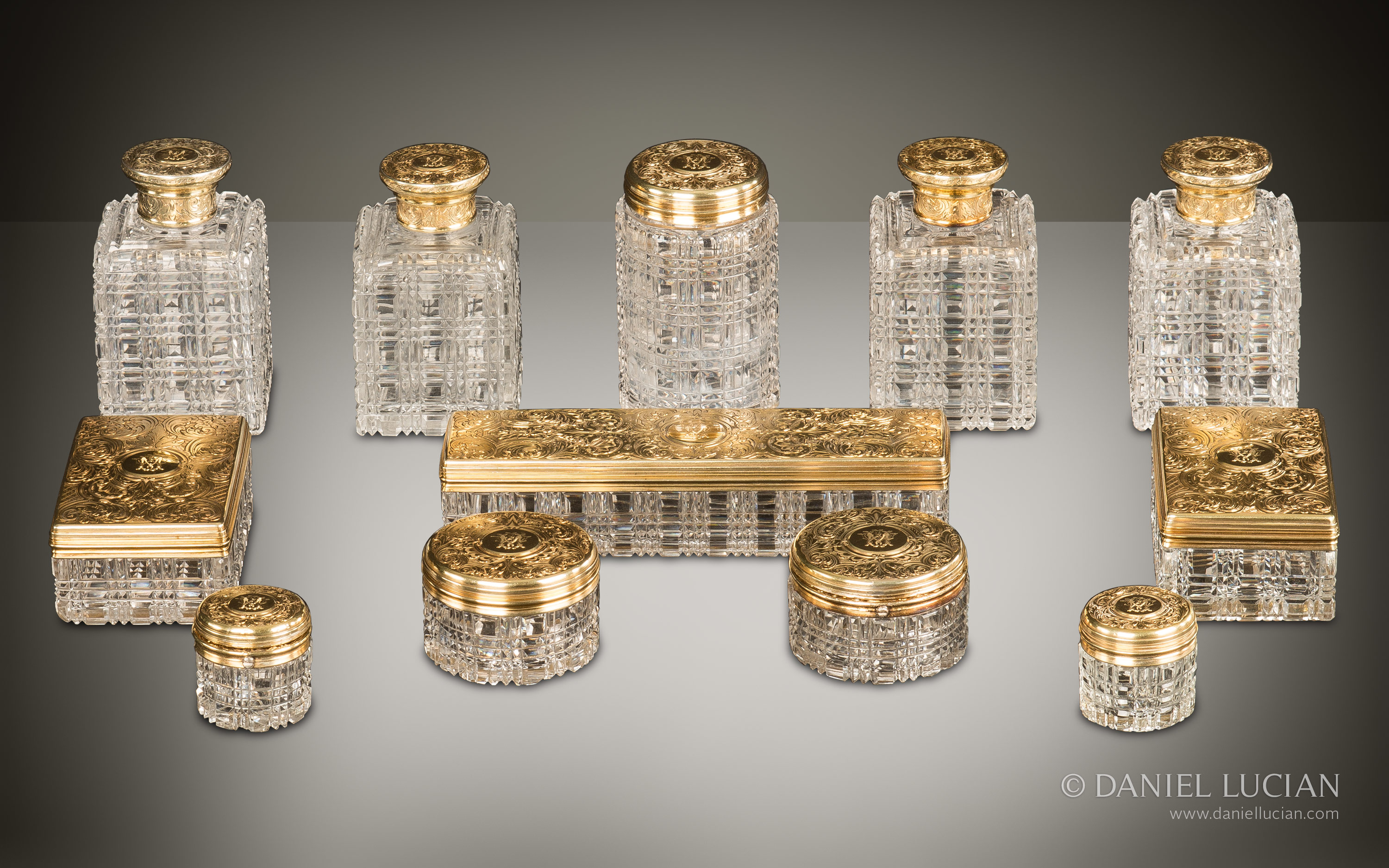

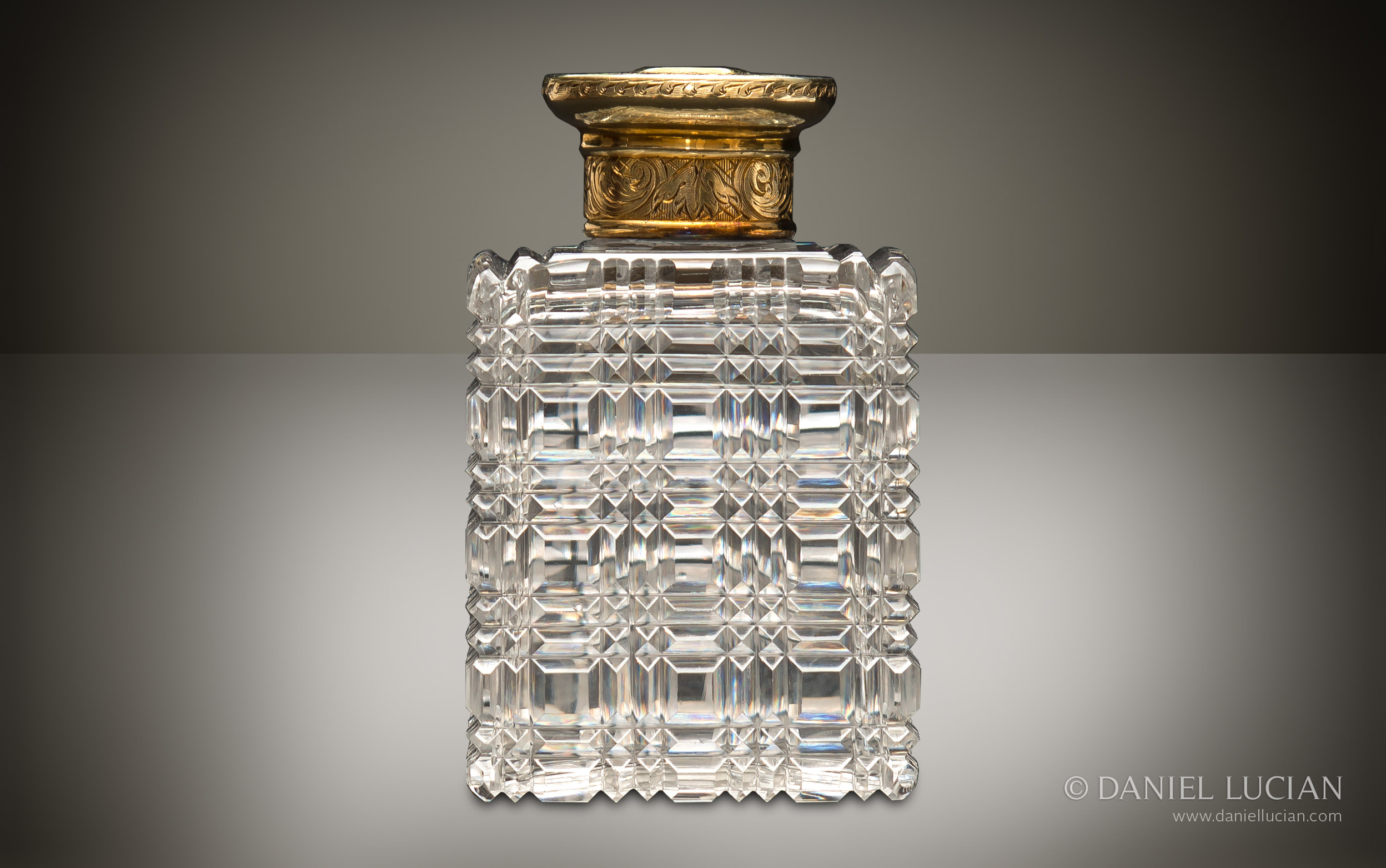
Perfume and Cologne Bottles
These are usually recognisable by their characteristic neck-and-shoulder form and are often positioned along the rear of the case. They generally have screw-threaded tops, with glass or cork stoppers within the neck to help seal their contents securely.
Double-ended perfume bottles, sometimes found in larger dressing cases, could contain perfume at one end and smelling salts at the other. Internally divided, each end was separately sealed, usually by a glass or cork stopper or a cork-lined top. The tops might be screw-threaded or, particularly at the smelling-salts end, hinged and fitted with a spring-loaded opening mechanism.
Toothbrush Jars
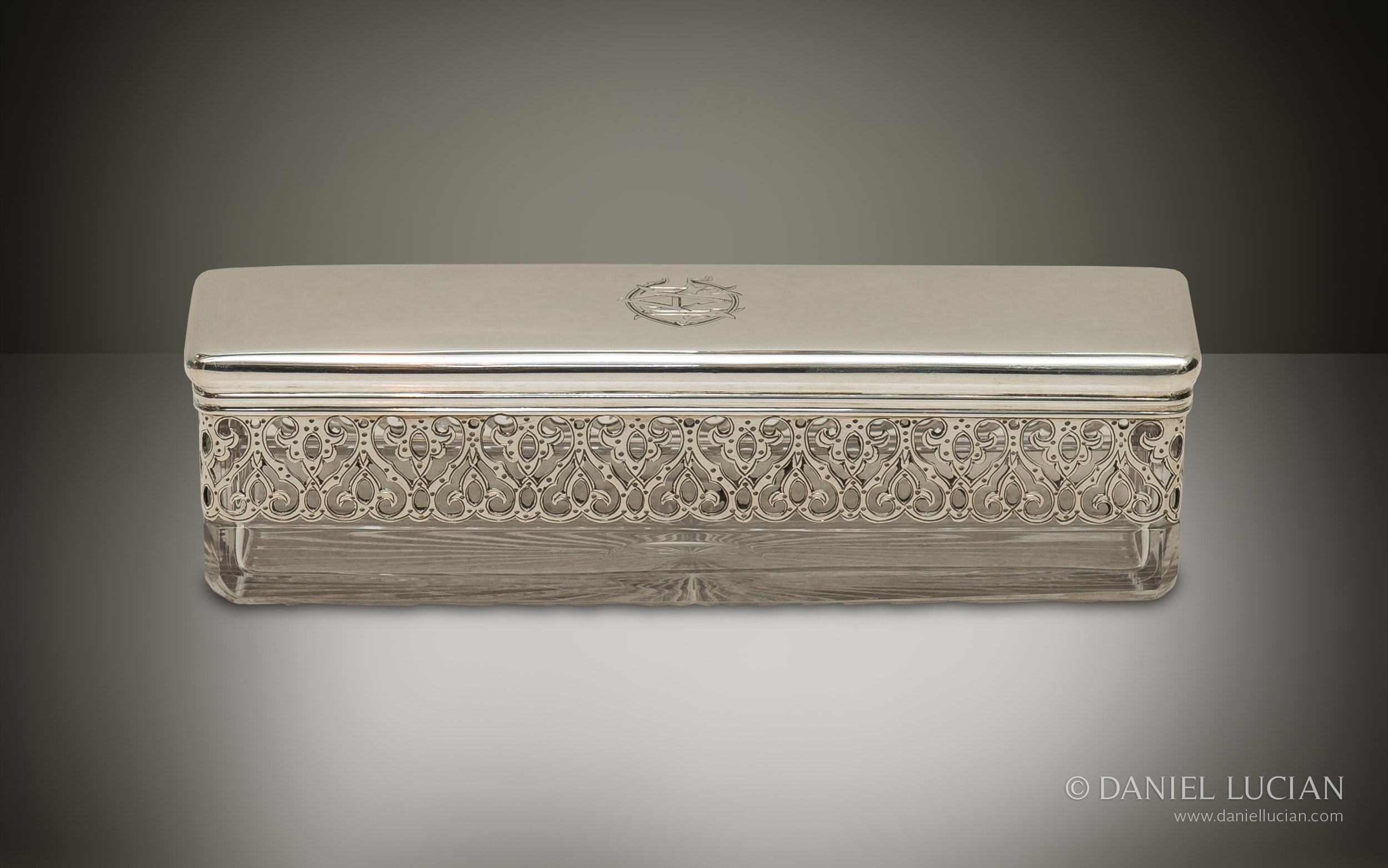
Usually among the longest rectangular containers within a dressing case, toothbrush jars were commonly positioned towards the front. Some have small pierced holes in their lids to provide ventilation and allow a damp toothbrush to dry after use.
Soap Jars
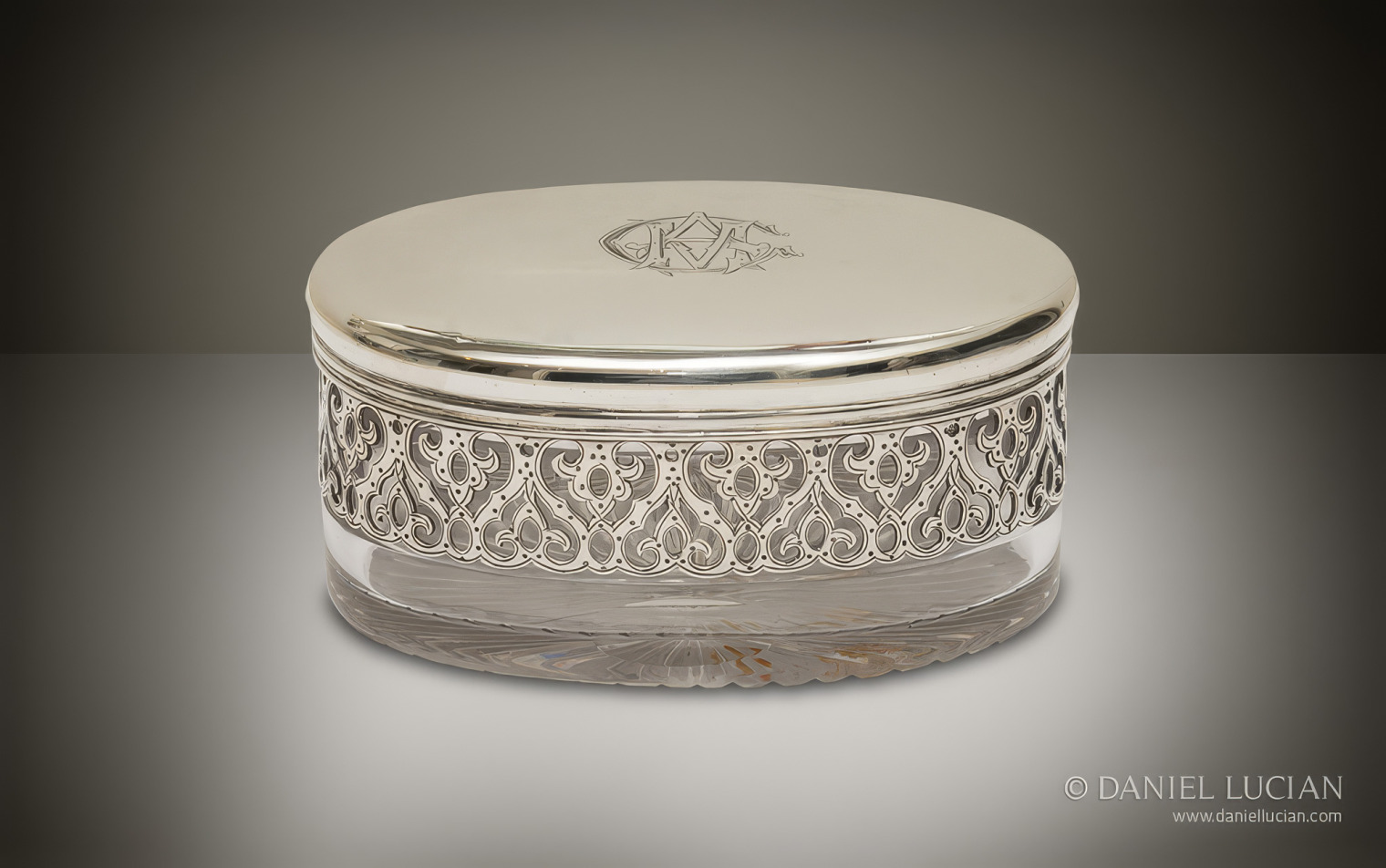
Soap jars are generally rectangular or oval and are often found in pairs. They typically have close-fitting lift-off lids and were designed to contain small bars or cakes of soap.

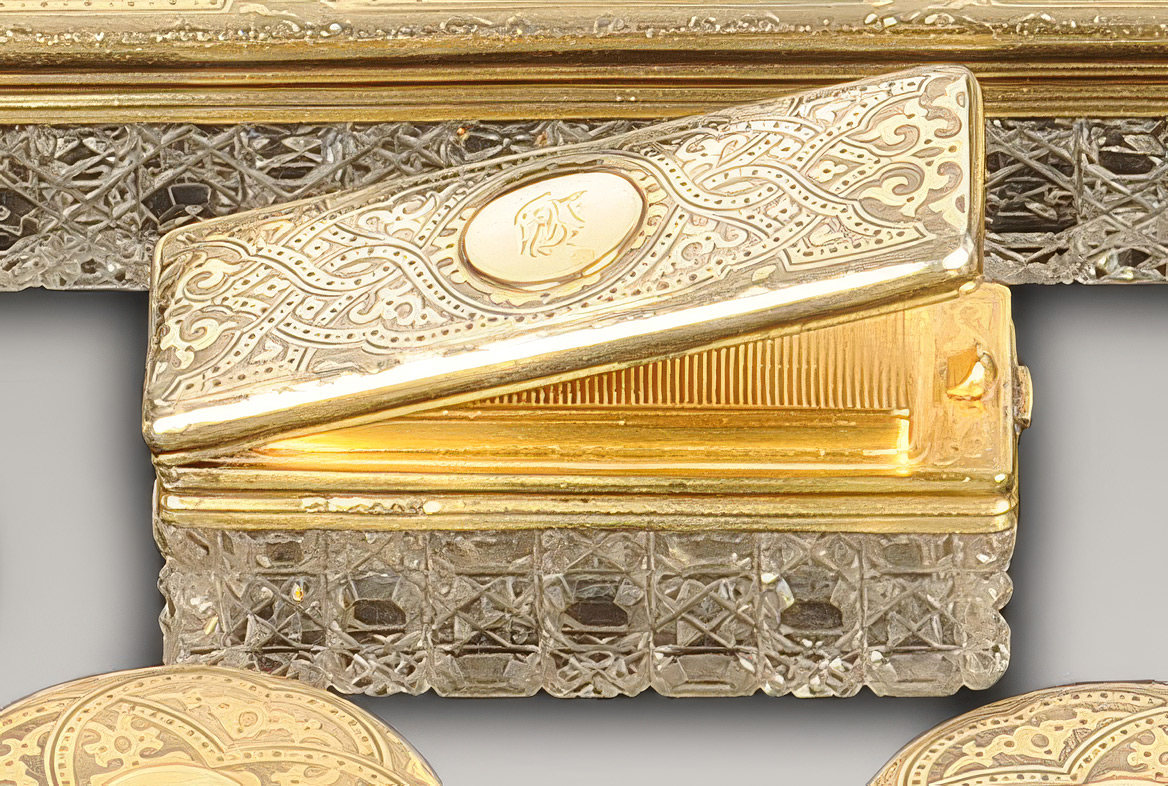
Matchbox and Striker
Usually rectangular in form, the matchbox has a hinged lid secured by a spring catch. Once released, a small spring-loaded rod positioned near the rear hinge raises the lid.
A striking surface, itself often forming a hinged cover over the match compartment beneath, distinguishes these fittings from other similarly shaped containers.
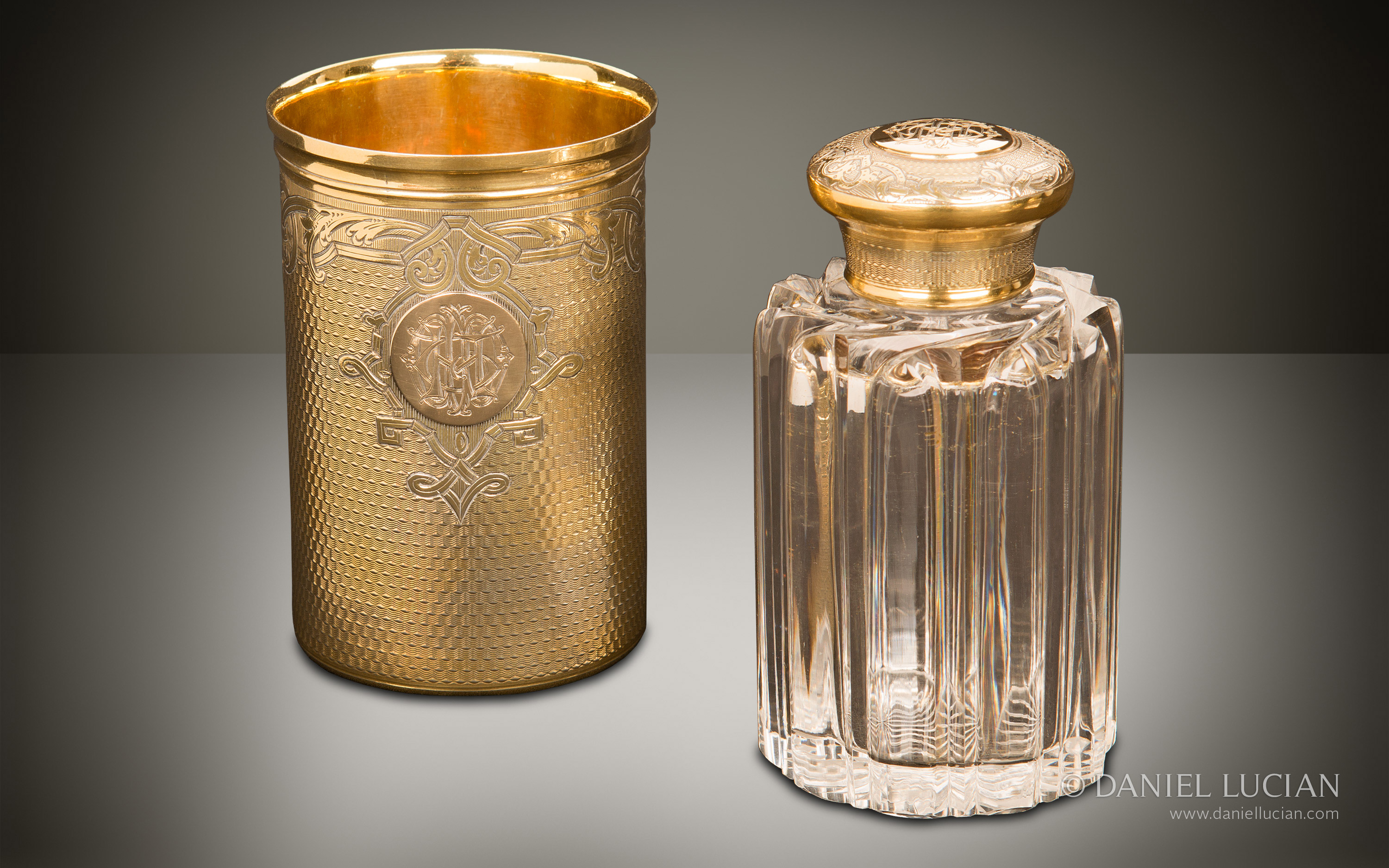
Spirit Bottle and Beaker
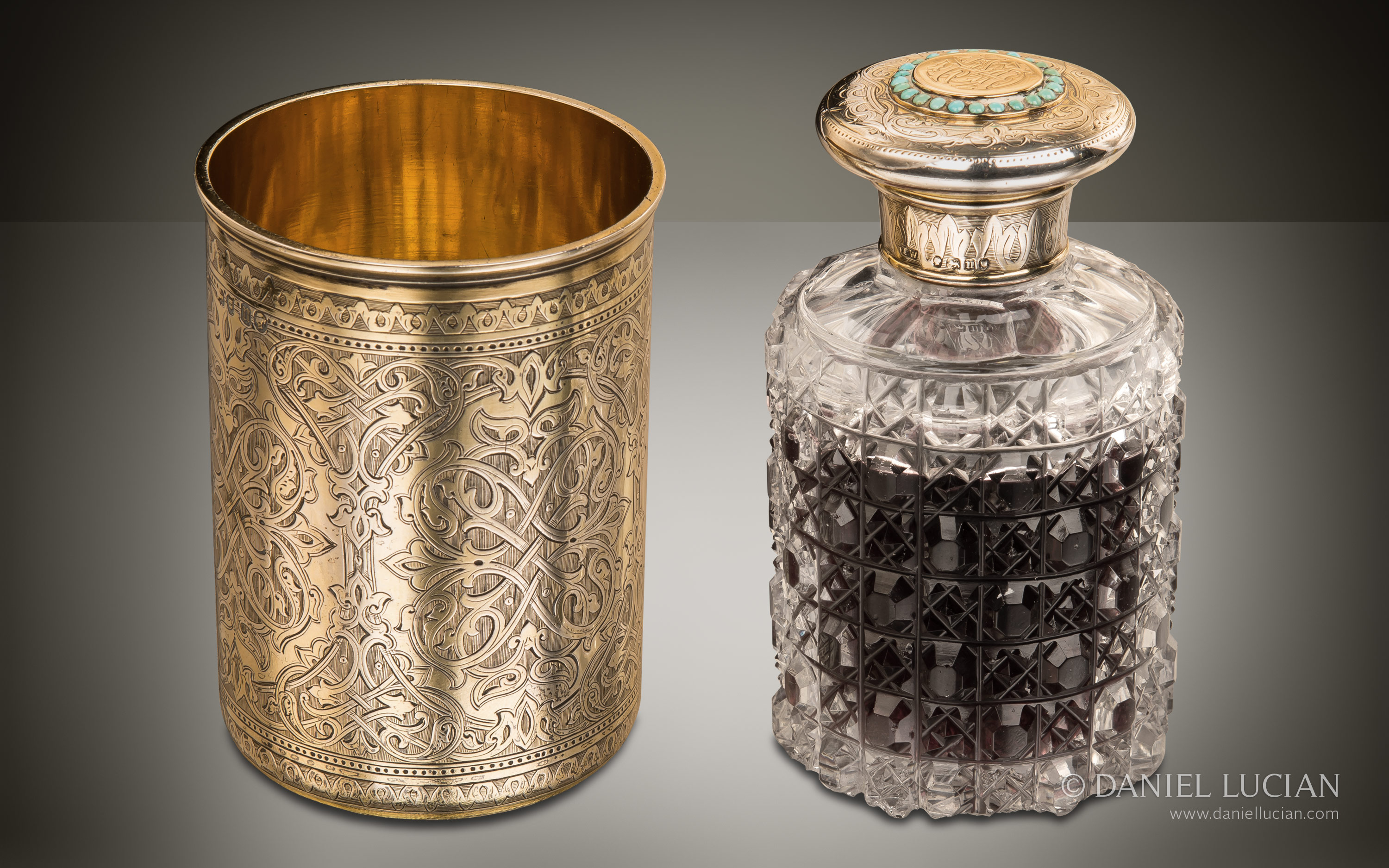
Although relatively uncommon in dressing cases, spirit bottles were sometimes accompanied by a fitted drinking beaker. The cylindrical glass bottle, usually fitted with a silver screw-threaded top, sits snugly within the solid silver beaker and was intended to carry a small quantity of spirits.
Travelling Inkwell
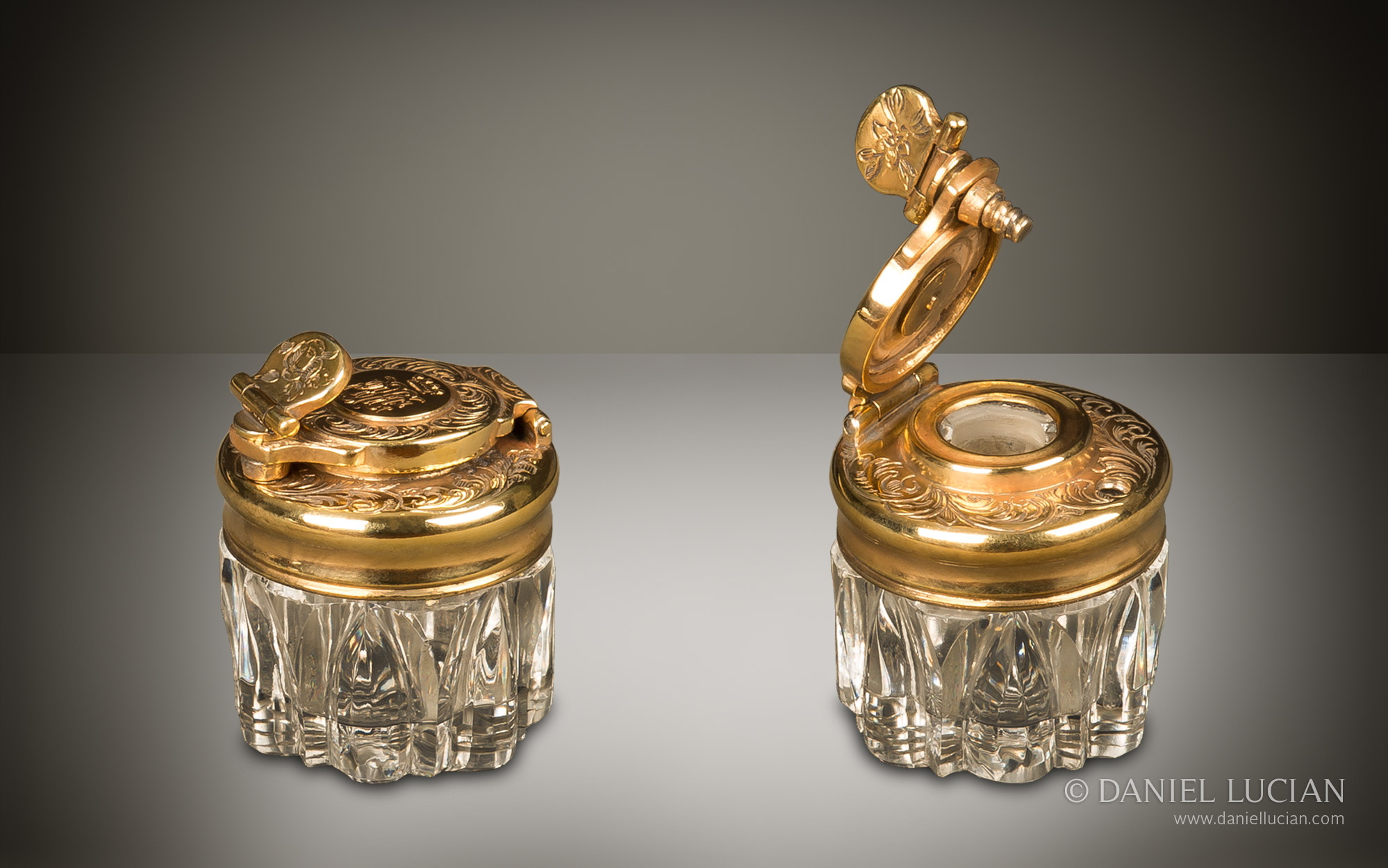
Travelling inkwells fitted into dressing cases tend to differ from the more familiar forms found in writing boxes and stationery cases. They are generally among the smallest pieces of glassware within the set.
The lid is often fitted with a small folding handle which, when turned, screws the lid tightly onto the glass well. A cork or padded leather seal to the underside presses against the mouth of the inkwell, helping to prevent leakage during travel. The same type of screw-handle closure can also be found on some multi-purpose containers intended for other liquids.
Vinaigrette
A vinaigrette is a small, often highly decorative container designed to hold aromatic vinegar or other scented preparations. Predominantly carried by women, it provided a readily accessible fragrance when travelling through unpleasant surroundings and could also be inhaled when feeling faint.
During a period in which foul or unhealthy air was widely believed to contribute to disease, vinaigrettes were also valued for their supposed protective qualities.
A small piece of sponge, saturated with scented vinegar or fragrance, was placed beneath an internal hinged and pierced grille. The outer lid was usually hinged for quick access. Because vinegar contains acetic acid, areas likely to come into contact with the saturated sponge were commonly gilded, helping to protect the underlying silver from corrosion and discolouration.
Like the dressing cases in which they were sometimes fitted, vinaigrettes could also serve as small expressions of personal taste and status. They were carried in pockets or reticules, suspended from chatelaines, or incorporated into jewellery worn at the neck or wrist.
Some examples combine a perfume receptacle at one end with a vinaigrette at the other.