Gilding
Gilding is the application of a thin layer of gold to the surface of another material. Several different techniques were used historically, depending on the object and the material being decorated. On antique dressing cases and luxury boxes, gilding was particularly associated with silver fittings, decorative brasswork and other metal accessories.
Mercury or Fire Gilding
One of the most important traditional methods of gilding metal was mercury gilding, also known as fire gilding. Gold was combined with mercury to form an amalgam, which was applied to a carefully prepared metal surface and subsequently heated. The mercury was driven off as vapour, leaving a layer of gold adhering to the underlying metal.
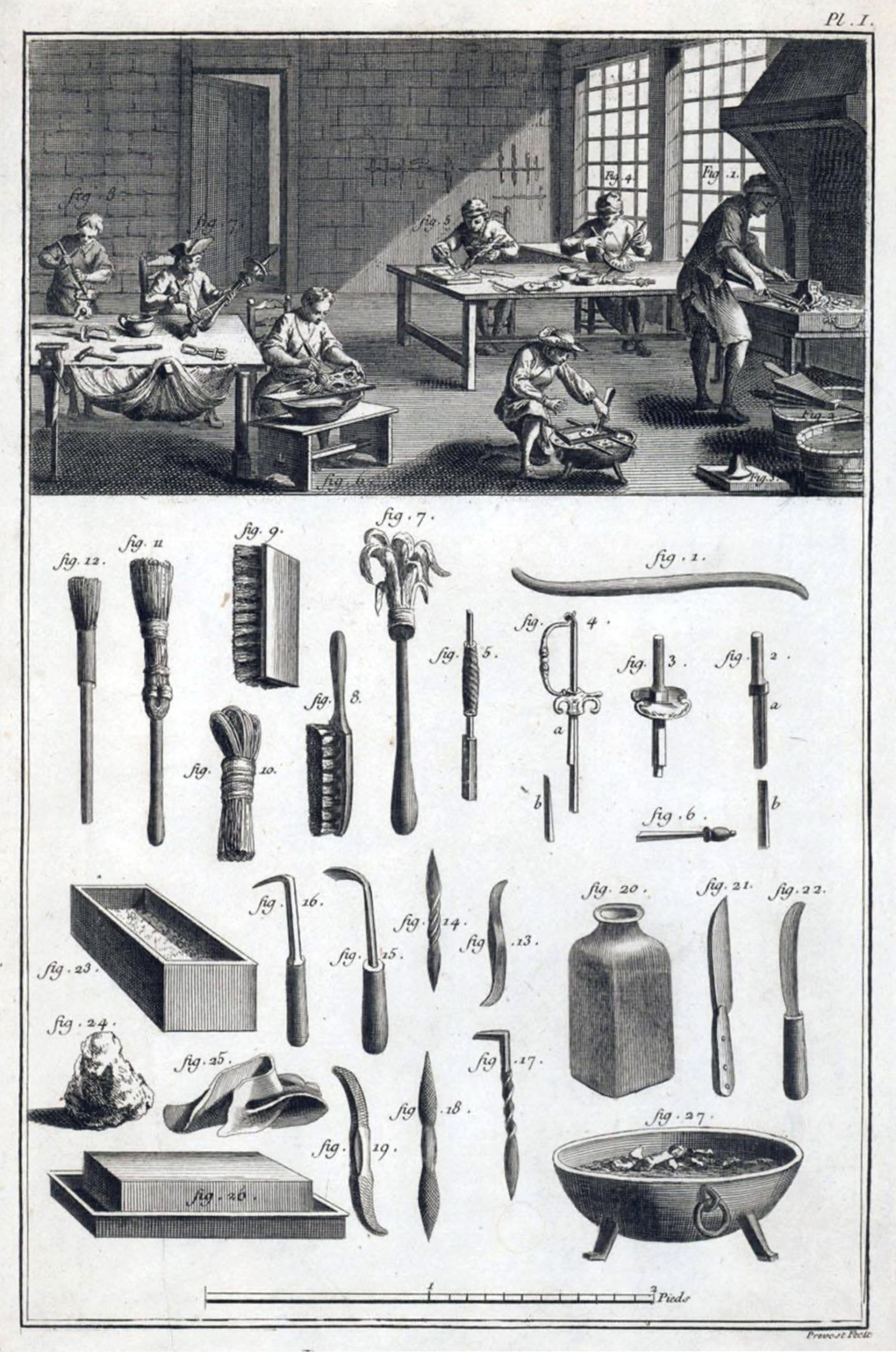
The process was highly hazardous because heating the amalgam released toxic mercury vapour. Its dangers were well recognised by the eighteenth and nineteenth centuries, with prolonged exposure causing tremors, neurological illness and other serious health problems, including premature death among gilders.
Efforts were made to reduce these dangers through improved furnace designs and ventilation. During the early nineteenth century, the French chemist Jean-Pierre-Joseph d'Arcet developed arrangements intended to draw mercury vapours away from the working area.
Electro-Gilding in the Nineteenth Century
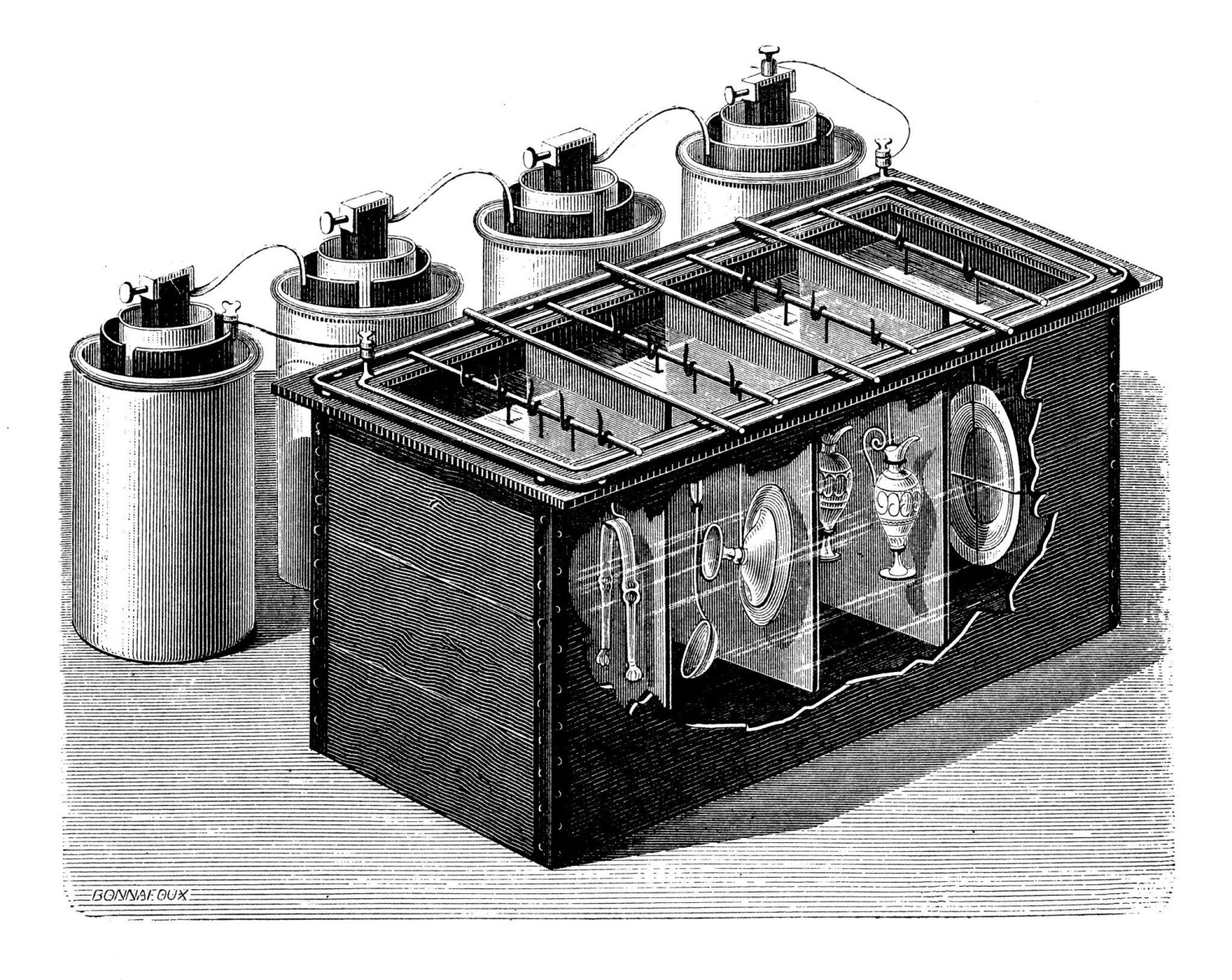
During the nineteenth century, electro-gilding provided an important alternative to traditional fire gilding. Developed commercially during the early 1840s, the process used an electrical current to deposit a thin layer of gold onto a prepared metal surface.
The object to be gilded was suspended in a solution containing gold compounds and connected to an electrical circuit. When the current passed through the solution, gold was deposited onto its surface, allowing the thickness of the coating to be controlled.
Electro-gilding avoided the mercury vapours associated with fire gilding, although the chemical solutions used in electroplating presented hazards of their own. Both techniques continued to be employed during part of the nineteenth century.
Finishing Gilded Metalwork
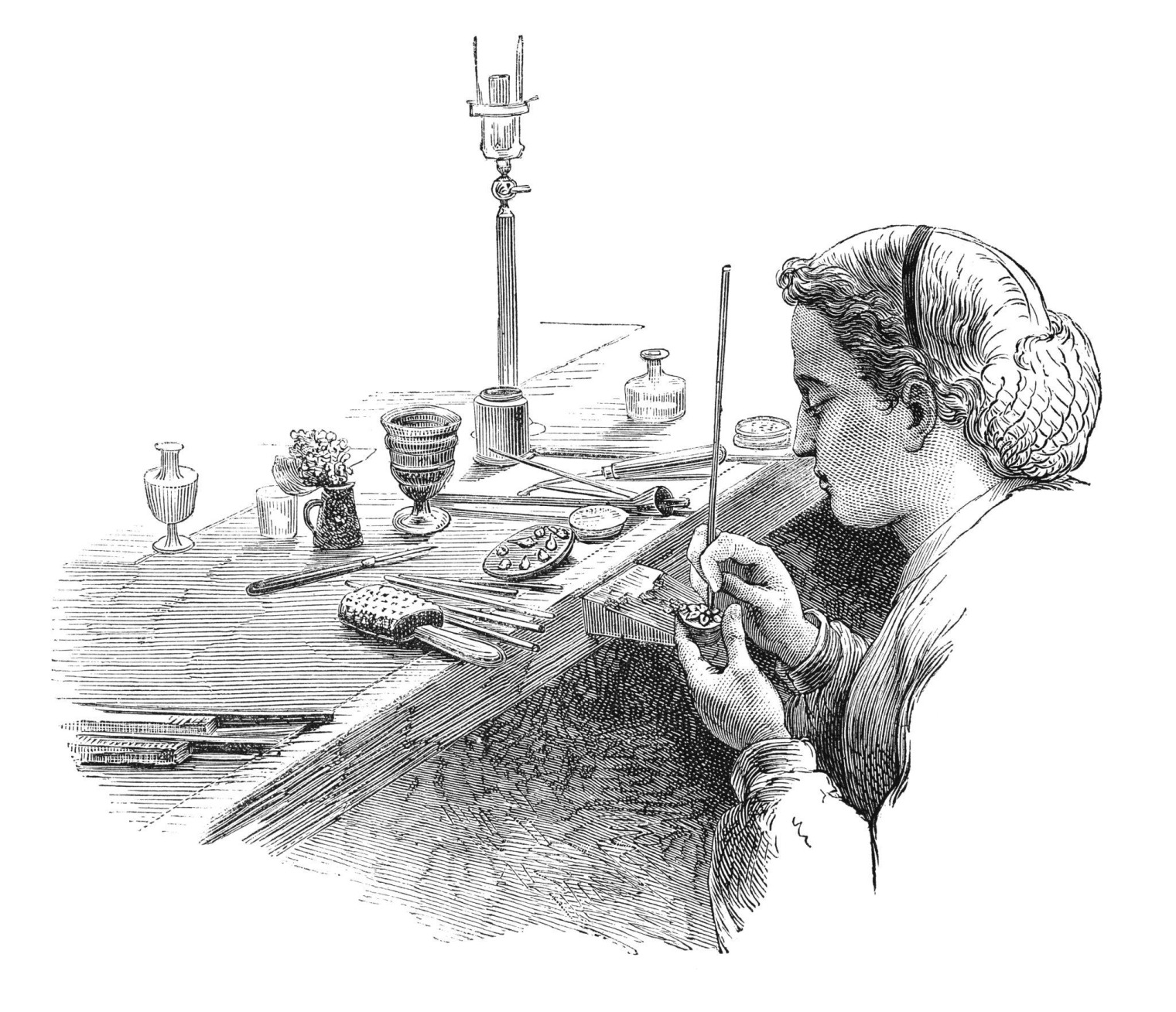
The application of gold was not always the final stage of the process. Gilded objects could undergo further finishing, including careful brushing and burnishing, to develop the required surface appearance.
Specialised brushes and polished burnishing tools enabled craftsmen to finish small and intricately decorated objects while preserving their engraved and ornamental details.
Gilding on Antique Dressing Cases
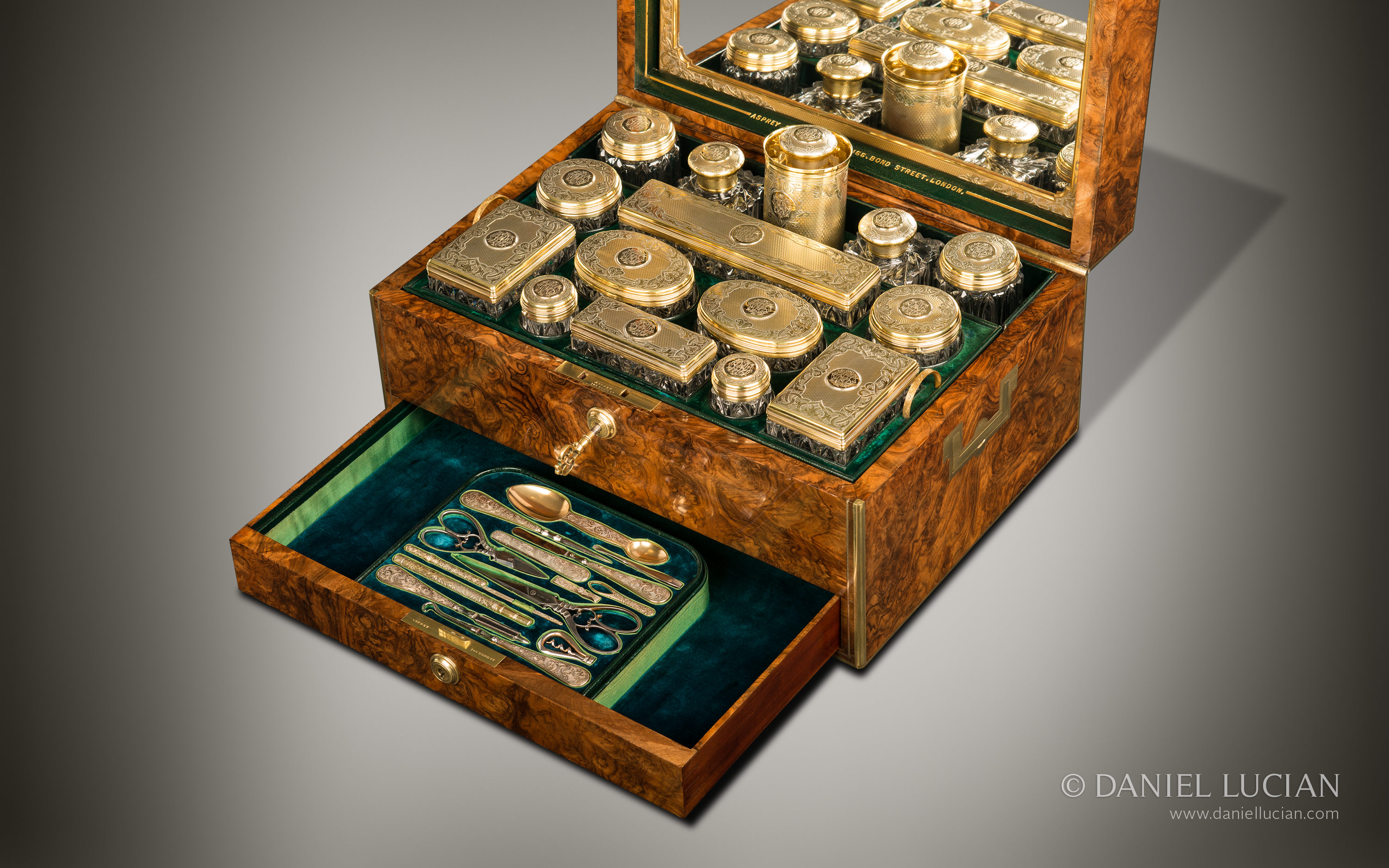
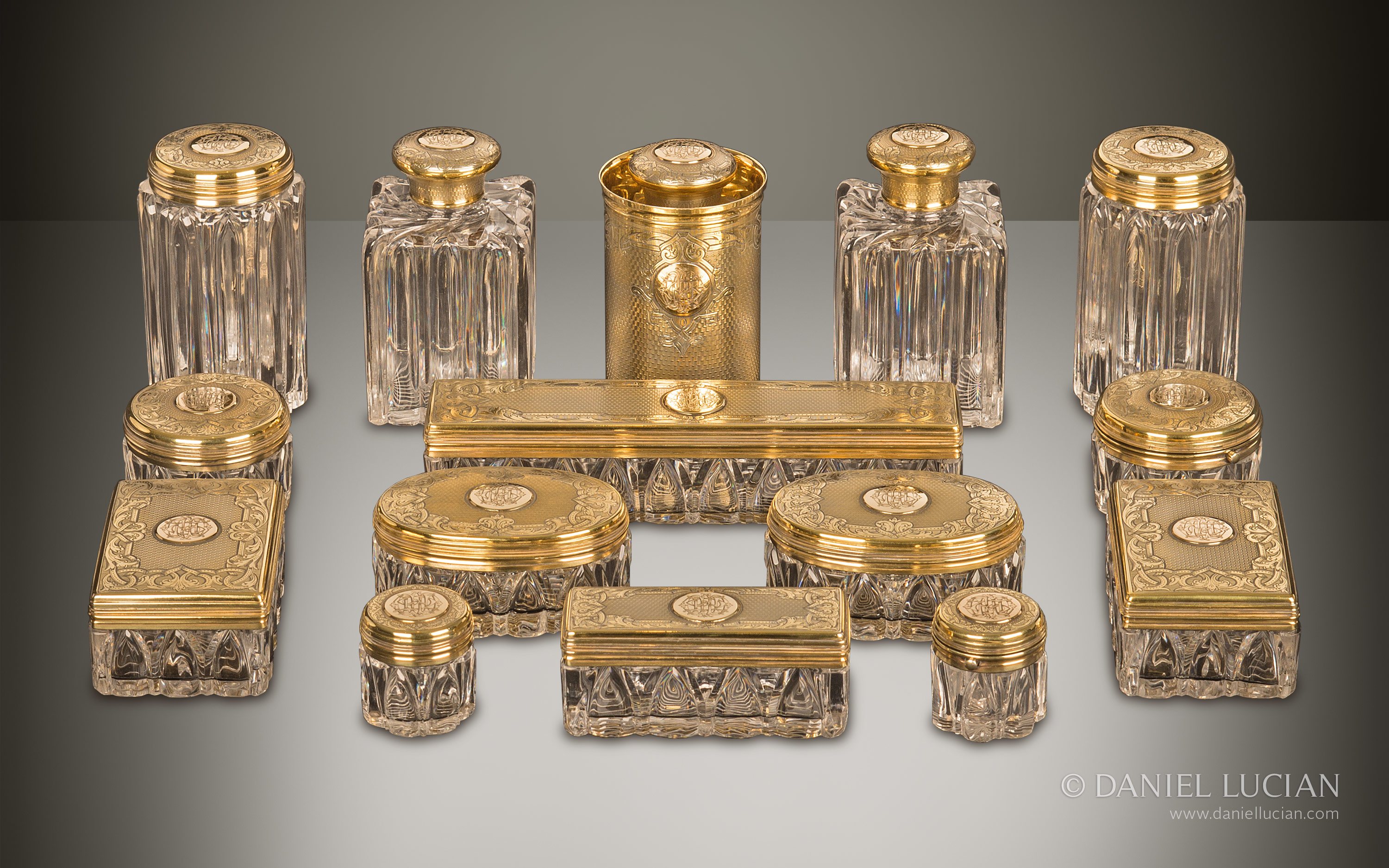
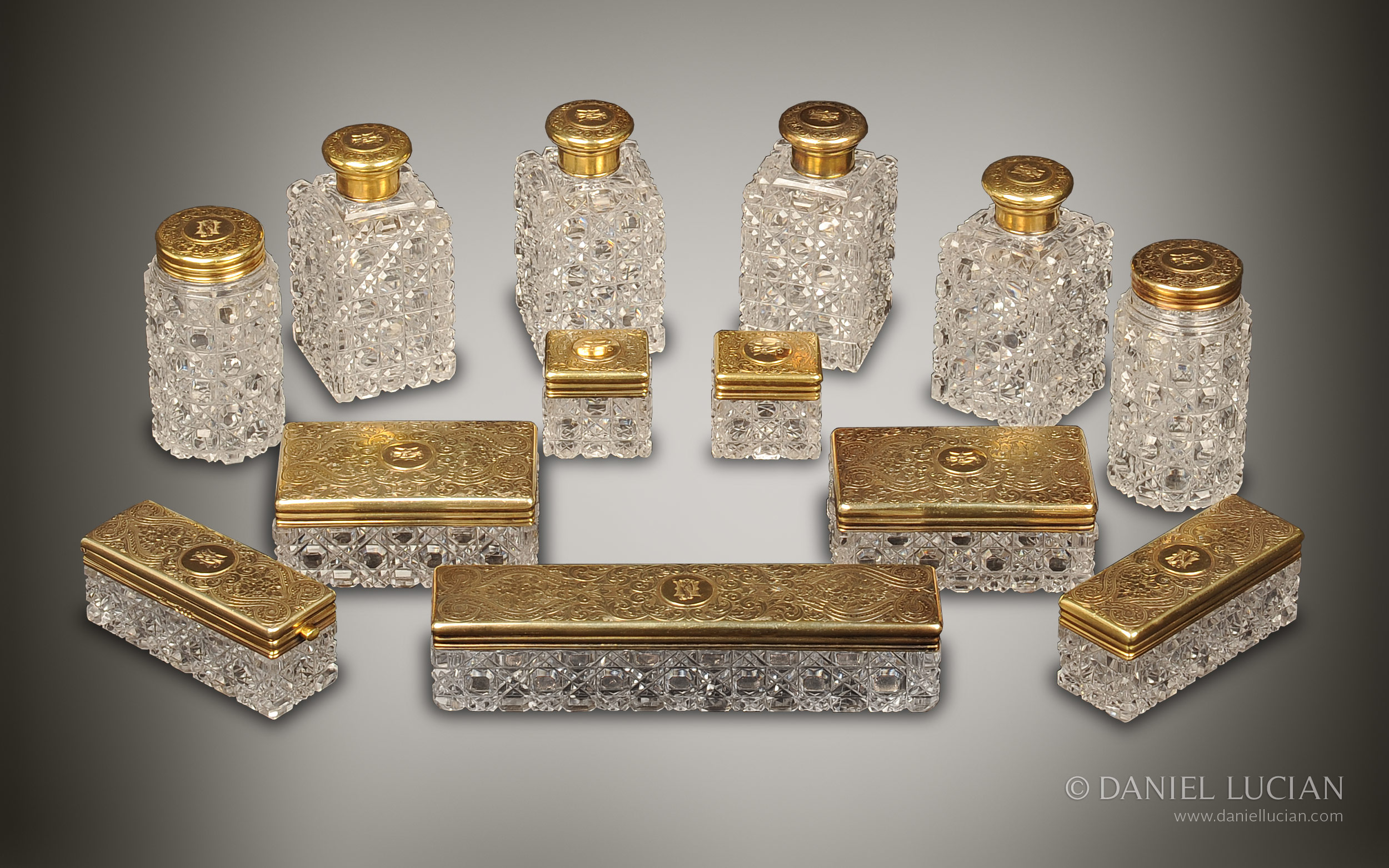
Gilding was frequently employed on the silver fittings of luxury dressing cases, including bottle and jar lids, cups, vanity tools and other accessories. The resulting gold-coated silver is commonly described as silver-gilt, or vermeil.
Brass mounts, mirror frames and other decorative metalwork could also be gilded, providing the appearance and colour of gold while retaining the strength and economy of the underlying metal.