Silver Plating (Nineteenth Century)
Silver plating is the application of a layer of silver to an object made from another metal. The practice predates the nineteenth century, but the development of electroplating during the 1840s transformed both the method and scale at which silver-plated objects could be produced.
Before electroplating, one of the most important methods was Sheffield Plate, developed by Thomas Boulsover in Sheffield around 1742. A thin sheet of silver was fused by heat to a thicker piece of copper and the two metals were then rolled together into sheet. The plated sheet was subsequently formed into the finished object. Sheffield Plate provided a less expensive alternative to solid silver and remained widely used until electroplating began to supersede it during the 1840s.
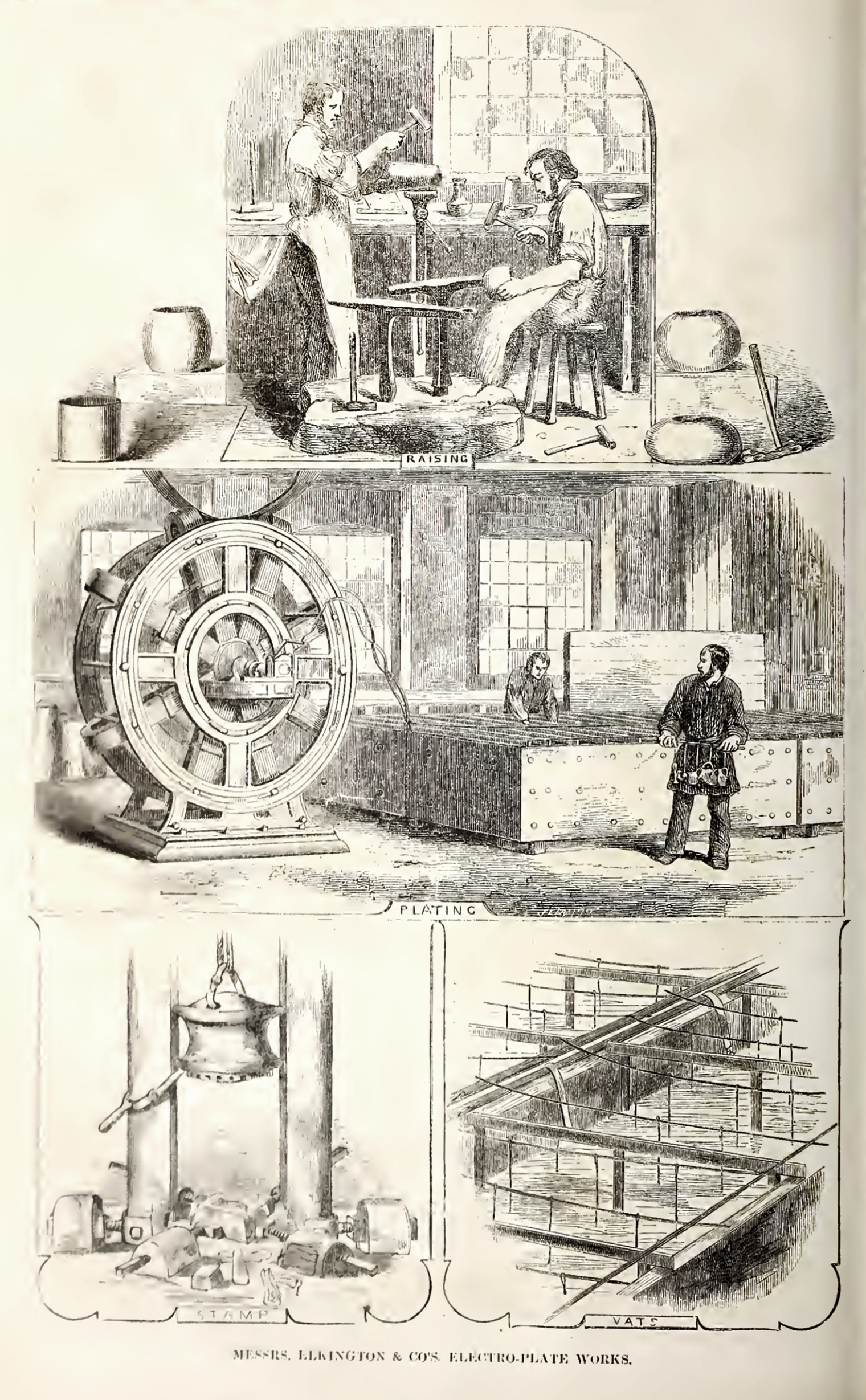
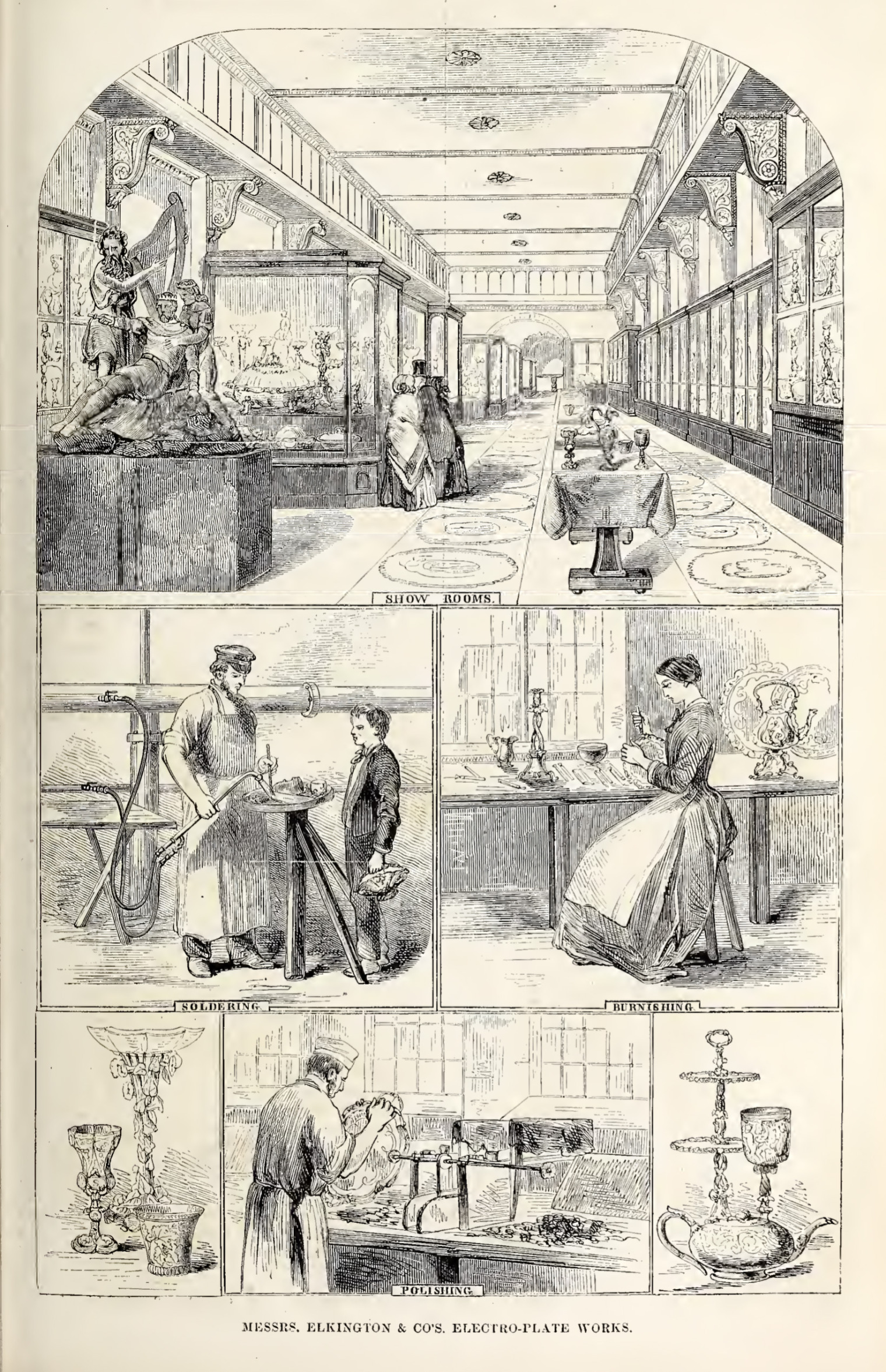
A major breakthrough came in Birmingham in 1840, when Dr John Wright discovered that potassium cyanide solutions could be used effectively in the electrodeposition of silver and gold. George Richards Elkington acquired the rights to Wright’s discovery and incorporated it into his patented electroplating process, helping to establish electroplating commercially during the early 1840s. Birmingham consequently became an important centre for the development of the new technology.
Unlike Sheffield Plate, the object to be electroplated was first made in its finished form from a base metal, commonly copper and later nickel silver. It was then immersed in an electrolyte containing silver ions and connected as the cathode to an electrical supply. A silver anode was immersed in the same solution. When an electrical current passed through the bath, silver from the solution was deposited as a thin metallic layer onto the surface of the object, while silver from the anode replenished the solution.
Electroplating offered important advantages over earlier methods. Complex finished objects could be evenly coated with silver without first having to manufacture them from pre-plated sheet, and the thickness of the deposited silver could be controlled during production. The process rapidly became commercially important and increasingly displaced older techniques such as Sheffield Plate and French plating, in which thin sheets of silver were heated and burnished directly onto a prepared base-metal surface.
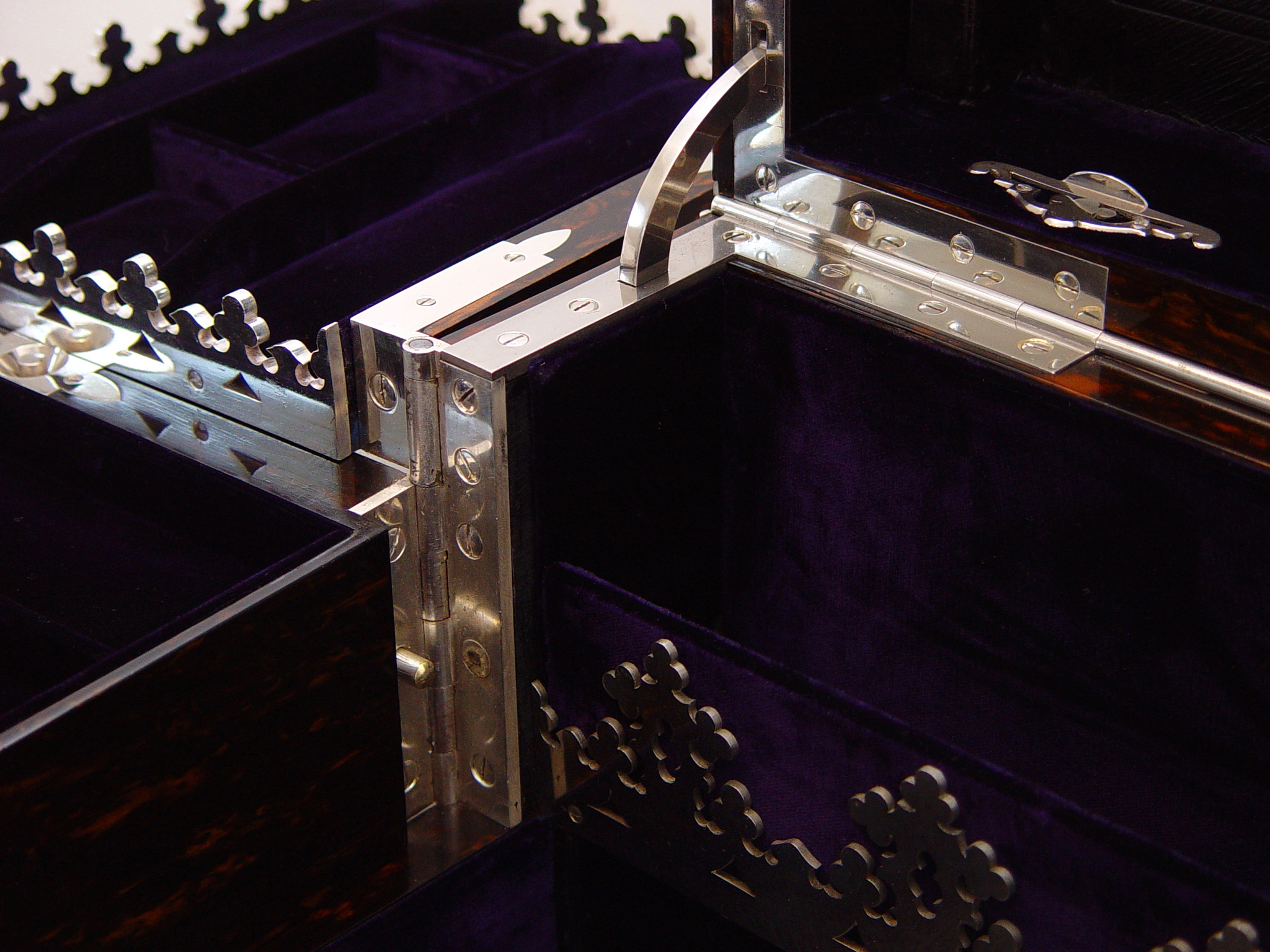
On nineteenth-century dressing cases, electroplating provided a practical alternative to solid silver for bottle and jar tops, tools, trays and other metal fittings. When carefully finished, these pieces could closely resemble solid silver while being considerably less costly to manufacture.