Engine Turning / Guilloché
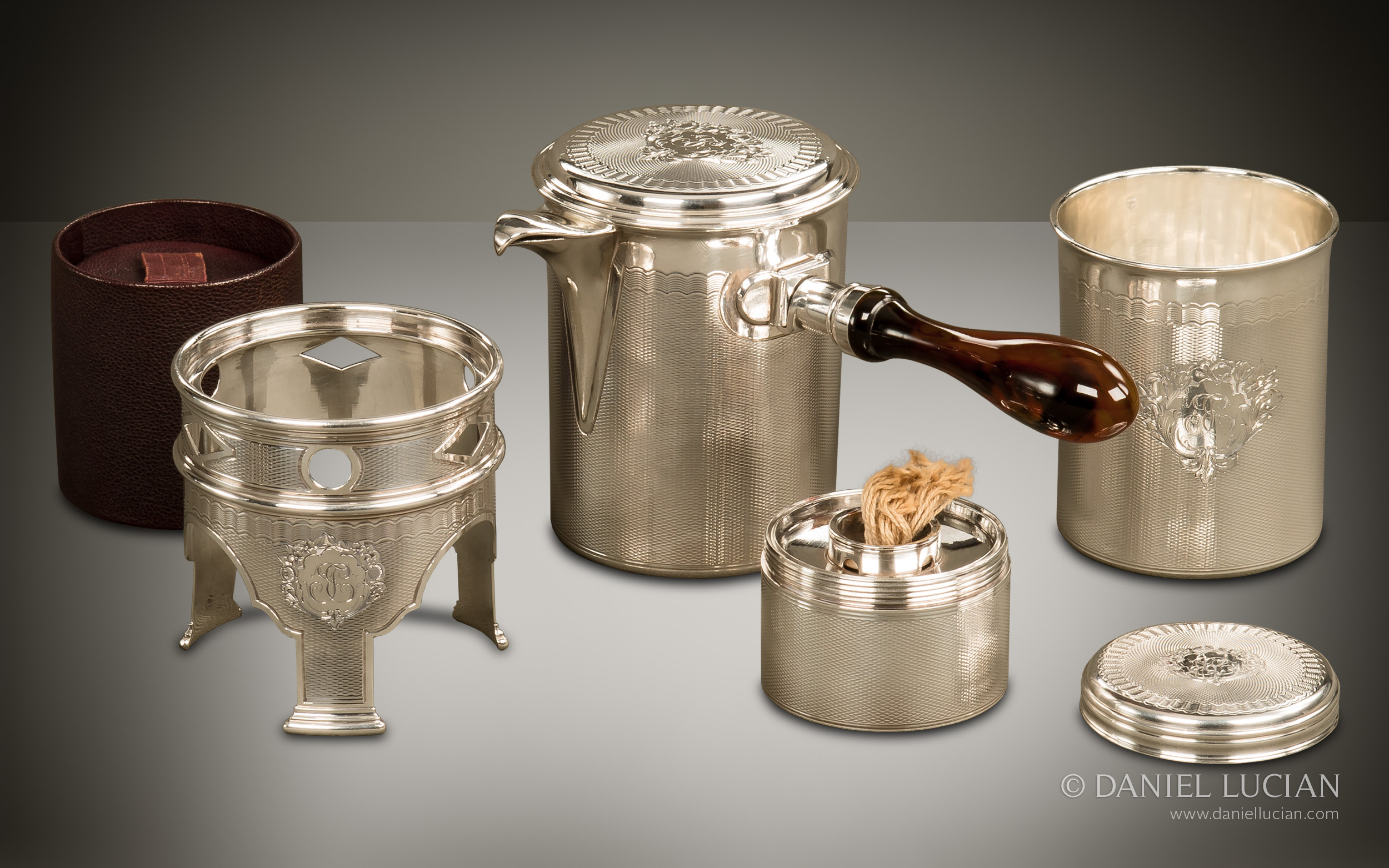
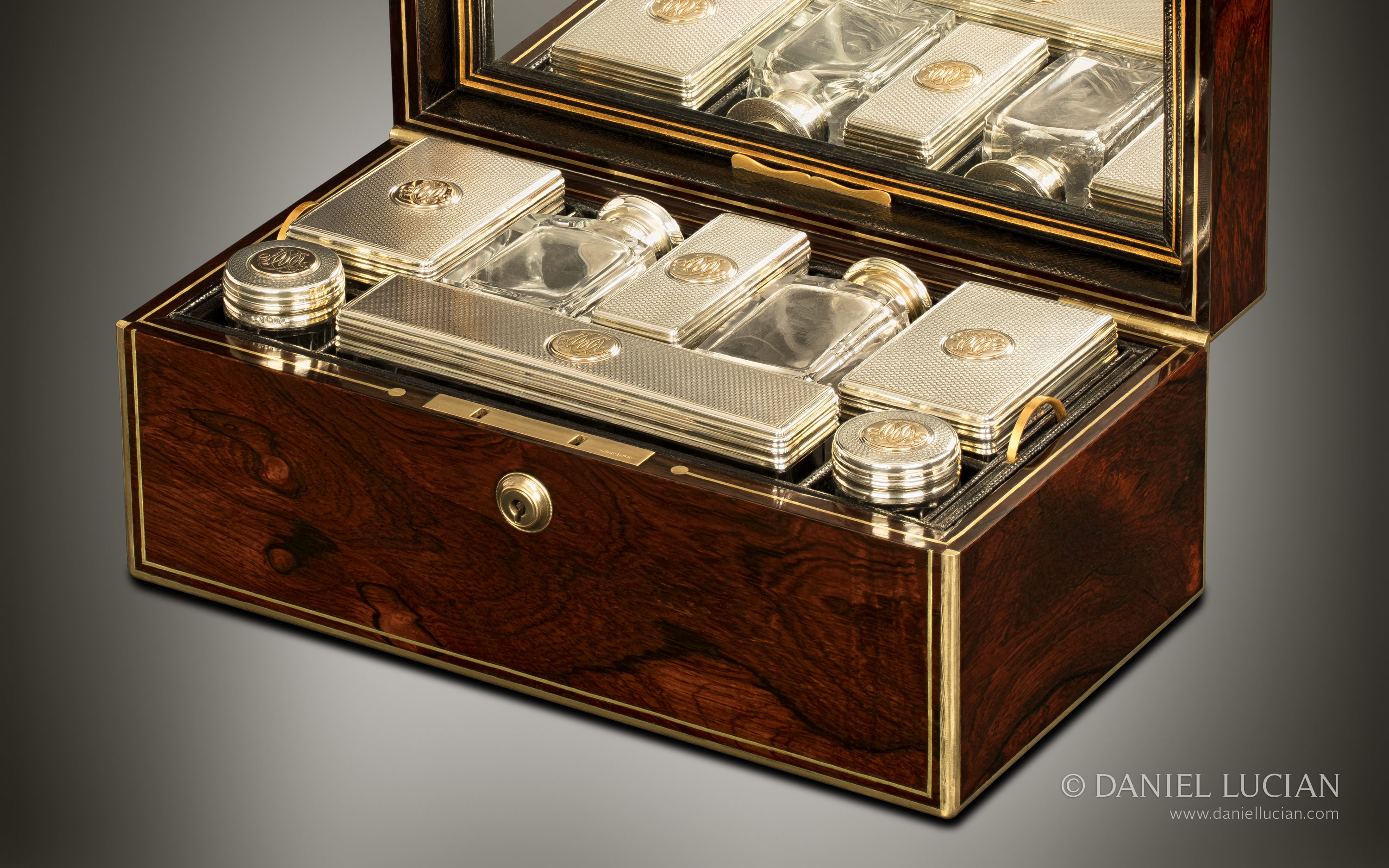
Engine turning, or guilloché, is a form of mechanical engraving used to create precise, repeating patterns on metal. The technique became particularly important in decorative metalwork during the eighteenth century and was widely used throughout the nineteenth century.
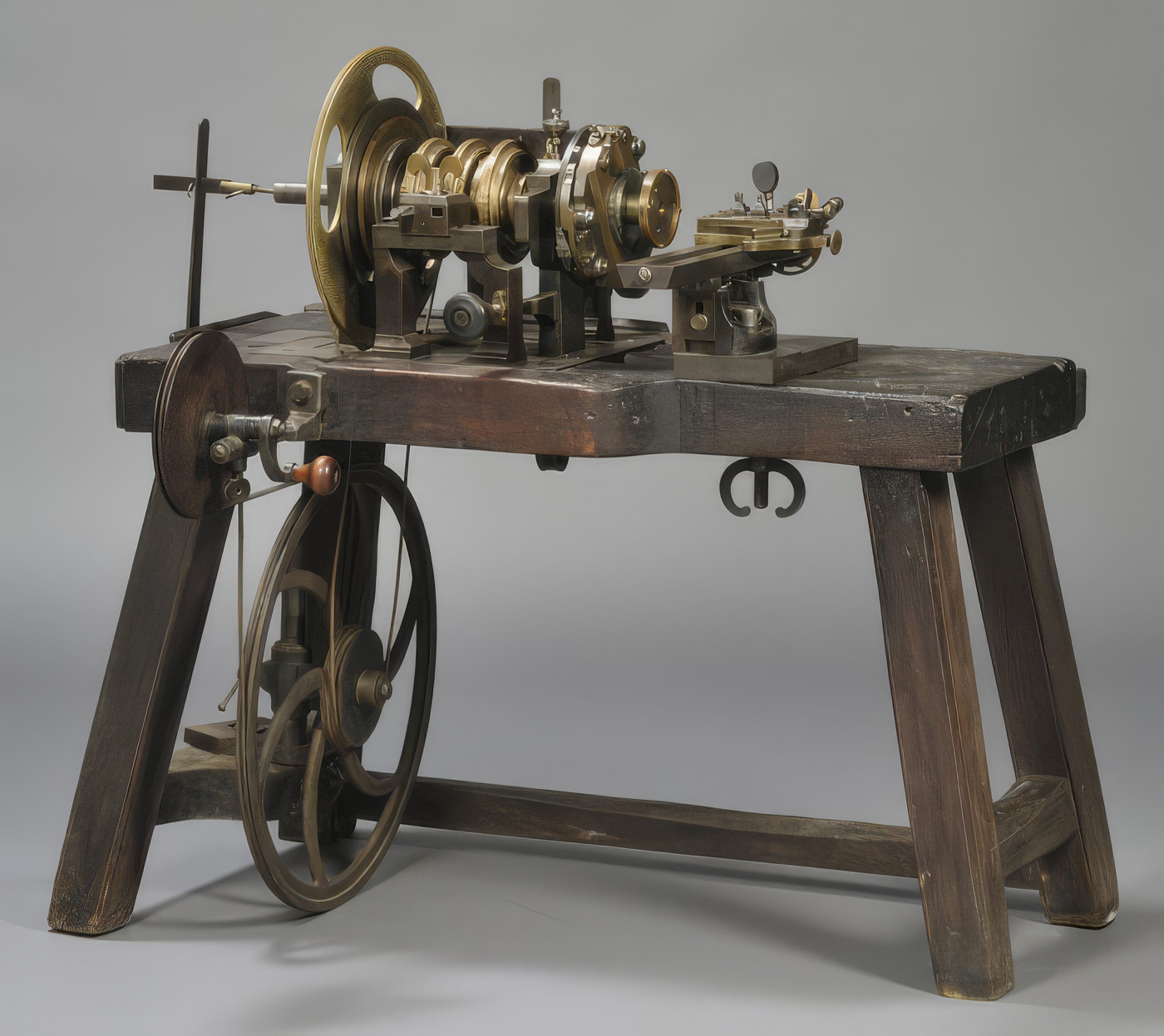
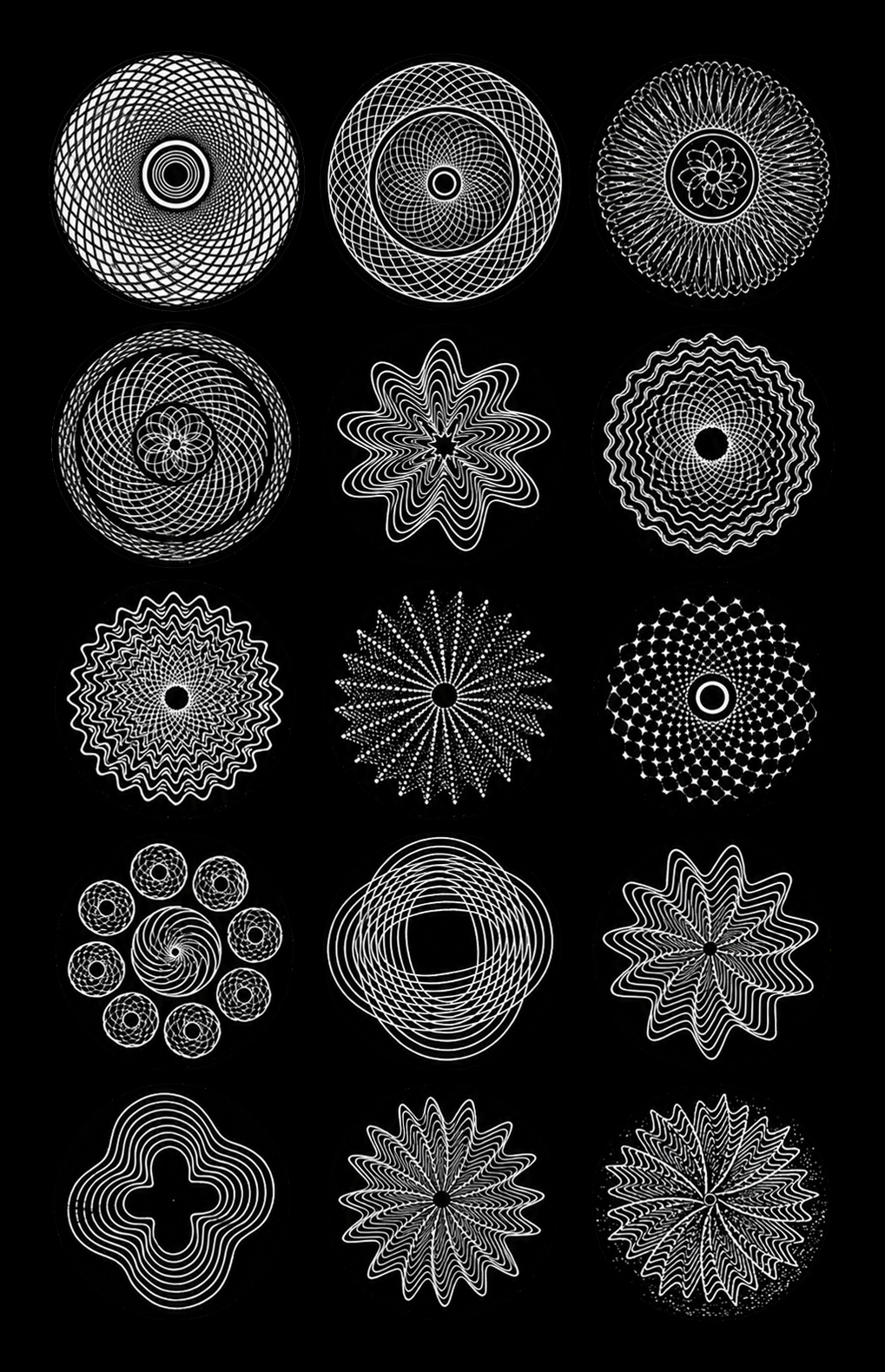
Specialised ornamental lathes controlled the movement of either the workpiece or the cutting tool, allowing complex patterns to be engraved with a degree of regularity that would have been extremely difficult to achieve by hand. Rose-engine lathes produced flowing, radiating and undulating designs, while other forms of engine-turning machinery could create straight-line, geometric and repeating patterns.
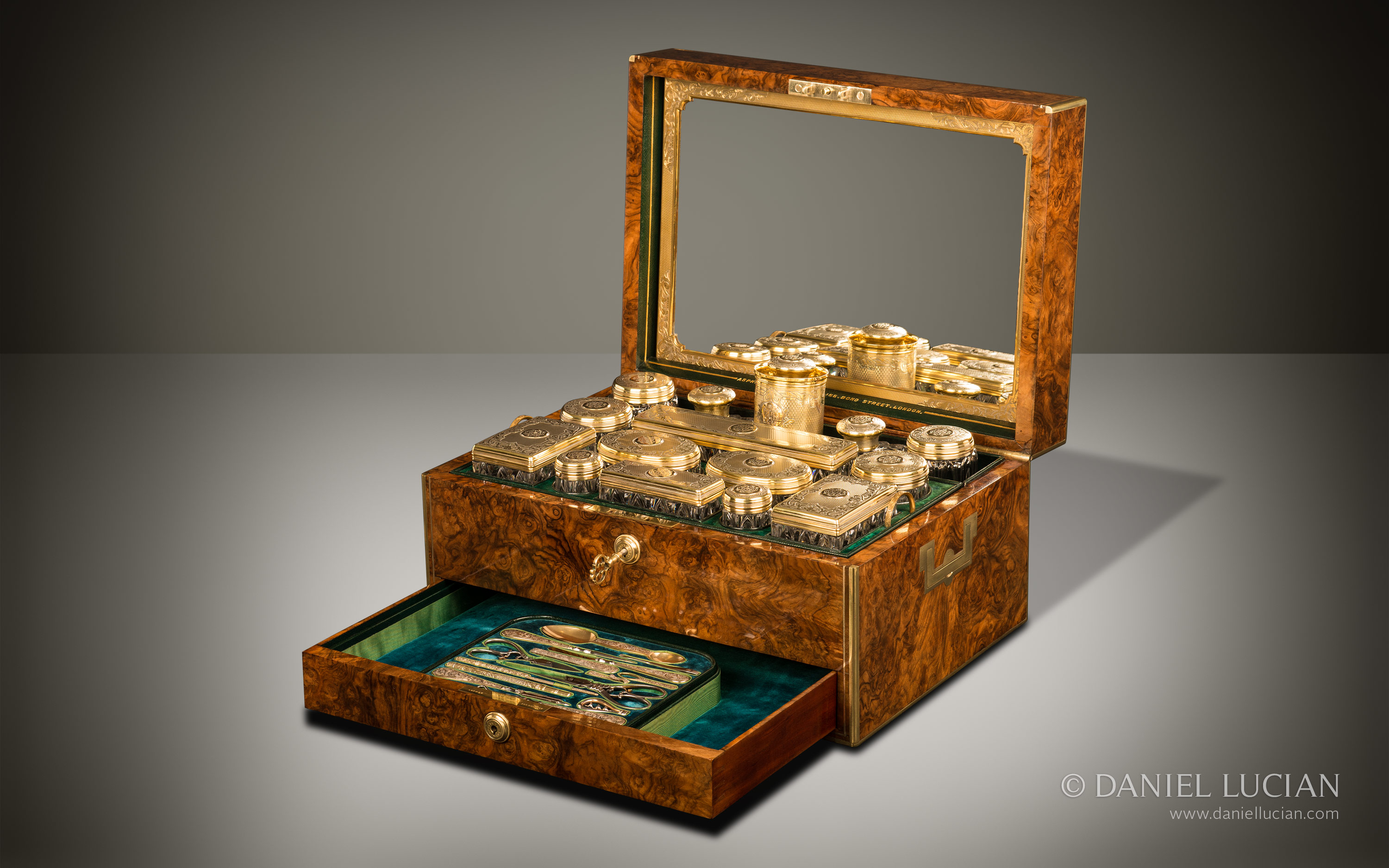
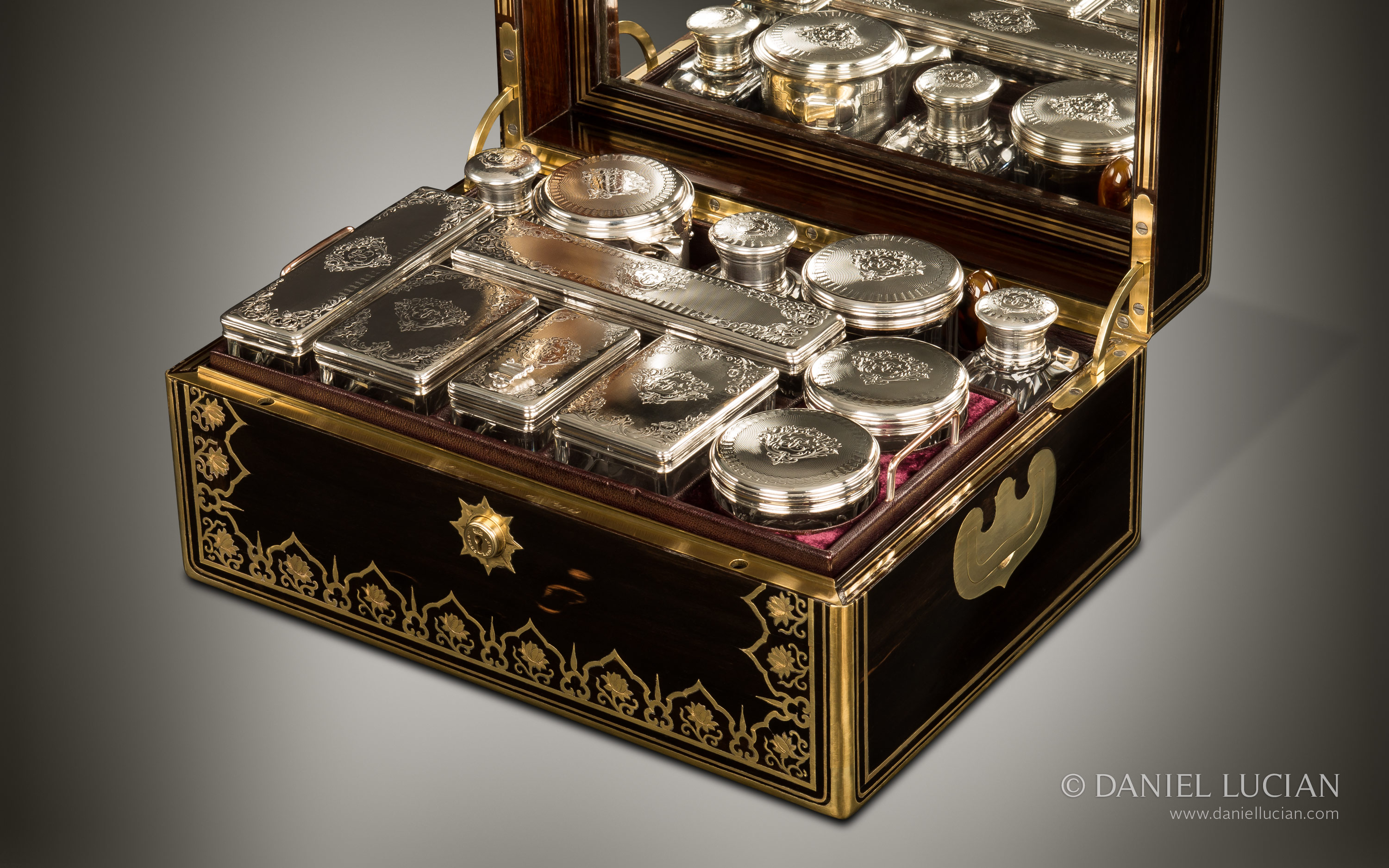
The resulting fine grooves create a subtly textured surface that changes in appearance as it catches the light. On dressing cases, engine turning was frequently used to decorate the silver or silver-gilt lids of bottles and jars, as well as cups, kettles and other fitted accessories. It was also sometimes applied to brass fittings such as hinges, lock plates and manufacturer’s plates.