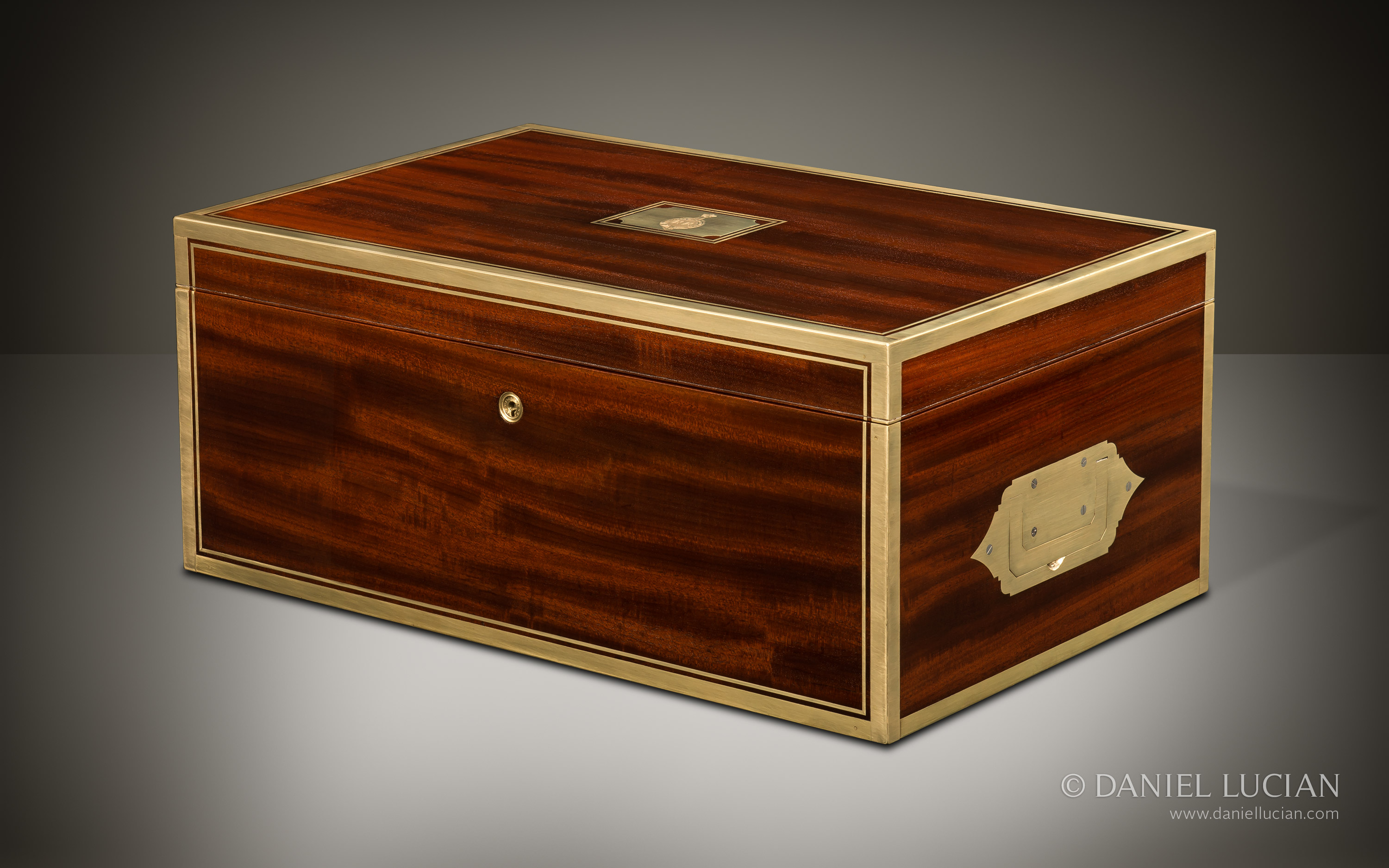
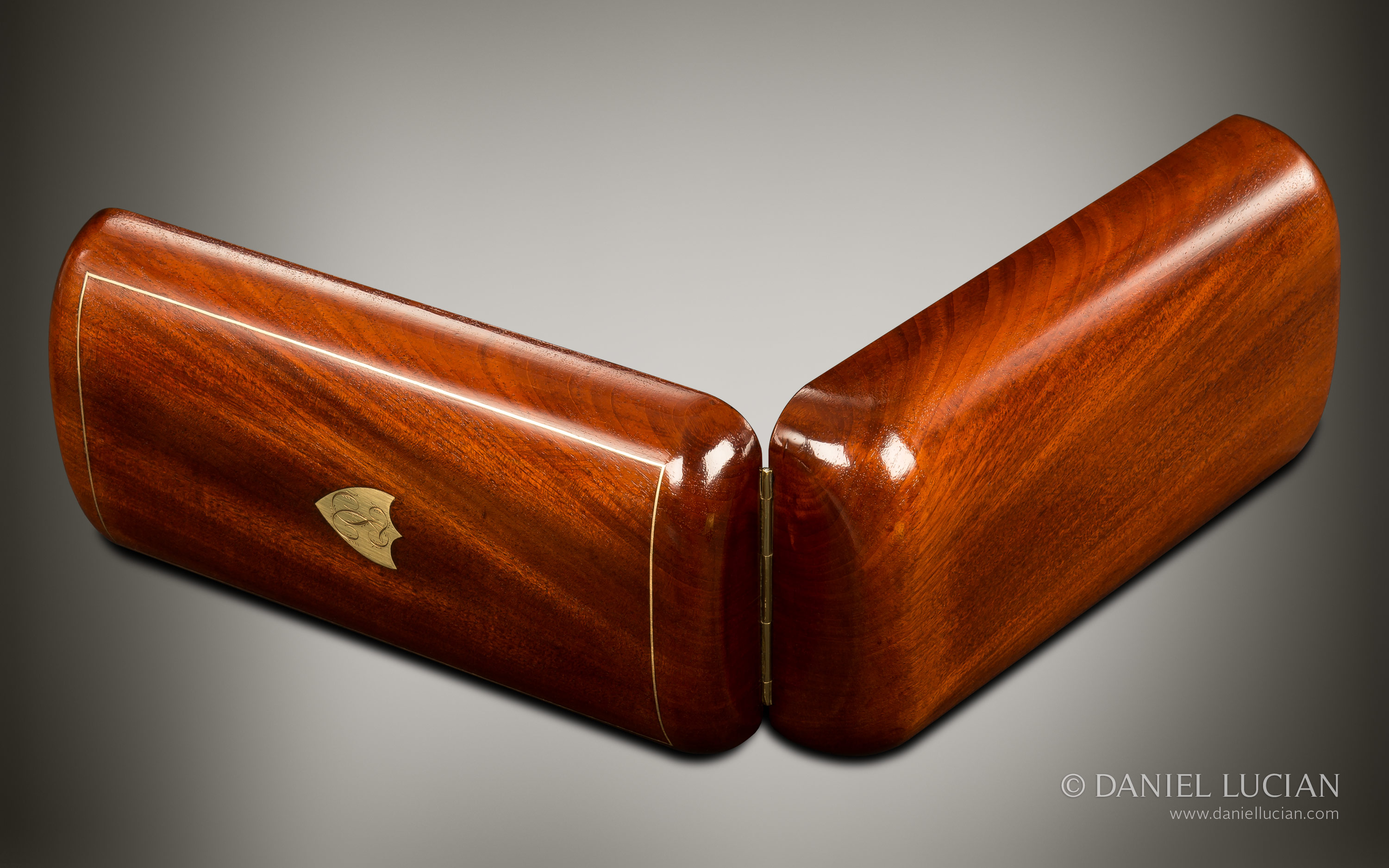
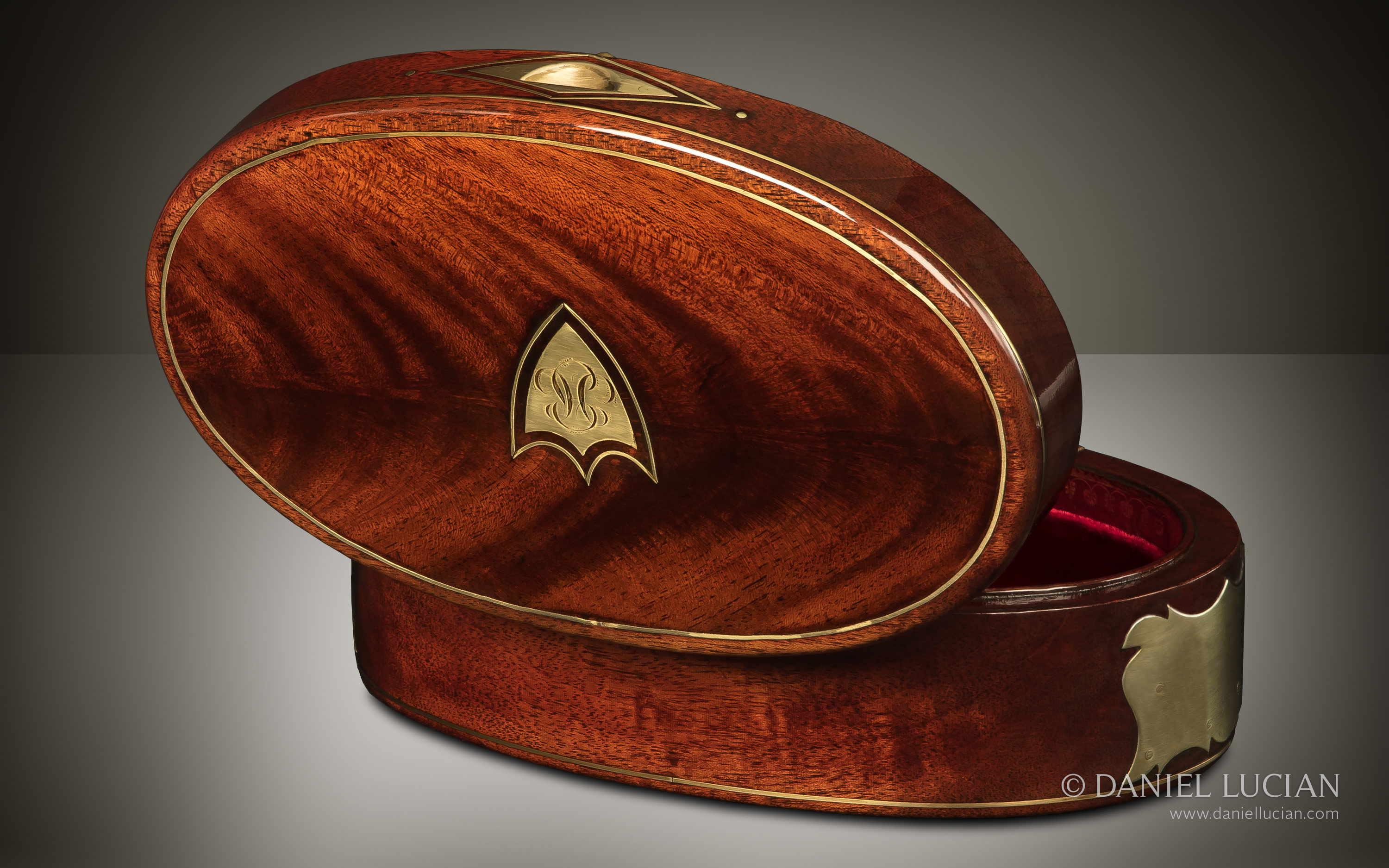
Mahogany
Mahogany is the name applied to several related hardwoods valued for their strength, stability and rich reddish-brown colour. True mahoganies belong to the genus Swietenia, native to the Americas, although related and similar-looking woods from other regions have also historically been sold under the name.
Throughout the eighteenth and nineteenth centuries, mahogany was one of the most important timbers used for furniture, cabinetmaking and box construction, most commonly in solid form. Its strength, stability and working qualities made it particularly well suited to the construction of boxes and cases. Highly figured varieties were also prized for decorative use, both in solid form and as veneers. Flame and fiddleback mahogany were especially effective as veneers, where cutting the wood into thin sheets allowed the figure to be displayed to full effect.
Cuban or West Indian mahogany, Swietenia mahagoni, was particularly valued for its density, rich colour and fine working qualities.
As tastes changed during the nineteenth century, mahogany was increasingly used as the strong, stable underlying structure of boxes externally veneered in more decorative woods such as rosewood, kingwood, burr walnut and coromandel.