
Velvet
Velvet has long been associated with wealth and refinement. Distinguished by its dense, closely cut pile, soft texture and rich appearance, it was particularly suited to luxury furnishings and decorative interiors. Silk velvet was especially prized for its lustre and ability to display deep, saturated colours.
The Manufacture of Velvet
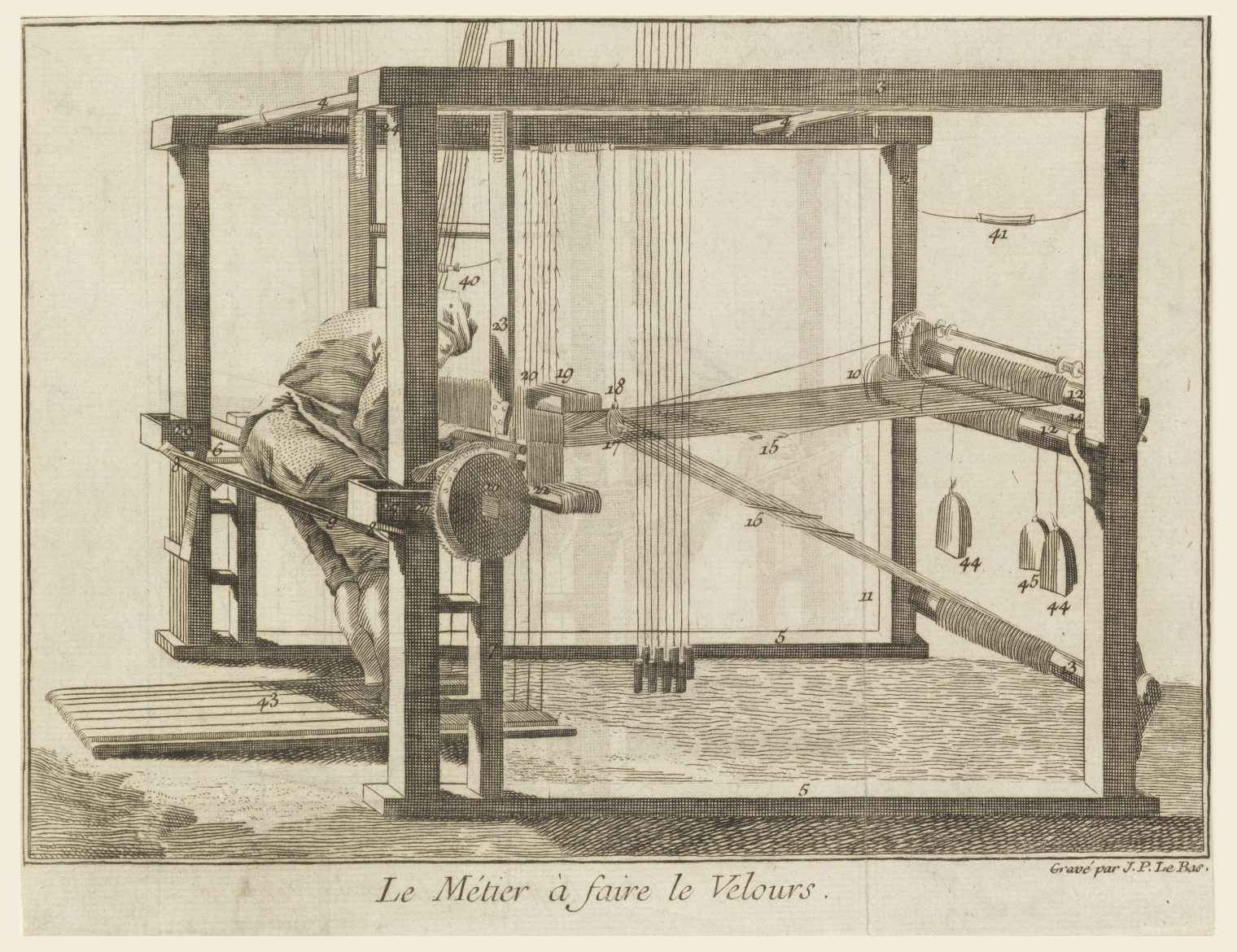
Unlike ordinary woven fabrics, velvet incorporates an additional set of threads that form its raised surface, known as the pile.
Traditionally, velvet was woven by passing these additional warp threads over fine metal wires inserted across the fabric during weaving. The resulting loops were then cut, allowing the wires to be withdrawn and leaving the short, upright threads that give velvet its characteristic surface.
During the nineteenth century, another method involved weaving two layers of fabric simultaneously, connected by pile threads passing between them. Cutting these connecting threads separated the layers, producing two lengths of velvet.
The height, density and evenness of the pile were important factors in determining the finished fabric's quality and appearance.

Silk velvet was traditionally regarded as the finest variety and was particularly favoured for the interiors of high-quality dressing cases. Cotton velvet was also employed, especially in some earlier and more utilitarian examples, providing a less expensive alternative to silk.
One of velvet's most distinctive characteristics is the way its pile reflects light. Depending on the direction in which the fabric is viewed, the same surface can appear considerably lighter or darker. This effect is particularly pronounced in silk velvet, giving the material its characteristic depth and richness of colour.
Colour and Dyeing
Before the introduction of synthetic dyes in the mid-nineteenth century, silk velvet was coloured using dyes derived principally from plants and insects.
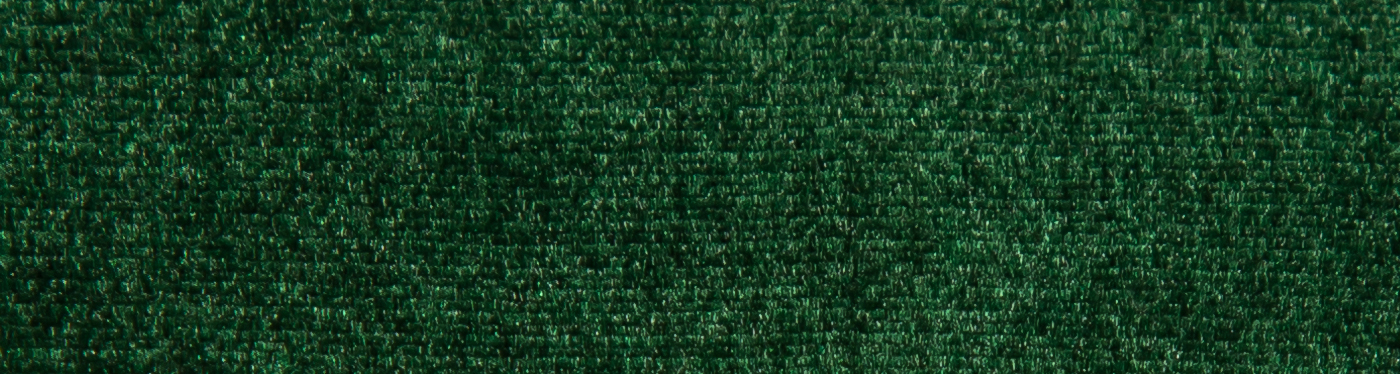
Rich reds and crimsons could be obtained from insect-derived dyes such as cochineal and lac, or from dye-producing woods such as brazilwood. Indigo, extracted from plants, provided shades of blue. Green was frequently produced by combining blue and yellow dyes, using materials such as weld, a flowering plant, and fustic, a dye-producing wood. Purples, violets and darker wine-coloured shades could be achieved through combinations of red and blue dyes, or with colouring materials such as logwood, a tropical hardwood.
The precise shade depended upon the dyestuffs employed, the preparation of the silk and the use of mordants such as alum, which helped certain dyes bind to the fibres and could influence the resulting colour.
The discovery of mauveine by William Henry Perkin in 1856 marked an important turning point in textile dyeing. Derived from coal-tar chemistry, this new synthetic purple dye was followed by an expanding range of artificial reds, blues, greens and violets.
During the second half of the nineteenth century, synthetic dyes became increasingly common, offering manufacturers a wider and often more economical range of colours. Traditional natural dyes nevertheless continued to be employed alongside them.
Velvet in Nineteenth-Century Dressing Cases
From the late eighteenth century and throughout the nineteenth, velvet was extensively used to line dressing cases, jewellery boxes and other luxury fitted interiors.
It was particularly suitable for covering trays, compartments, recessed fittings and padded lid panels, where its soft surface provided a protective resting place for delicate objects, while also lending itself to decorative arrangements of gathered or ruched fabric.
Popular colours included crimson, burgundy, purple, dark blue and green. These rich shades complemented the polished silver, silver-gilt, ivory, mother-of-pearl and cut-glass fittings commonly found in the finest dressing cases.