
Dovetail and Keyed Mitre Joints
Dovetail and mitred keyed joints are traditional woodworking techniques used in the construction of boxes, drawers and fitted interiors. Both provide strength and stability, although their methods of construction and appearance differ considerably.
Dovetail Joints
Dovetail joints have been used in woodworking since antiquity, with examples documented in ancient Egypt as early as the First Dynasty.
The joint consists of a series of projecting, wedge-shaped tails cut into the end of one piece of wood, which interlock with corresponding pins cut into another. Their angled shape creates a strong mechanical connection that resists the joint being pulled apart.
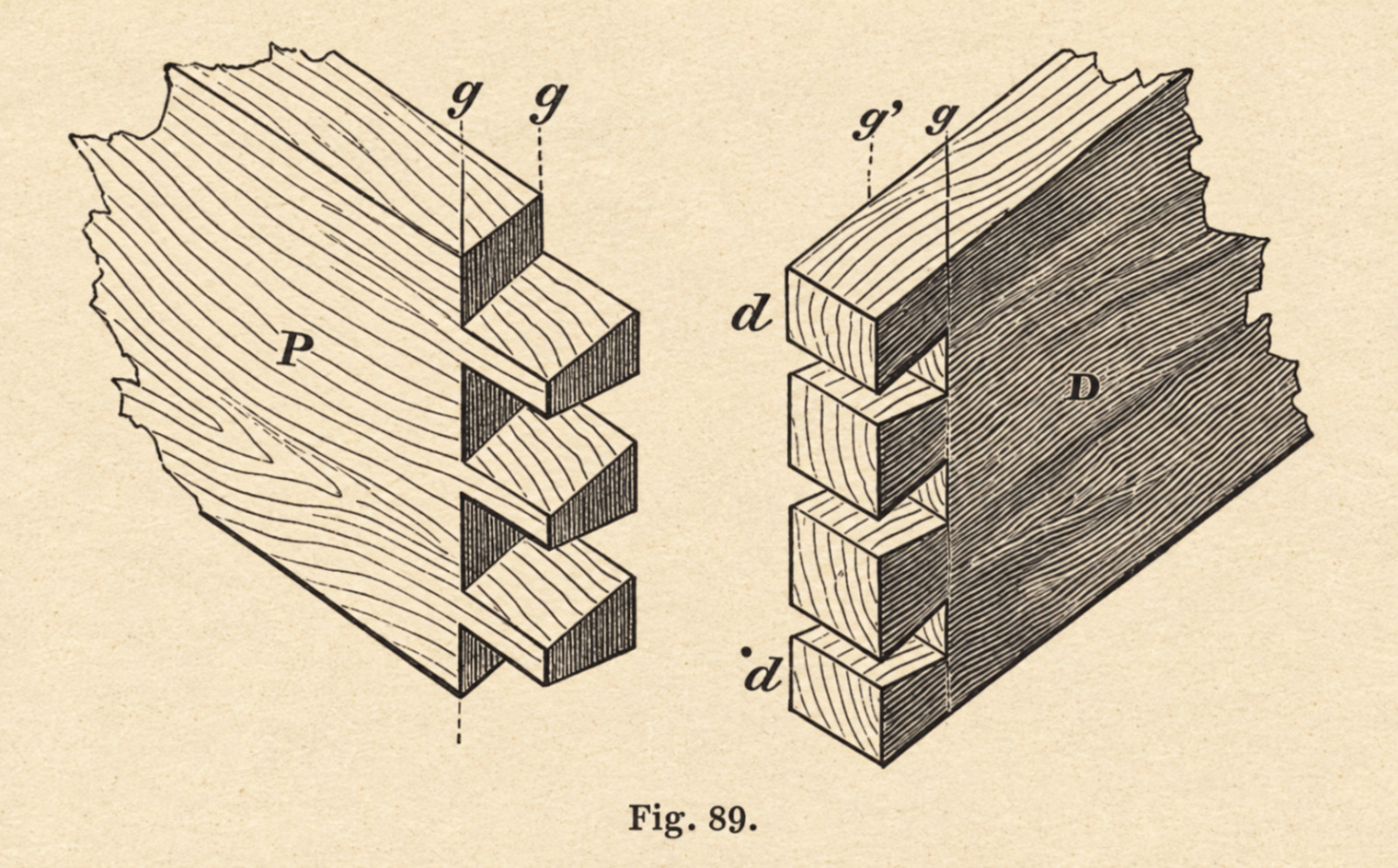
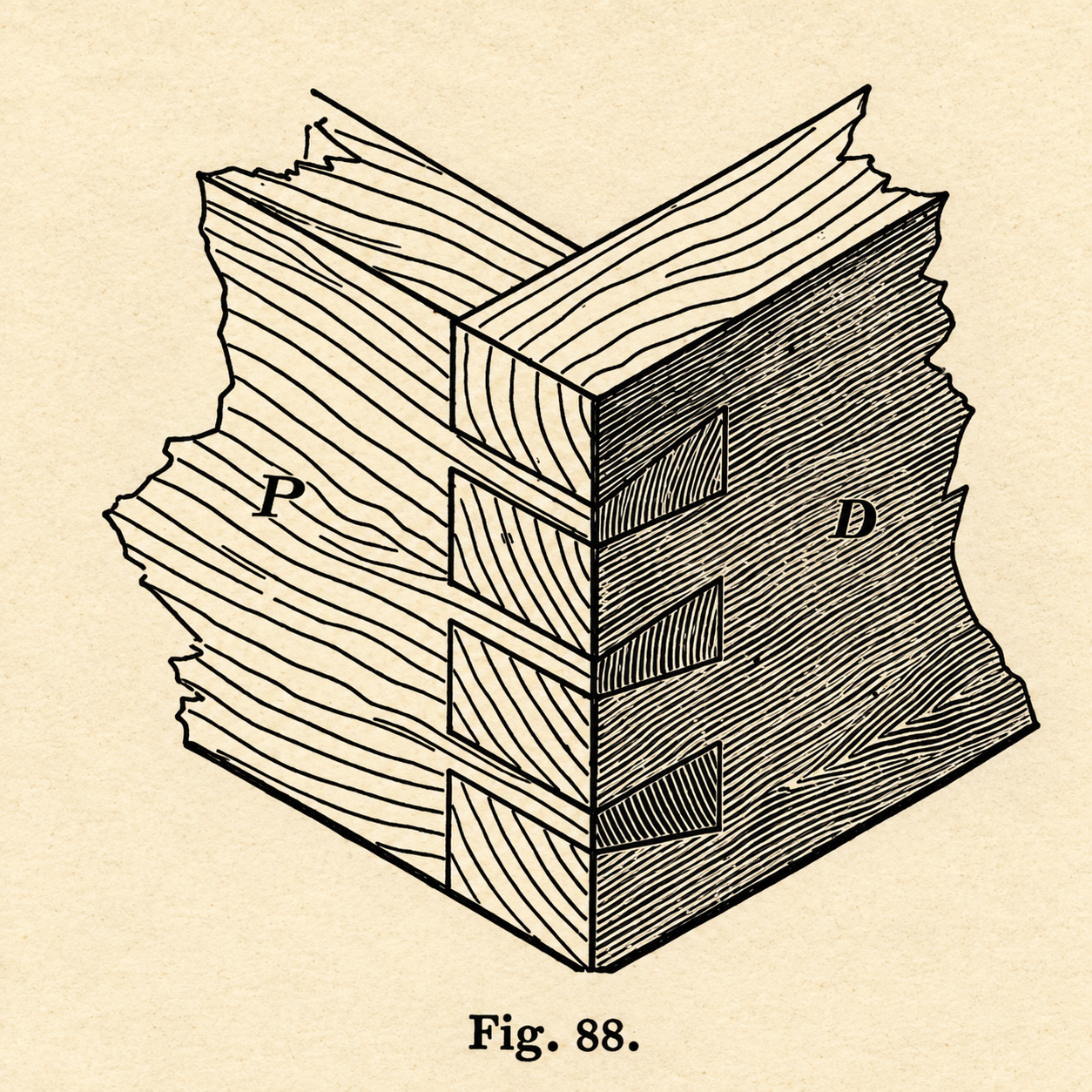
Dovetailing became an established feature of cabinetmaking and was particularly suited to the construction of cabinets, drawers, boxes, and other wooden components subjected to regular handling. The precision and regularity of hand-cut dovetails often reflected the skill and workmanship of the craftsman.
Several variations were employed, including through dovetails, also known as plain dovetails, where the interlocking timber is visible on both adjoining faces. These can appear quite different when viewed from either side, with the characteristic angled tails visible on one face and the comparatively straight-sided ends of the pins on the other.
Half-blind or lapped dovetails concealed the joint from one face, making them particularly suitable for drawer fronts where an uninterrupted exterior surface was desired. More elaborate forms, including secret mitred dovetails, allowed the joint to be concealed entirely beneath the appearance of a conventional mitred corner.
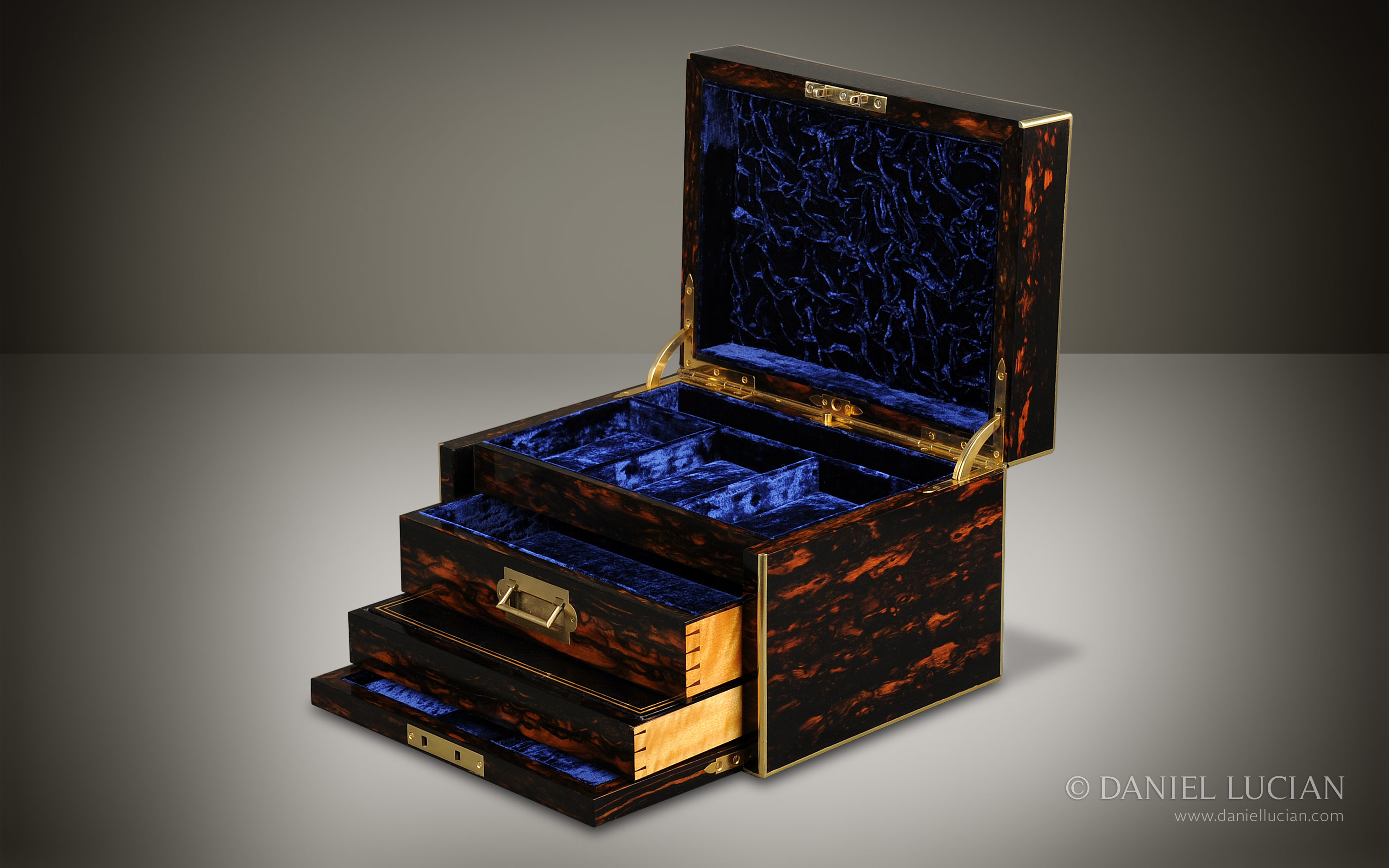
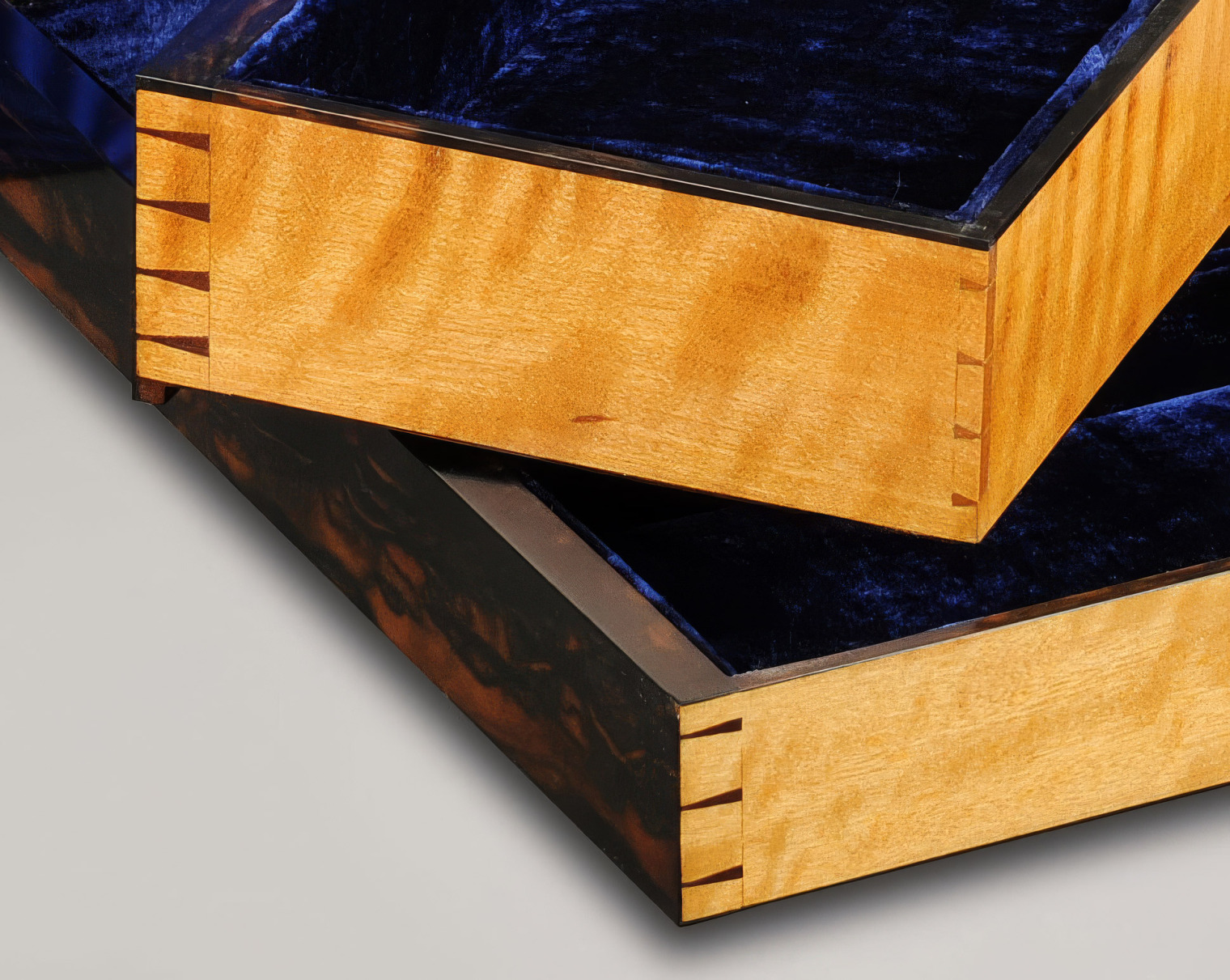
Through dovetail joints on the solid satinwood drawers of an antique coromandel jewellery box.
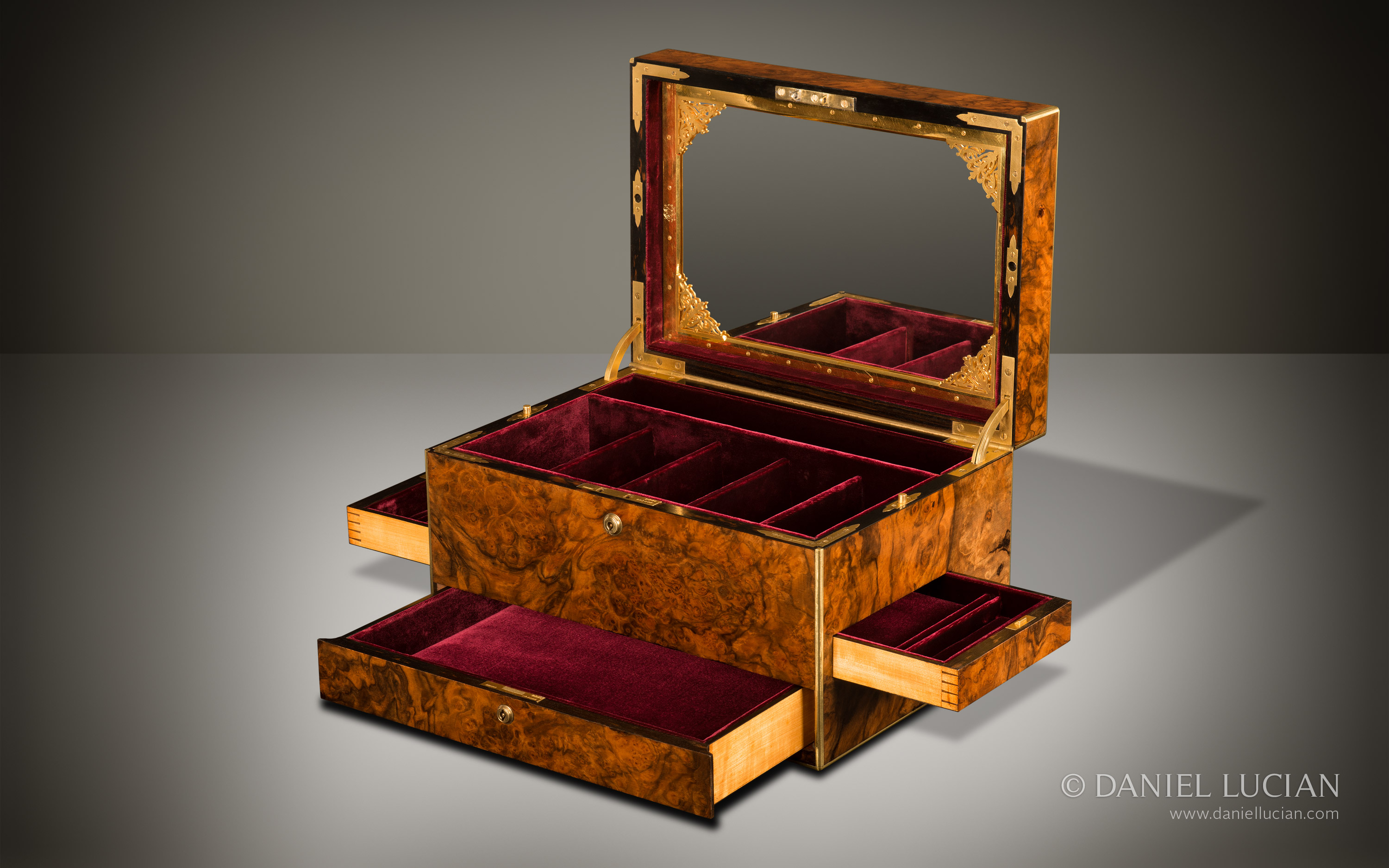
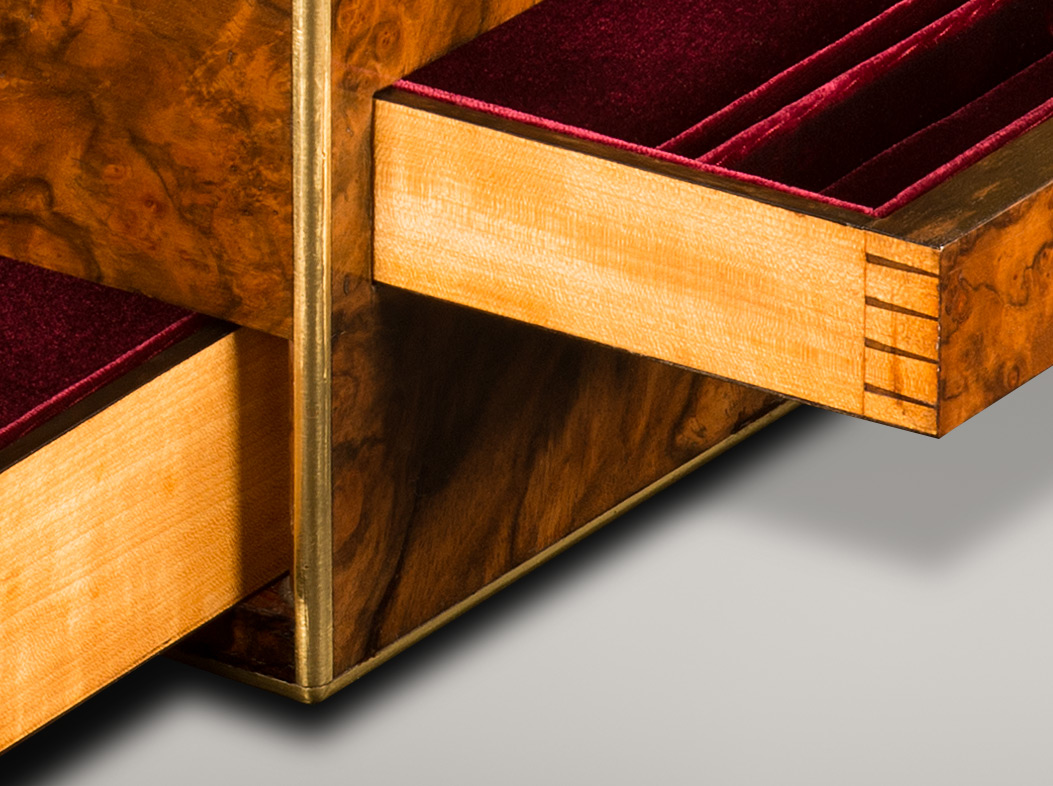
Dovetail construction on a solid satinwood drawer within an antique burr walnut jewellery box.

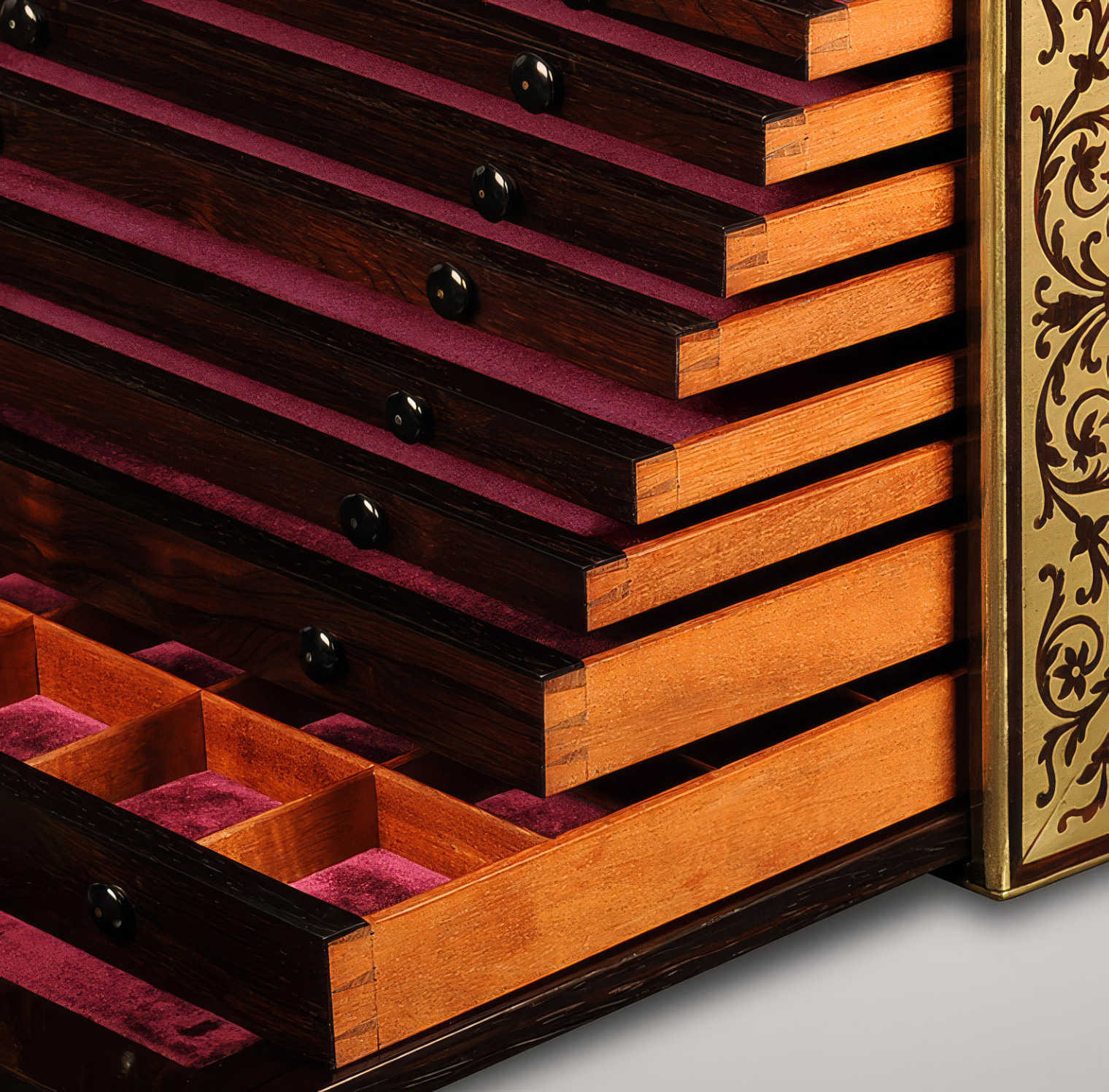
Dovetail-joined drawers within an antique rosewood jewellery cabinet with foliate brass inlay.
Keyed Mitre Joints
Mitred and keyed joints provided an alternative method of construction for smaller boxes and lightweight wooden components, including removable trays, internal drawers, mirror frames and elements of concealed compartments found within dressing cases and other boxes. These components could also be constructed using plain mitres or other forms of reinforcement.
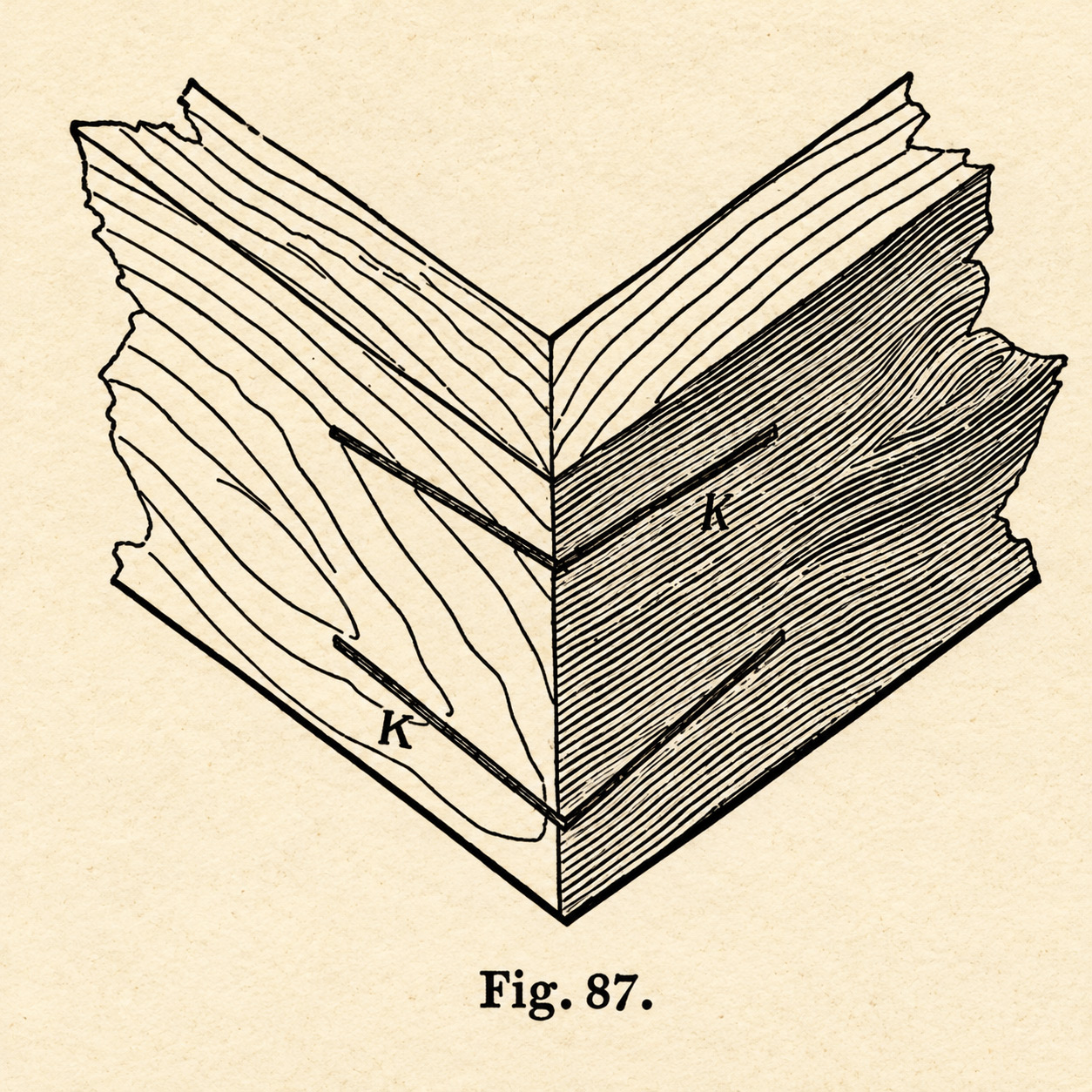
Where the completed component was covered with decorative veneer, the underlying construction could be concealed, leaving little visible indication of the methods used in its assembly.