Exterior and Interior Design
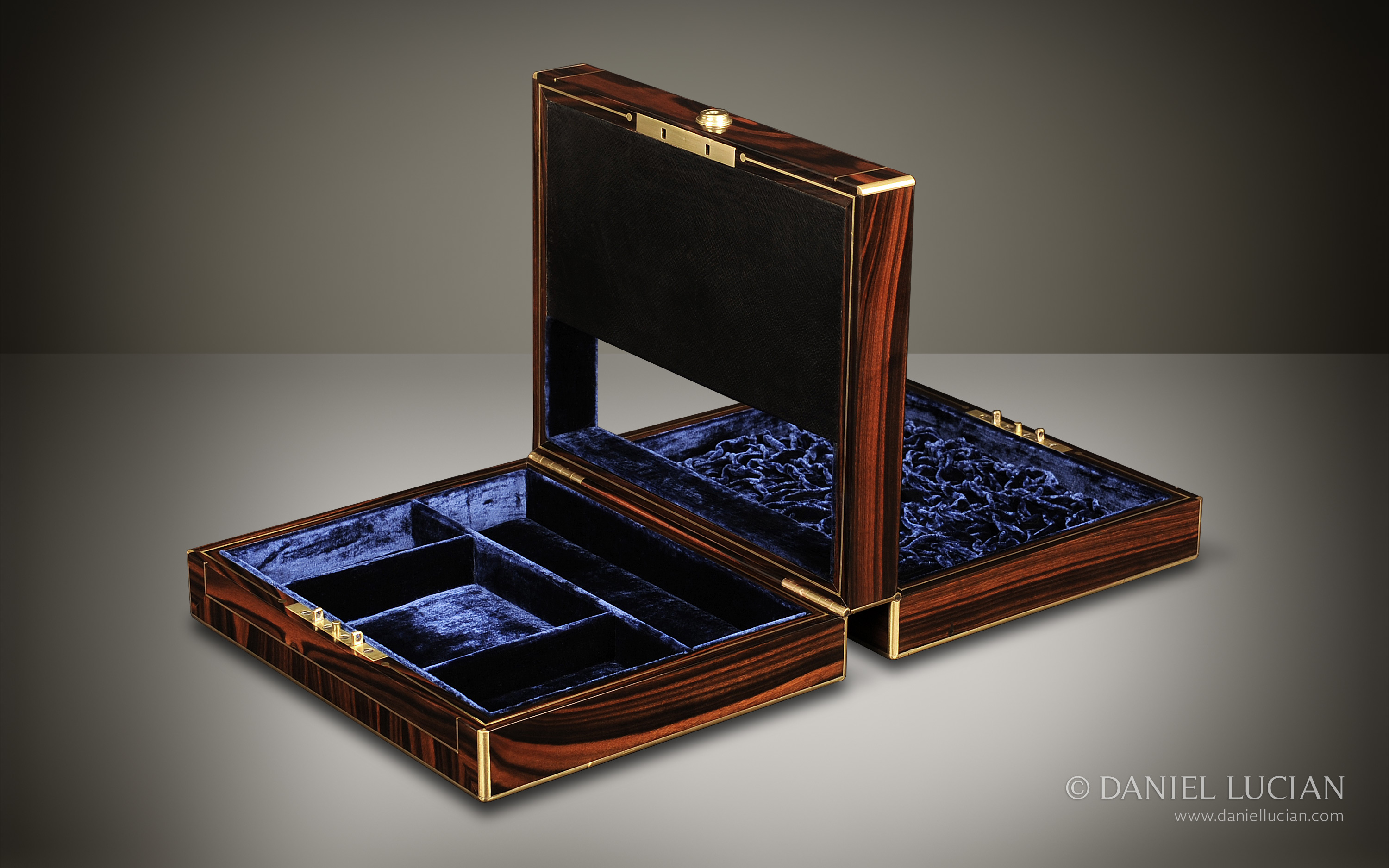
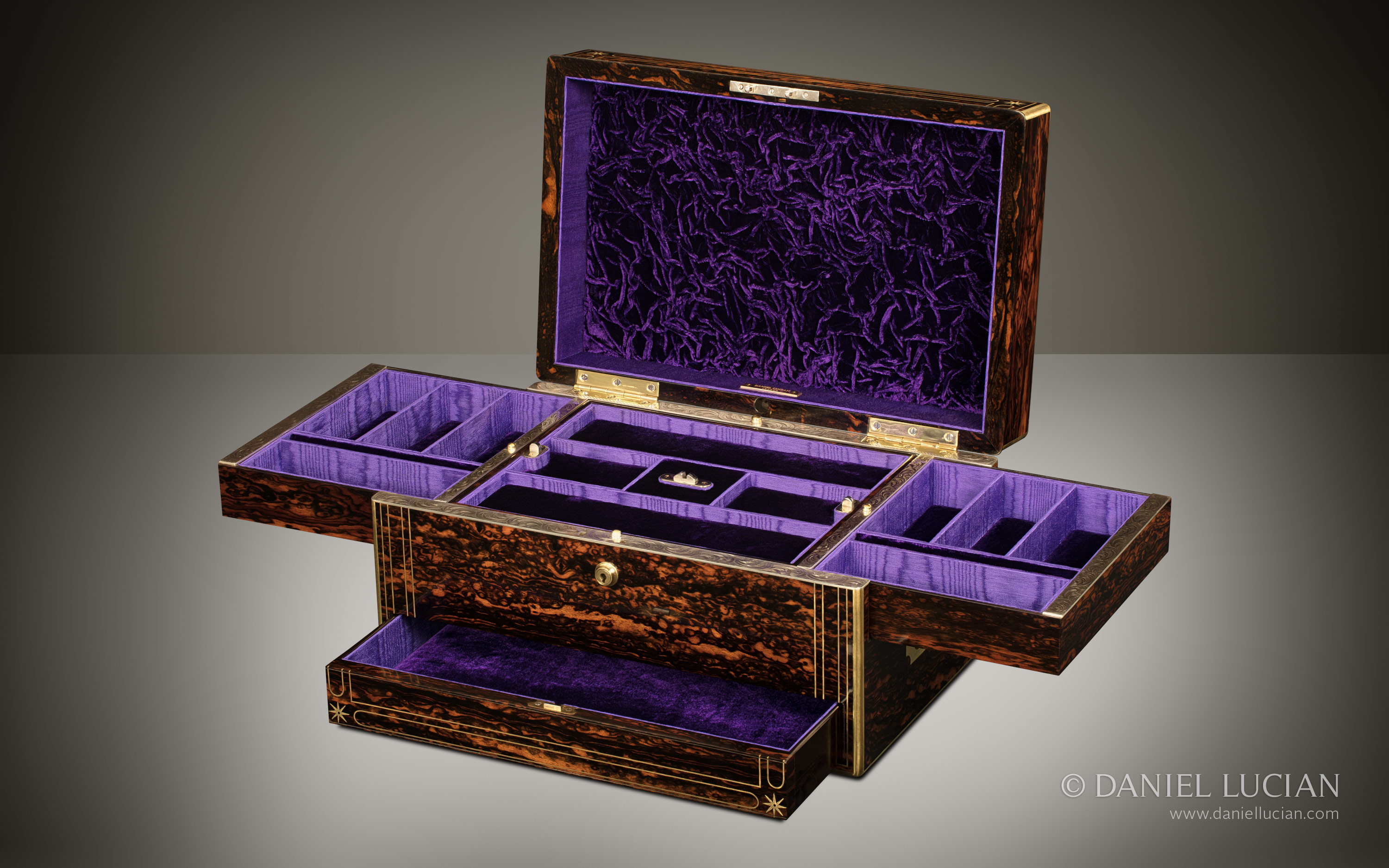
Earlier boxes generally followed relatively conventional forms, but during the nineteenth century makers increasingly explored more inventive ways of opening, expanding and arranging their interiors. Practicality, efficient use of space and visual effect all contributed to increasingly complex designs.
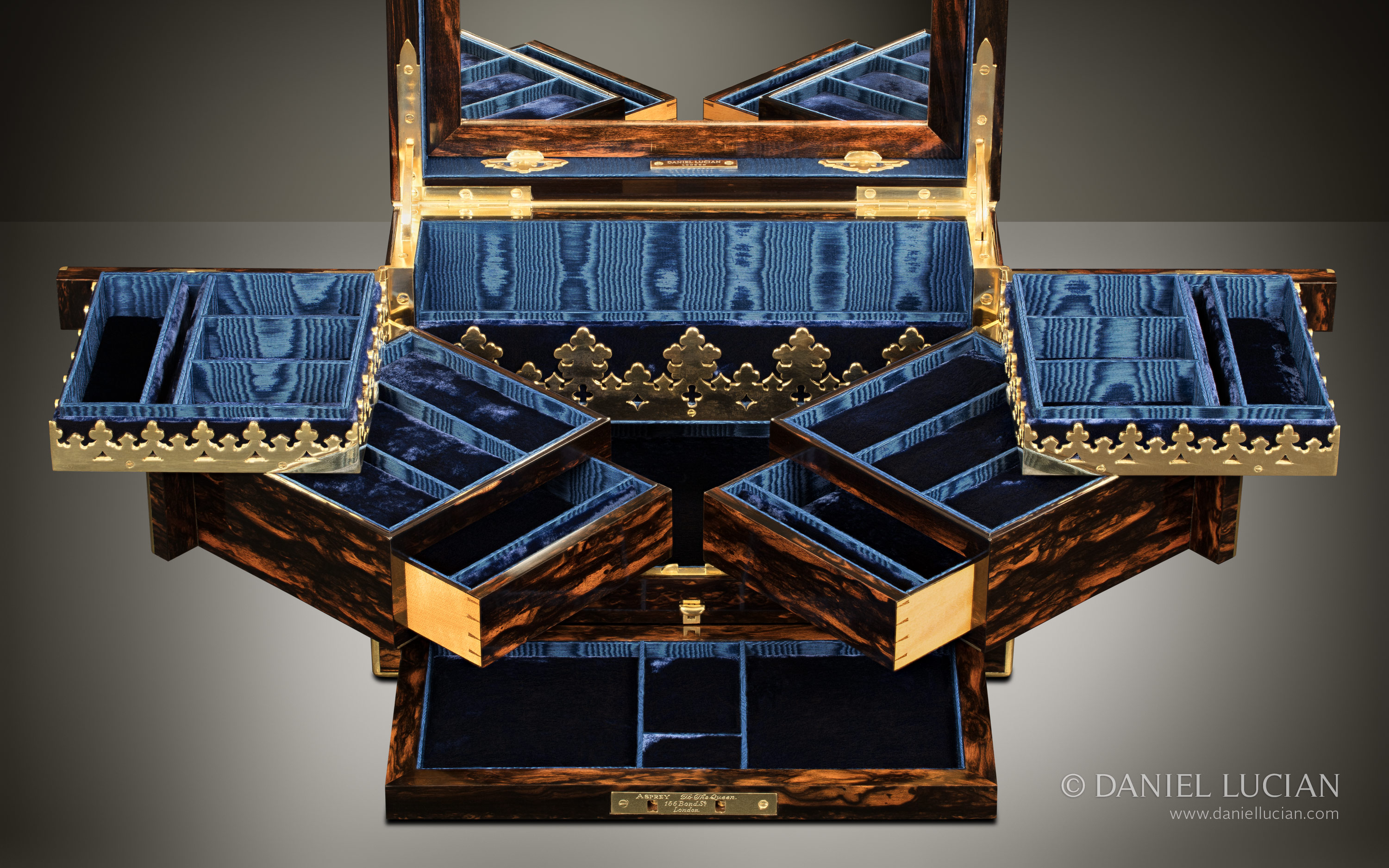
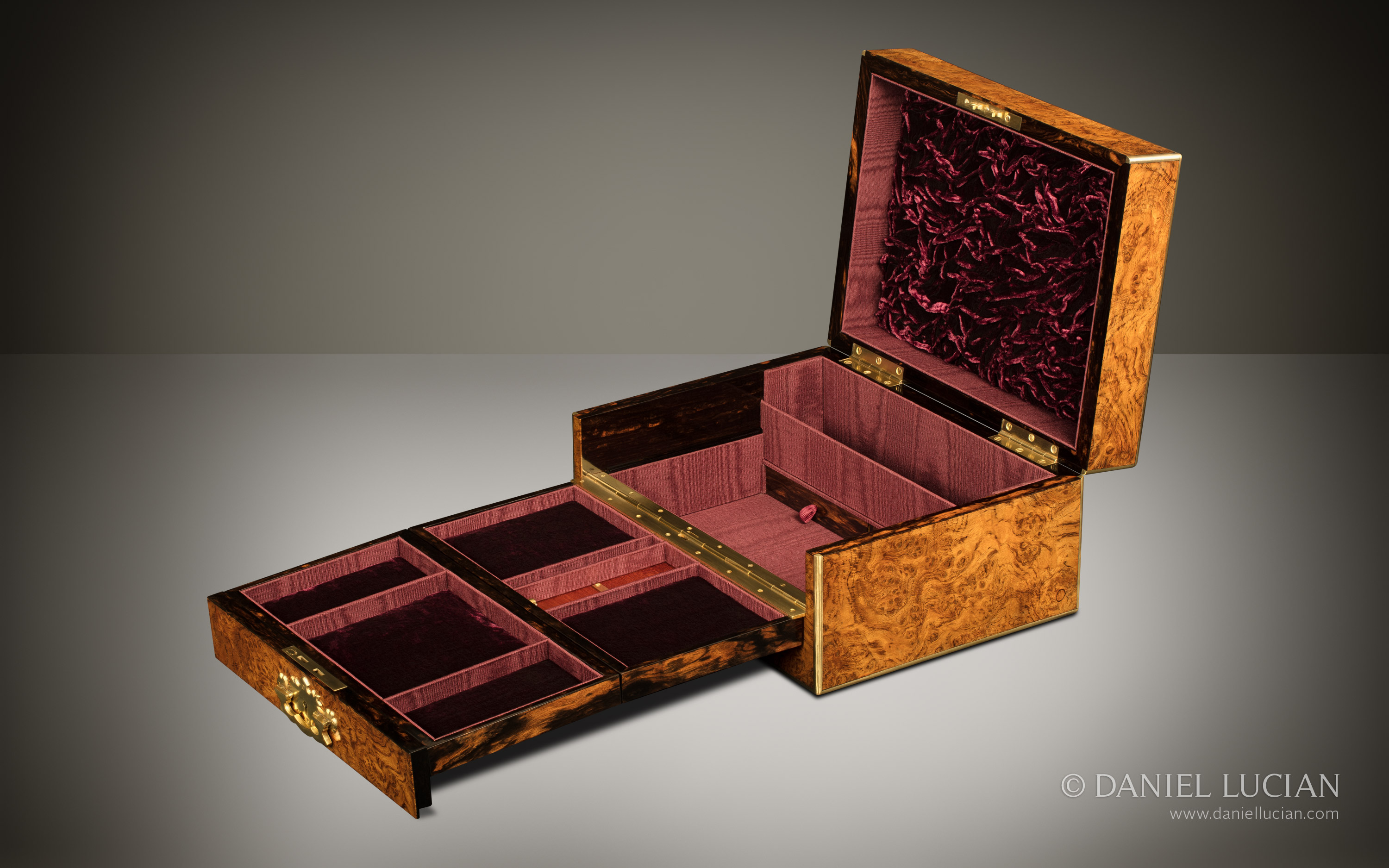
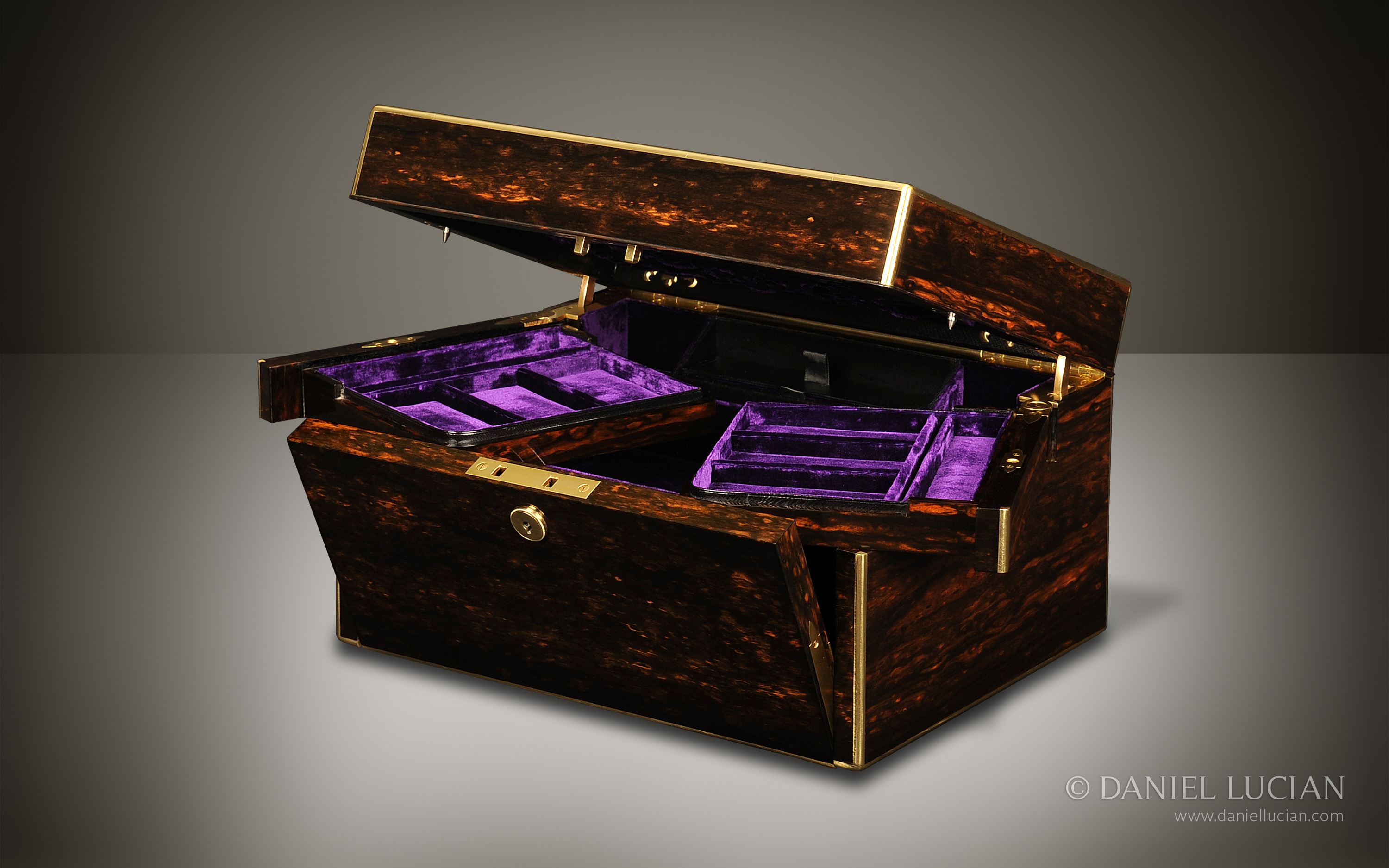
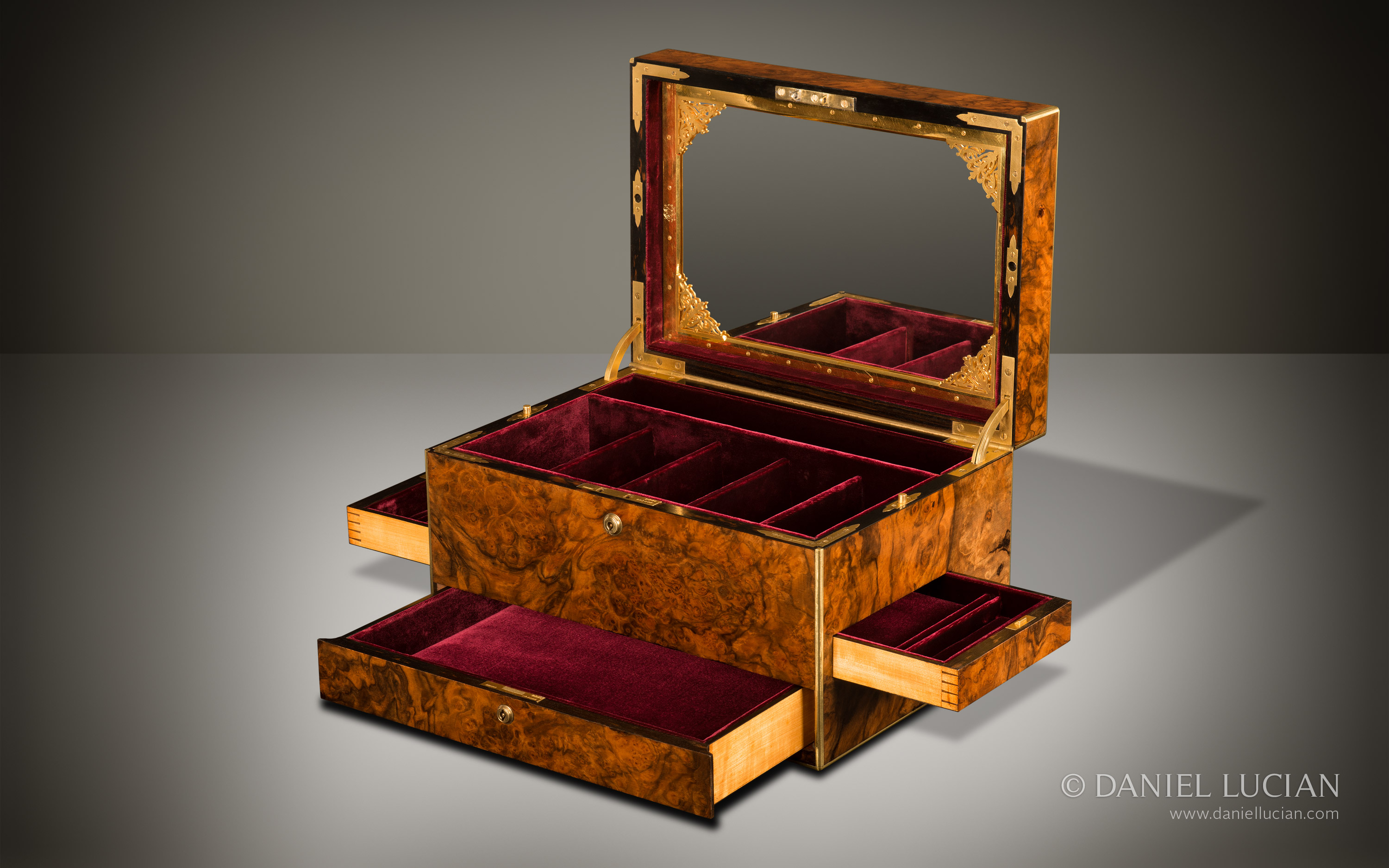
Boxes could incorporate lower or side drawers, drop-front panels revealing concealed compartments, cantilevered trays and numerous hinged or spring-loaded mechanisms. These designs allowed a relatively compact exterior to contain surprisingly elaborate and versatile interiors.
George Betjemann & Sons became particularly renowned for this type of mechanical box construction, patenting a number of ingenious systems in which trays, panels and compartments opened or extended automatically as the box was operated.