LOCKS & MECHANISMS

Spring-Loaded Mechanisms

A spring-loaded mechanism uses the stored tension of a compressed or flexed spring to move a component once a retaining catch is released. Until that point, the mechanism remains held securely in position.

In antique box making, spring-loaded mechanisms were commonly used to release drawers and secret compartments, open or disengage mirror panels, operate hinged mechanisms such as Betjemann’s patented systems, and activate certain locking or concealed opening devices.

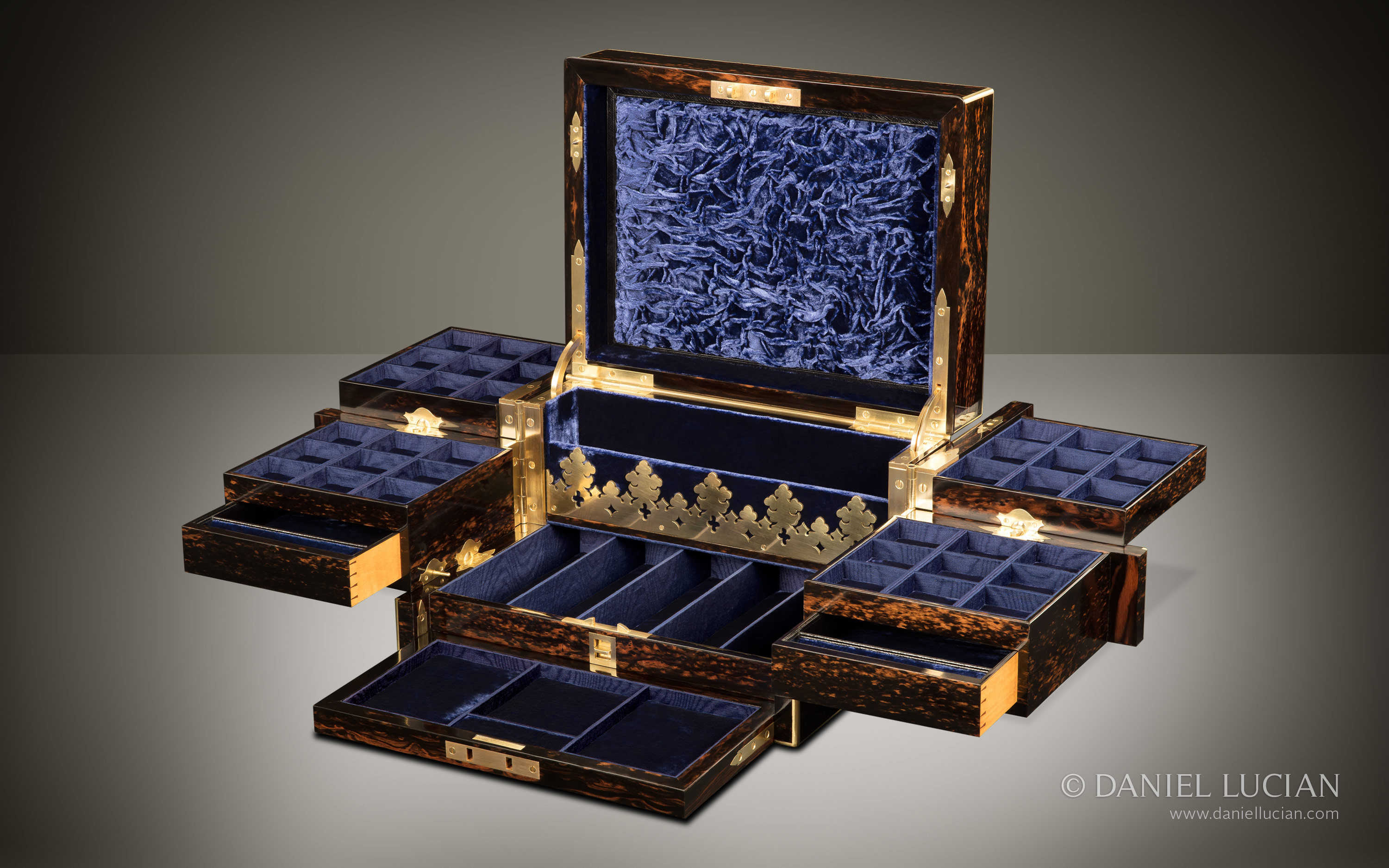
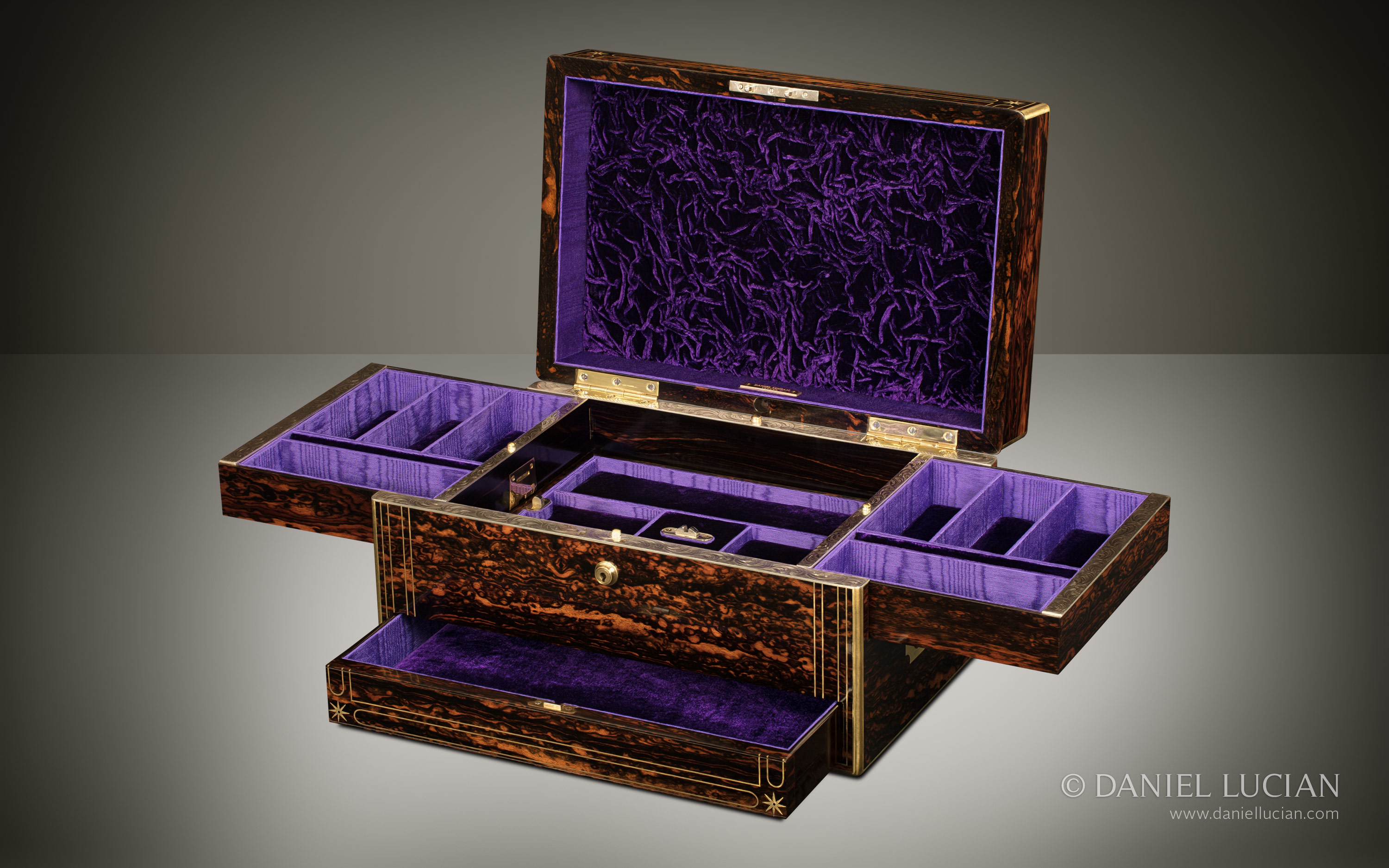
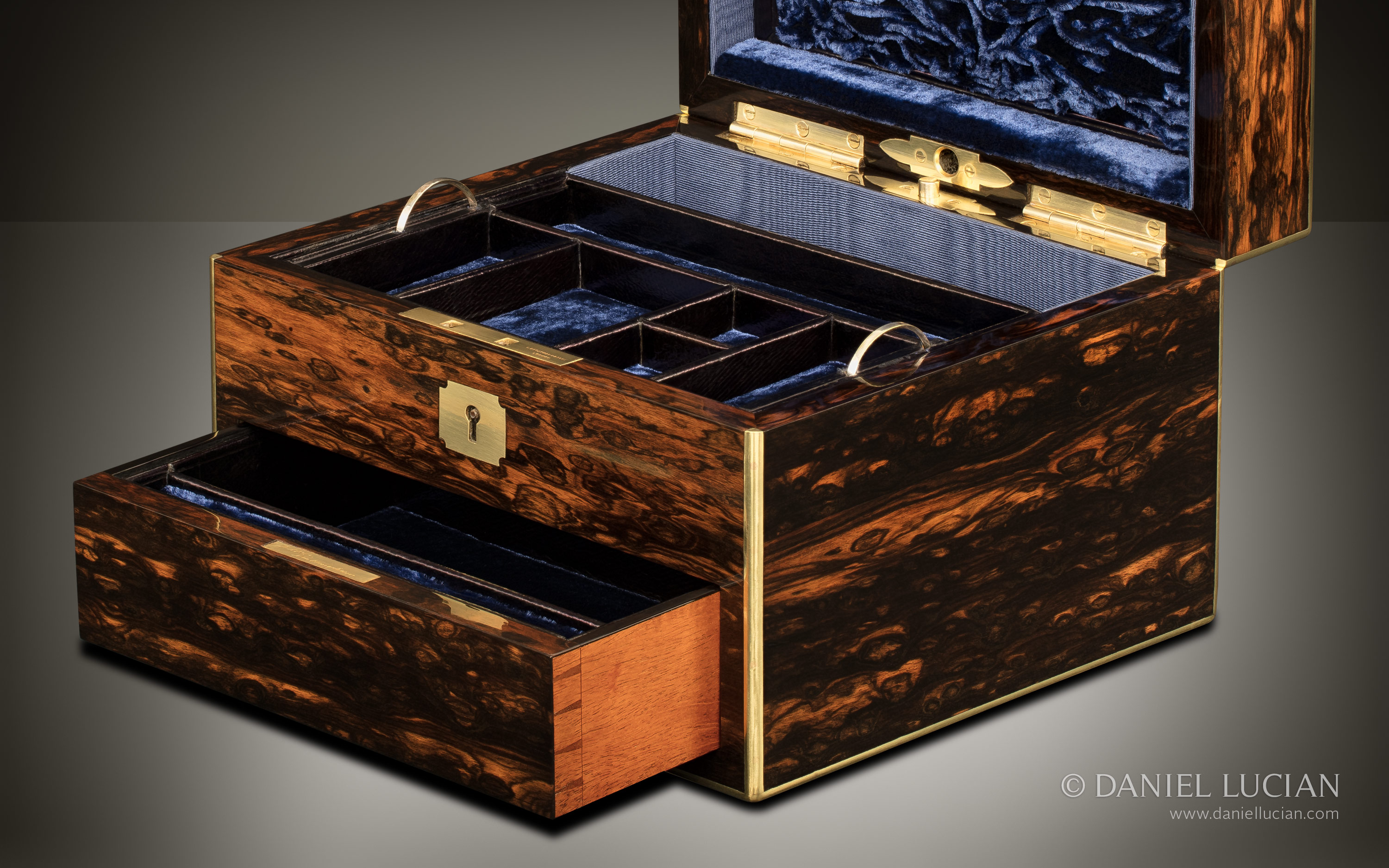
Front right interior view of the Asprey jewellery box with its spring-loaded Betjemann patent lower side trays and concealed drawers extended.
Asprey Antique Jewellery Box in Coromandel with Betjemann Patent Mechanism. VIEW THIS BOX →
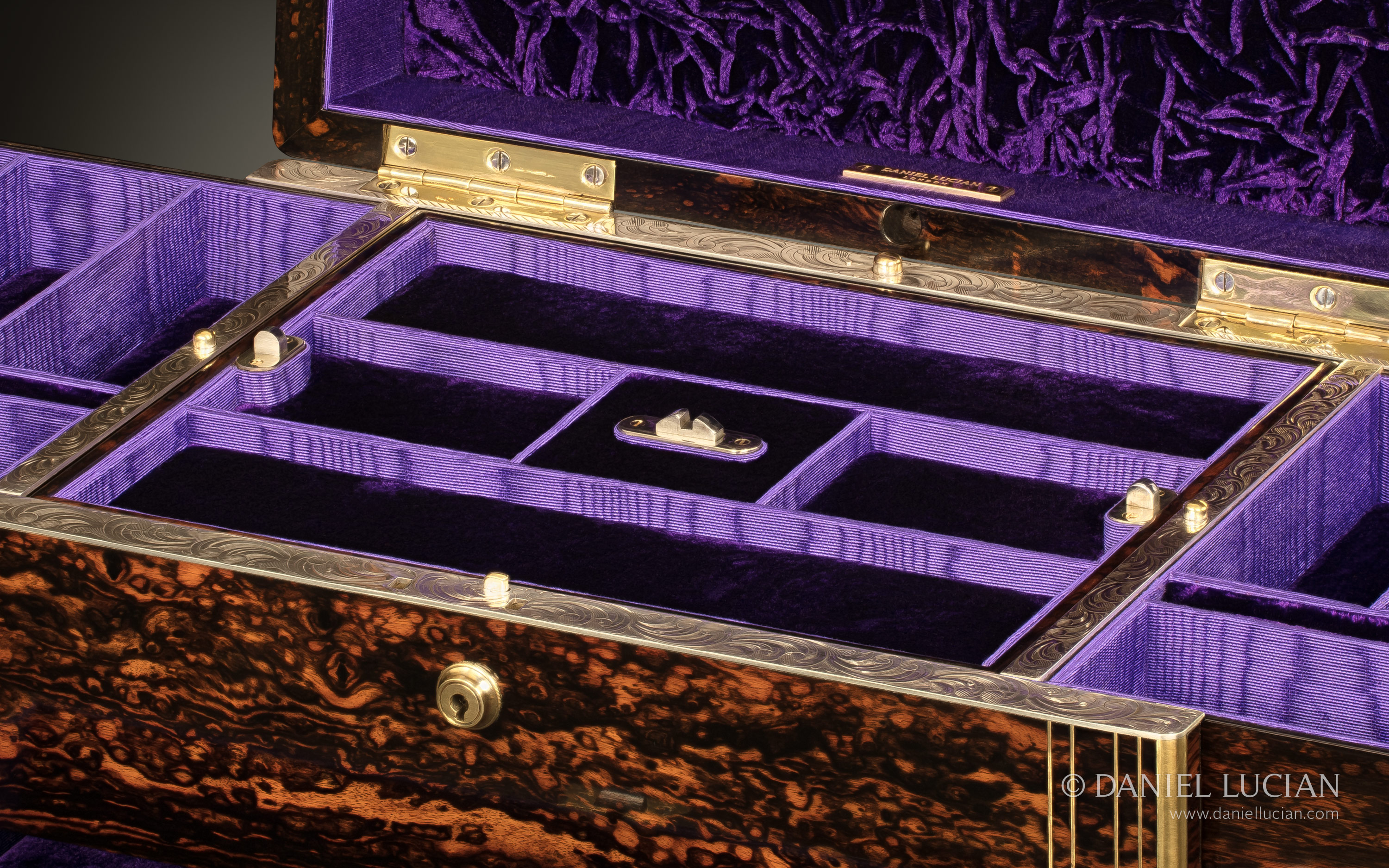
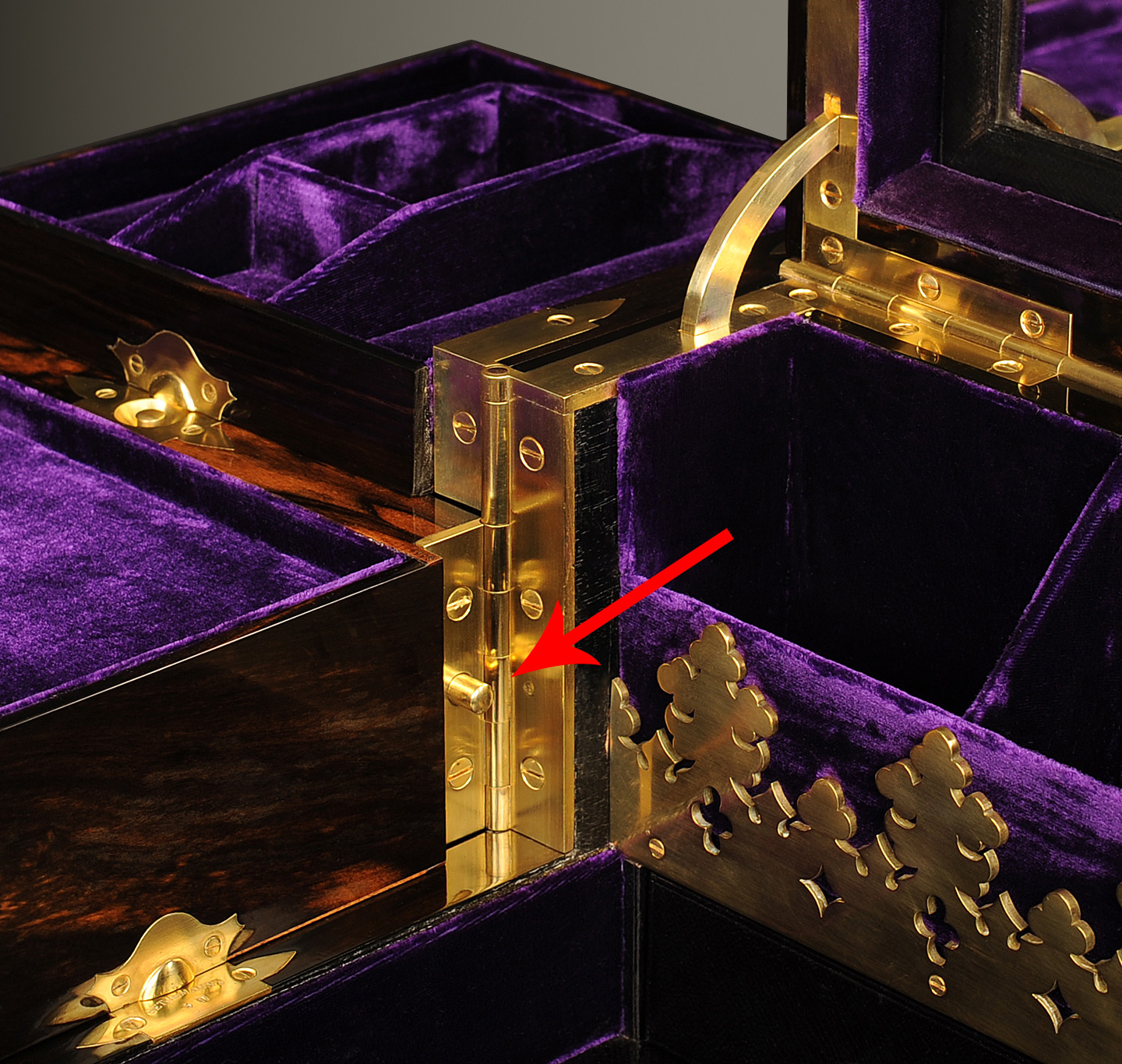
Spring-loaded hinge mechanism from an Asprey antique jewellery box in coromandel with Betjemann Patent mechanism.
This spring-loaded hinge mechanism propels open the secondary tier. The mechanism is deployed by pushing down on a sliding button at the base of the box.
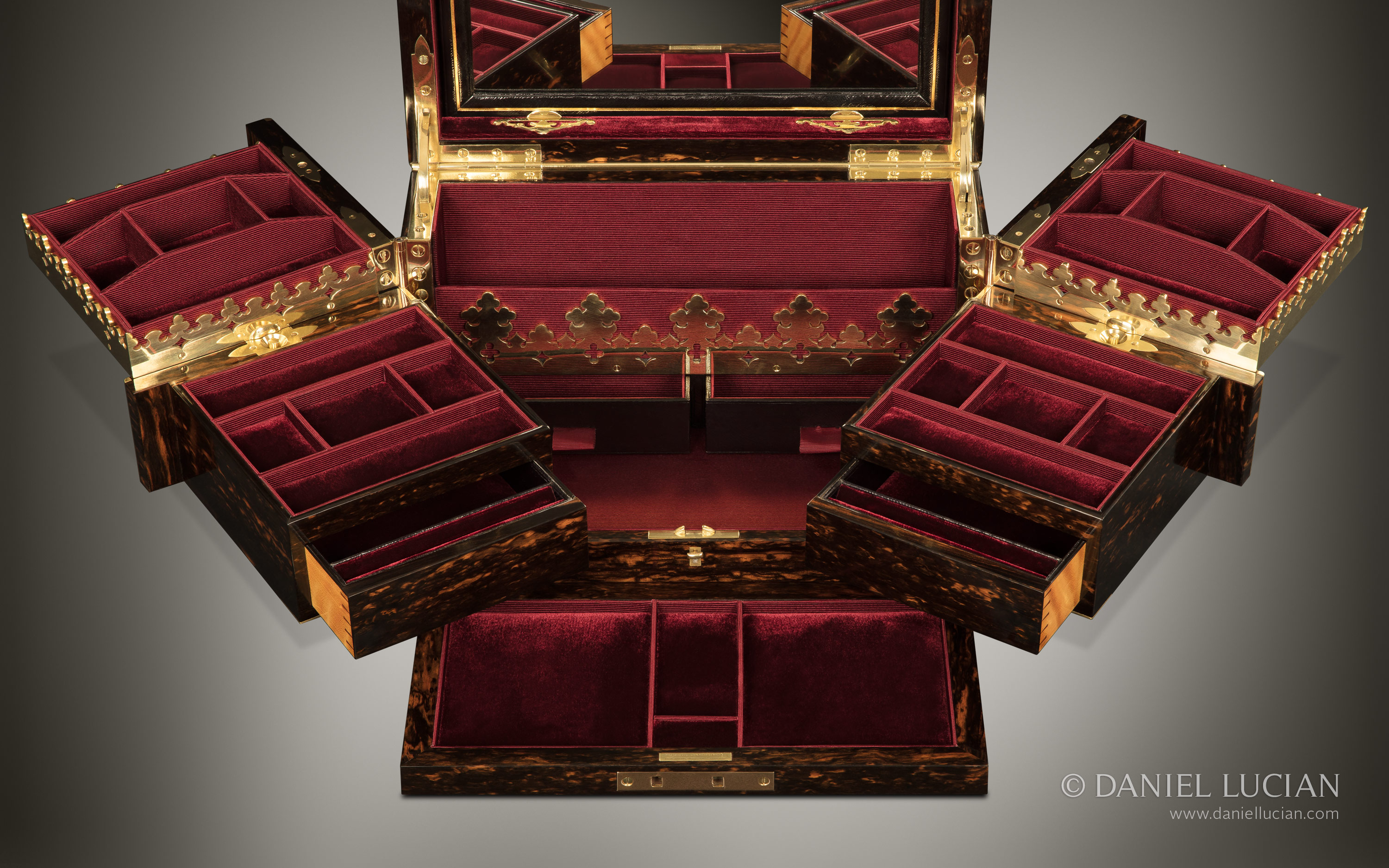
Antique Jewellery Box in Coromandel with Betjemann Patent Mechanism, by Jenner & Knewstub.
Antique Jewellery Box in Coromandel with Betjemann Patent Mechanism, by Jenner & Knewstub. VIEW THIS BOX →
Spring-loaded cantilever release mechanism from an antique jewellery box in coromandel with Betjemann Patent mechanism, by Jenner & Knewstub.
This spring-loaded rod propels open the secondary tier. The mechanism is deployed by pushing down on a sliding button at the base of the box.
Antique Jewellery Box in Coromandel with Betjemann Patent Mechanism, by Howell, James & Co.
Antique Jewellery Box in Coromandel with Betjemann Patent Mechanism, by Howell, James & Co. VIEW THIS BOX →
Spring-loaded lower drawer from an antique jewellery box in coromandel with Betjemann Patent mechanism, by Howell, James & Co.
This spring-loaded push-button to the rear of the secondary compartment deploys the concealed, spring-loaded lower drawer.
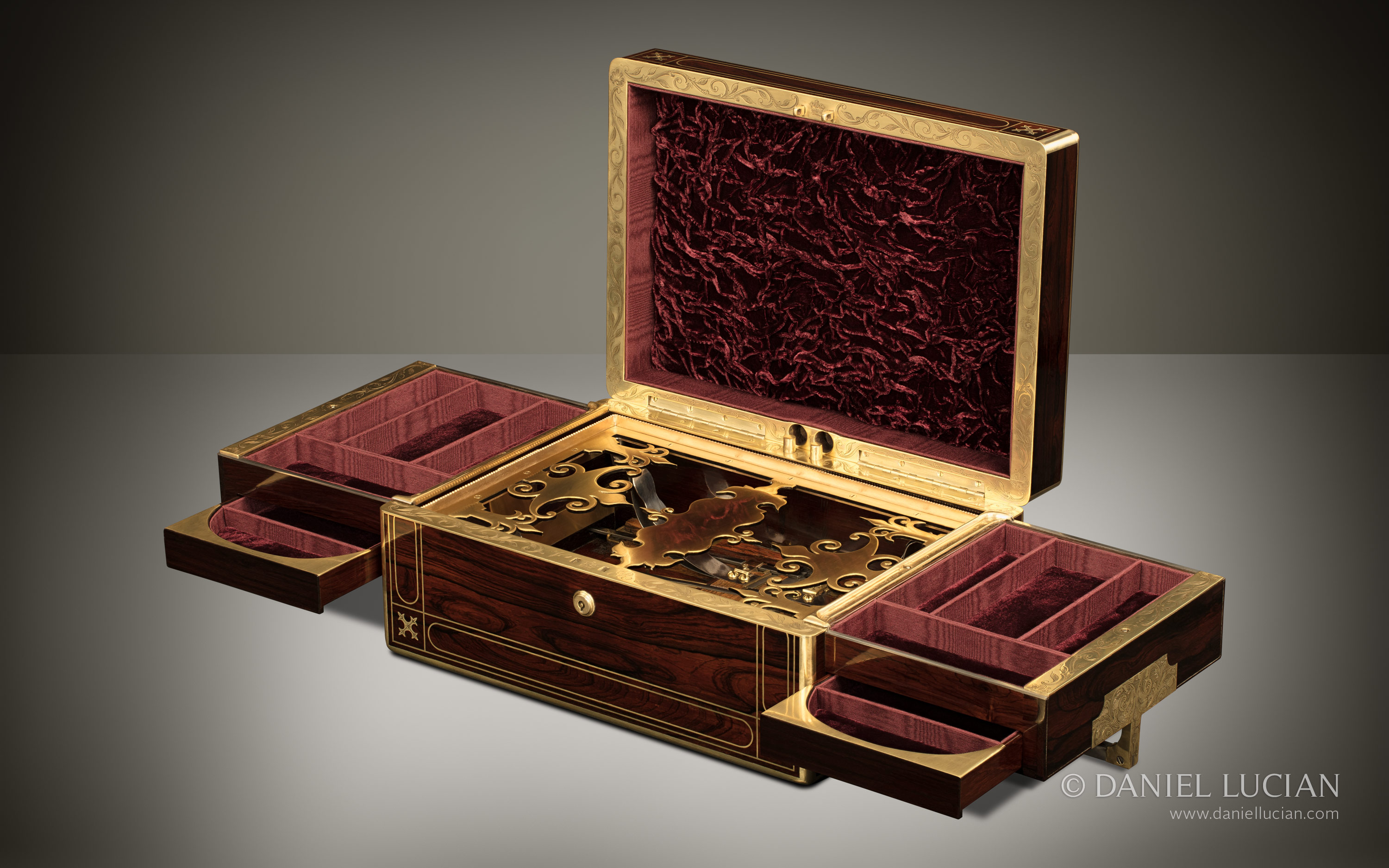
Front right interior view of the prototype mechanical jewellery box with the spring-loaded central platform raised, side trays extended and secret drawers open.
A Royal Commission by Queen Victoria; Antique Prototype Mechanical Jewellery Box in Rosewood. VIEW THIS BOX →
Prototype mechanical jewellery box with push-button releases for spring-loaded rack-and-pinion side trays and a rising central platform.
The left push button (top centre) on the rear rim of the box releases two side trays that are propelled outwards on independent spring-loaded rack and pinion mechanisms. Both trays are fitted with their own spring-loaded secret drawers that are deployed by pressing a concealed trigger in the floor above. The right push button (top centre) on the rear rim of the box raises the central brass platform using four pairs of leaf springs. VIEW THIS BOX →
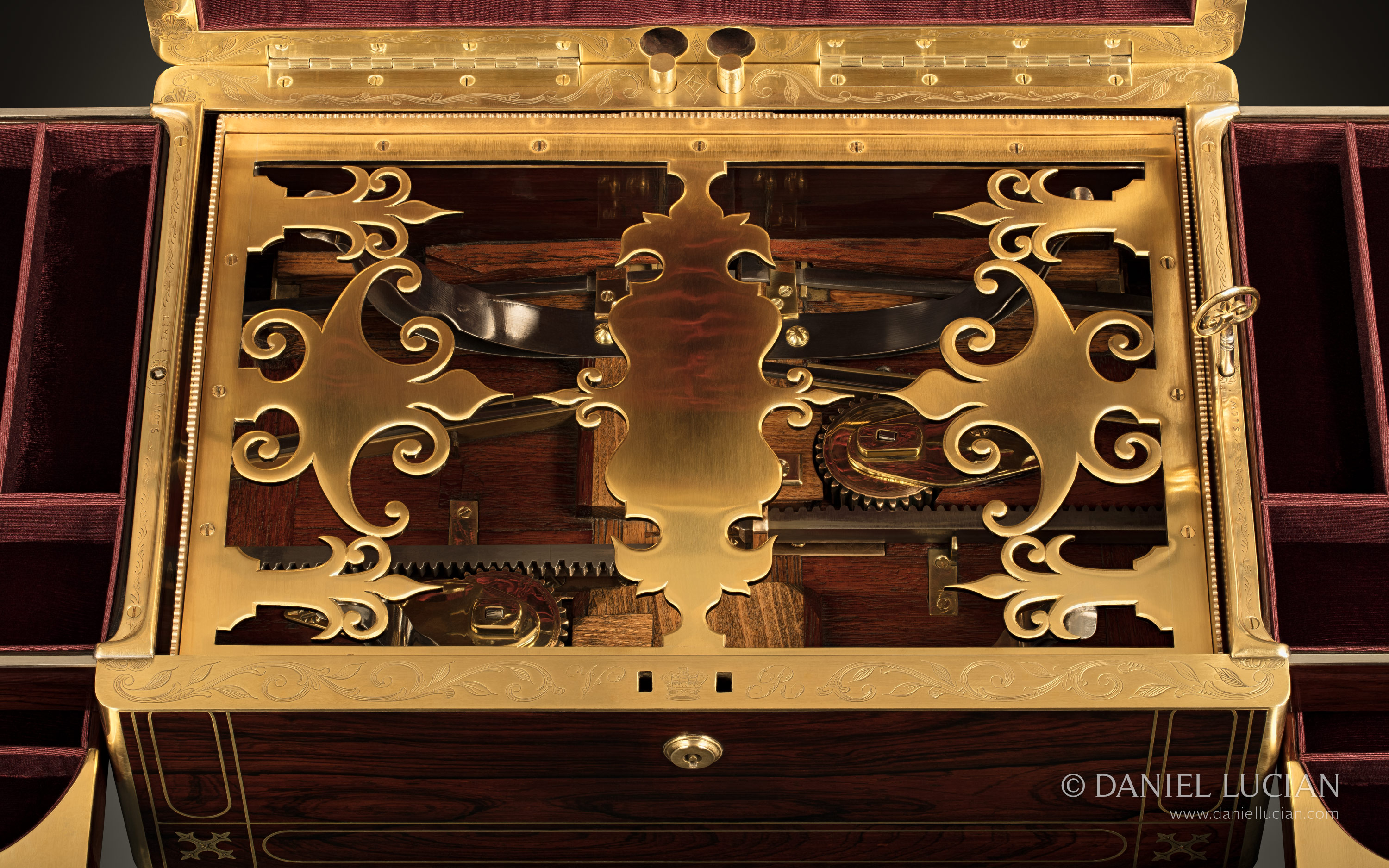
View of the rack and pinion mechanism, and a pair of leaf springs.
Foreground: View of the rack (steel linear toothed gear) and pinion (brass circular toothed gear) mechanism. The pinion is internally spring-loaded using a spiral torsion spring. Background: View of a pair of steel leaf springs.
Spring-loaded central tray rising to the level of the neighbouring trays in a coromandel jewellery box.
A push button to the rear rim of the box enables the spring-loaded central tray to rise automatically until it rests level with the neighbouring trays. VIEW THIS BOX →
Close-up of the spring-loaded central tray in its fully raised position.
A closer view of the spring-loaded central tray in its raised position. VIEW THIS BOX →
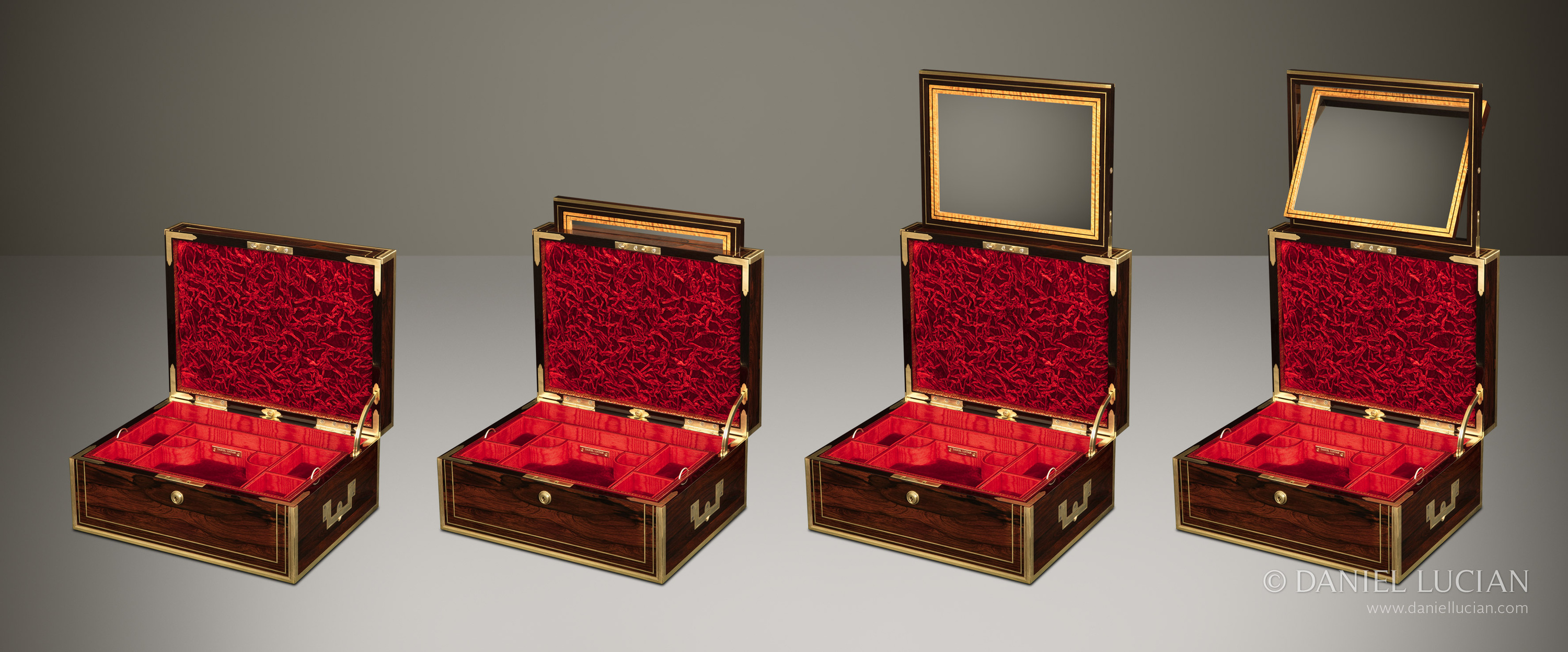
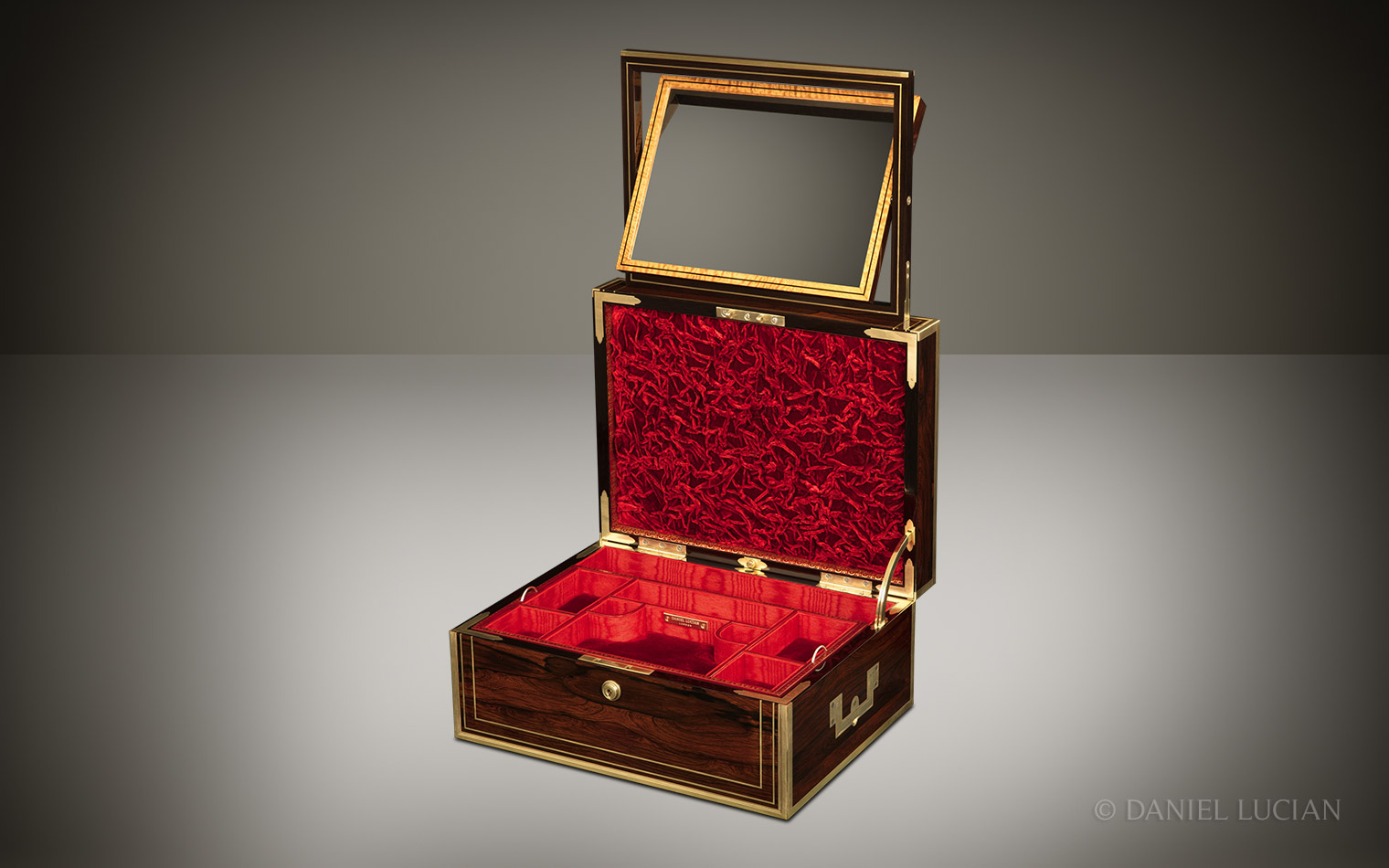
This box cleverly masks a very unusual and ingenious mechanism within. An interior push-button deploys a concealed spring-loaded mirror from the exterior of the lid section. The rosewood and satinwood mirror frame can be raised fully into position then swivelled accordingly to gain the perfect viewing angle.
Antique Jewellery Box in Rosewood with Spring-Loaded Mirror Mechanism, by David Edwards
Antique Jewellery Box in Rosewood with Spring-Loaded Mirror Mechanism, by David Edwards VIEW THIS BOX →
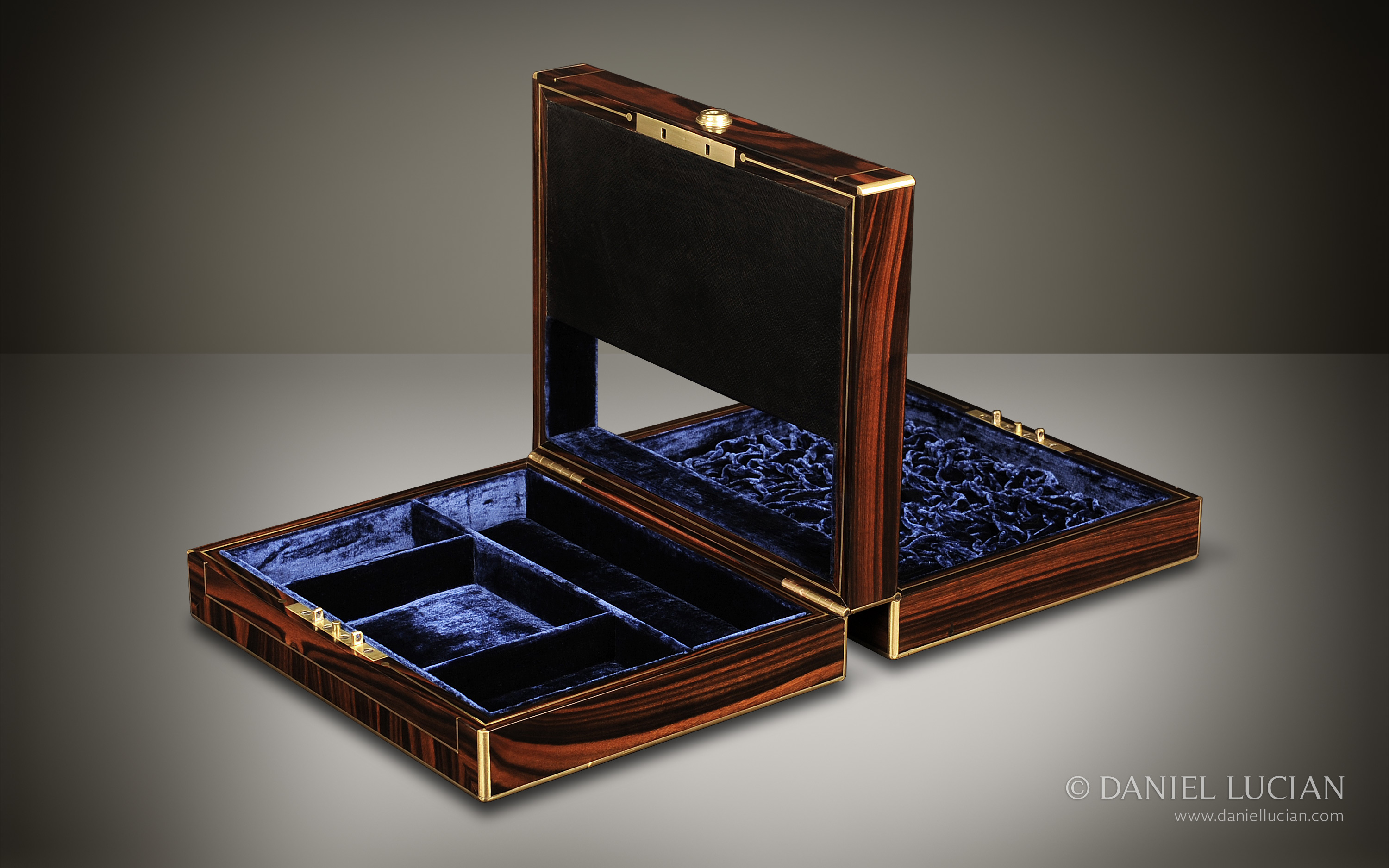
Front right interior view of the calamander jewellery box by Edwards with spring-loaded pistons protruding from the lock plates.
Antique Jewellery Box in Calamander, Attributed to Edwards. VIEW THIS BOX →
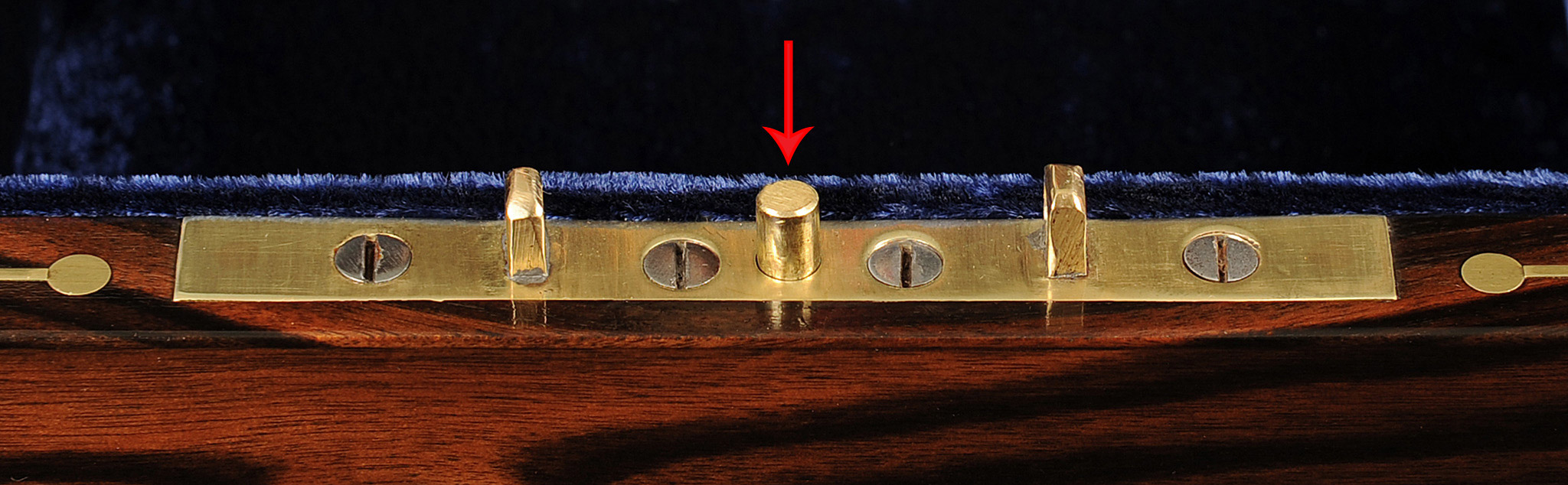
Spring-loaded rod mechanism from an antique jewellery box attributed to Edwards.
This spring-loaded rod mechanism is used to pop up the lid and the middle section (both by about 5 mm) upon the opening of the twin self-locking Bramah lock.
Miniature Antique Jewellery Box in Coromandel, by Betjemann & Sons.
Miniature Antique Jewellery Box in Coromandel, by Betjemann & Sons. VIEW THIS BOX →
Spring-loaded drawer release mechanism from a miniature antique jewellery box in coromandel by Betjemann & Sons.
A concealed brass spring-loaded rod runs down the back of the box and connects with the sprung catch in the floor (middle of photo). When the rod finial is pushed from the main compartment, the action releases the spring-loaded lower drawer.

EXPLORE FURTHER