
Rack and Pinion Mechanical Box
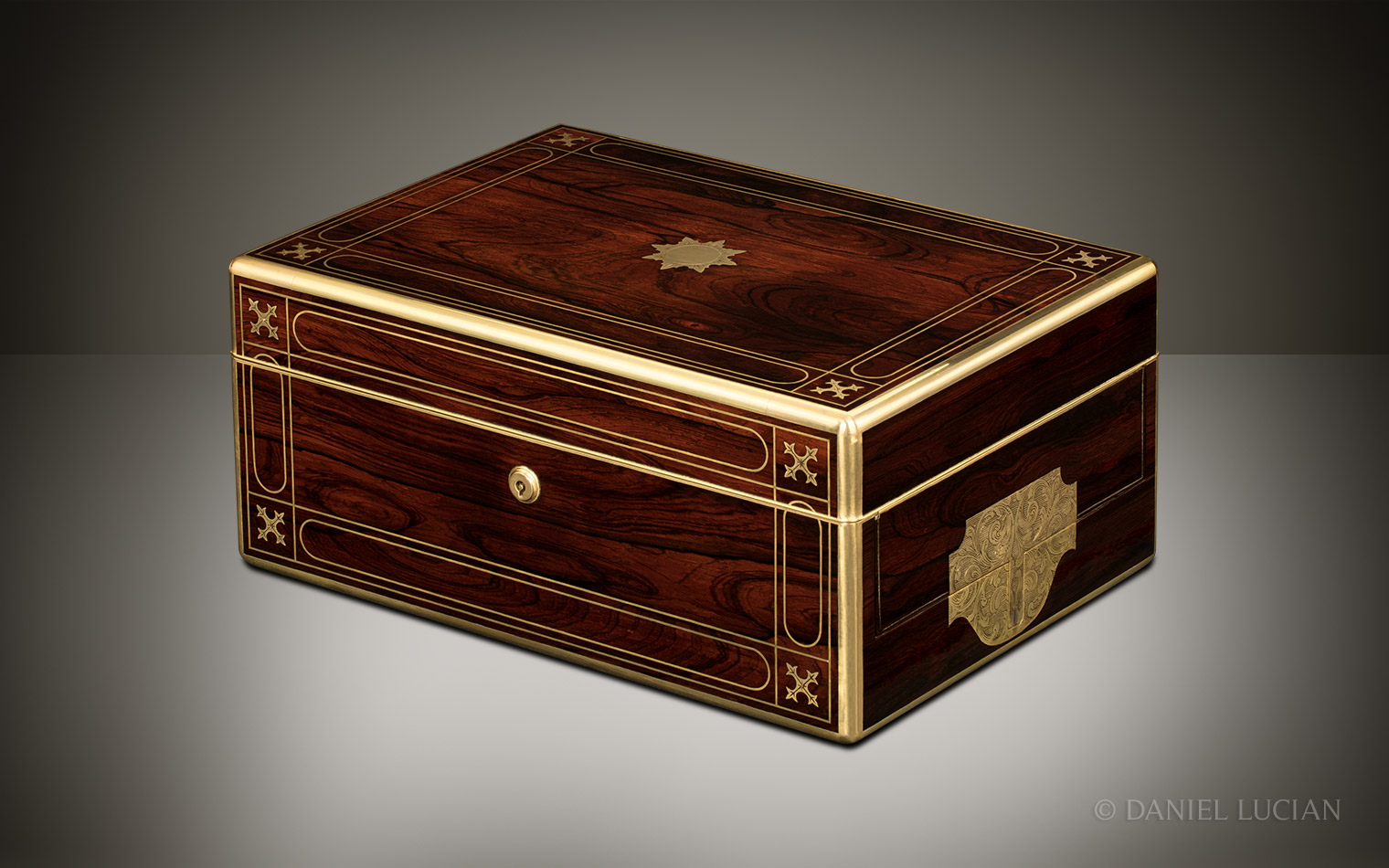
This extraordinary mechanical box was manufactured during the mid-1840s as a prototype under a commission from Queen Victoria. Its substantial construction, elaborate brasswork and complex internal mechanisms suggest that it was intended not simply as a practical box, but as a demonstration of mechanical ingenuity and manufacturing skill.
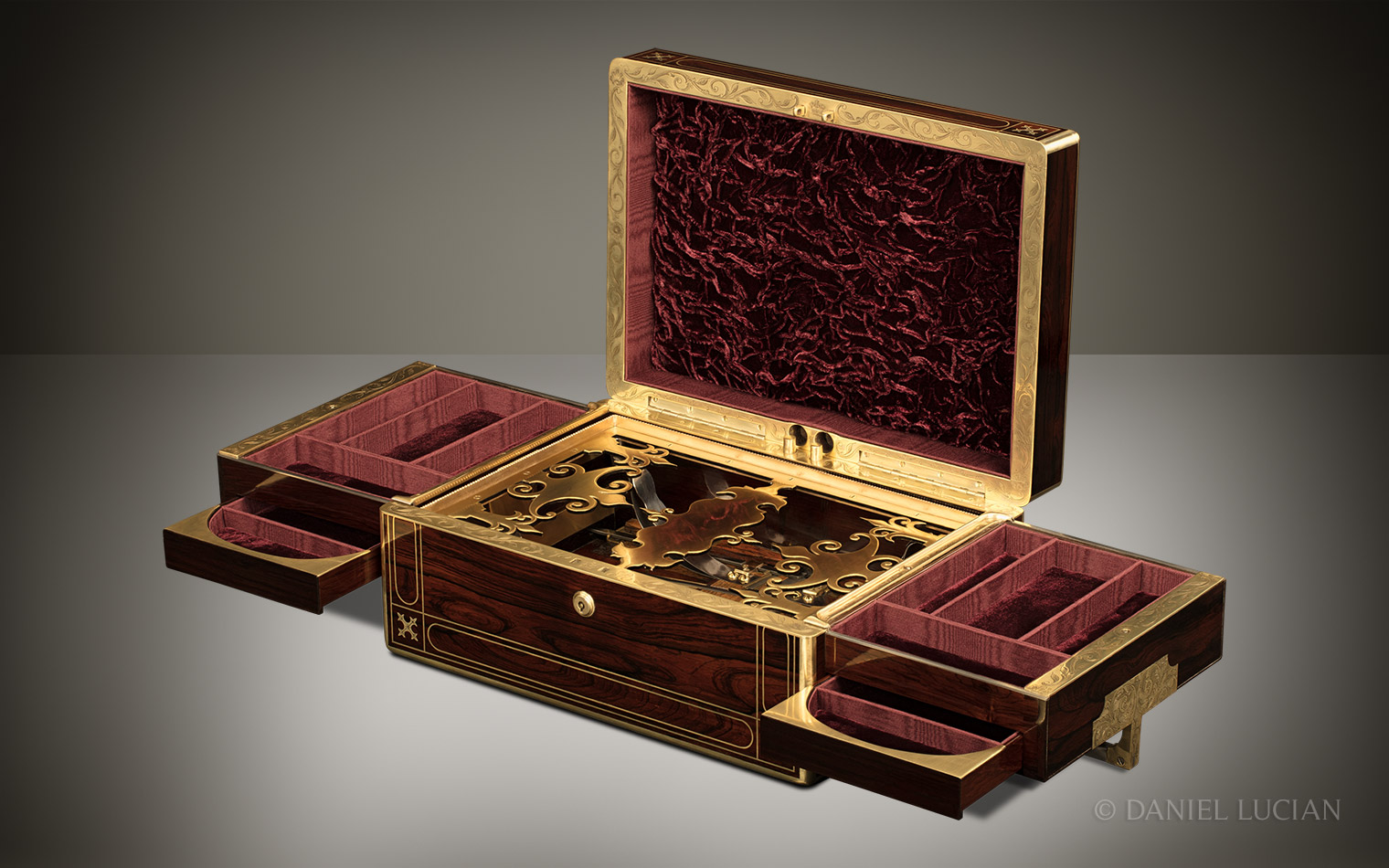
Even when closed, there are indications that this is an unusual object. Engraved brass mounts to either side resemble handles but serve another purpose within the mechanism, while its weight of almost 12 kg hints at the considerable amount of brass and steel concealed within.
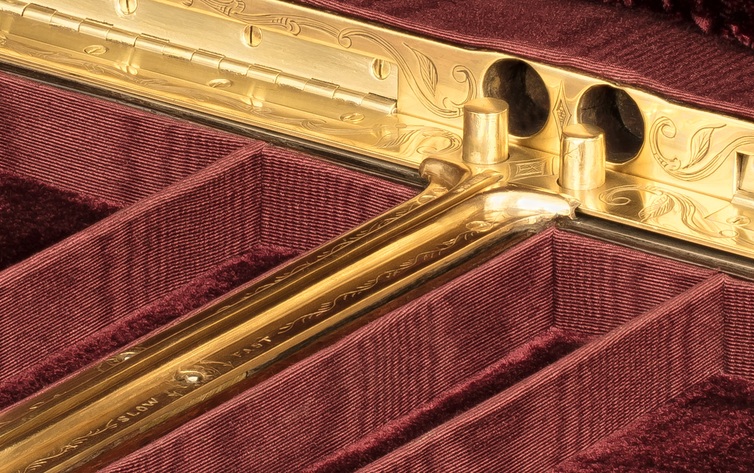
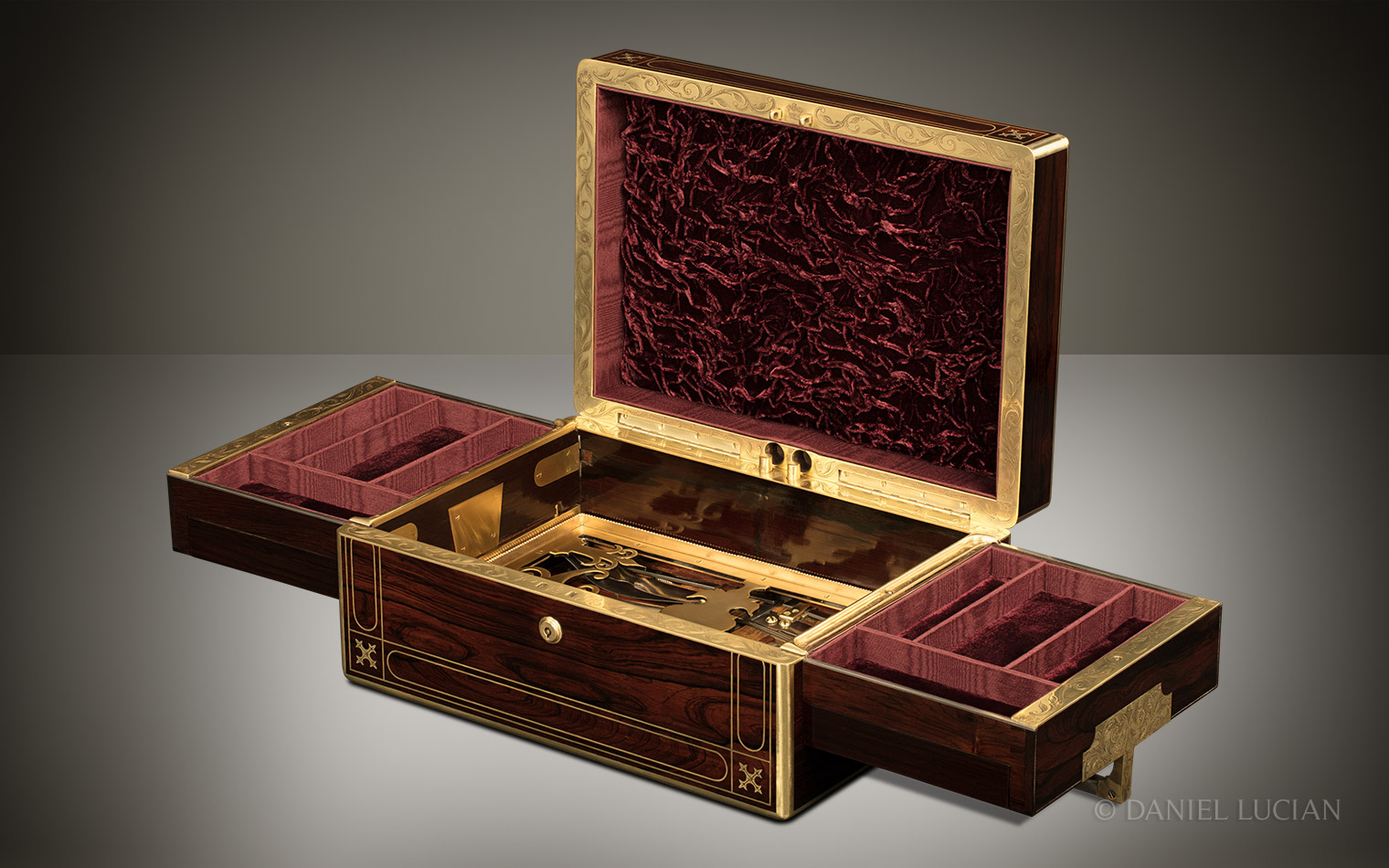
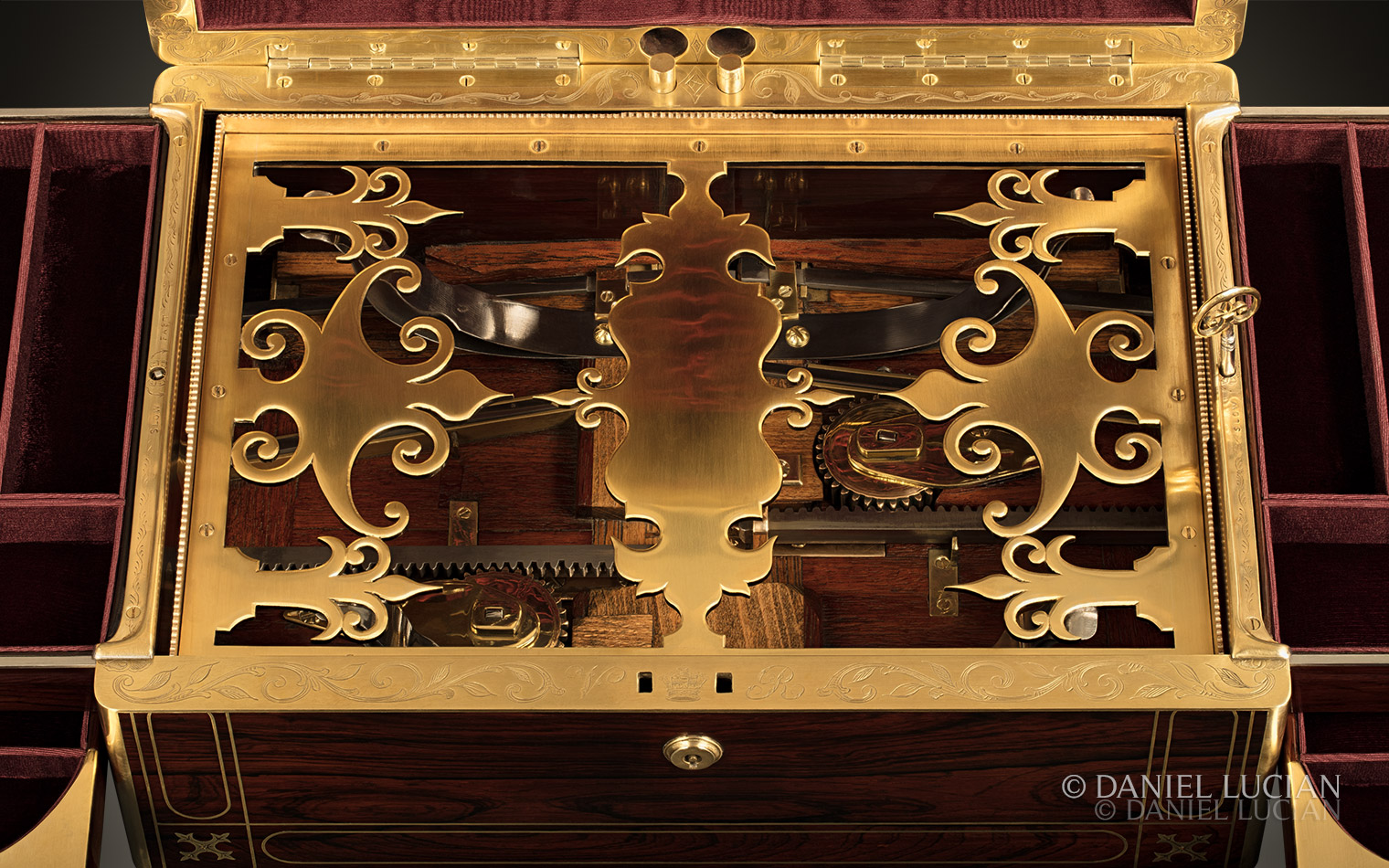
Opening the box reveals a network of engraved brass rims centred around Queen Victoria’s crowned VR monogram. Four circular apertures are marked Fast and Slow, each containing a square-section threaded shaft, while two unusually large brass push buttons are positioned along the rear rim. These controls operate the principal mechanical functions of the box.
The left-hand push button
Depressing the left-hand button initiates a sequence of sliding steel mitred bars running within a system of brass guides. These simultaneously retract catches on the left and right sides of the box, releasing the two side trays.
Each tray is driven outwards by an individual rack-and-pinion mechanism. A linear steel rack engages with a brass pinion containing a spiral torsion spring. Once the tray is released, the spring unwinds and rotates the pinion, driving the rack and propelling the tray smoothly outwards.
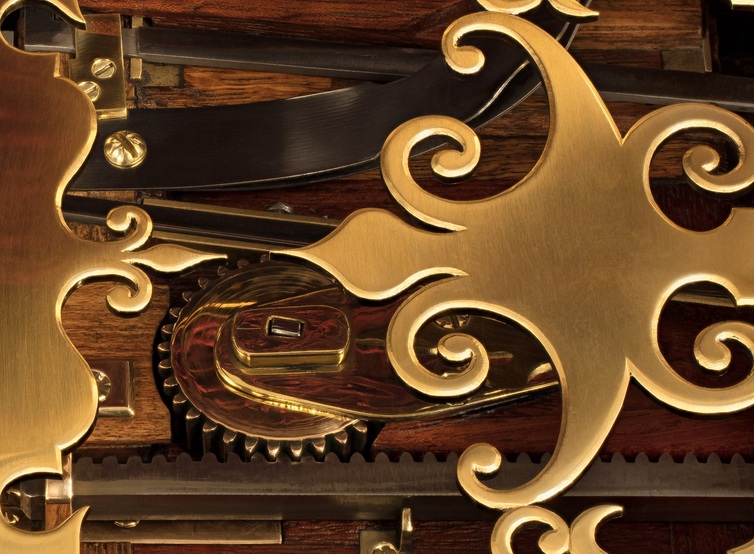
The speed of each tray can be adjusted independently through the circular apertures marked Fast and Slow. Beneath each aperture, the square-section threaded shaft operates a rectangular nut and coiled spring. Using the dedicated key, the shaft can be turned to increase or reduce the spring pressure applied against a steel plate beneath the tray. This alters the amount of friction within the mechanism and therefore regulates the speed at which the tray extends.
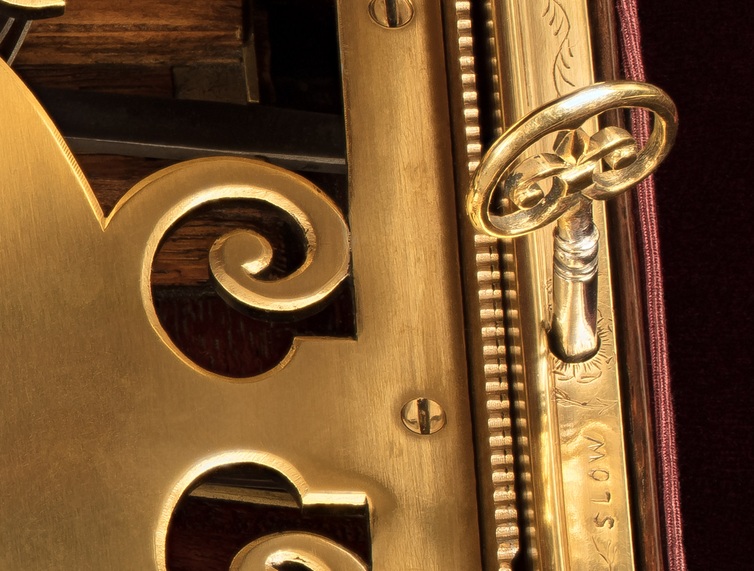
Both trays also contain spring-loaded secret drawers. Each is released by pressing a concealed trigger set into the floor of the compartment above, causing the hidden drawer to project automatically.
The right-hand push button
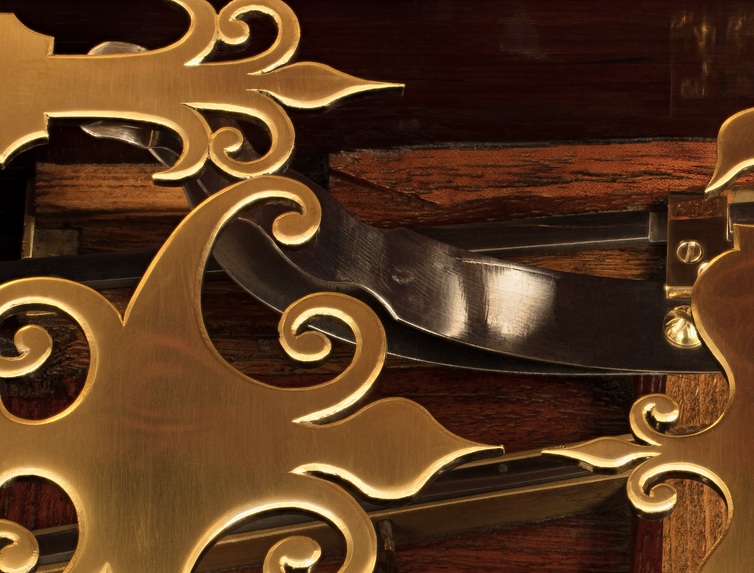
The right-hand button controls the central platform. Pressing it retracts a centrally mounted steel catch, releasing four pairs of steel leaf springs which raise the brass platform into its fully elevated position.
The platform has been extensively fretworked, allowing the mechanism beneath to remain visible while retaining greater strength at the points where the springs and supporting structure act upon it. The result is both functional and visually revealing, making the engineering an intentional part of the box’s appearance rather than something entirely concealed.
The box appears to have been conceived more as a demonstration of engineering ability than as a practical object. Its mechanisms are extraordinarily elaborate for the functions they perform: adjustable opening speeds, automatically extending trays, concealed spring-loaded drawers and a mechanically raised central platform are all incorporated within a single cabinet.
Dating from the mid-1840s, the box predates the mechanically innovative work for which George Betjemann & Sons later became celebrated by around two decades. This makes the absence of a maker’s name particularly frustrating, as the sophistication of the design suggests a manufacturer of considerable technical ability.
Almost every aspect of the box is excessive in the most compelling sense. It is heavily engineered, mechanically complicated and unusually powerful in operation, with a construction far more substantial than its practical purpose required. Yet it is precisely this combination of extravagance and ingenuity that makes it such an extraordinary demonstration of nineteenth-century mechanical cabinetmaking.