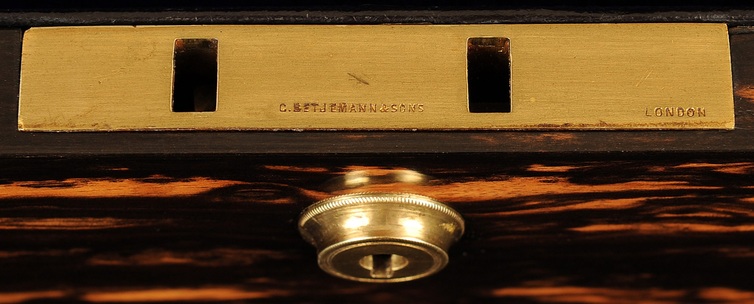
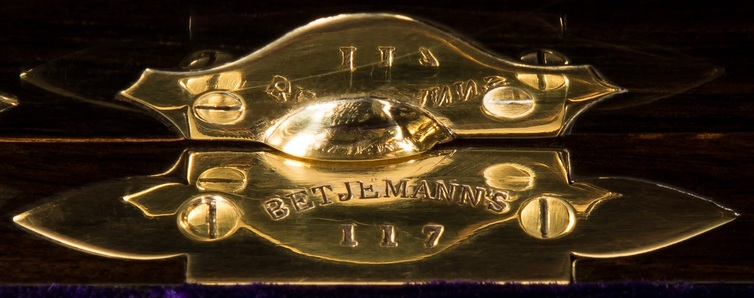
George Betjemann & Sons
In 1812, at the age of 14, George Betjemann began an apprenticeship as a cabinetmaker with his uncle, Gilbert Slater, at his premises on Carthusian Street, London. In 1834, George joined his father-in-law William Merrick’s cabinetmaking business on Red Lion Street, Clerkenwell, London.
From 1848, George brought his sons, George William Betjemann (his eldest) and John Betjemann (grandfather of the poet Sir John Betjeman), to apprentice with him. He began his own business at 6 Upper Ashby Street, Clerkenwell, London, and, with his two sons having completed their apprenticeships in 1855, expanded to 7 Upper Ashby Street shortly afterwards.
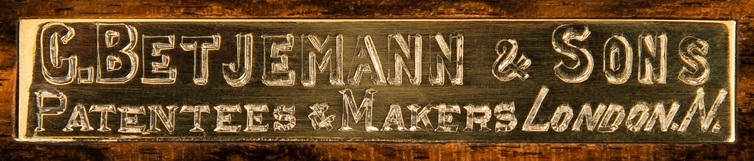
In 1859, George moved to 36 Pentonville Road, London, which became the family’s new home and business premises. Here he continued the business, now called George Betjemann & Sons, alongside his two sons. George William never married but instead was ‘married’ to his work, being a true artist and perfectionist.
Betjemann’s reputation extended well beyond Britain. The firm exhibited at the London International Exhibition of 1862, the Paris Exposition Universelle of 1867 and the Vienna World’s Fair of 1873.

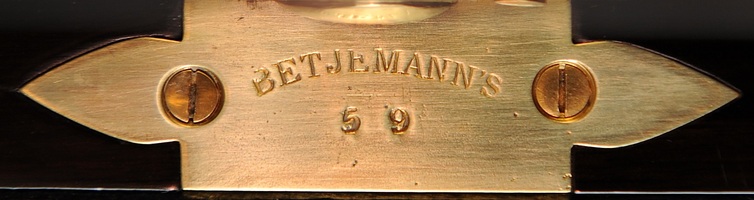

By 1871, they had expanded their premises to incorporate 38 Pentonville Road and were employing 119 people.
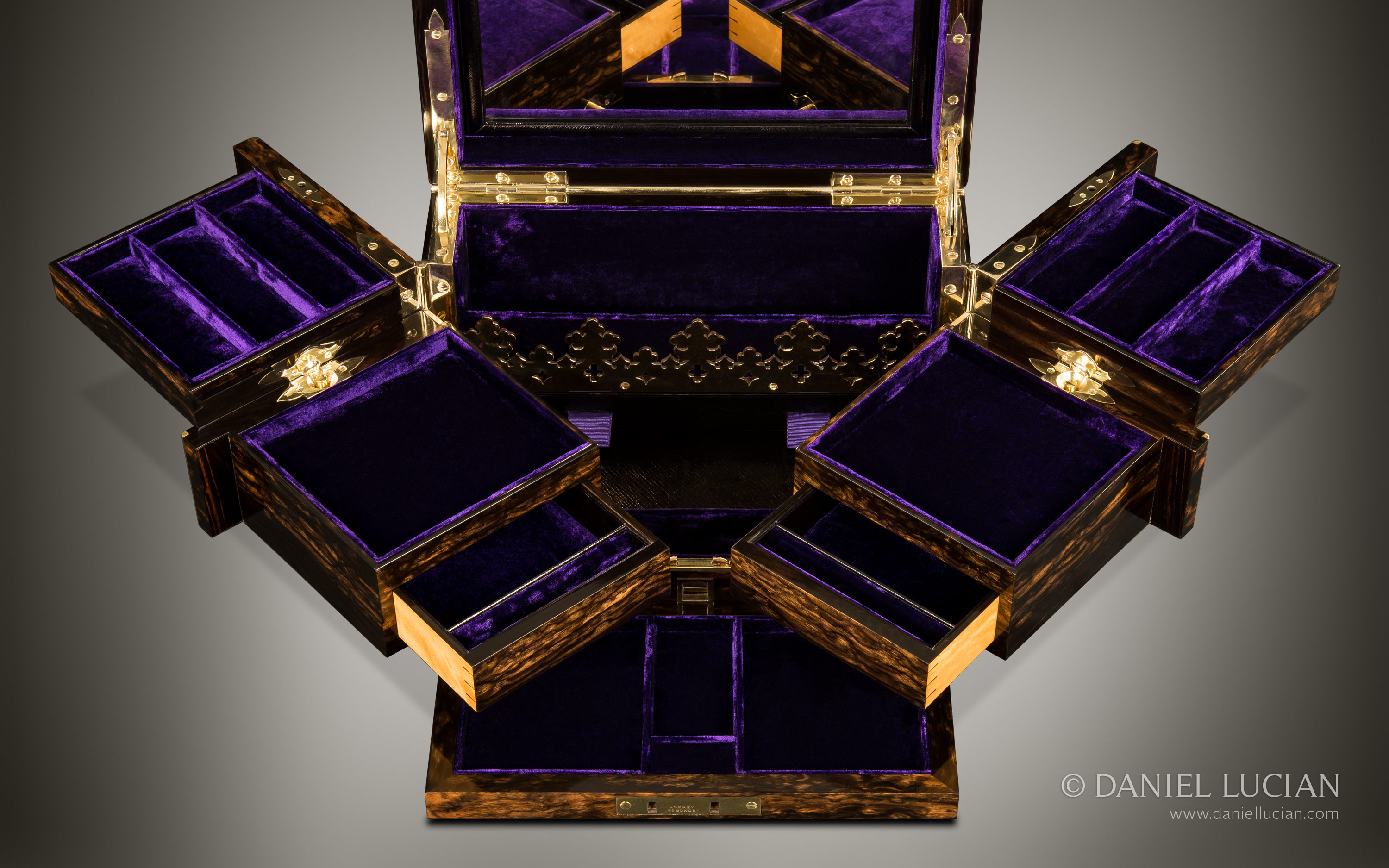
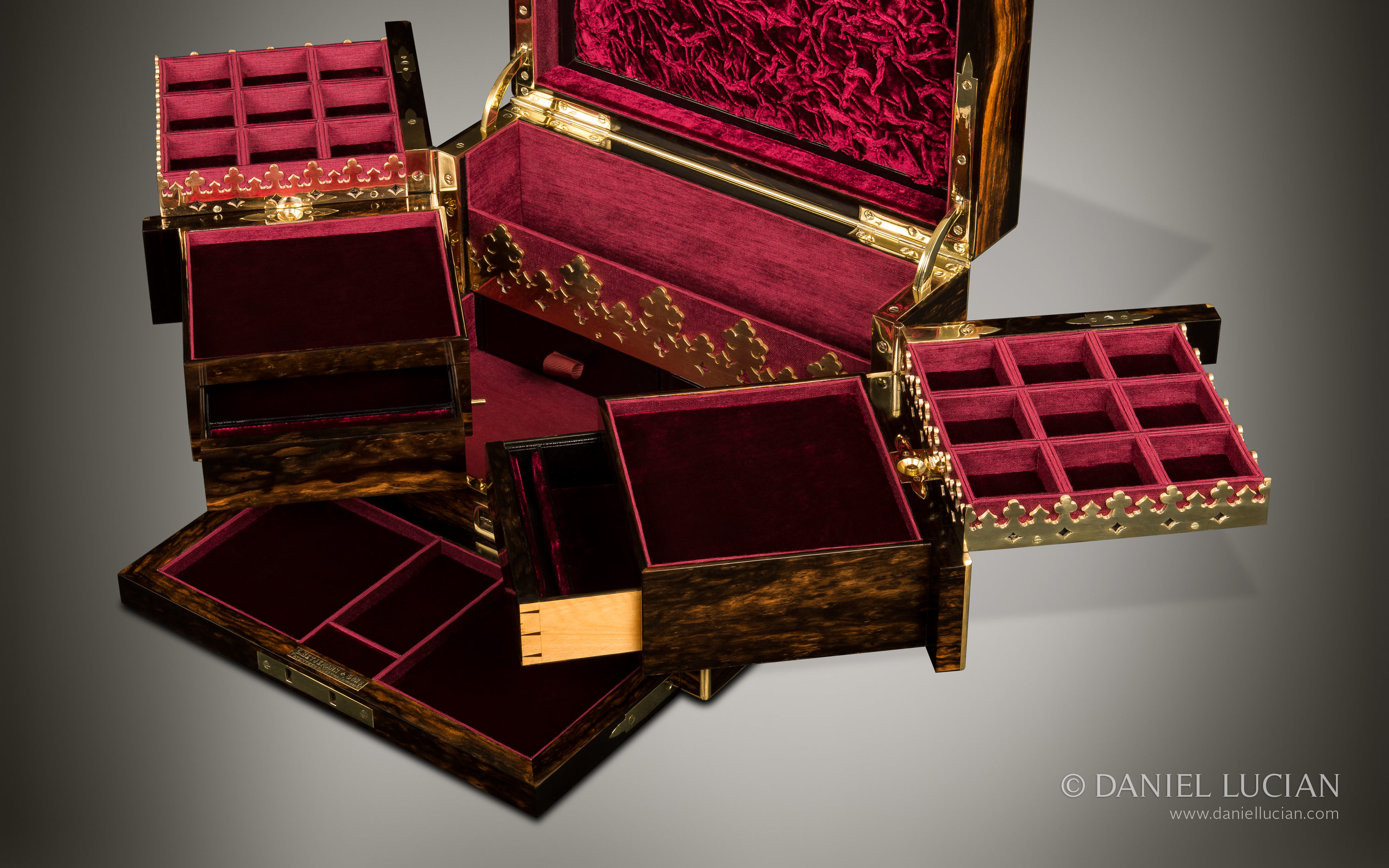
George Betjemann & Sons manufactured boxes and other luxury goods for many of the leading retailers and manufacturers of the period, including Asprey, Howell, James & Co. and Leuchars. As a result, many pieces produced in the Betjemann workshops were retailed under the names of these firms rather than that of their actual maker. Betjemann did, however, also retail many of their own pieces directly from their Pentonville Road premises, with examples bearing the George Betjemann & Sons name and address.
The firm’s expertise was not limited to cabinetwork and luxury goods, but extended to the ingenious mechanisms for which Betjemann became particularly renowned; these are explored in greater detail in our article on Betjemann Patent Mechanisms.
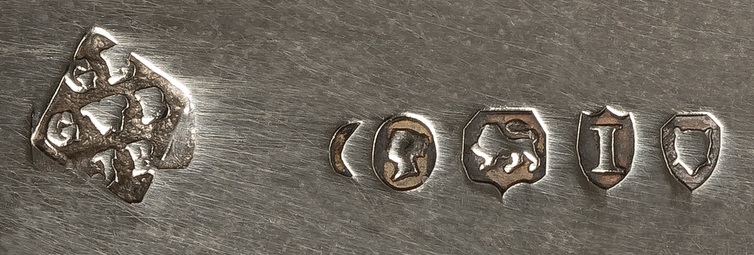
In February 1872, George Betjemann & Sons registered a London silversmith’s mark, combining the initials of George Betjemann, George William Betjemann and John Betjemann.
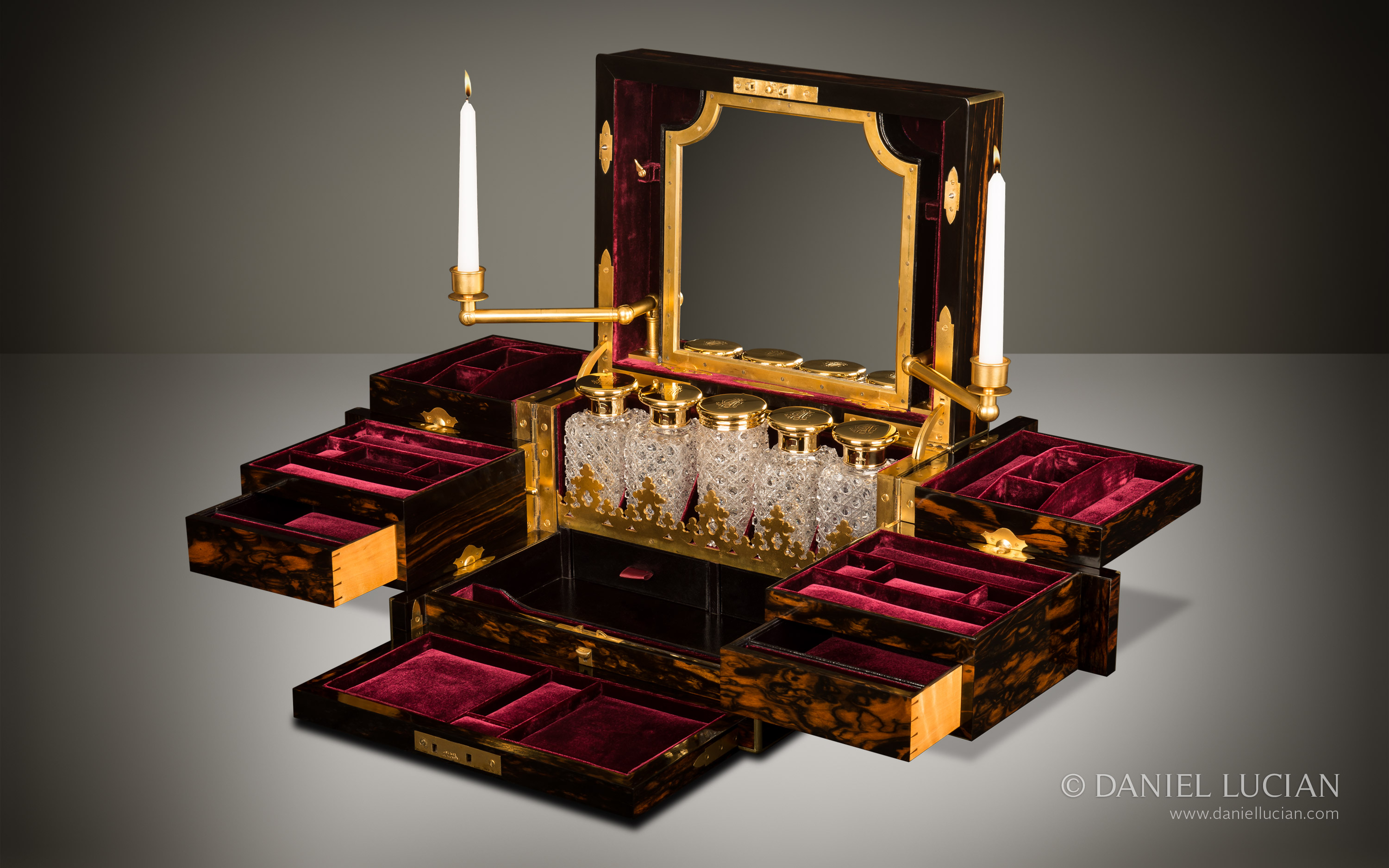
Records show that by 1875 the premises had expanded further to incorporate 40 Pentonville Road.
At the Paris Exposition Universelle of 1878, George Betjemann & Sons displayed an extensive selection of their work, including extending dressing cases, self-closing bookslides, desks and writing sets in decorative woods.
George died in 1886 at the age of 88, after which George William and John continued to run George Betjemann & Sons in partnership until John’s death in 1893.
George William then established a business partnership with John’s sons, John George Betjemann and Ernest Edward Betjemann. Around 1896, John George and Ernest Edward established an offshoot company called Betjemann Brothers, based at 2 Newcastle Place, Clerkenwell, London. This company ran alongside George Betjemann & Sons until the two were merged in 1903, following the death of George William. In 1909, the business became a limited company, known as George Betjemann & Sons Ltd.
With Ernest’s son John (the future poet Sir John Betjeman) having no interest in carrying on the family business, George Betjemann & Sons Ltd finally wound up in 1939.