Asprey
.JPG)
The Asprey company was originally founded as a silk printing business by William Asprey in 1781. Based at a shop in Mitcham, Surrey, William and his son Charles (I) soon began to retail luxury goods.
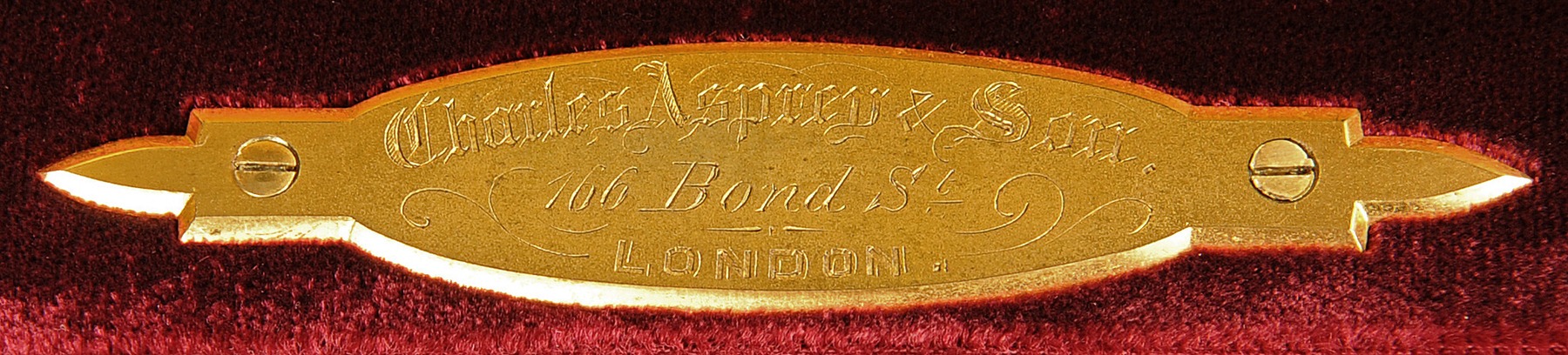
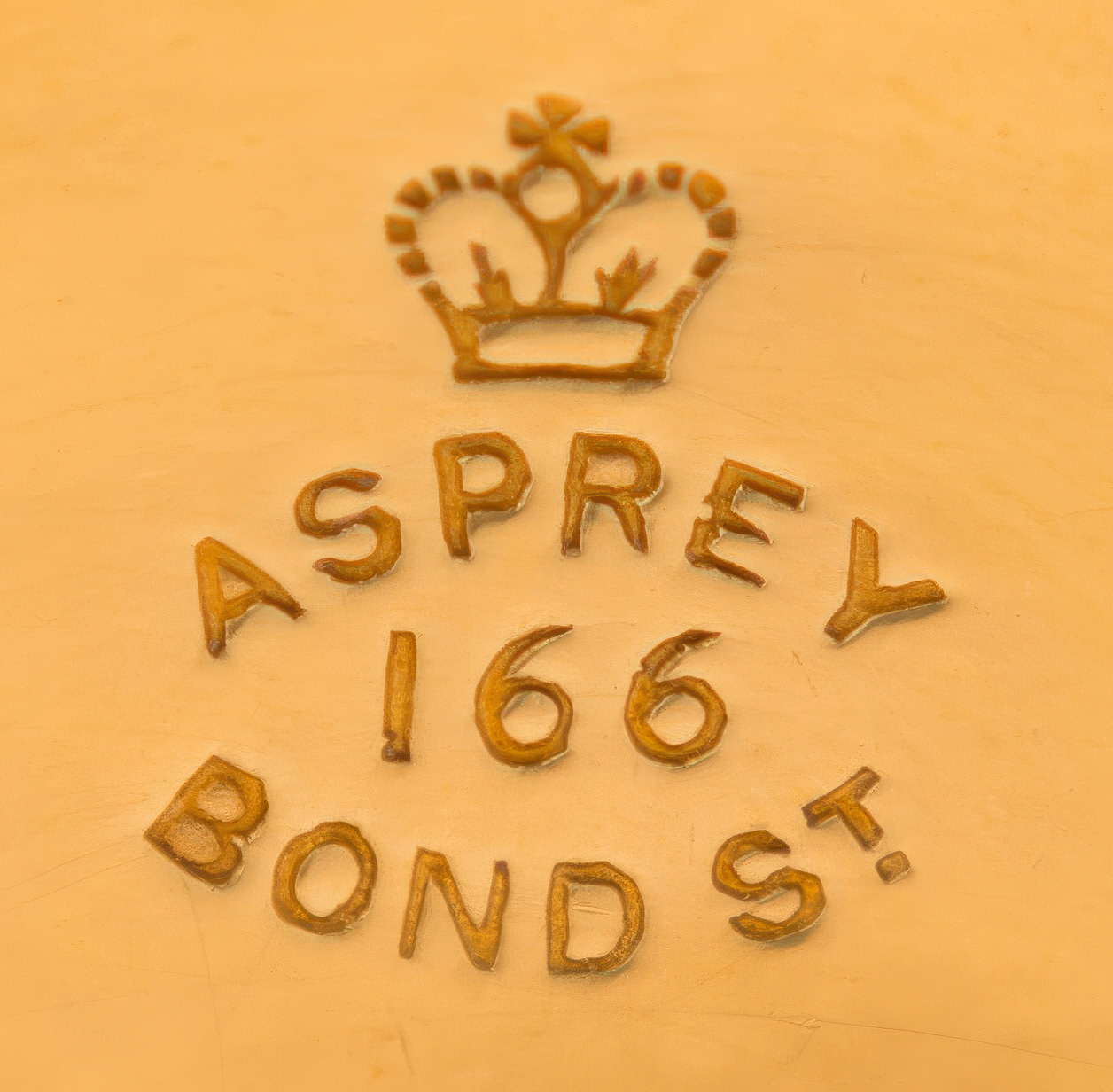
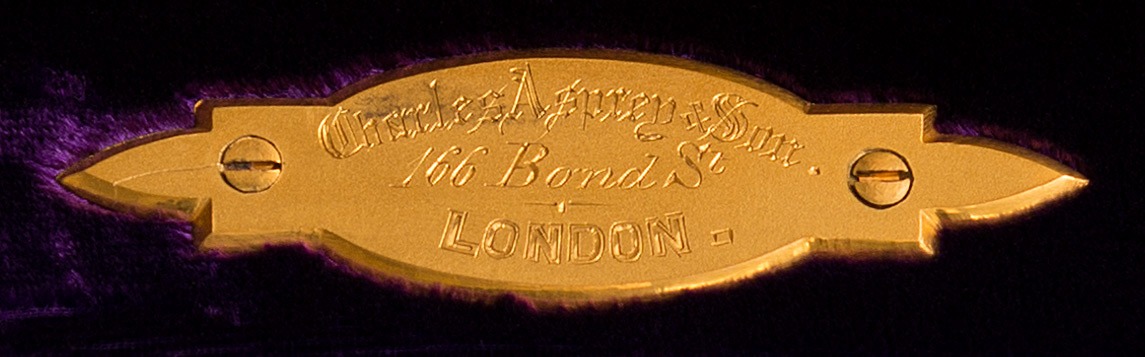
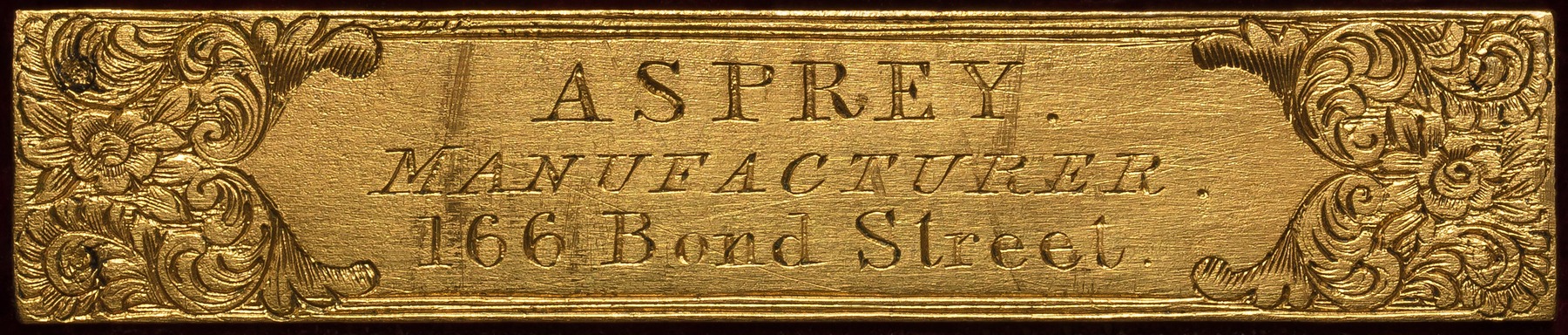
In 1841, Charles (I) formed a business partnership with his son-in-law, Francis Kennedy, a stationer based at 49 Bond Street, London. The partnership lasted until 1846, after which Francis continued the business himself. By the end of 1847, Charles Asprey (I) and his son Charles (II) had moved their business to 166 Bond Street, London.
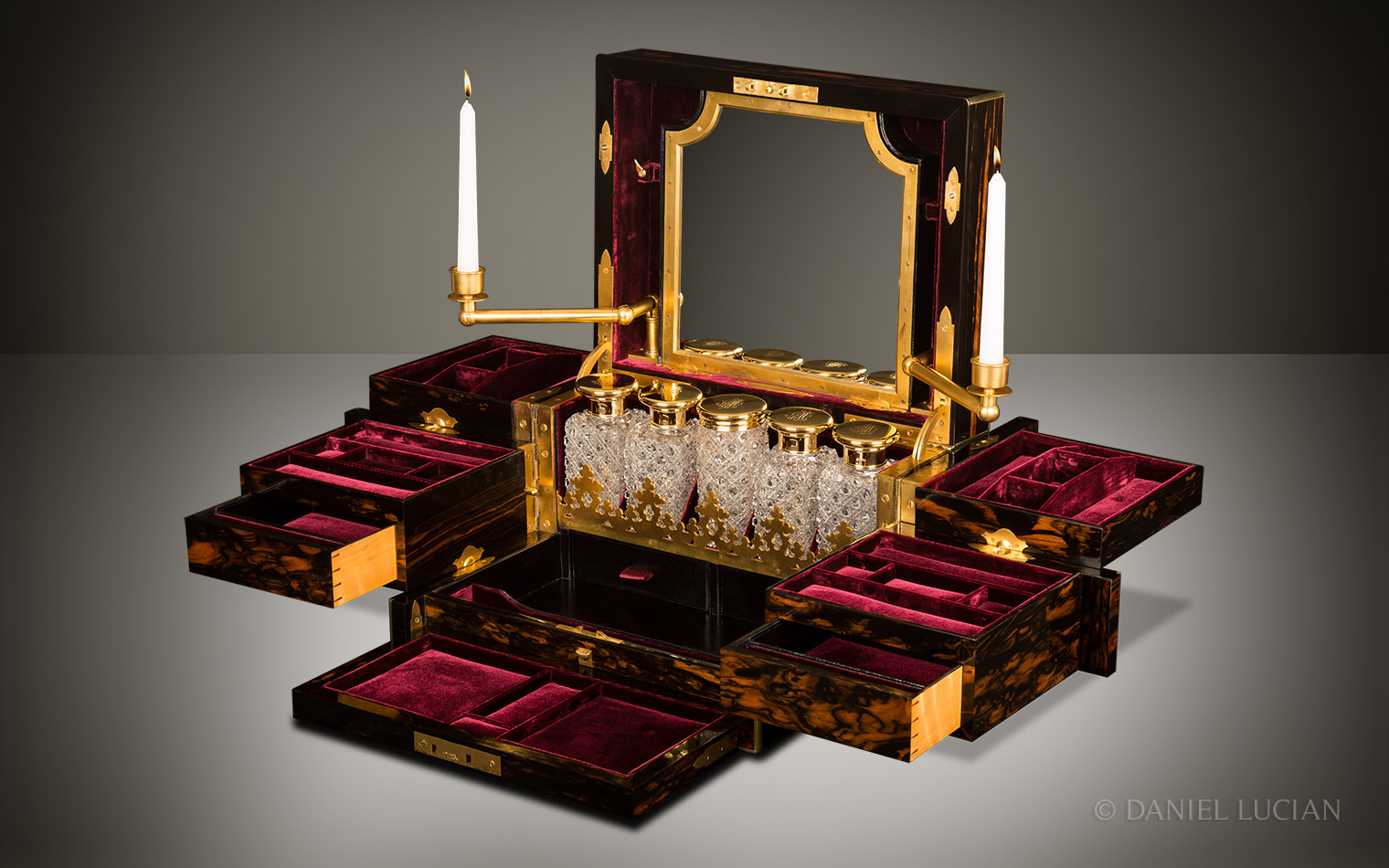
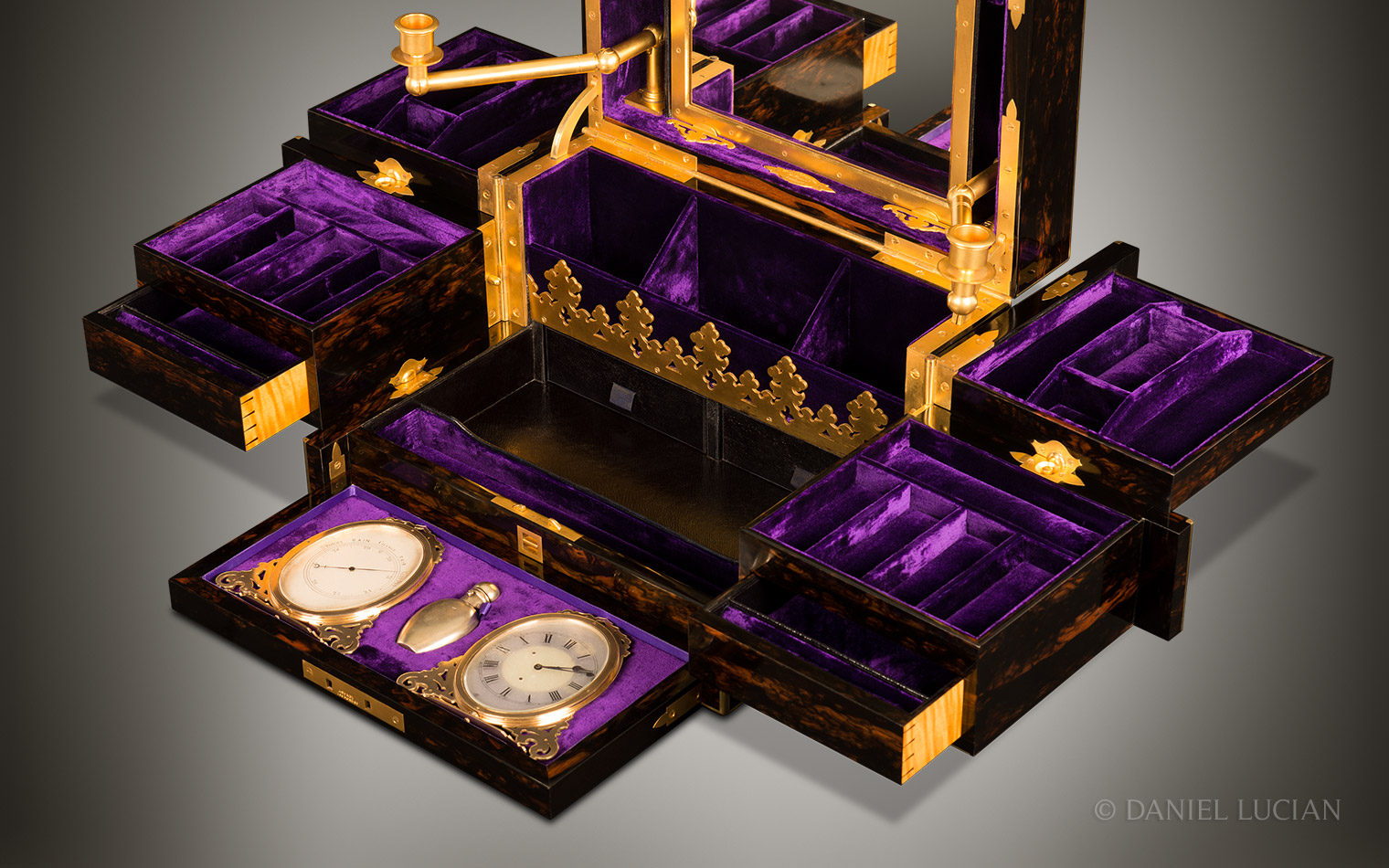
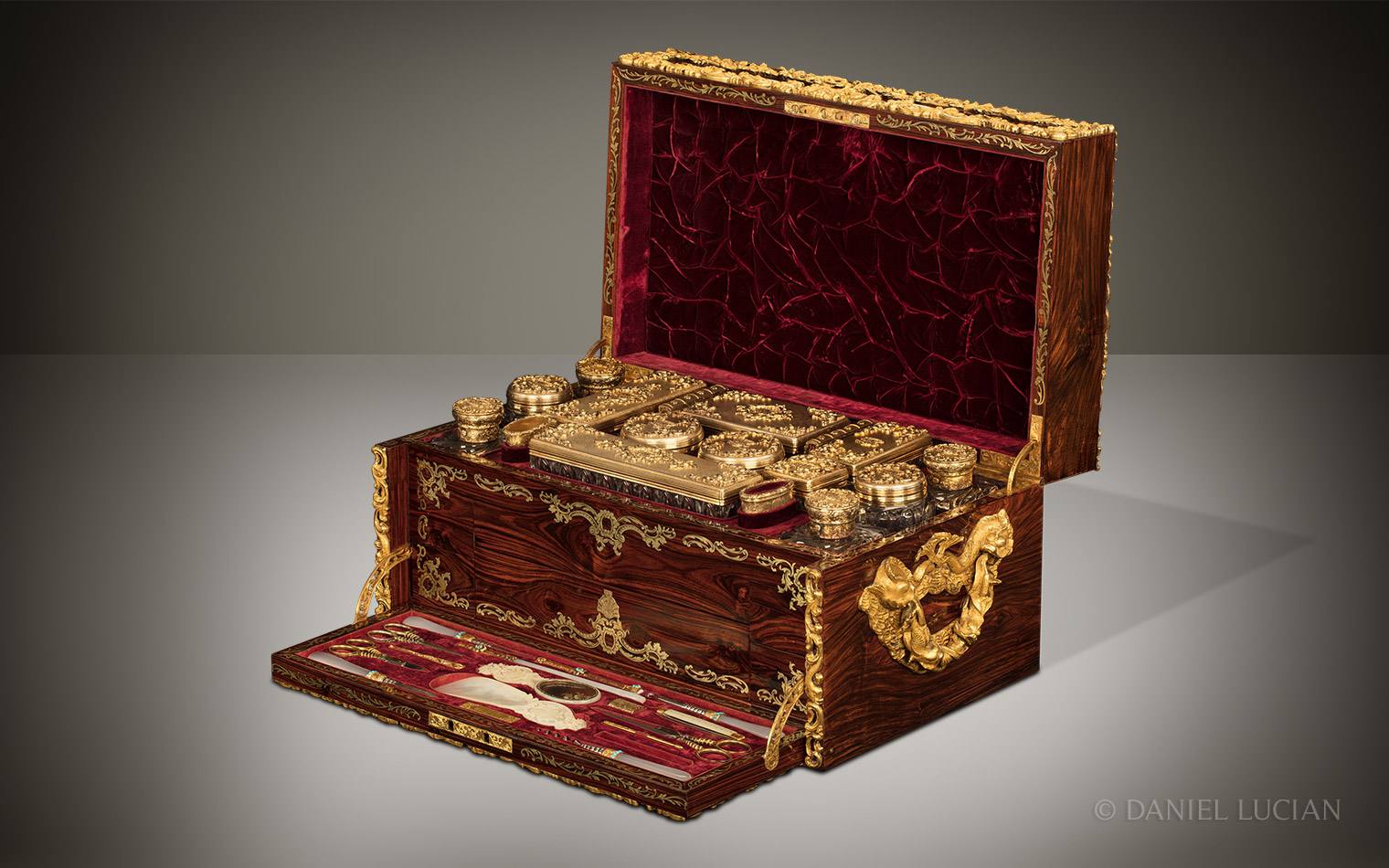
Asprey entered one of its dressing cases into the Great Exhibition of 1851, receiving an ‘Honourable Mention’ for the quality of its workmanship (see Asprey's 'Great Exhibition' Dressing Case). The exhibition brought considerable recognition to the firm and helped establish Asprey’s growing reputation for luxury and exceptional craftsmanship.
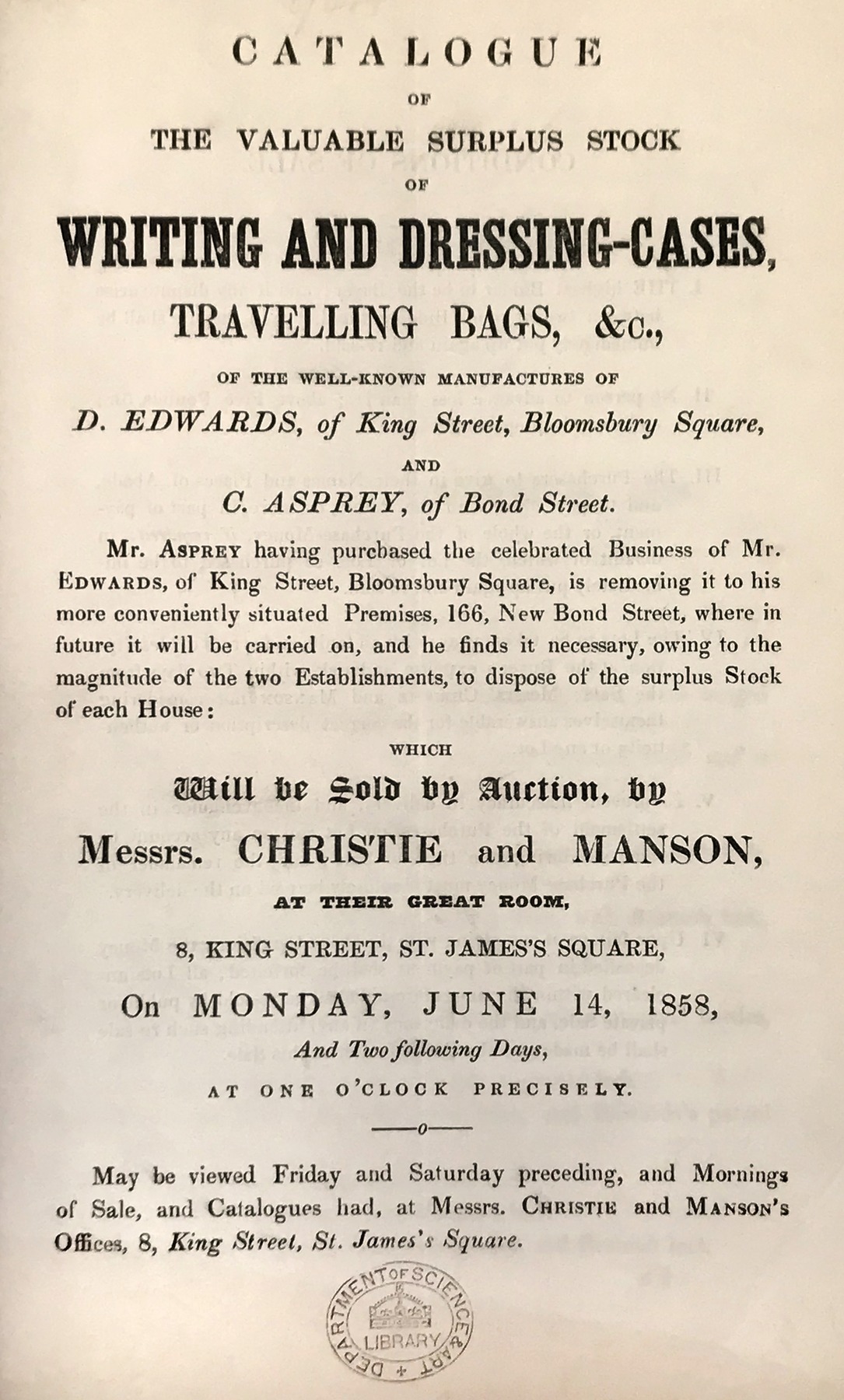
In 1858, Asprey absorbed the highly respected firm of Edwards into its business.
Purchasing the Alfred Club at 22 Albemarle Street in 1861, Asprey expanded its premises and now had entrances to its shop on two of the most exclusive streets in London.
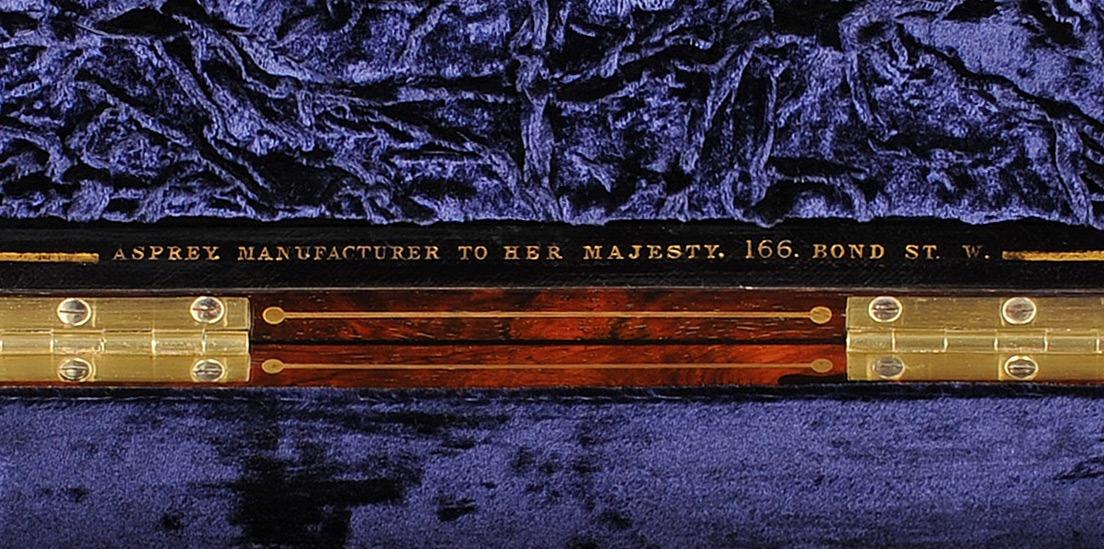
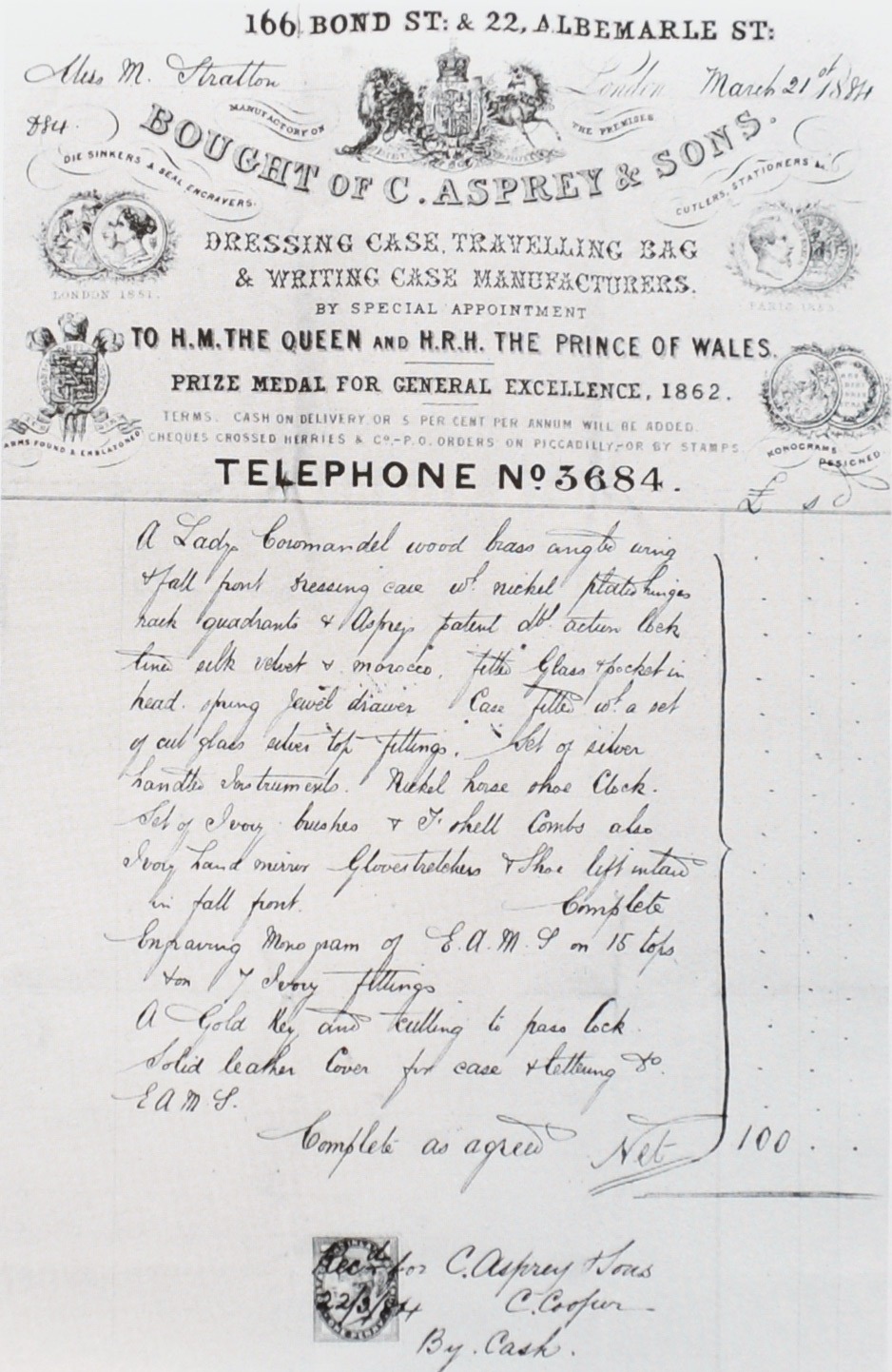
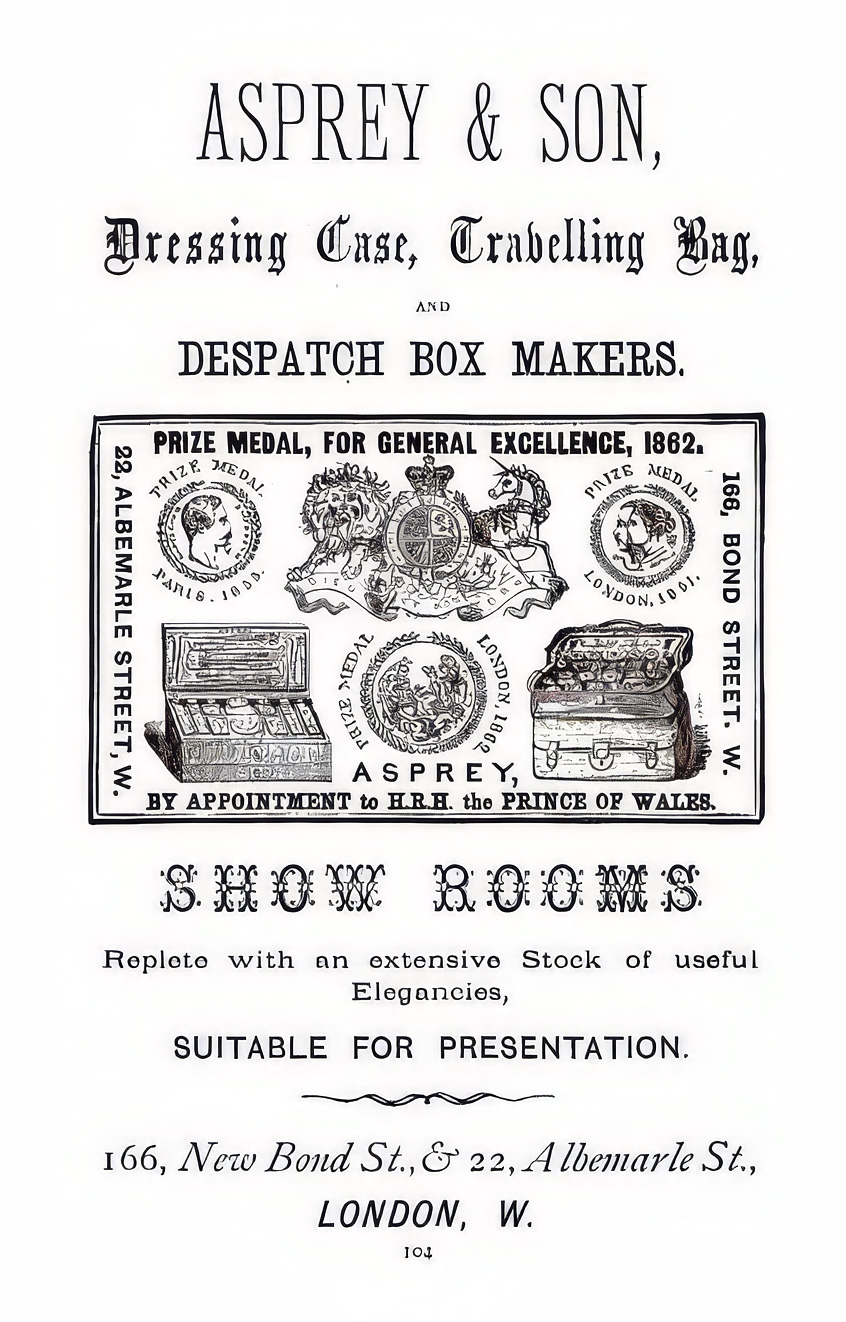
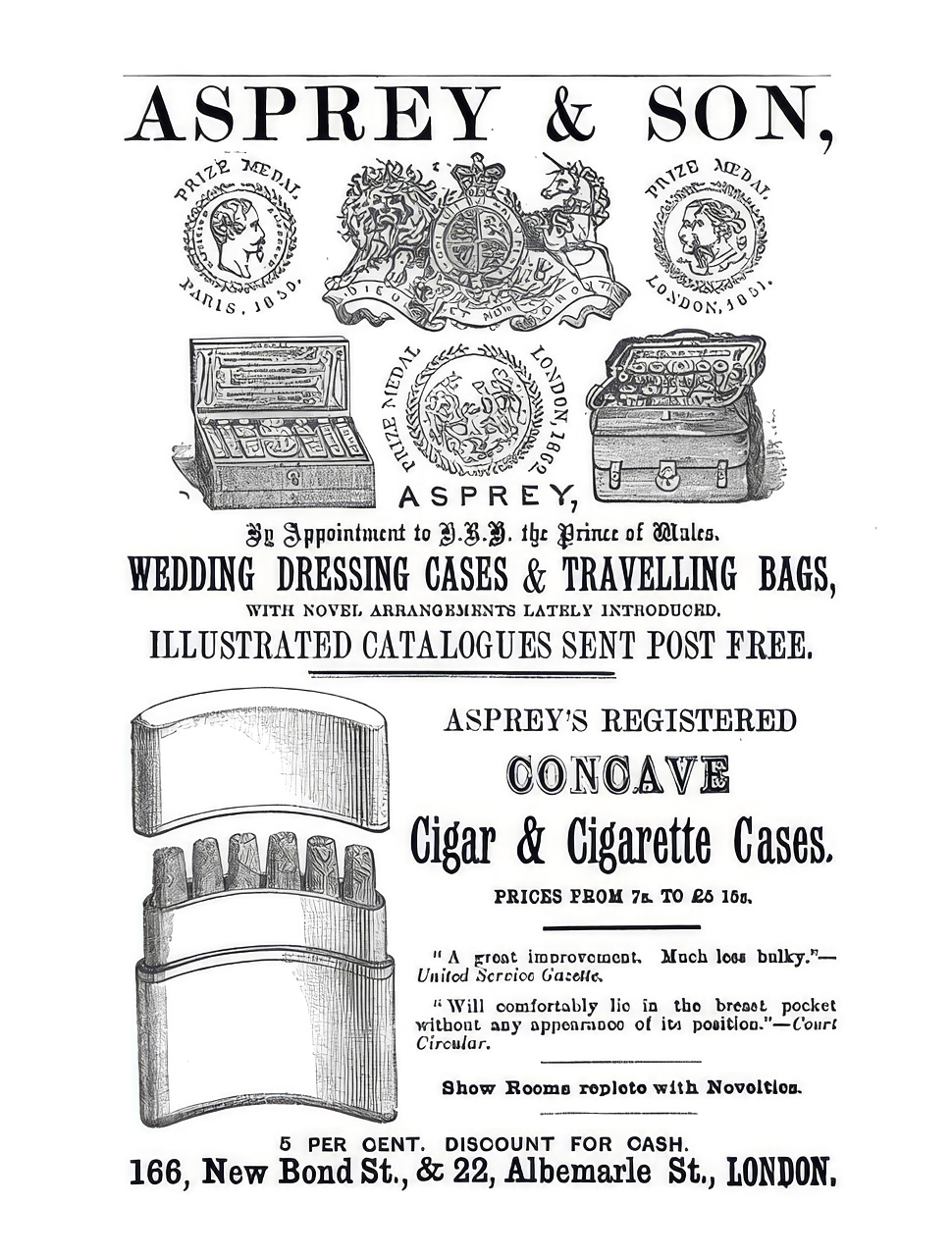
Asprey was awarded a gold medal for its collection of dressing cases presented at the International Exhibition of 1862. In the same year, Queen Victoria awarded the firm a Royal Warrant for its dressing cases, travelling bags and writing cases.
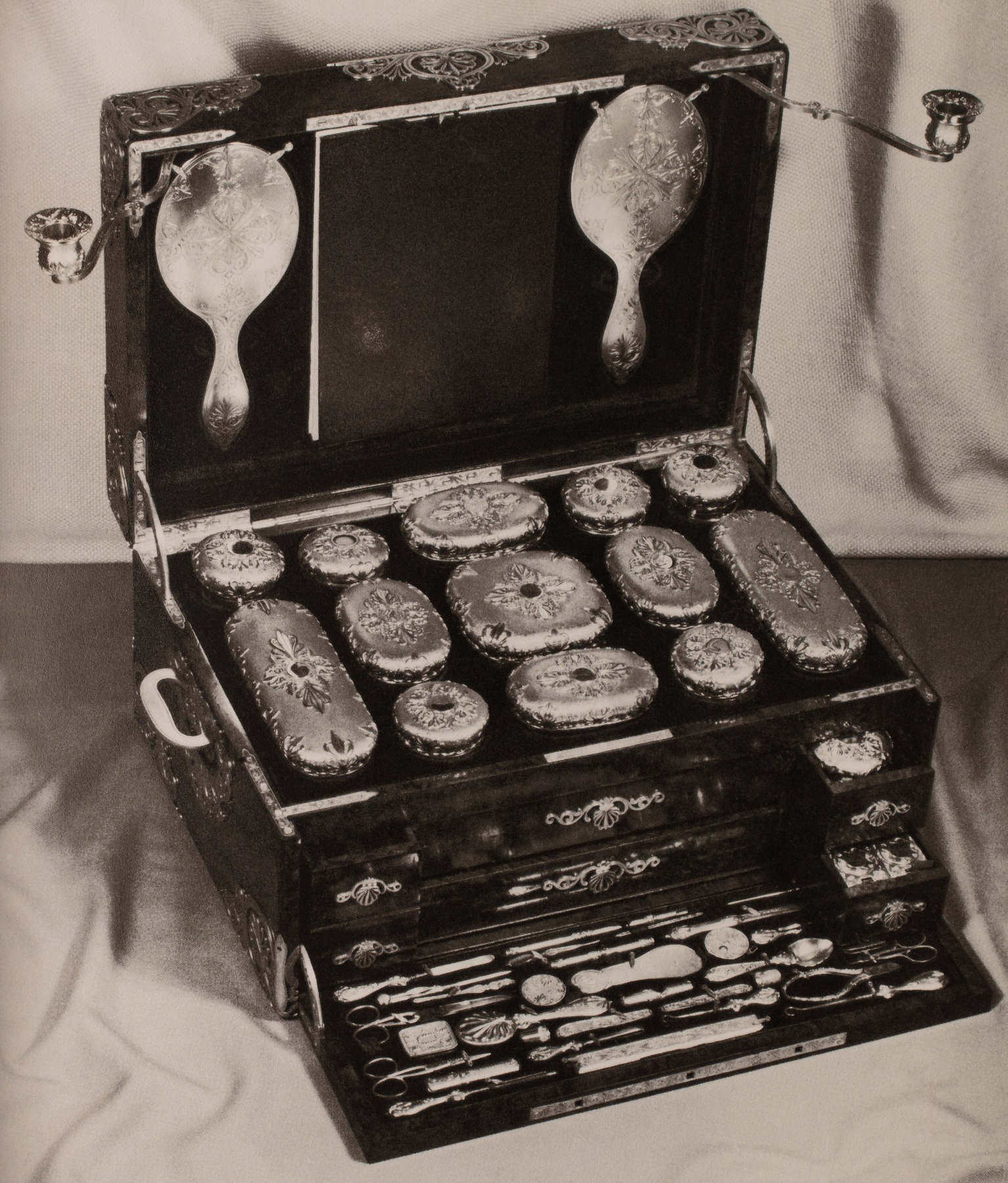
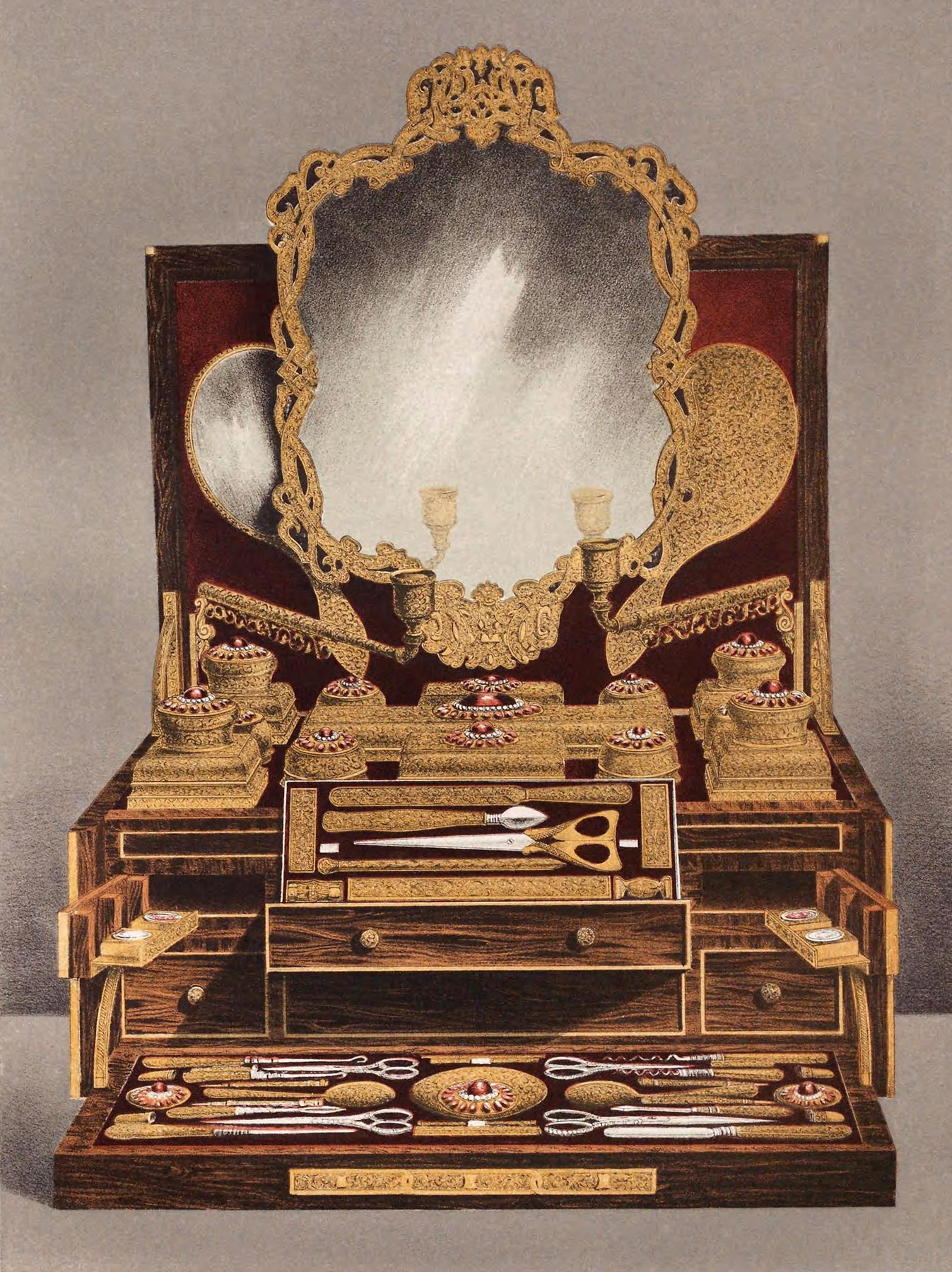
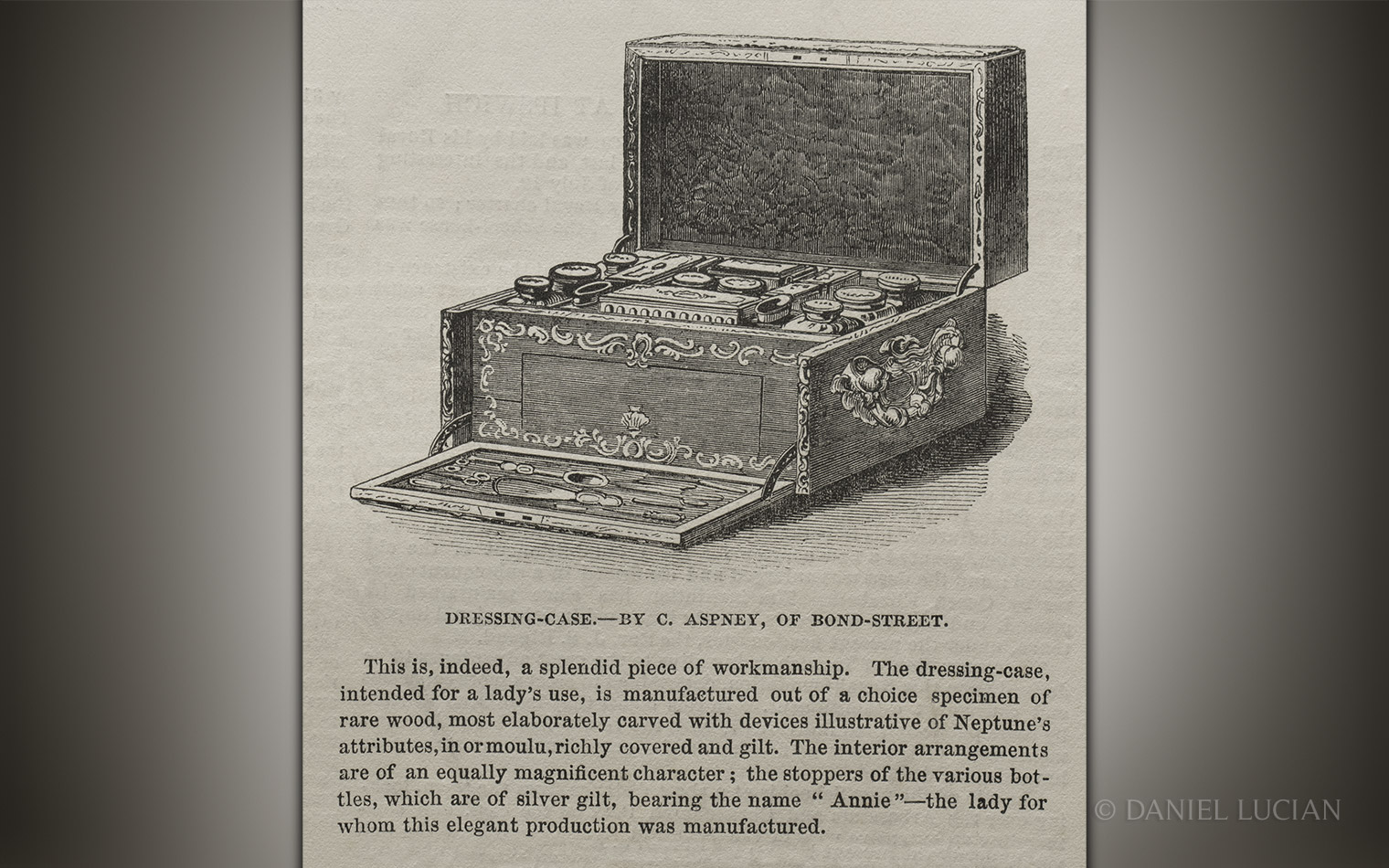
The lithograph above and the following description are taken from ‘Masterpieces of Industrial Art & Sculpture at the International Exhibition, 1862’ by J. B. Waring.
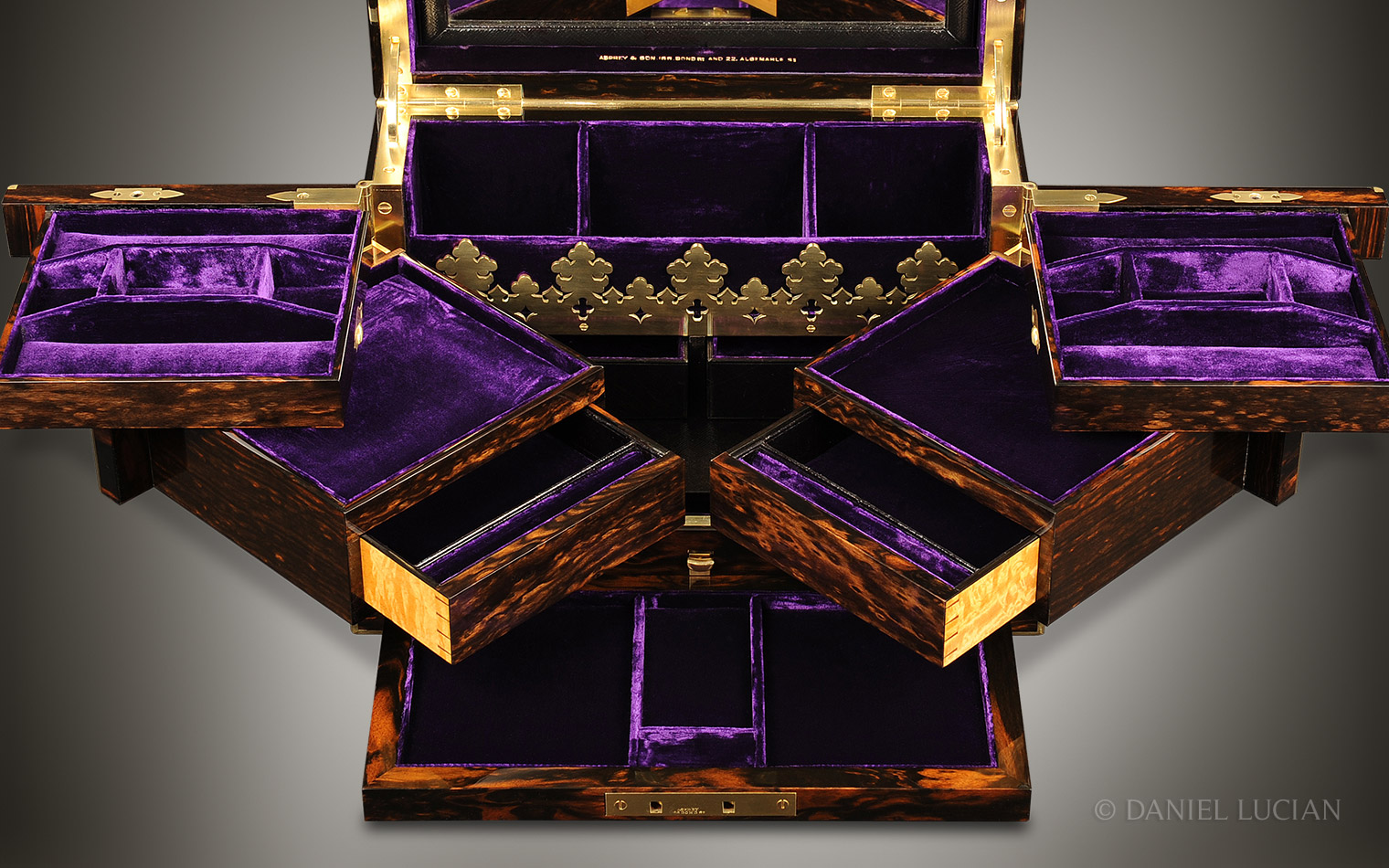
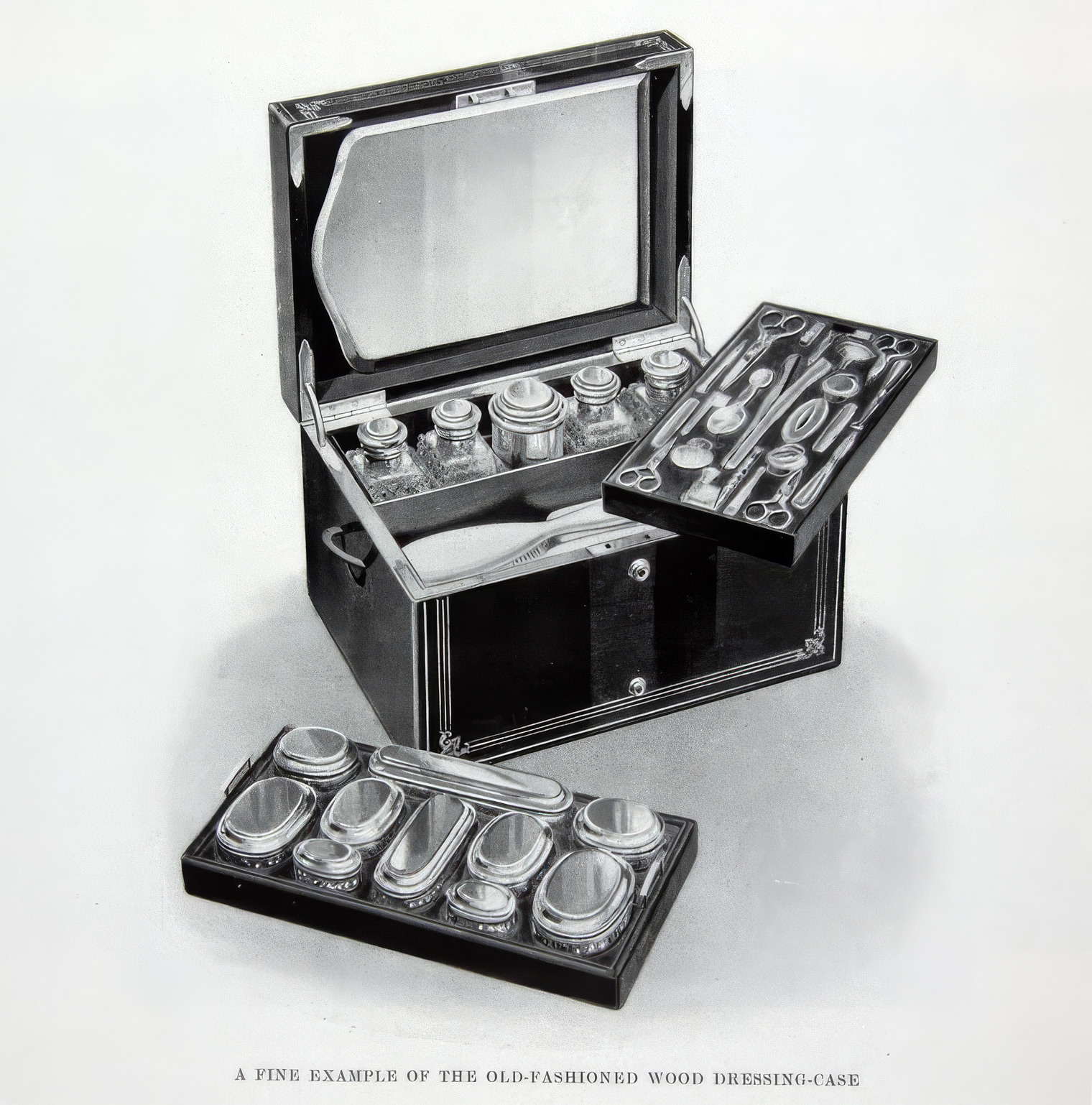
‘Mr. Asprey, who received prize-medals at the London Exhibition of 1851, and at that of Paris, 1855, for his productions, obtained also, in 1862, a medal for the general excellence of his manufactures. We have selected as his chef-d’oeuvre a lady’s dressing-case, of Coromandel or Bengal wood, inlaid and mounted externally with brass, and lined internally with rich ruby velvet. The various toilette fittings are of cut crystal glass, with silver-gilt tops, the centre of each being enriched with a carbuncle surrounded with pearls, consisting in all of 872 stones; the large mirror can be adjusted to any angle, and on each side of it are two hand-mirrors; beneath these are candle-branches so arranged as to fold up in the lid. The fall front is fitted with a call-bell, mariner’s compass, thermometer, whistle, magnifier, glove-stretcher, and in fact a list of objects which quite exhaust the requisites for the road or the boudoir. There are very ingeniously contrived drawers for jewels, bank-notes, gold, &c. &c. besides repositories for pen, ink, and paper. By pressing a spring, a slide is formed into a writing-desk independent of all the fittings. There is, indeed, an infinity of ingenious contrivances, a multiplicity of objects, and an excellence of workmanship shown in this case, which more than sustain Mr. Asprey’s well-earned reputation. The size of the case was about 20 inches by 14 inches, and 10 inches deep; it was valued at £1500 [approximately £175,000 in today’s money].’
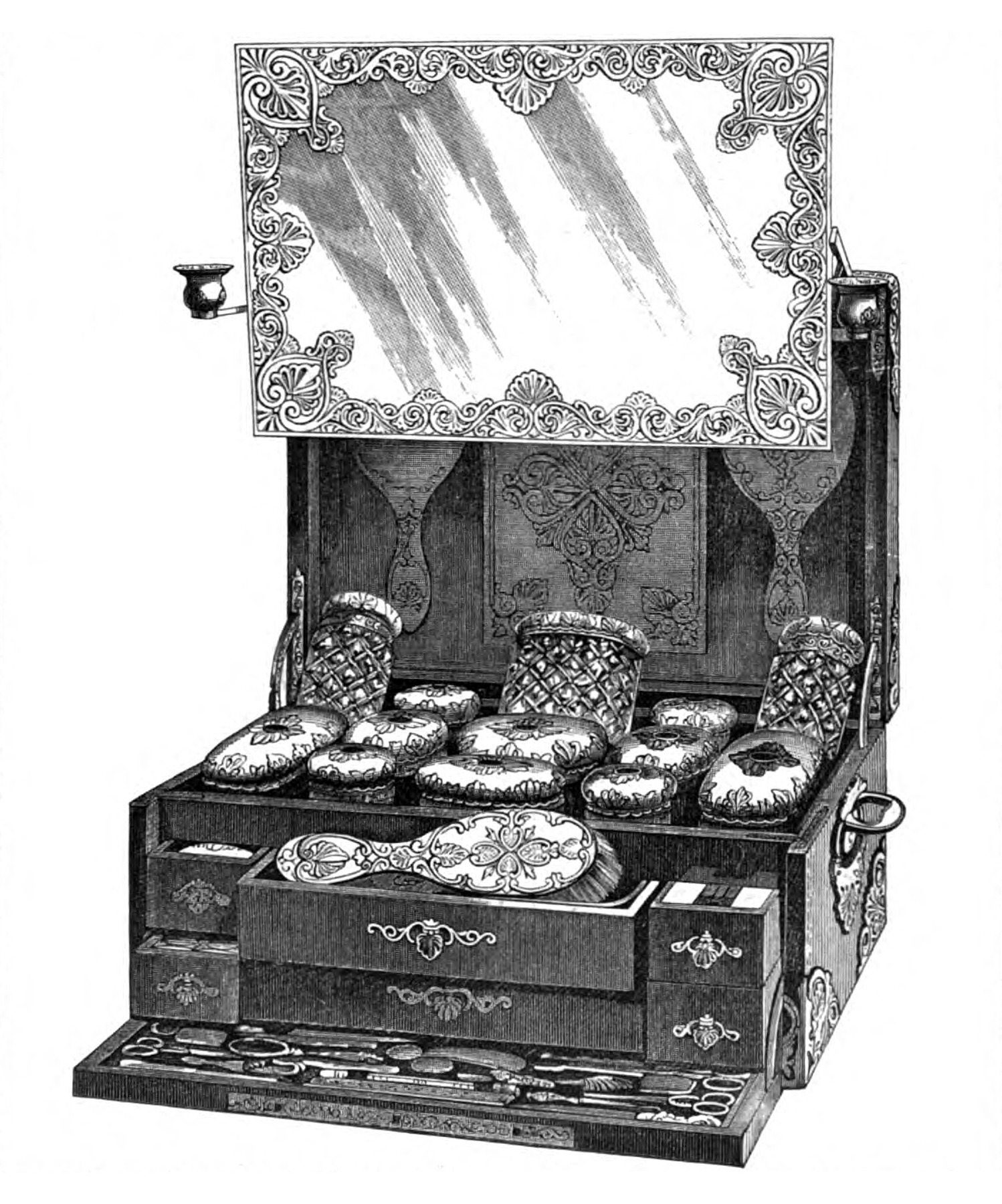
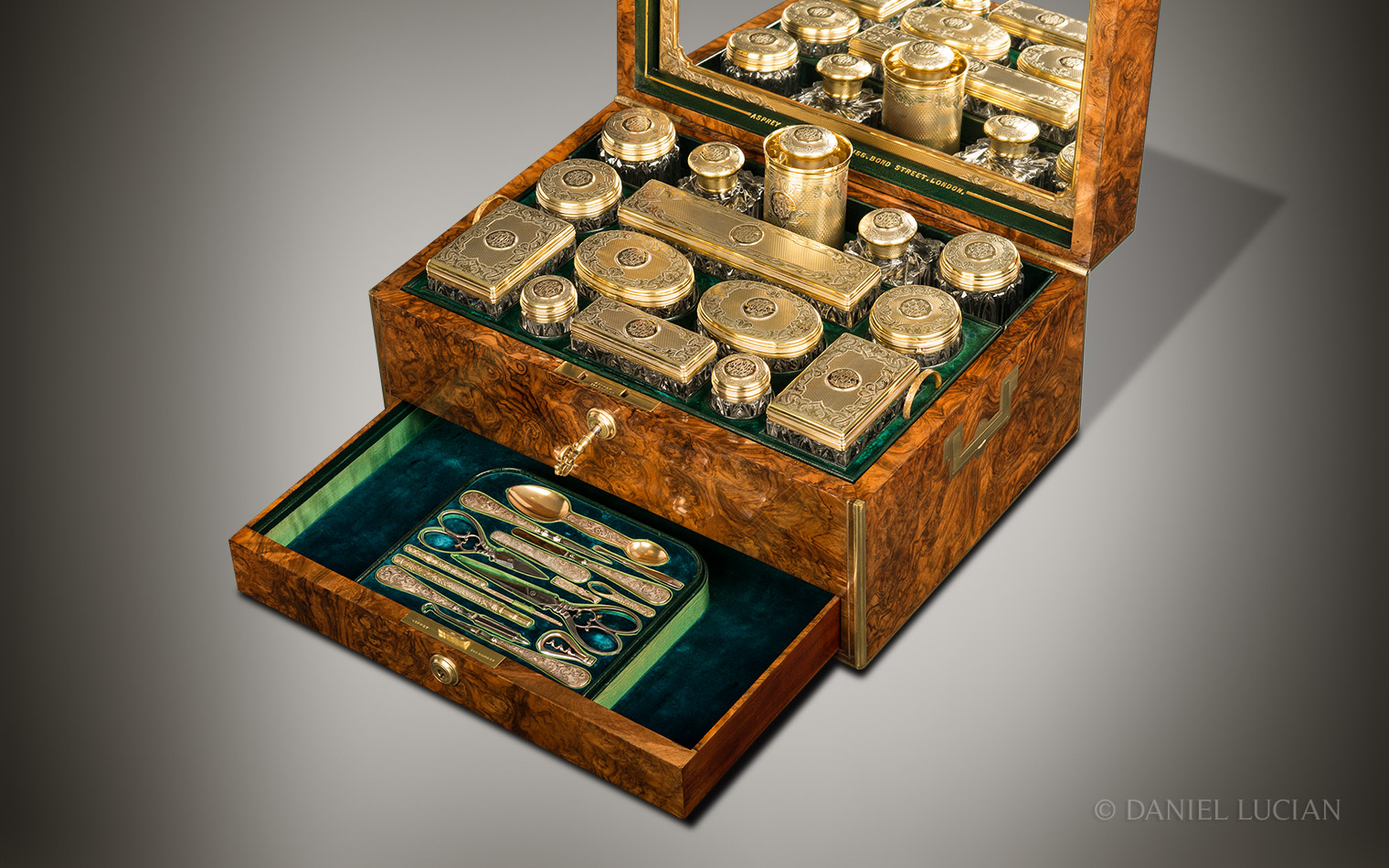
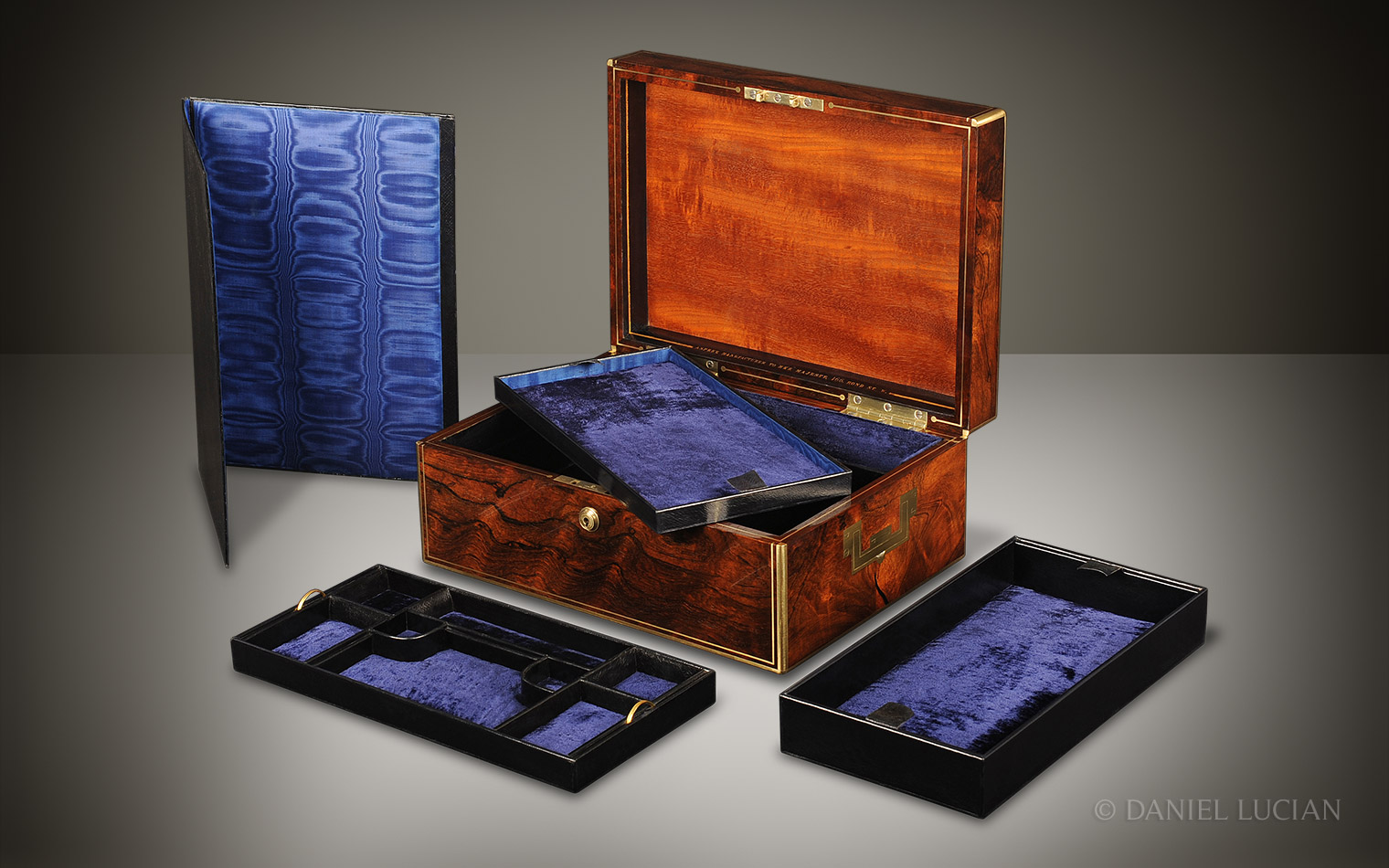
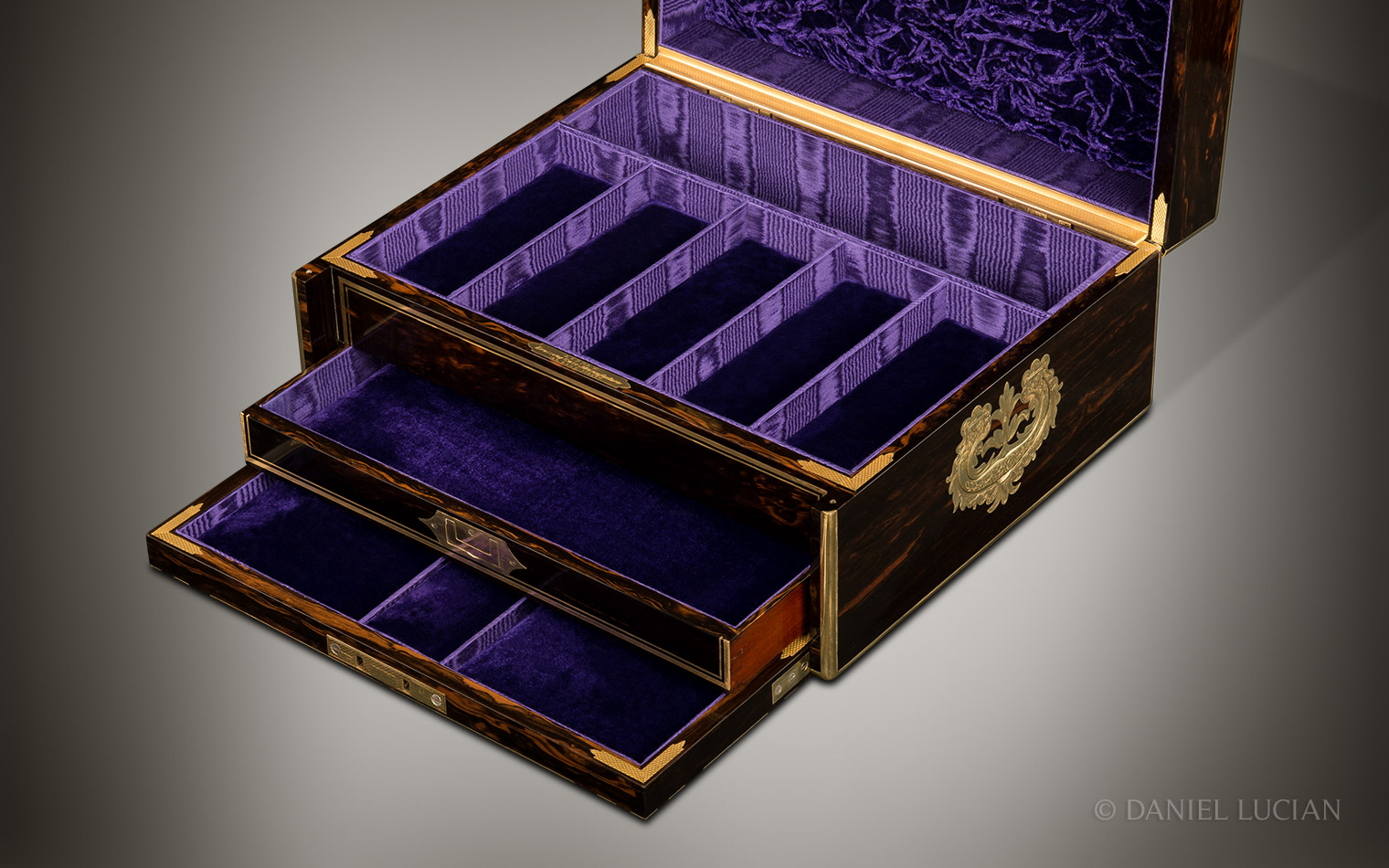
Asprey was an accomplished manufacturer in its own right, producing a wide range of luxury goods from its own workshops. However, it also commissioned work from other leading specialist manufacturers, including George Betjemann & Sons, who produced boxes that were subsequently retailed under the Asprey name.
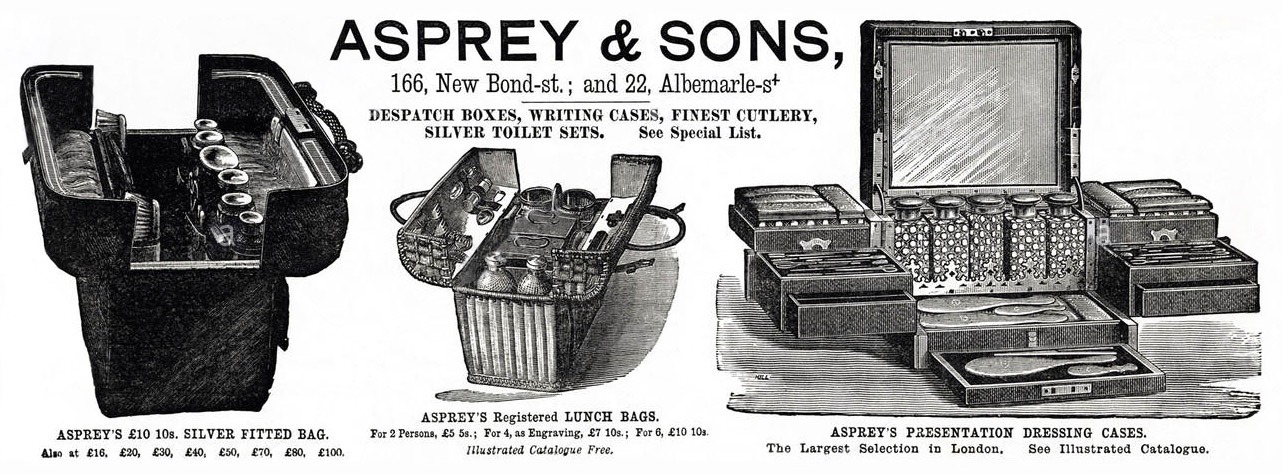
In 1872, the business name officially changed to Charles Asprey & Son and, in 1879, to Charles Asprey & Sons, with the inclusion of Charles (II)’s sons, Charles (III) and George Edward Asprey. (See note below.)
.JPG)
Asprey acquired the firm of Leuchars & Son in 1888 and began sharing the manufactory at 8 Sherwood Street, Golden Square, London. The business of Leuchars & Son, however, continued to trade from 38 & 39 Piccadilly, London until 1902.
In 1889, the business was renamed C & G. E. Asprey, despite Charles (II) not retiring until 1891. The final name change of the nineteenth century came in 1900, when the business became known as Asprey & Co. In 1906, Asprey acquired its business competitors and neighbours, Houghton & Gunn.
Note:
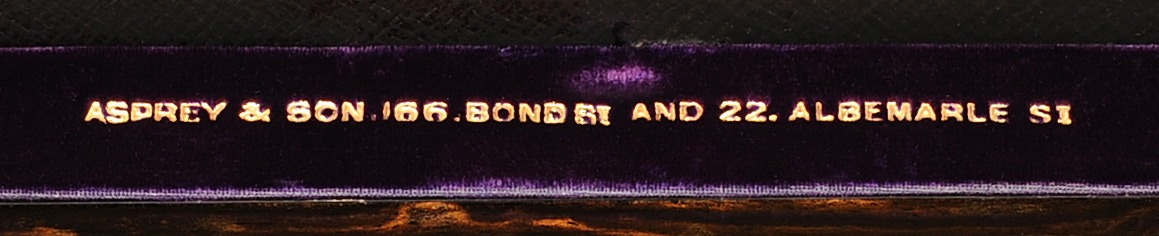
Despite these official dates of name change, pieces signed ‘Asprey & Son’ or ‘Asprey & Sons’ have appeared considerably earlier than these dates would suggest.