Edwards
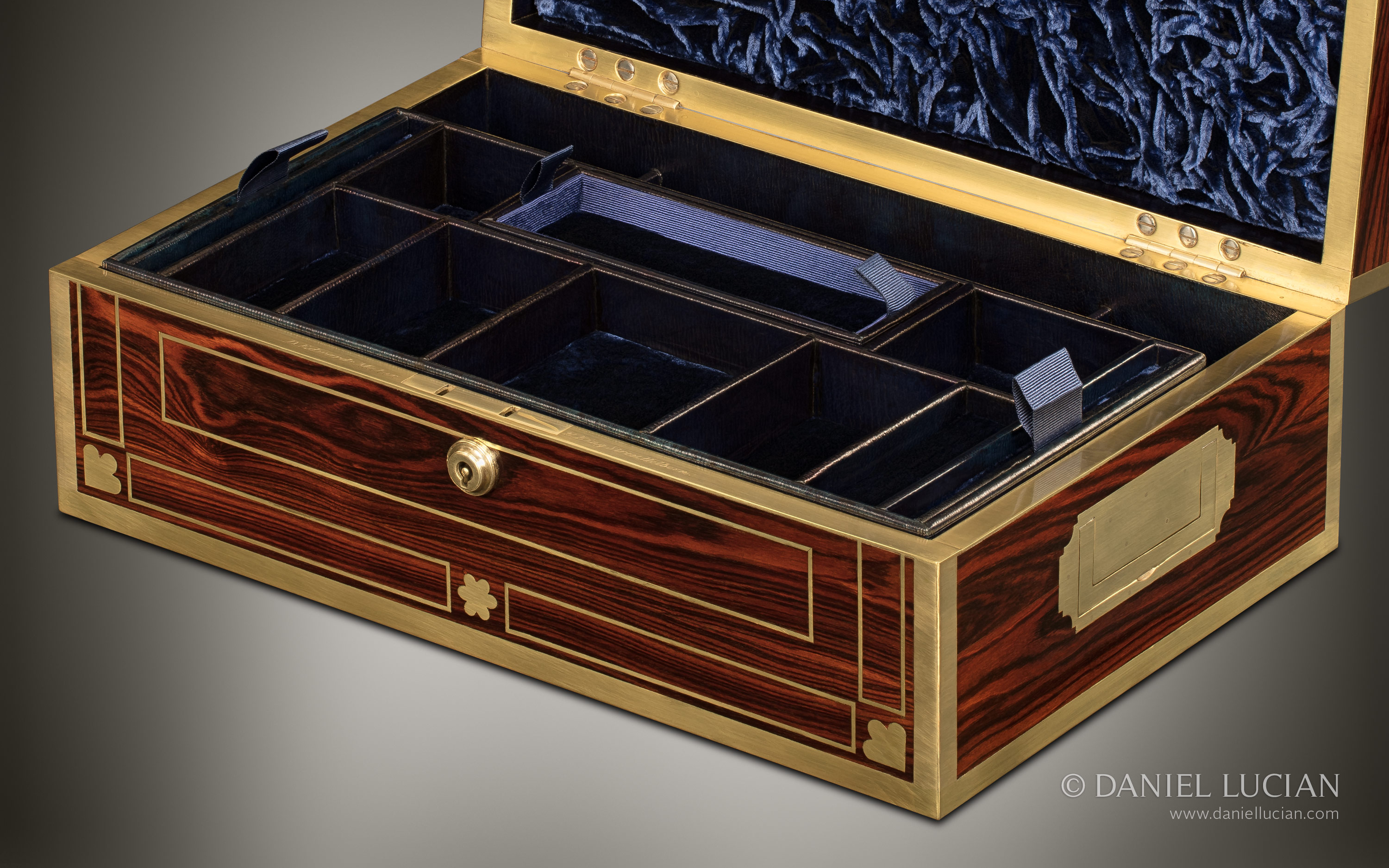
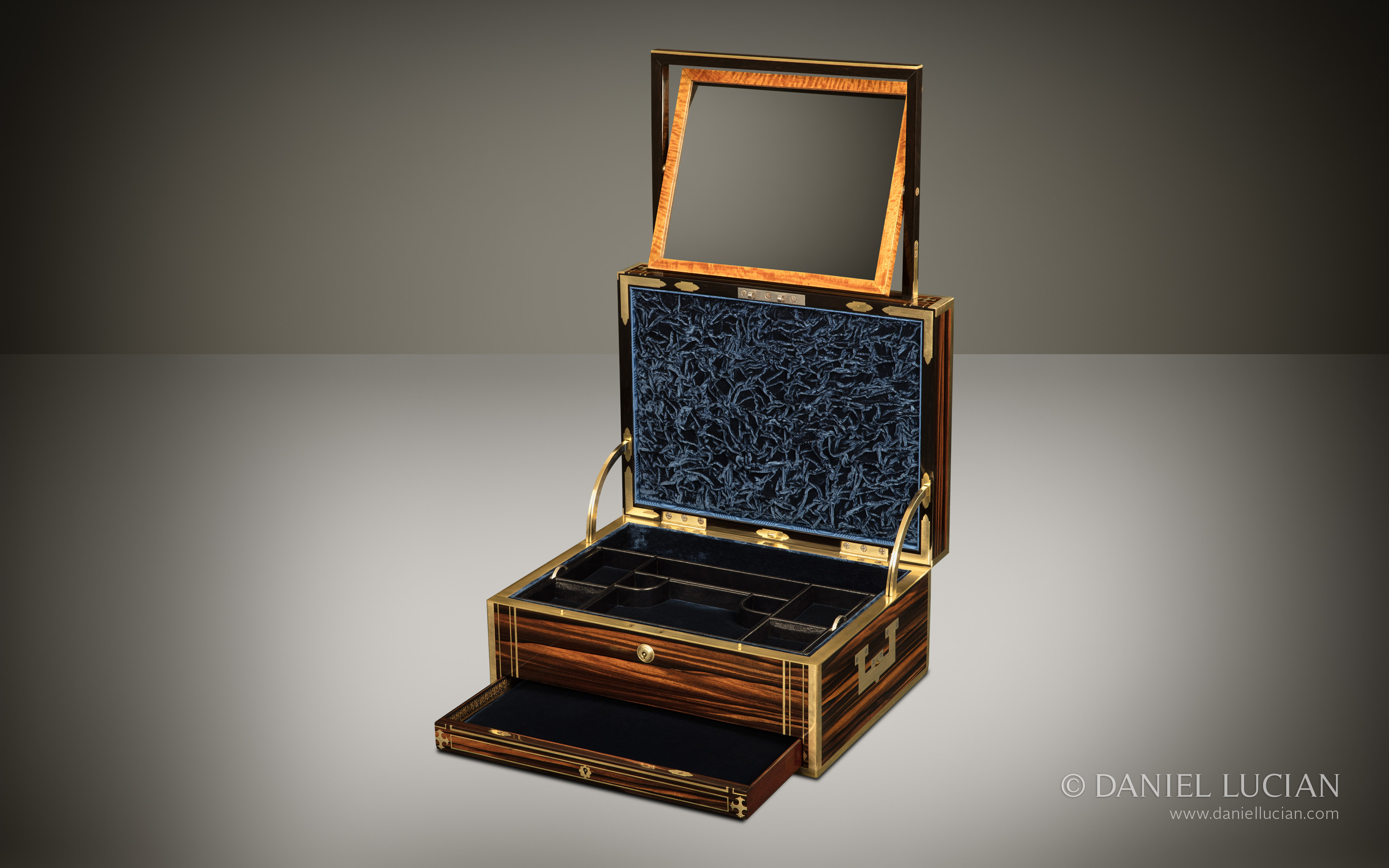
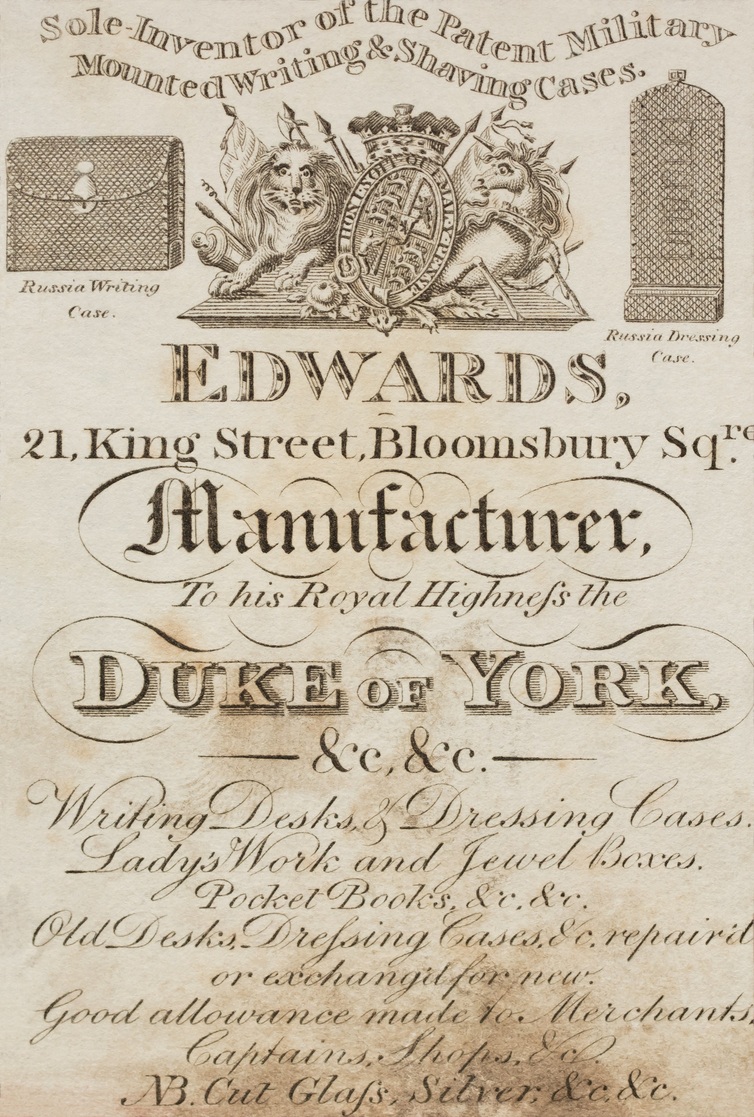
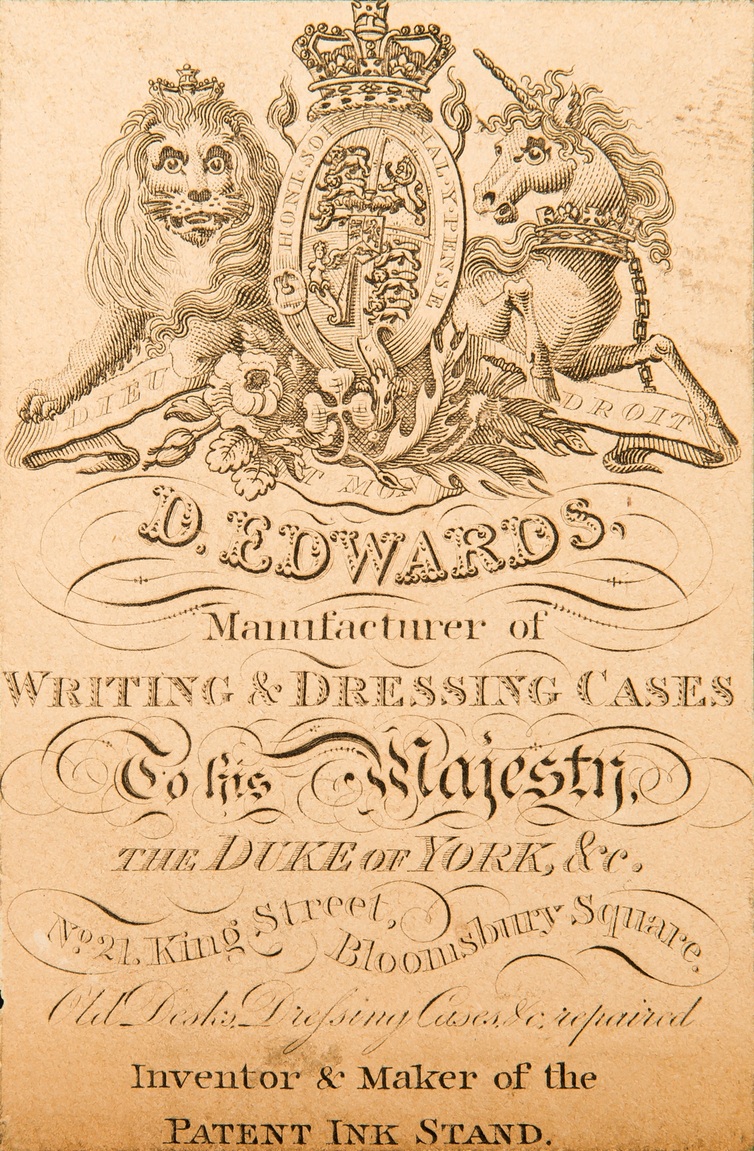
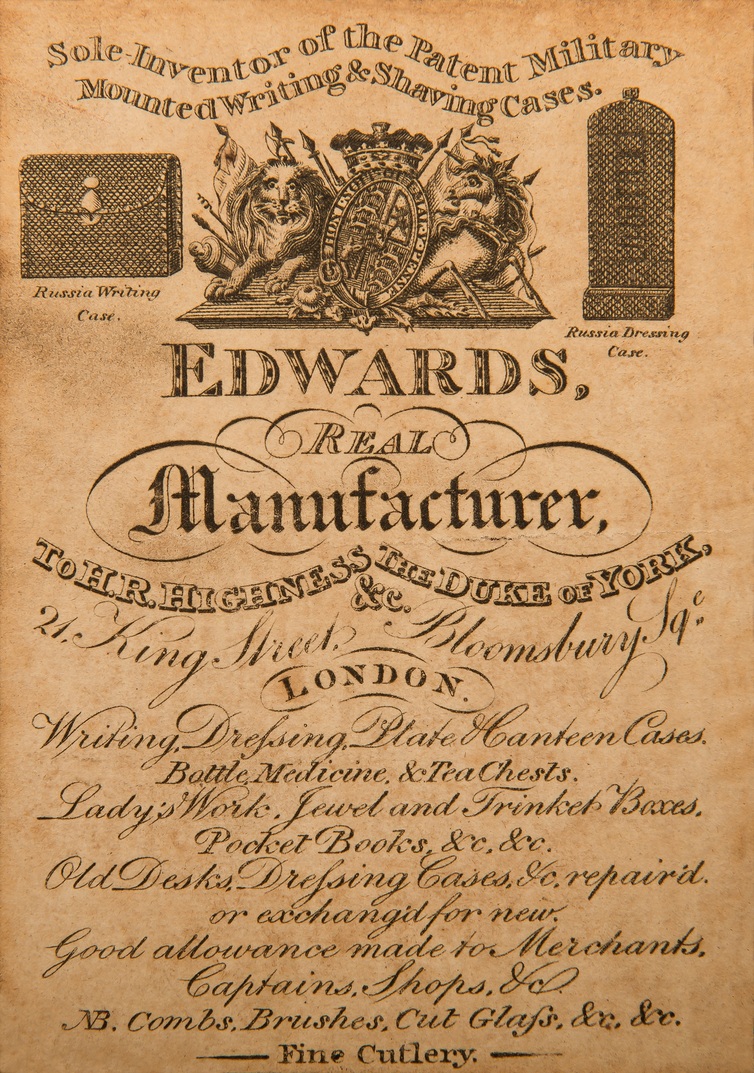
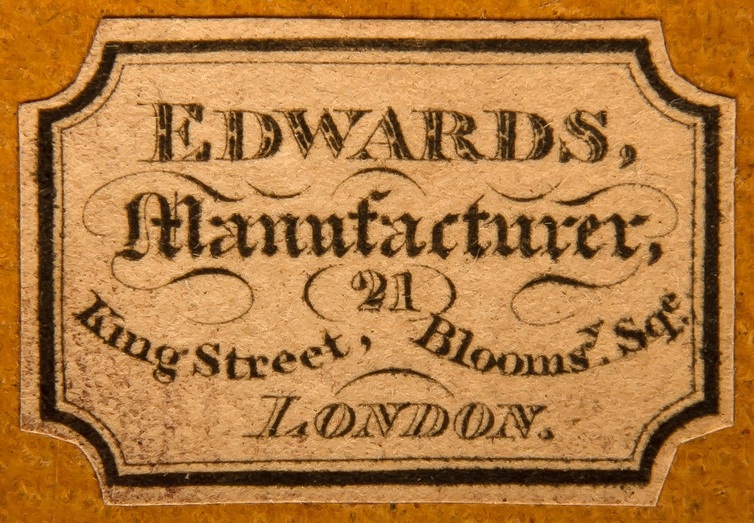
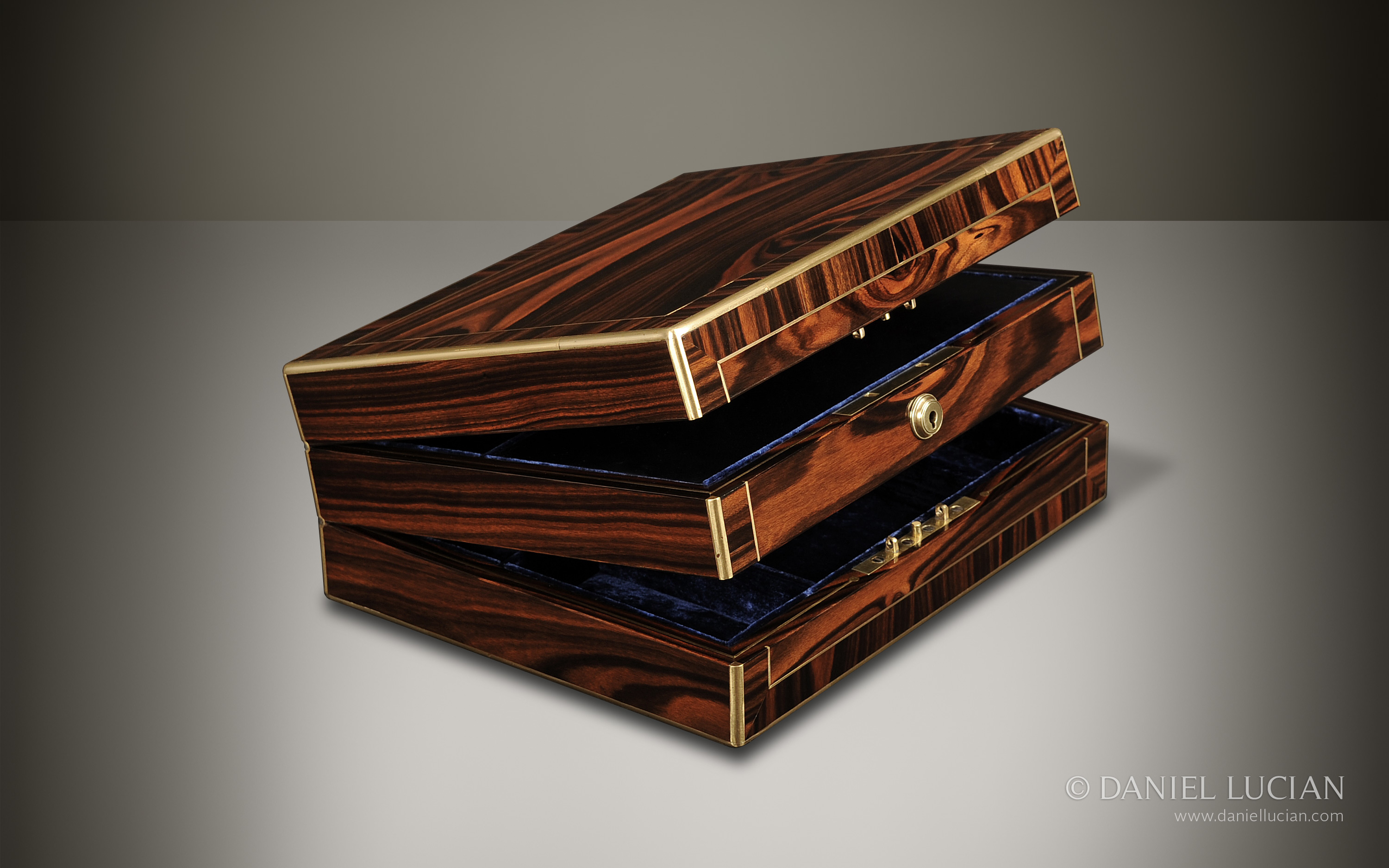
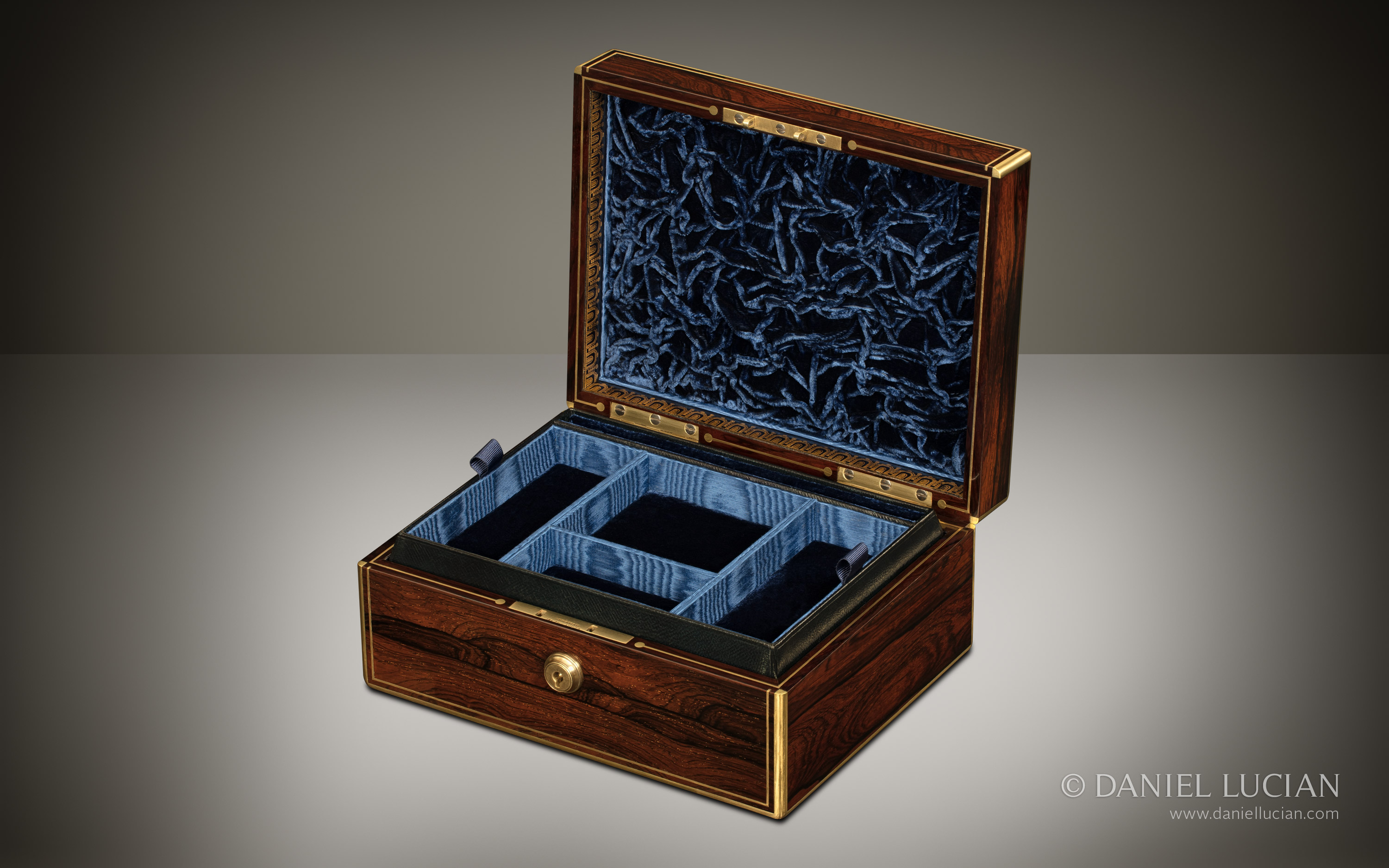
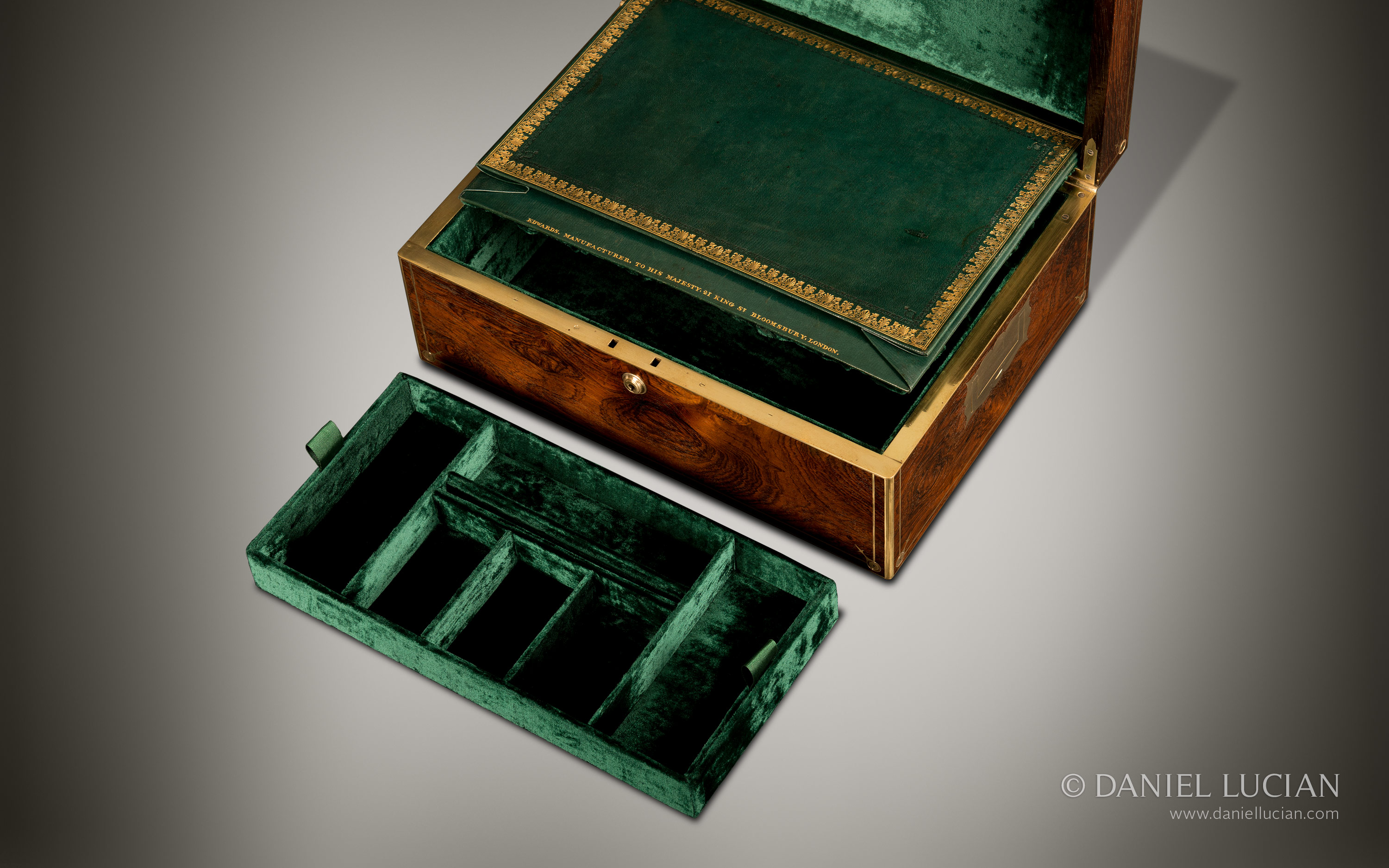
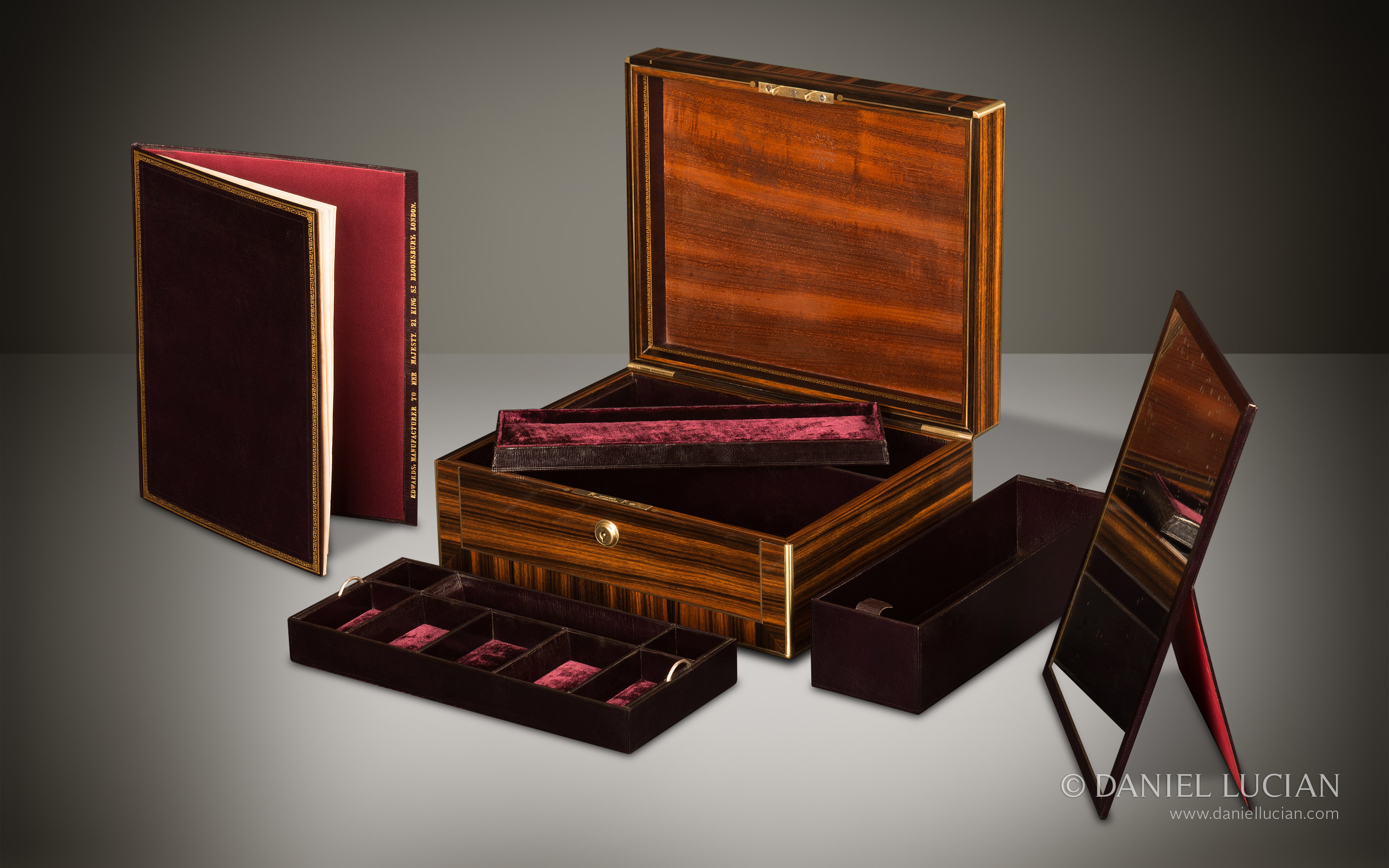
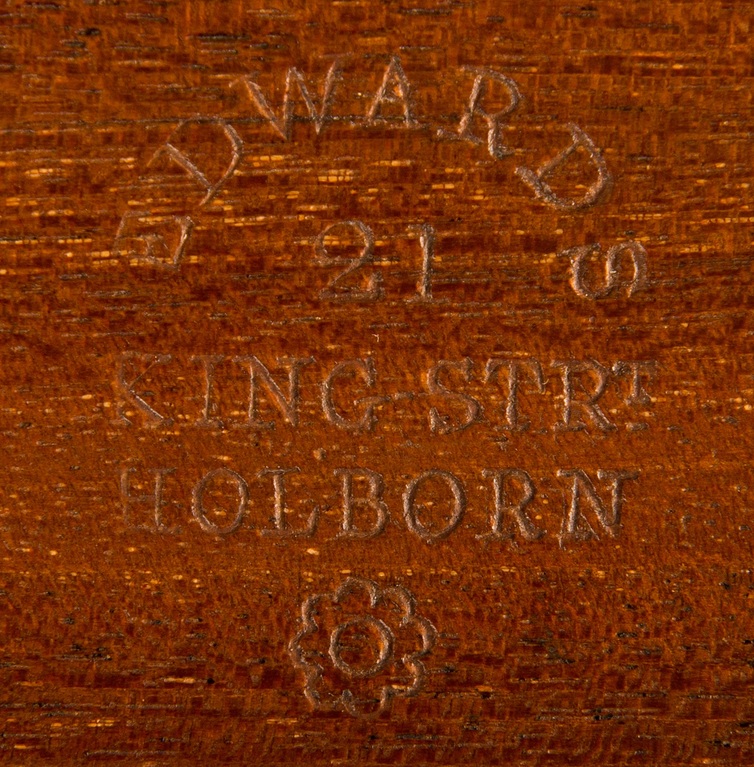
David Edwards established his cabinetmaking business in 1813 at 84 St James’s Street, London. He remained there for approximately a year before moving to 21 King Street, Bloomsbury, at the corner of Orange Street, where he became particularly noted for writing and dressing cases and other finely fitted boxes.
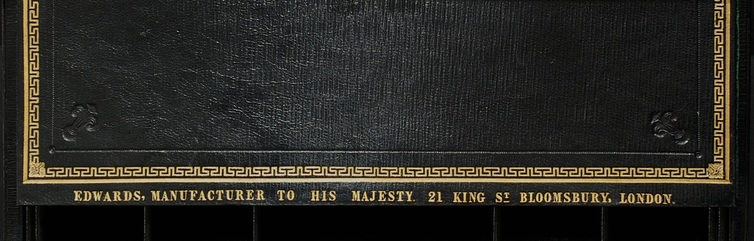
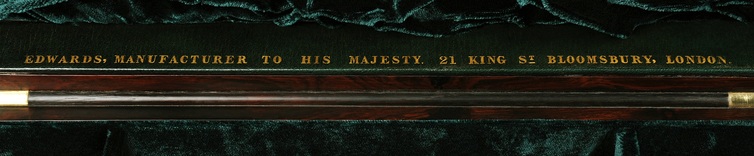
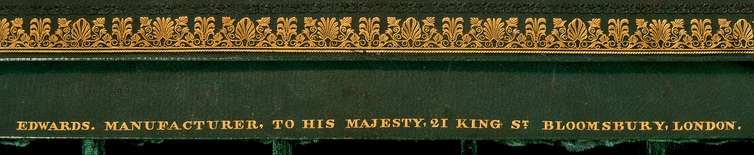
Edwards’ royal patronage began early. Surviving labels from the 1820s identify him as ‘Manufacturer of Writing and Dressing Cases to His Majesty the Duke of York’. Following the accession of William IV in 1830, Edwards was appointed ‘Writing and Dressing Case Manufacturer to His Most Gracious Majesty’.
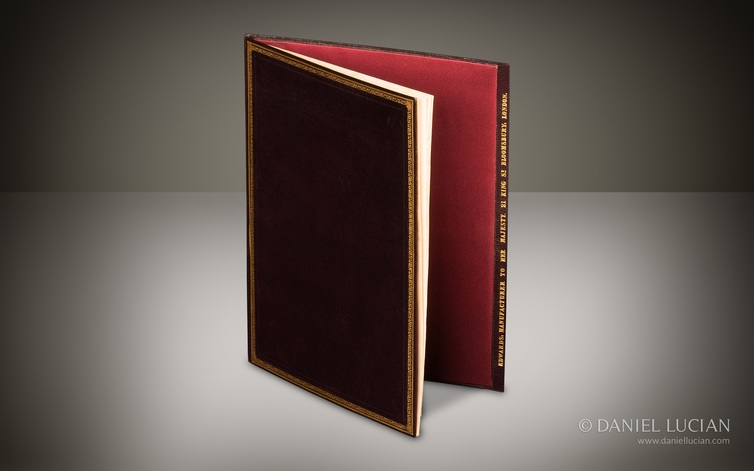
David’s nephew, Thomas Edwards, joined the business in 1832 and subsequently continued the firm following David’s death in 1848. Edwards later received a Royal Warrant from Queen Victoria and the Royal Family, with the firm’s labels changing accordingly from references to ‘His Majesty’ to ‘Her Majesty’.
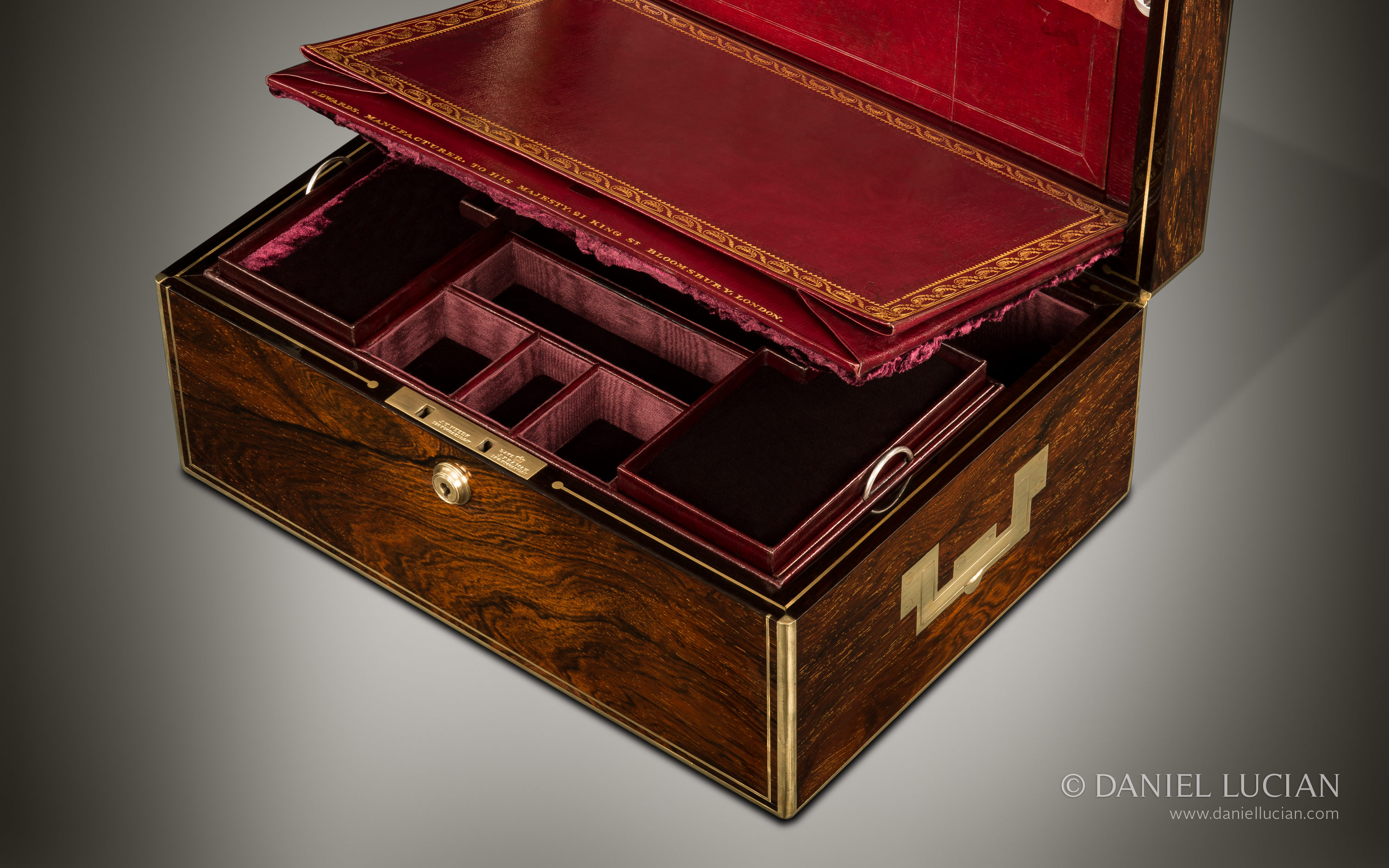
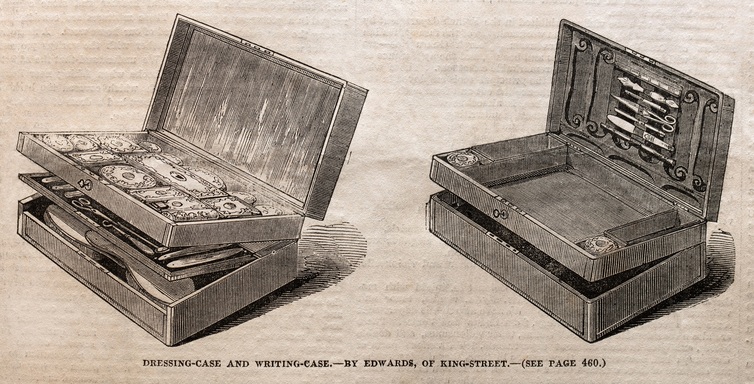
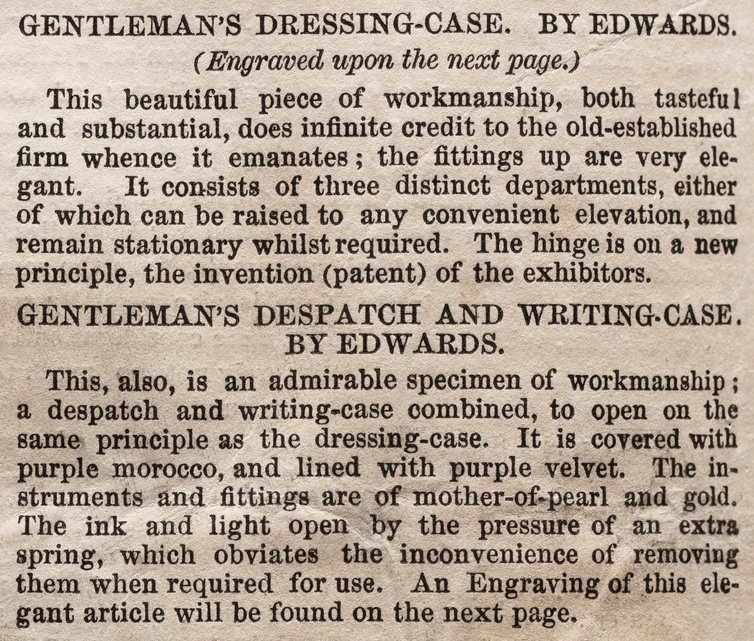
Thomas’s son, Thomas Jeyes Edwards, succeeded him in the running of the business. At the Great Exhibition of 1851, Edwards was awarded a Prize Medal for his dressing cases and writing desks. The jury placed his work in the ‘very highest class of workmanship’, praising both the construction of the cases and the quality of their mounts. They also drew attention to Edwards’s use of friction hinges and the ingenious arrangement of the interiors, while noting that the exceptional quality of the work was reflected in its high price.
Thomas Jeyes remained at the forefront of the business until Edwards was absorbed into Asprey in 1858, after which he continued to work for Asprey until his retirement in 1872.