The International Exhibition of 1862
The International Exhibition of 1862, sometimes referred to as the Great London Exposition, was conceived as a successor to the Great Exhibition of 1851. Sponsored by the Royal Society for the Encouragement of Arts, Manufactures and Commerce, it brought together industrial technology, craftsmanship, fine art and design from 36 countries. The early organisation was undertaken by the Society of Arts before responsibility passed to commissioners appointed specifically for the Exhibition.
The International Exhibition opened on 1 May 1862 and remained open to the public until 15 November, with the official closing ceremony taking place on 1 November. Attracting more than six million visitors and over 28,000 exhibitors, it was considerably larger than its 1851 predecessor and included fine art alongside industrial and manufactured goods.
Financially, the Exhibition was far less successful than its 1851 predecessor. Although later accounts give receipts of £459,632 against expenditure of £458,842 — implying a surplus of just £790 — the Royal Society of Arts archive records that the Exhibition’s receipts were insufficient to cover its overall expenses.
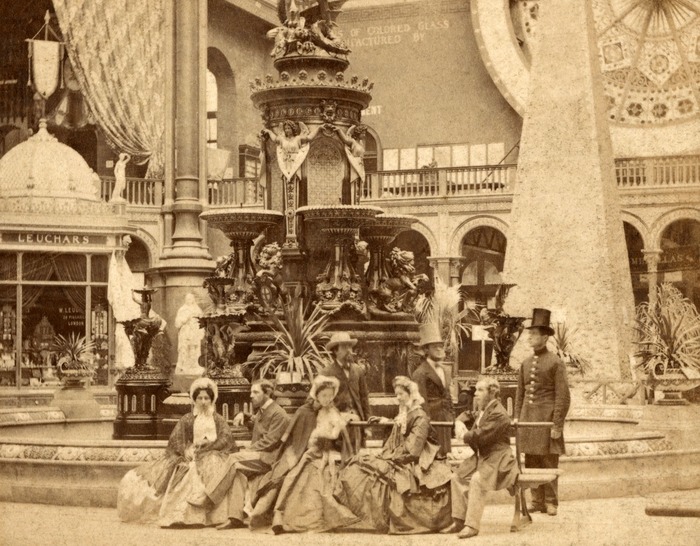
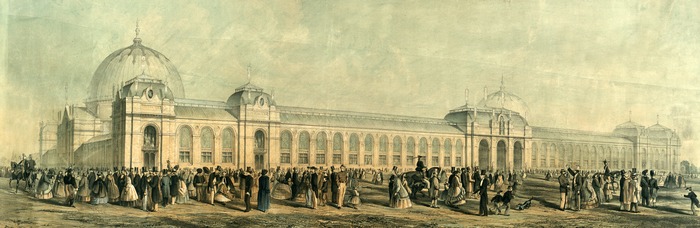
The purpose-built exhibition building stood in South Kensington, with its principal frontage on Cromwell Road, on land acquired following the success of the Great Exhibition. Designed by Captain Francis Fowke of the Royal Engineers and constructed by Lucas Brothers and Sir John Kelk, the vast building occupied more than twenty acres and was distinguished by two enormous glass domes.
Although the International Exhibition was larger in scale than that of 1851, it did not achieve quite the same popular response. Prince Albert, whose enthusiasm and involvement had been so closely associated with the Great Exhibition, died in December 1861, only months before the opening. Queen Victoria remained in mourning and did not attend the opening ceremony, depriving the event of the royal presence that had contributed so much to the atmosphere of 1851. Contemporary opinion on the Exhibition itself was mixed: some critics considered it artistically superior to its predecessor, while others were less impressed by the building and the sheer scale of the event.
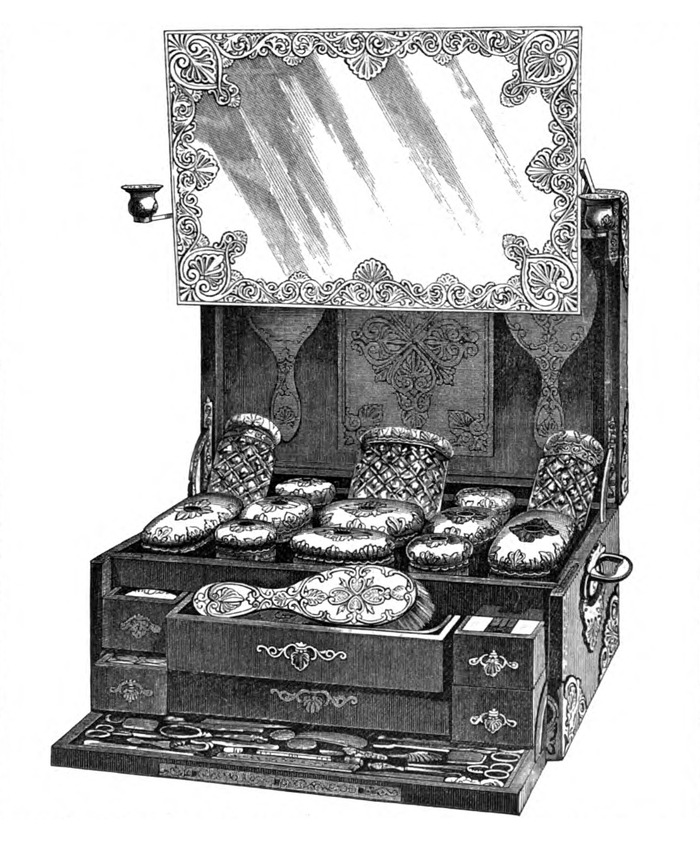
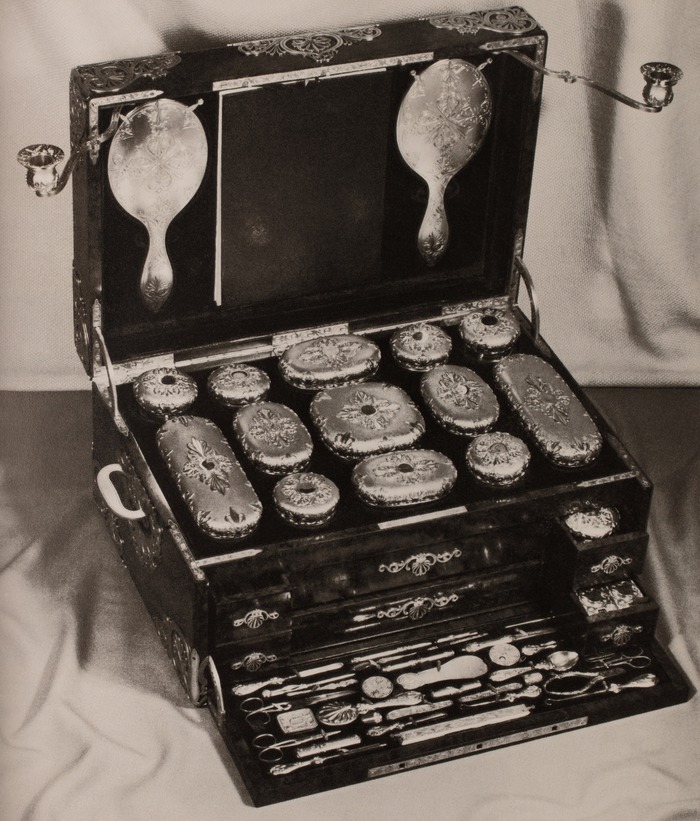
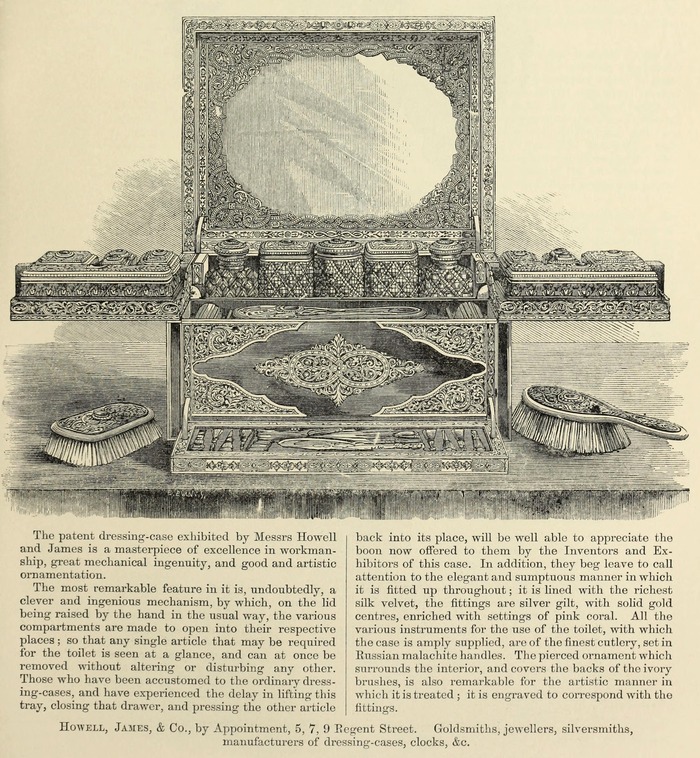
The Exhibition was nevertheless an important showcase for many of the leading dressing-case manufacturers and luxury retailers represented in this Library. Prize Medals were awarded to Asprey, Aucoc, Jenner & Knewstub, Leuchars and Toulmin & Gale, while Howell, James & Co received an Honourable Mention for its dressing cases. Mechi & Bazin and Fitzmaurice West also exhibited, but as members of the jury responsible for their class, their own work was excluded from consideration for awards.