Asprey Patent Bramah Lock
Asprey Patent locks were based on the Bramah lock but incorporated Asprey’s own patented modification. A conventional box lock remained unlocked until secured manually with a key, meaning that a box could easily be closed and left unintentionally unsecured.
One solution was the self-locking Bramah lock, which incorporated a spring-loaded mechanism that automatically engaged when the lid was closed. Although this ensured that the box could not accidentally be left unlocked, it created another inconvenience: the key was required every time the box was opened and it could not safely be stored inside.
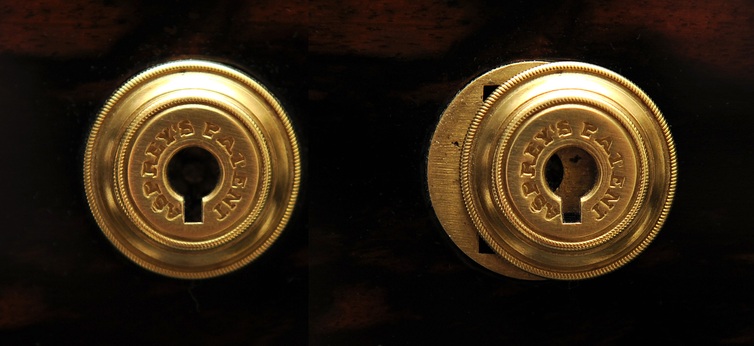
Asprey’s design overcame this problem by incorporating a spring-loaded sliding mechanism into the front aperture of the lock. Moving the aperture either sideways or downwards temporarily disengaged the locking mechanism, allowing the box to be opened without the key. Once released, the aperture immediately returned to its original position and the lock automatically re-engaged.
The key therefore served a different purpose. Turning it locked the sliding aperture mechanism itself, preventing it from being moved and leaving the box completely deadlocked.
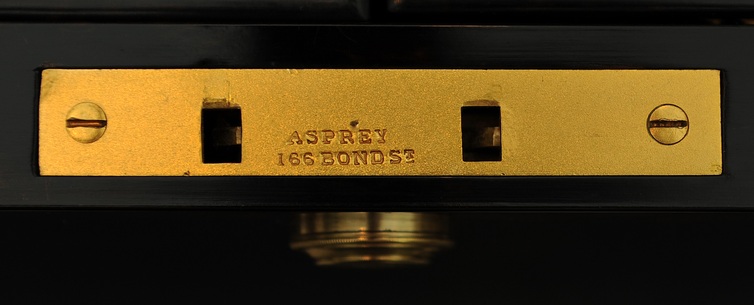
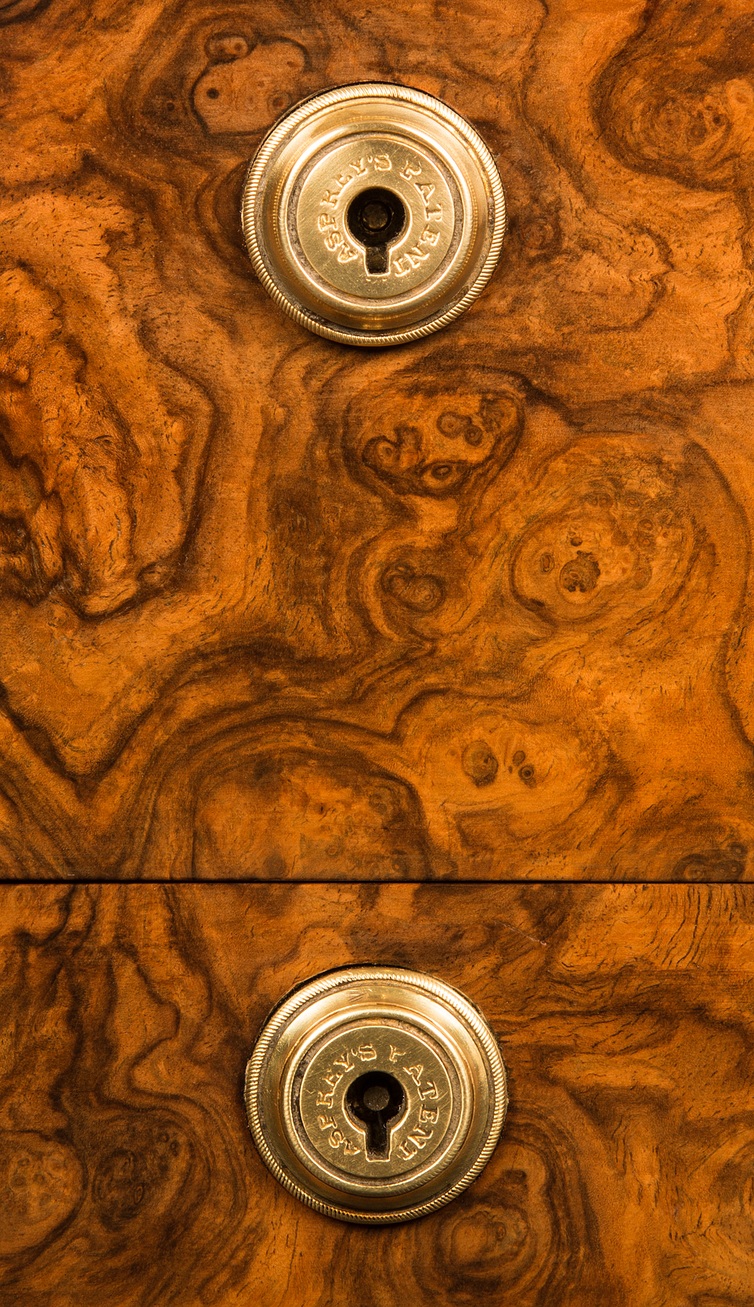
Asprey Patent locks were manufactured with considerable precision, and the sliding release mechanism was extremely discreet. Unless familiar with its operation, there was little indication that the lock could be opened in this way. The most obvious distinction from a conventional Bramah lock is the inscription ‘Asprey’s Patent’ stamped around the circumference of the lock.