In 1859, George Betjemann moved his business to 36 Pentonville Road, London, where he worked alongside his sons George William Betjemann and John Betjemann under the name George Betjemann & Sons. The premises later expanded to include No. 38 by 1871 and No. 40 by 1875. During this period, the firm developed and patented an extraordinary range of innovative mechanisms that transformed the way boxes, dressing cases and other fitted objects could open, extend and reveal their interiors.
Among their extending and expanding boxes, two particularly distinctive systems were the ‘Automatic’ mechanism and the ‘Angle-Wing’ mechanism.
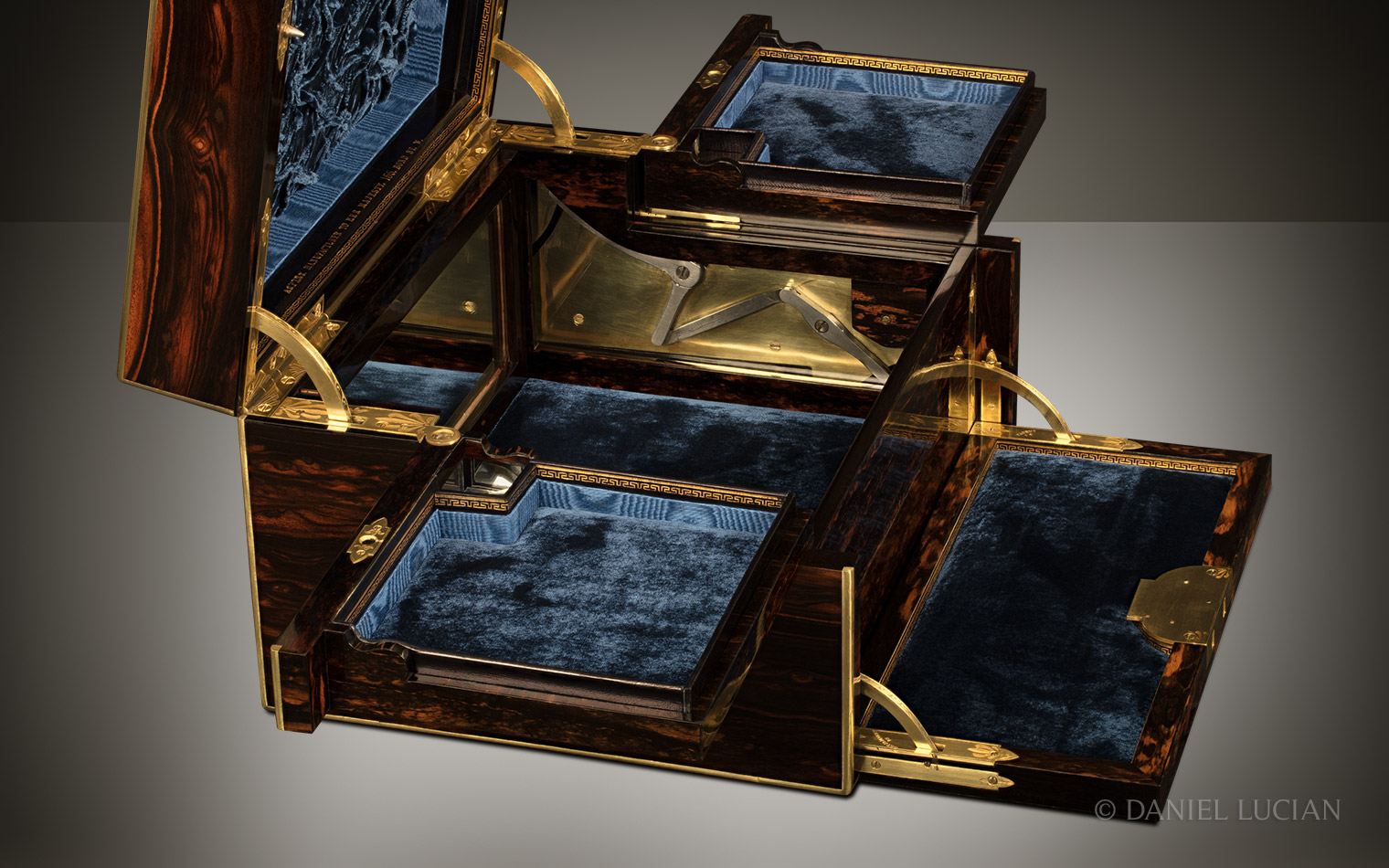
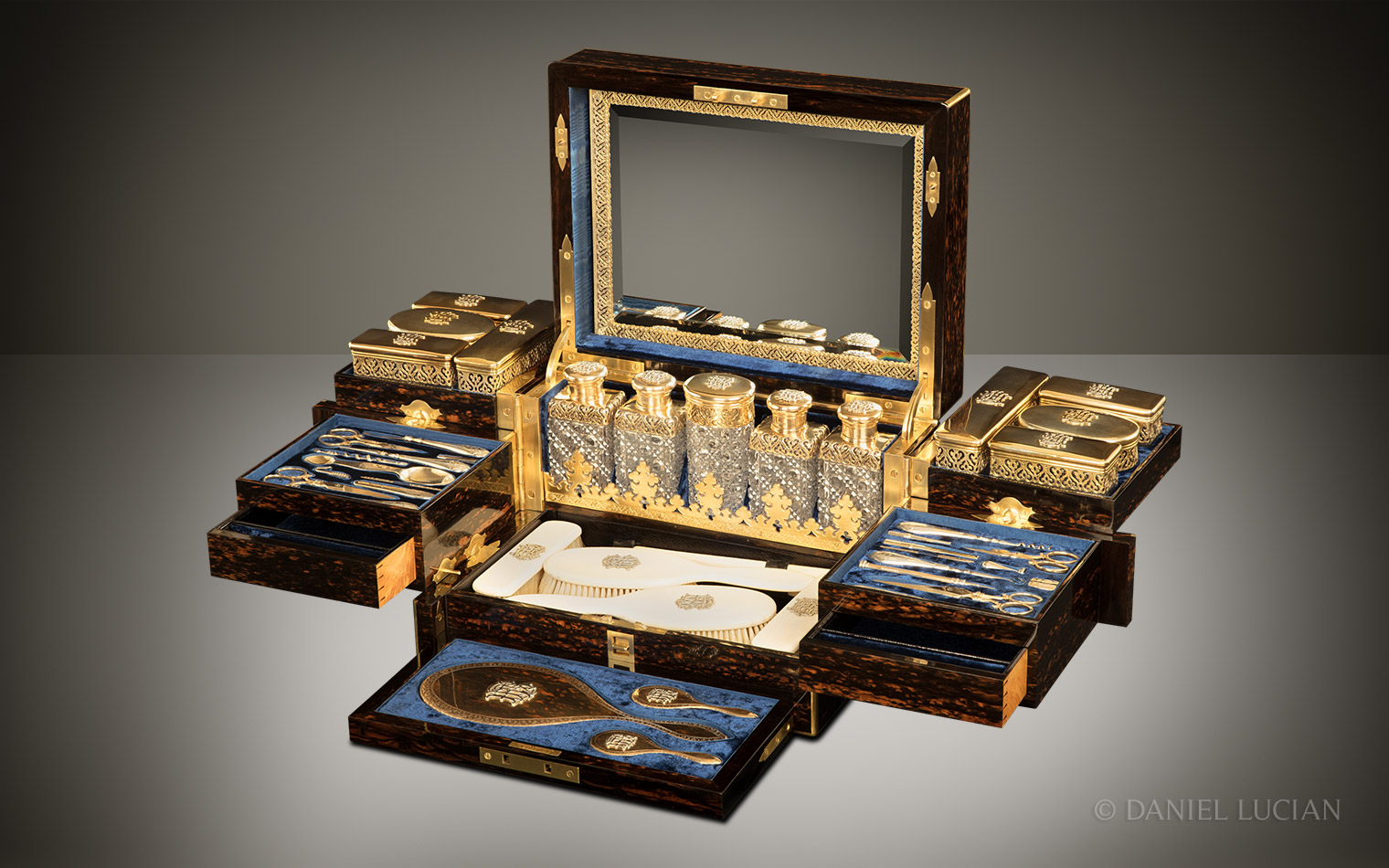
The Automatic mechanism links the movement of the lid directly to the internal sections of the box. As the lid is raised, the two winged side trays and the front panel open out simultaneously; lowering the lid reverses the action and draws the sections back into their closed position.
This allowed an otherwise compact box to unfold automatically into a much larger and more accessible arrangement of compartments.
Betjemann’s Patent 18 ‘Automatic’ mechanism.Antique ‘Salesman Sample’ Box in Coromandel with Betjemann Patent ‘Automatic’ Mechanism, Manufactured For Asprey. VIEW THIS BOX →Copy of Betjemann’s original patent documentation for their ‘Automatic’ opening mechanism – Page 1.Copy of Betjemann’s original patent documentation for their ‘Automatic’ opening mechanism – Page 2.Copy of Betjemann’s original patent documentation for their ‘Automatic’ opening mechanism – Page 3.Copy of Betjemann’s original patent documentation for their ‘Automatic’ opening mechanism – Page 4.Copy of Betjemann’s original patent drawings for their ‘Automatic’ opening mechanism.Copy of Betjemann’s original patent drawings for their ‘Automatic’ opening mechanism.Betjemann’s Patent 93 ‘Automatic’ mechanism.Antique Jewellery Box in Coromandel with Betjemann Patent ‘Automatic’ Mechanism, by Leuchars. VIEW THIS BOX →Antique Jewellery Box in Coromandel with Betjemann Patent ‘Automatic’ Mechanism by Howell, James & Co. VIEW THIS BOX →Betjemann’s Patent 238 ‘Automatic’ opening mechanism (left side).Betjemann’s Patent 238 ‘Automatic’ opening mechanism (right side).
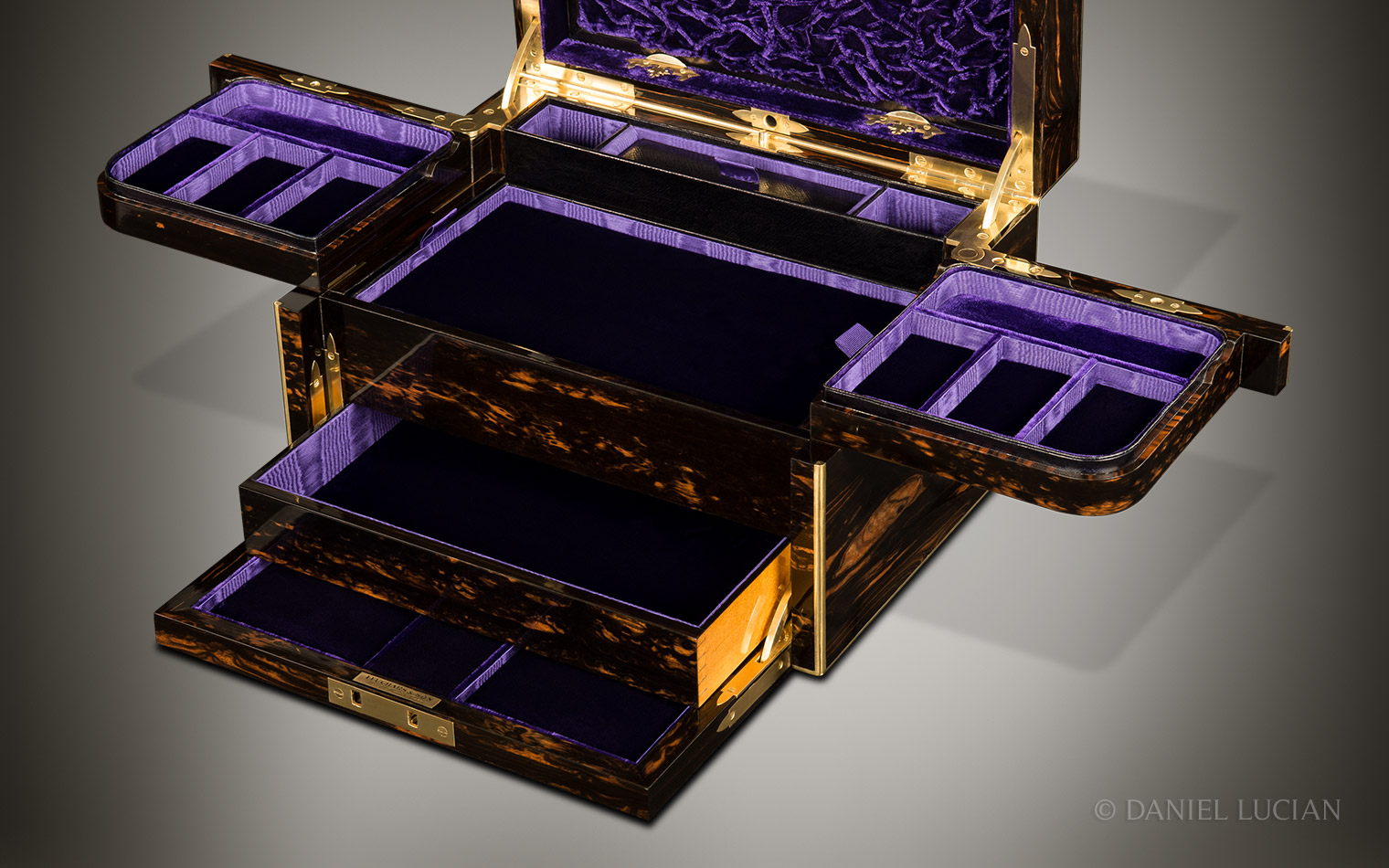
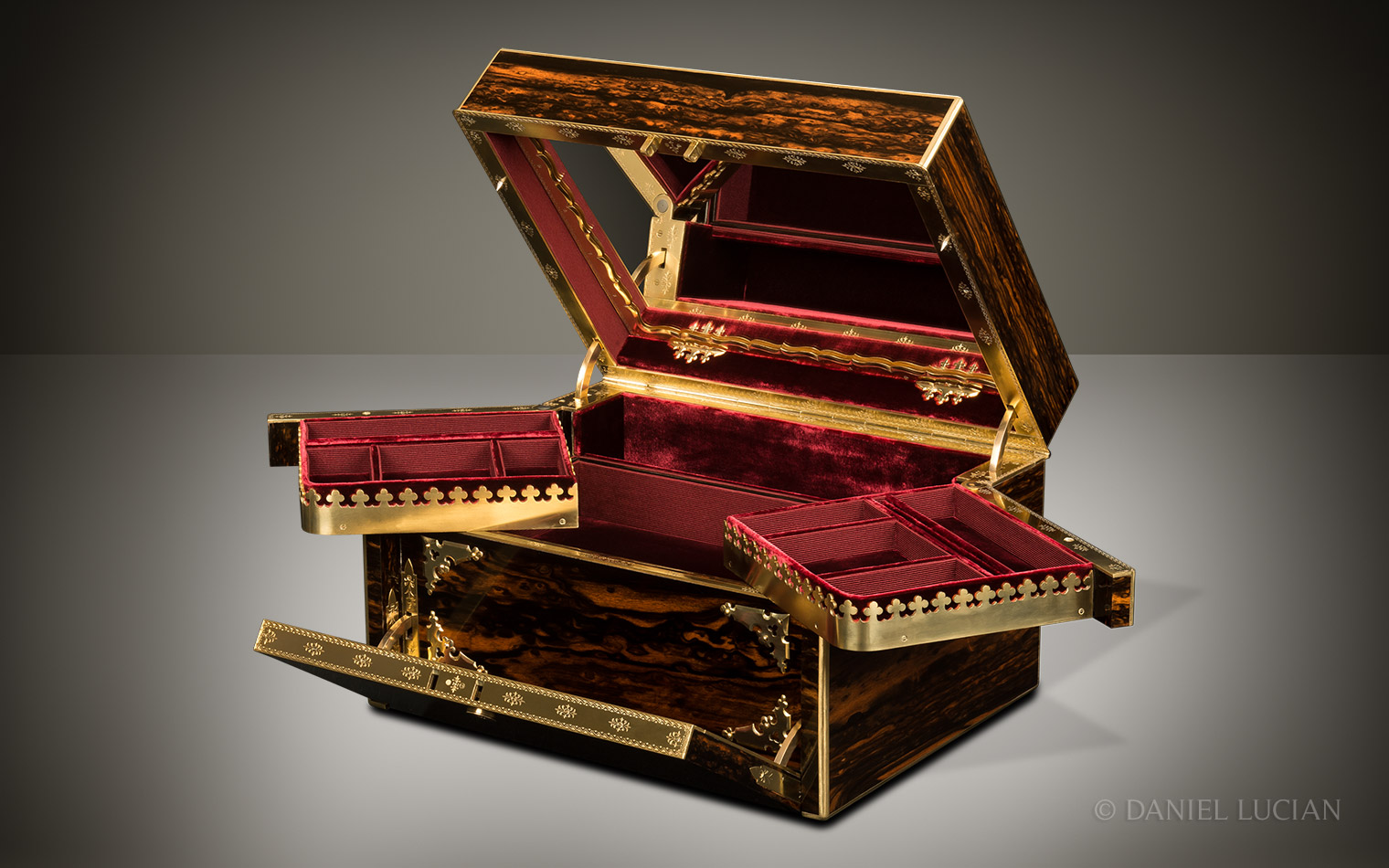
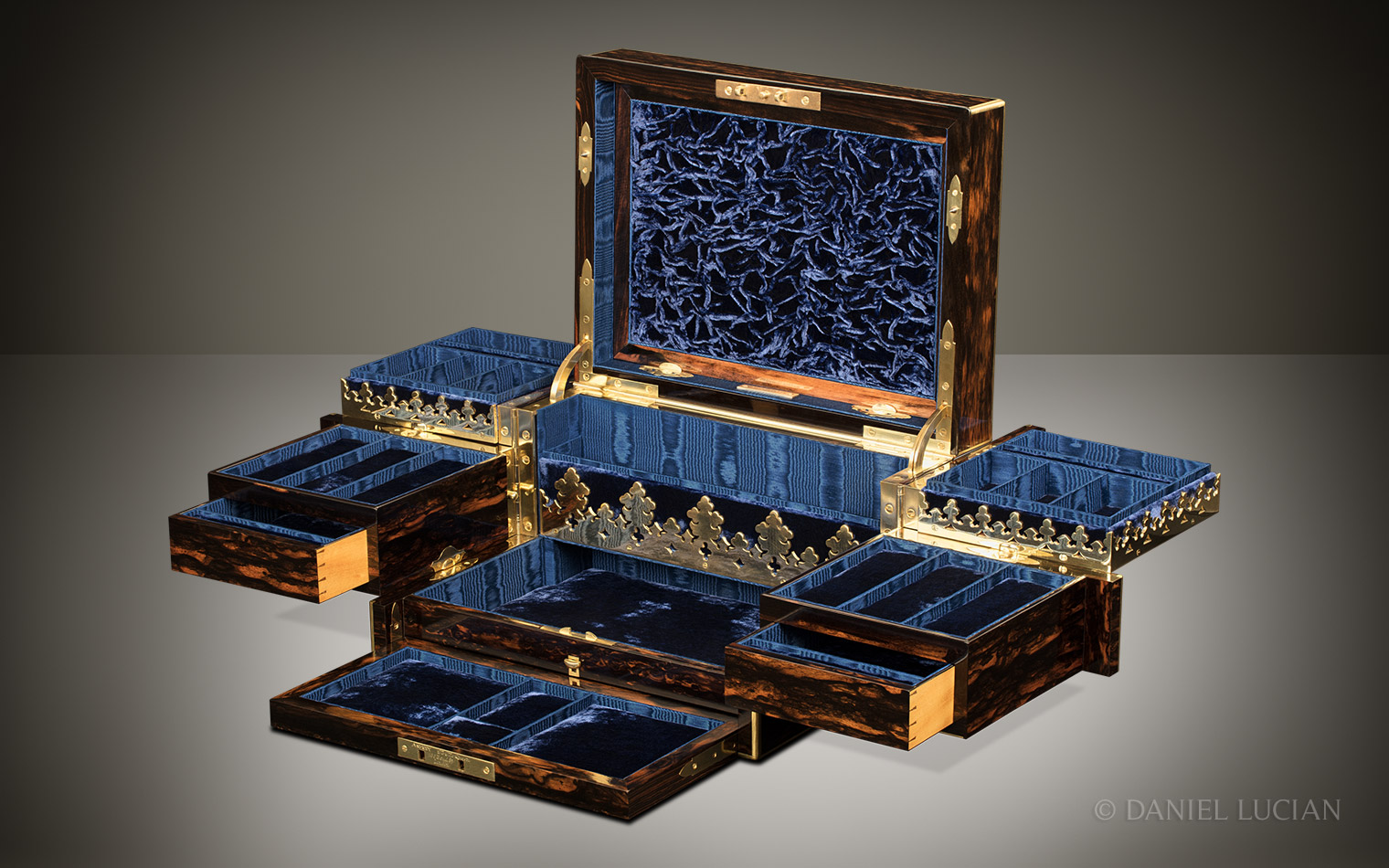
The Angle-Wing mechanism allows the box to unfold into six compartmented tiers.
The front panel drops forward.
The two upper compartments swing outward to approximately 90 degrees.
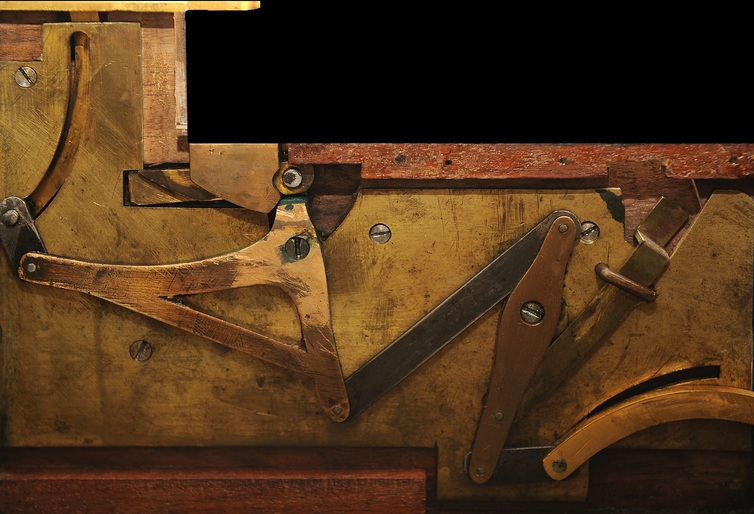
Secondary lower compartments are then released by a sliding push-button and cantilever outward, carrying the upper compartments through to 180 degrees.
Further push-buttons release concealed spring-loaded drawers from the fronts of the secondary compartments.
The result is a highly compact box which, when fully opened, reveals an extensive arrangement of trays, compartments and concealed drawers, effectively transforming it into a portable dressing table for use while travelling.
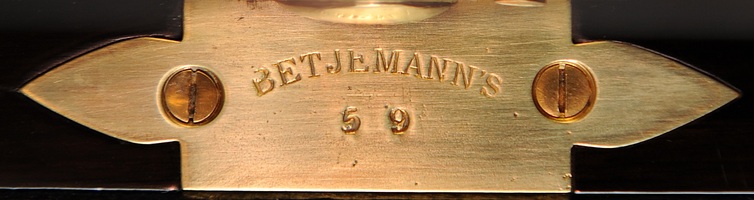
Betjemann’s Patent ‘Angle-Wing’ dressing case.Antique Dressing Case in Coromandel with Betjemann Patent Mechanism, by Jenner & Knewstub. VIEW THIS BOX →Betjemann’s Patent ‘Angle-Wing’ mechanism.Betjemann’s patented split-hinge. With the front catch depressed, the spring-loaded rod protruding from the hinge (centre of the photo) pushes the secondary compartment out to a 90-degree position. This compartment is inhibited from travelling beyond the 90-degree position due to the inlaid brass stop plate (lower left corner of the photo). The top part of the split-hinge allows the top compartment to open out to the 180 degree position.Antique Jewellery Box in Coromandel with Betjemann Patent Mechanism, by Asprey. VIEW THIS BOX →A push-button to the rear of the secondary compartment deploys the concealed, spring-loaded lower drawer.George Betjemann & Sons patent stamp plate.George Betjemann & Sons patent stamp plate.
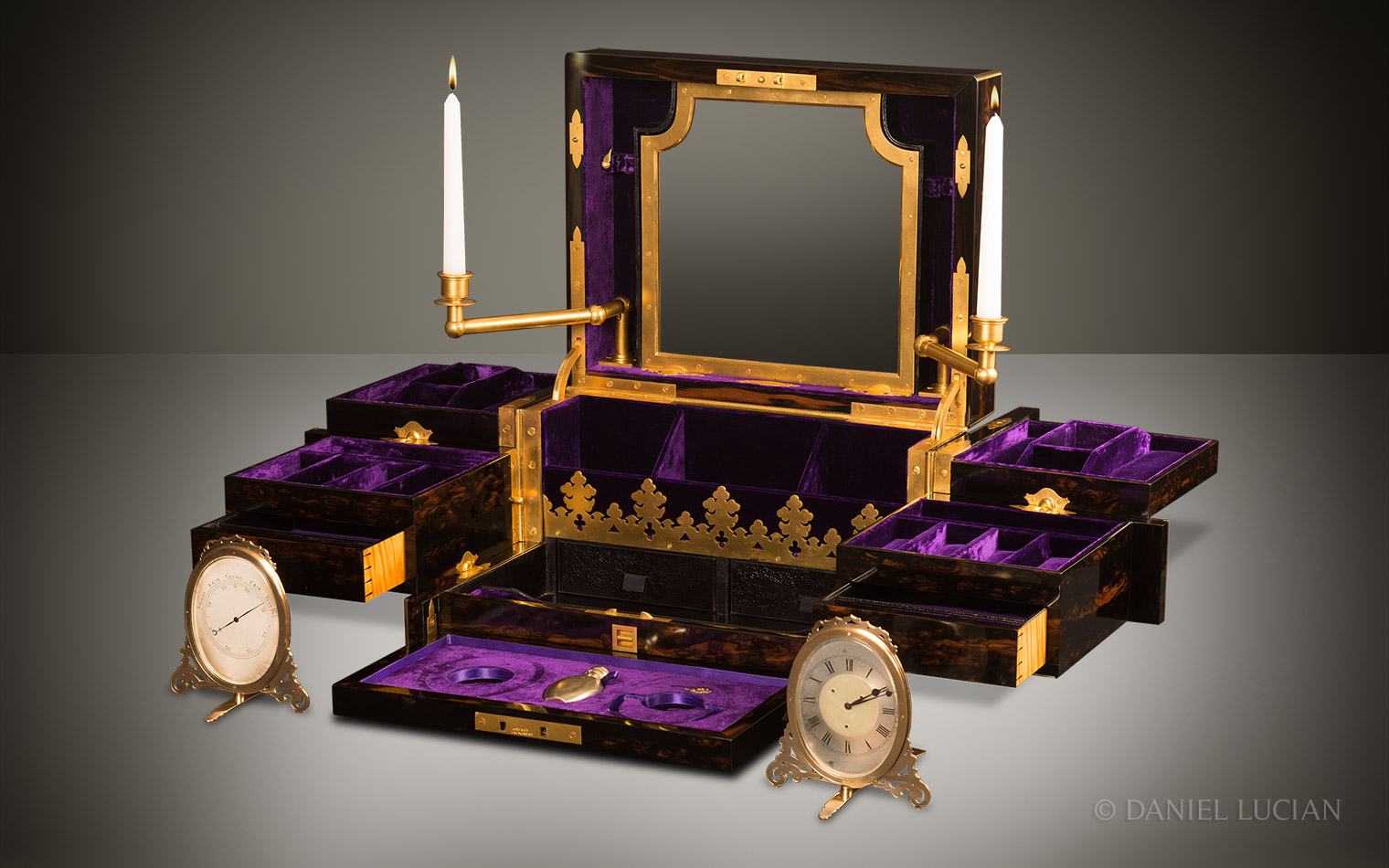
Other important Betjemann Patent designs included the Tantalus spirit and perfume stands, the Self-Closing Book Slide, Partners Inkwell, Lockable Decanter, Extending Dressing Case, Extending Dressing Table, Double-Winged Cabinet of Games, En Garde Lock, Triple Opening Travelling Bag, Quadruple Opening Travelling Bag, Lift-Out Well Travelling Bag, Reverse Opening Travelling Bag and Equipoise Candlestick, alongside numerous other inventive adaptations to boxes, cabinets, travelling goods and locking mechanisms.
Betjemann’s Equipoise candlesticks in their stowed position within the lid compartment. These candlesticks have three articulated joints: The lower articulation allows the candlestick to swing down from the lid section. The middle articulation allows the candlestick to swing left, right, up and down. The top articulation allows the candlestick and sconce to move left, right, up and down.Betjemann’s Equipoise candlestick.Asprey Antique Jewellery Box in Coromandel with Betjemann Patent Mechanism & Candlesticks. VIEW THIS BOX →Betjemann patent design for a combined liqueur case and cigar stand.Betjemann patent design for a combined liqueur case and cigar stand.Betjemann patent design for a ‘Tantalus’ spirit frame.Betjemann patent design for a perfume bottle stand.Betjemann patent design for a bottle or decanter stand.Betjemann patent design for a liqueur case.Betjemann patent design for a cigar box.Betjemann patent design for a games box.