
George Davis Patent Lock
George Davis, a lockmaker based in Windsor, Berkshire, patented his ‘Double Chambered’ lock in 1799.
The lock was designed so that the true locking mechanism was concealed within a lower internal chamber, rather than being directly accessible from the visible keyhole.
Operating the George Davis Patent Lock
- A double-sided bitted key is first inserted through the front aperture and turned anti-clockwise through approximately 90 degrees.
- At this point, the key aligns with a secondary opening leading into the lower chamber of the lock, where the working mechanism is housed.
- The key then engages a rotating disc fitted with pins and raised ridges. As it continues to turn anti-clockwise, the mechanism operates the sliding bolt and moves the lock into its secured position.
- The key completes its rotation until it returns to the point at which it entered the lower chamber. It can then be withdrawn back into the upper chamber, turned clockwise through 90 degrees and removed from the lock.
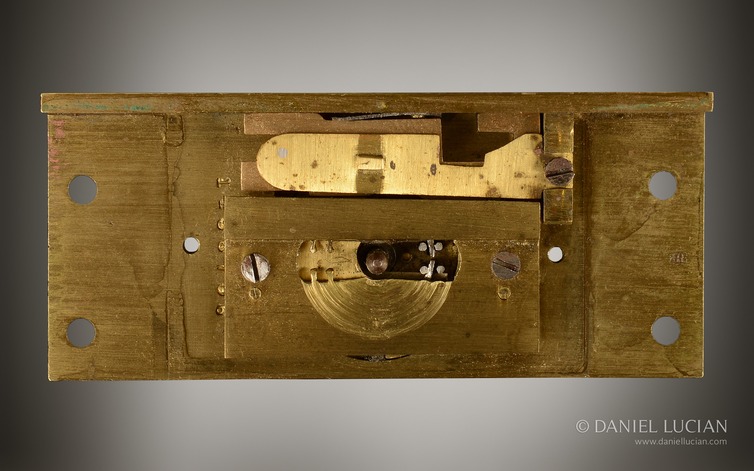

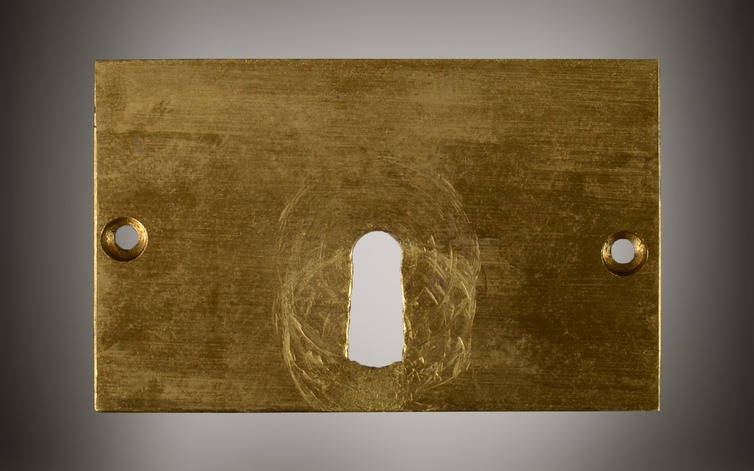

The purpose of this double-chamber arrangement was to conceal the true wards and working mechanism behind a comparatively simple outer keyhole and upper chamber. This made it more difficult for anyone unfamiliar with the lock to determine its internal construction.
George Davis locks were used almost exclusively on government dispatch boxes and other cases intended to protect sensitive documents. Some examples incorporate an additional deterrent in the form of engraved instructions to any locksmith asked to make a replacement key. These offered a financial reward for reporting anyone attempting to obtain an unauthorised duplicate, with surviving examples recording rewards ranging from £5 to £50.