Turner Patent Lock
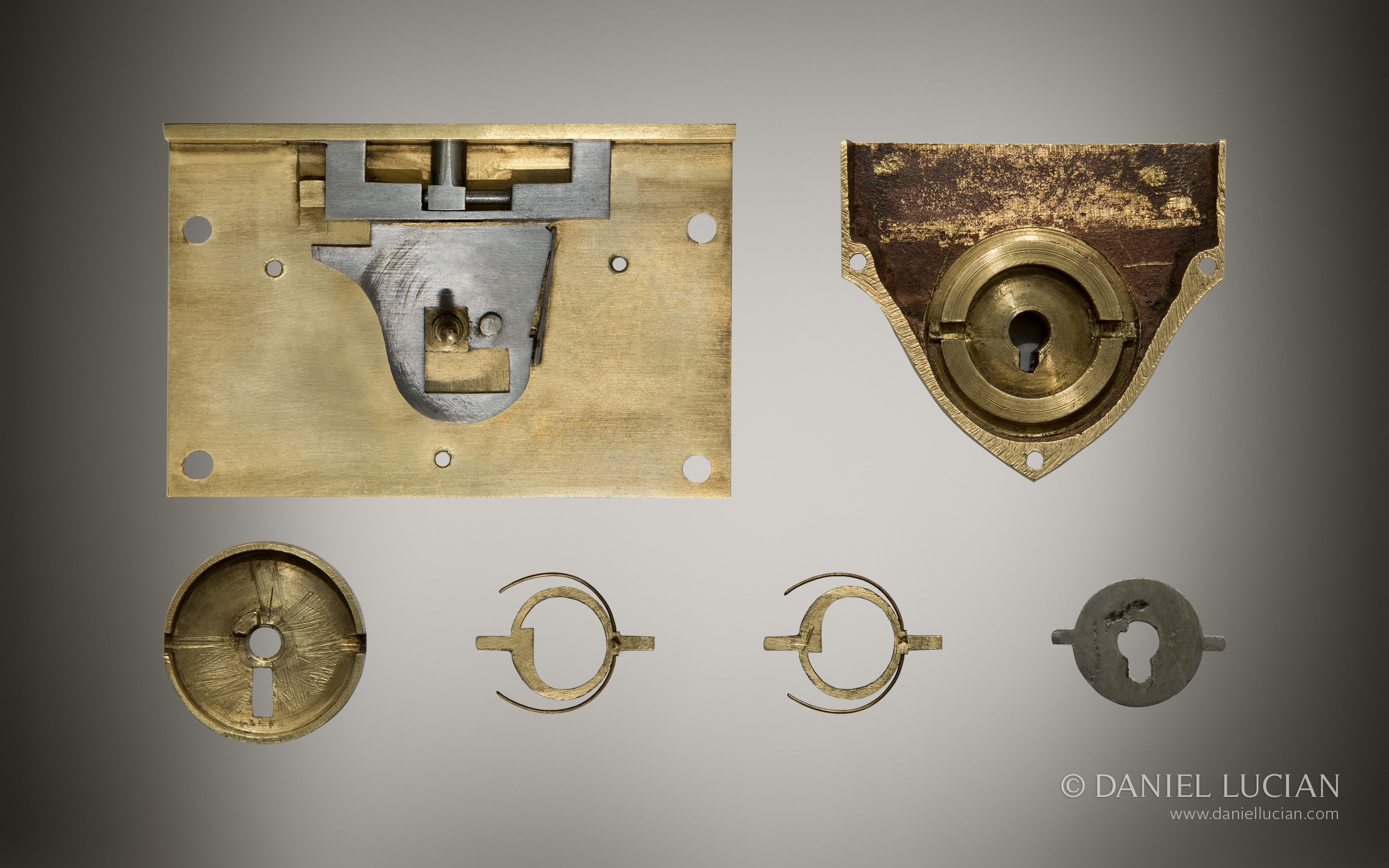
The Turner Patent lock, first patented in 1798, can be broken down into the following principal components:
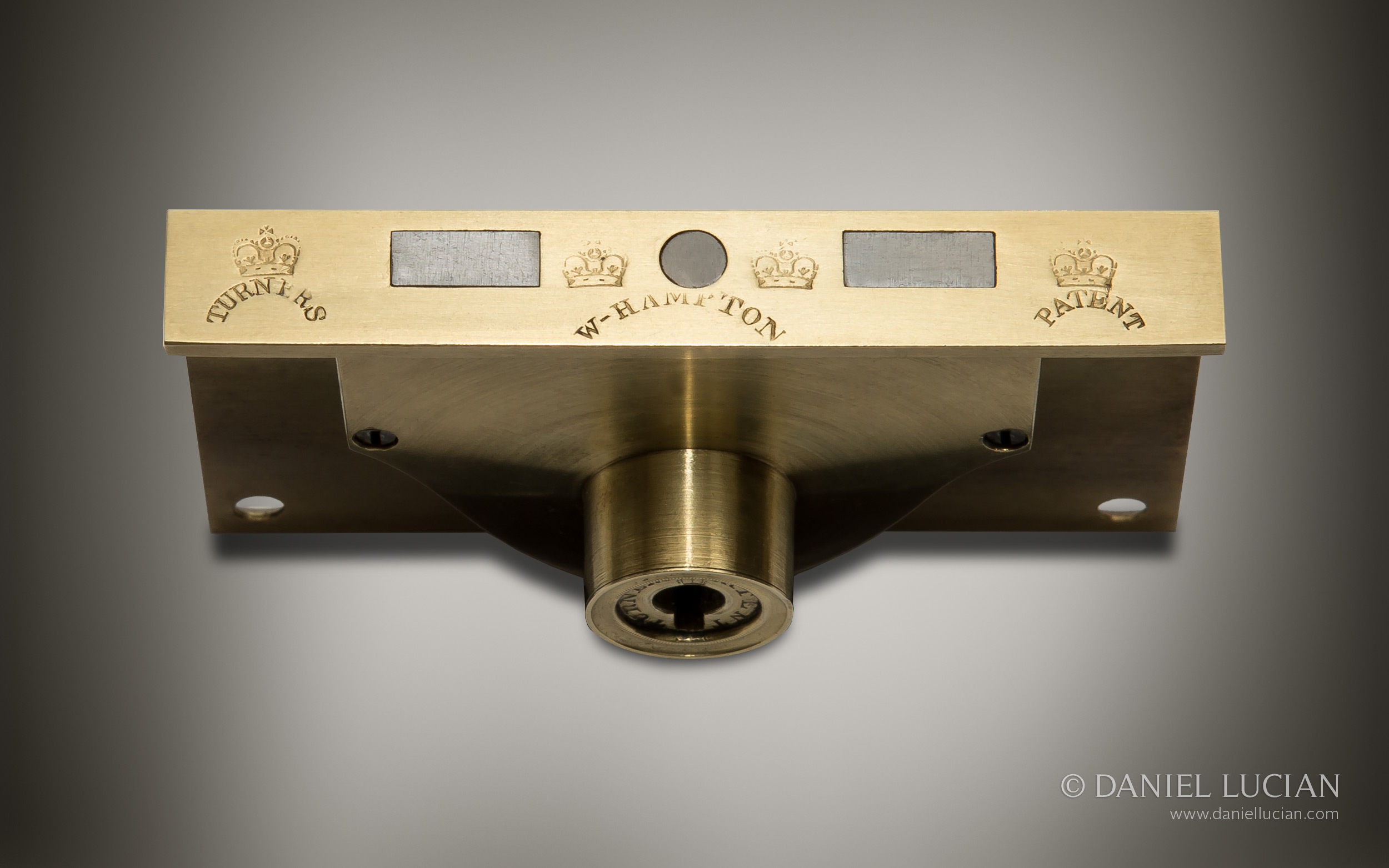
- A brass back plate and lock surface plate. The surface plate is engraved with ‘Turner’s’, ‘Patent’ and ‘W-Hampton’ (Wolverhampton), accompanied by crowns representing the monarch.
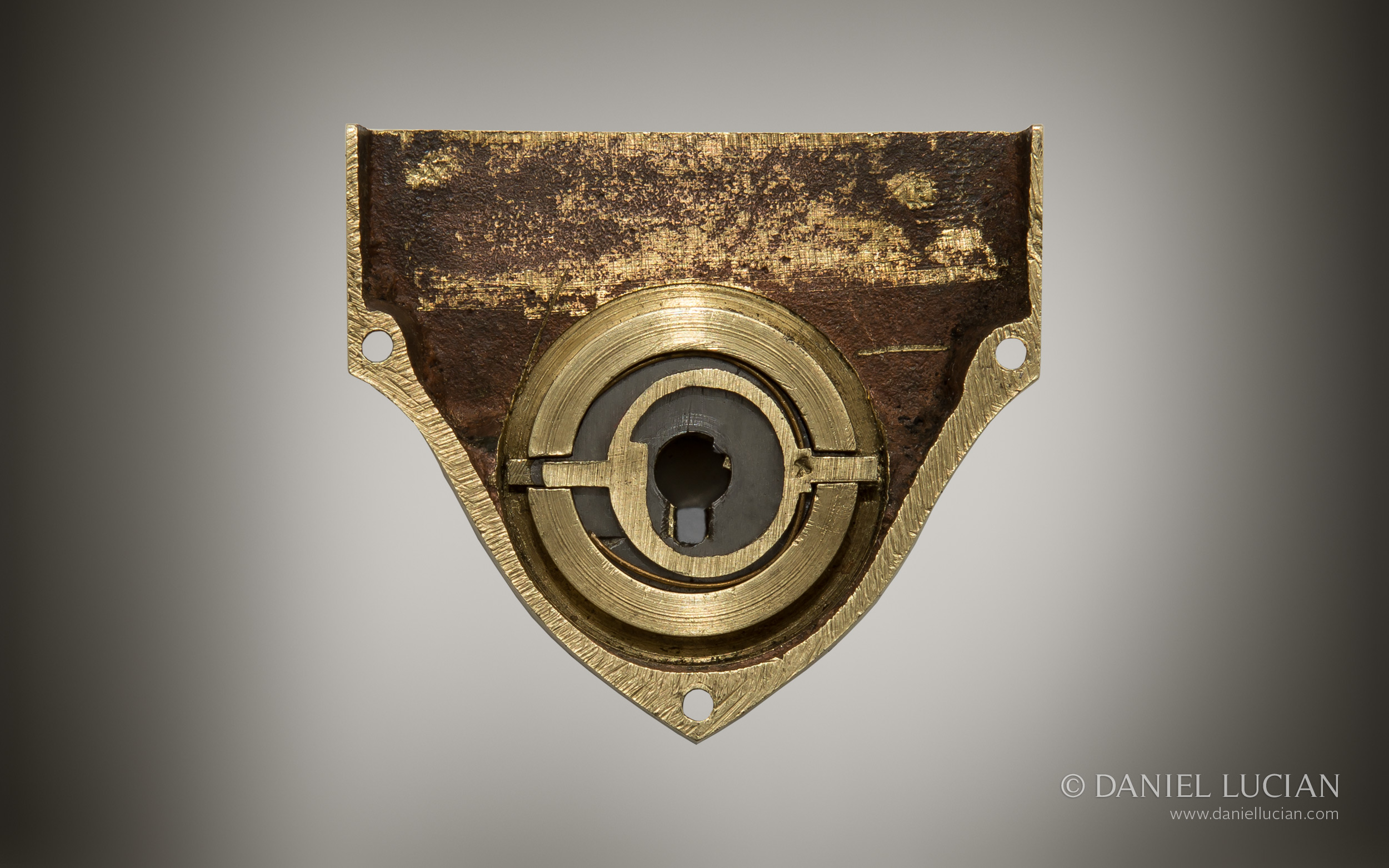
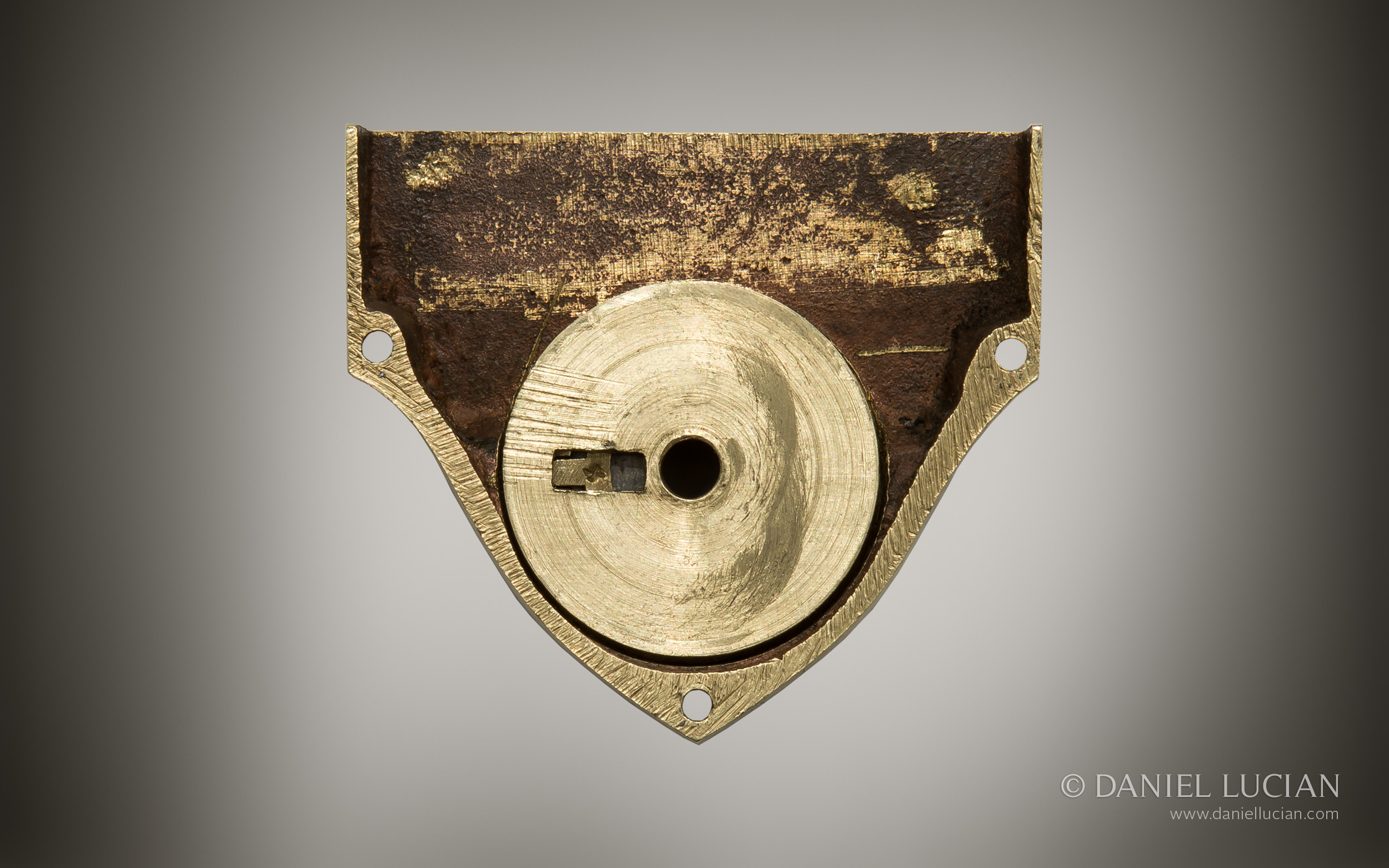
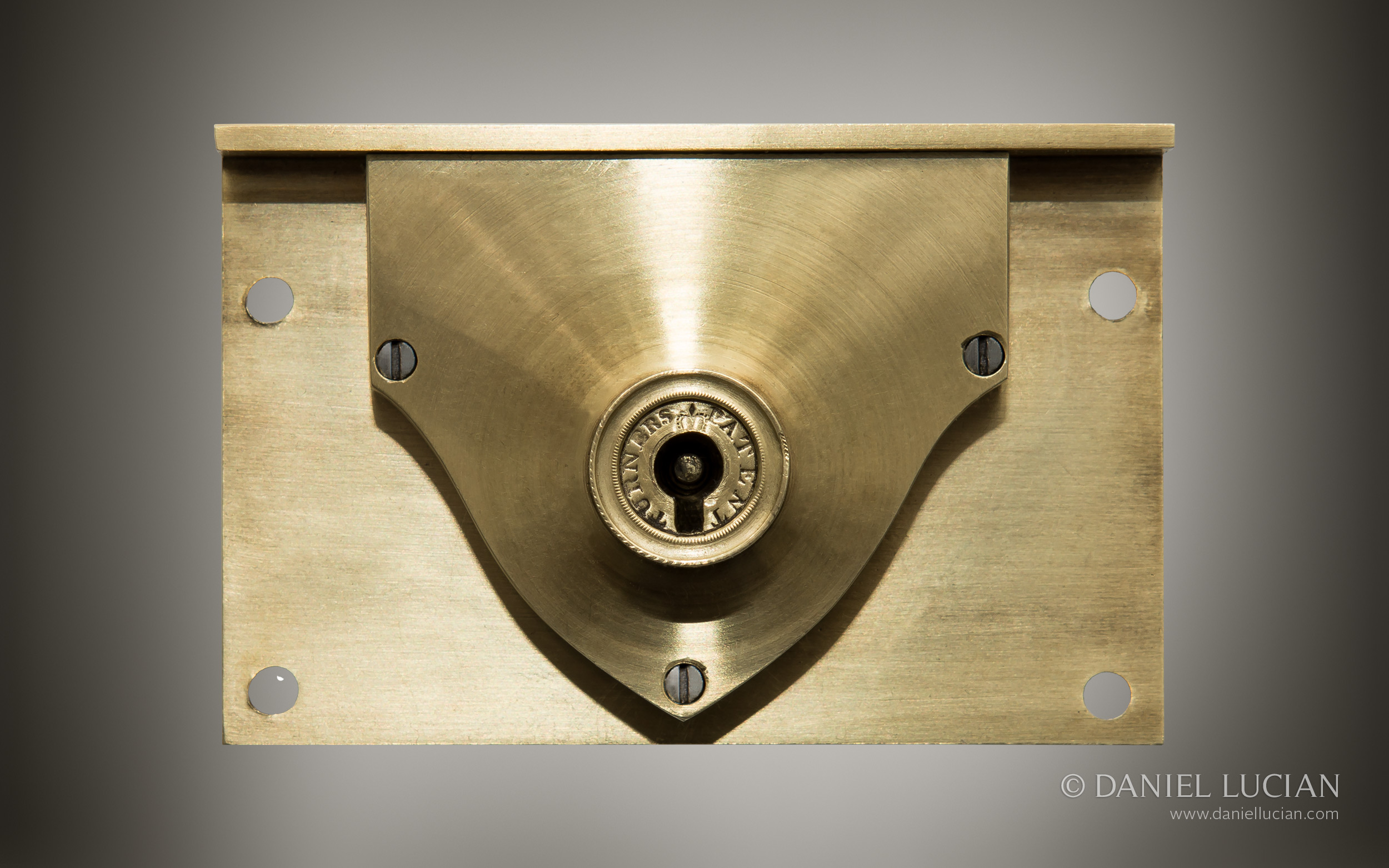
- A brass lock mount. The front keyhole aperture is engraved around its circumference with ‘Turner’s Patent’ and a crown. To the rear is a fixed circular rim with incised openings to either side.
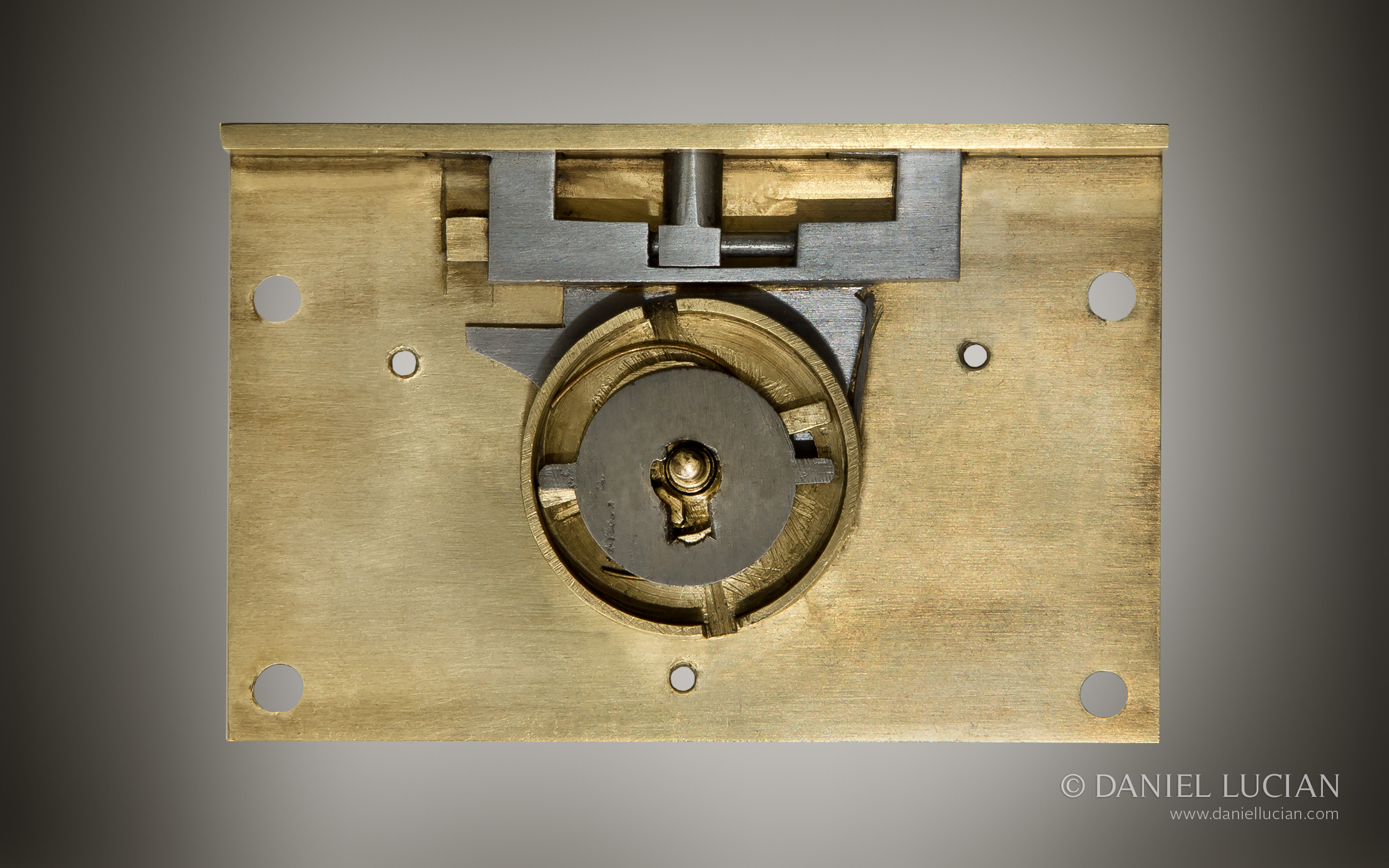
- A brass-rimmed wheel, or ‘moving cup’. This rotating wheel fits over the fixed circular rim and has corresponding side apertures. A rectangular opening to its rear engages with a stud on the sliding bolt
- A steel sliding bolt with a central moving peg. The peg is attached by a pin, allowing the sliding bolt to move laterally without carrying the peg with it.
- A bullet ward. This is a steel disc with a projecting tooth positioned over the keyhole-shaped opening.
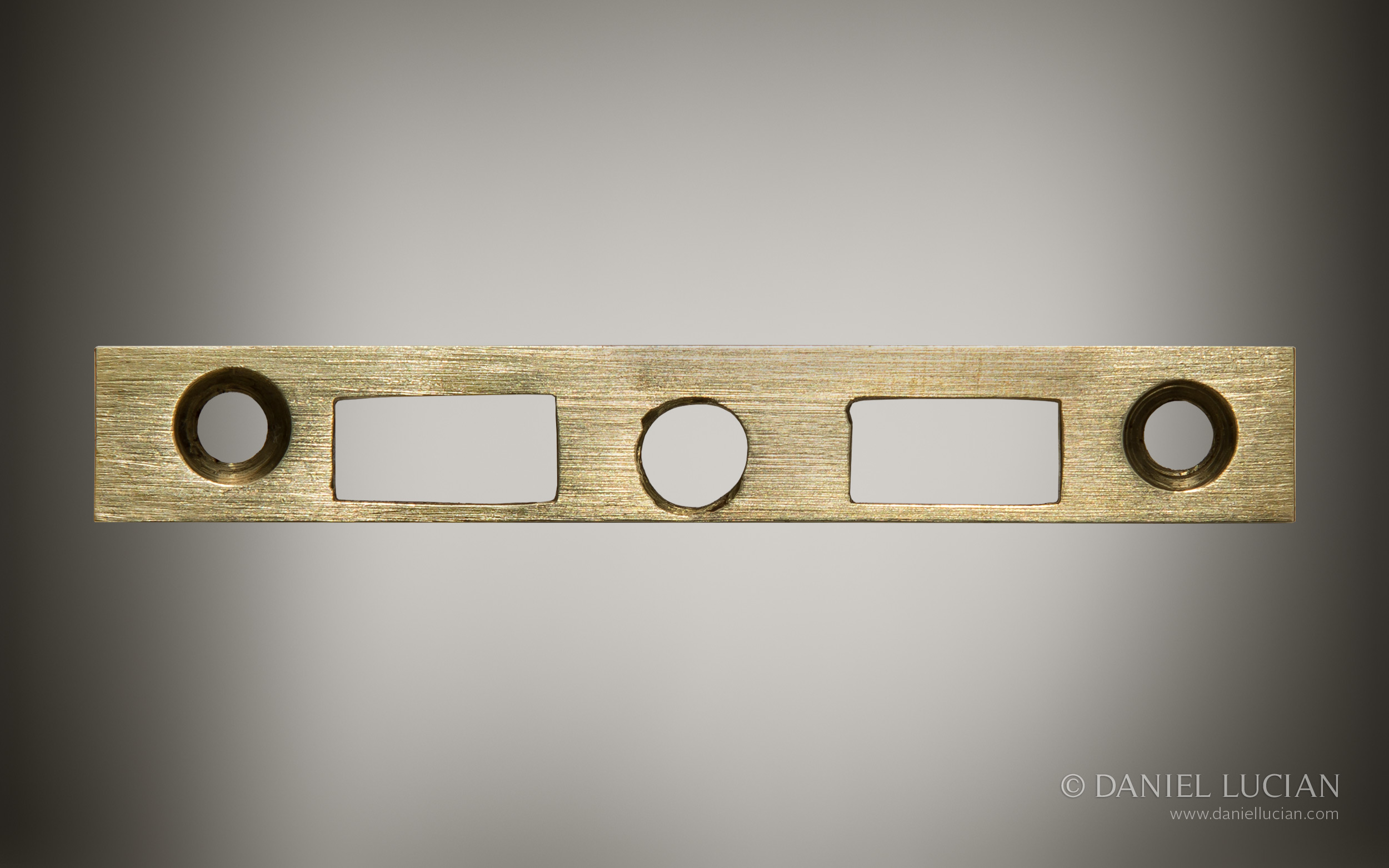
- Two tumblers, or spring bolts. The bullet ward sits between the two spring bolts within the fixed circular rim behind the lock mount. Their fine springs are held by grooves around the inner circumference of the rim. When relaxed, the arms of the spring bolts project through the corresponding apertures in both the fixed rim and moving wheel, preventing the wheel from rotating.
- A key with an incised tip to the shank. This shaped tip allows the key to pass through the toothed bullet ward.
Operating a Turner Patent Lock
- The key is inserted through the front aperture.
- As it is turned anti-clockwise, the bits of the key engage the two spring bolts. Their springs contract, withdrawing the bolt arms from the apertures in the fixed rim and moving wheel. Once released, the wheel is free to rotate.
- As the wheel turns, it drives the sliding bolt upwards and across towards the left, while simultaneously raising the central moving peg vertically.
- The lock is now fully engaged.
- To unlock the mechanism, the key is reinserted and turned clockwise through a full rotation, returning the mechanism to its original position. The key can then be withdrawn.