
History of the French Nécessaire de Voyage
The origins of the French travelling case can be traced back to the late fourteenth century, when fitted boxes containing personal necessities began to appear in written records. Over the following centuries, these cases developed from practical travelling accessories into increasingly sophisticated objects associated with royalty, the aristocracy and other wealthy travellers.
By the seventeenth and eighteenth centuries, fitted cases were being produced for a wide variety of purposes, including personal grooming, eating and drinking, sewing, writing and other activities required while travelling. The term nécessaire came to describe a case containing the objects considered necessary for a particular purpose; by 1718 it was already being used in connection with fitted travelling sets.
During the eighteenth century, French ébénistes, tabletiers and orfèvres developed increasingly elaborate nécessaires de voyage, bringing together numerous travelling requirements within a single fitted case. Made for both ladies and gentlemen, these sophisticated travelling sets were established in France well before the English dressing case became fashionable towards the end of the eighteenth century.
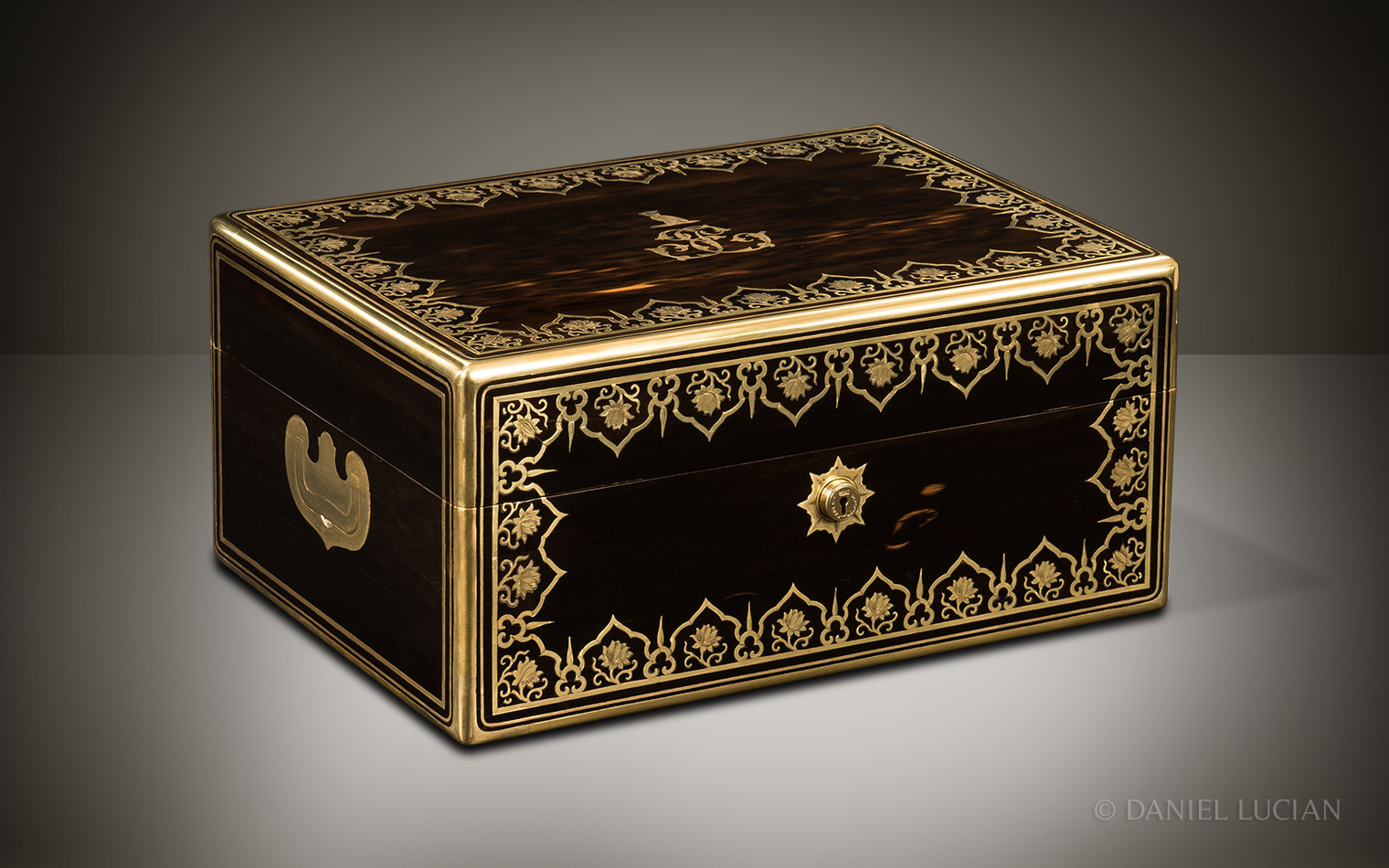
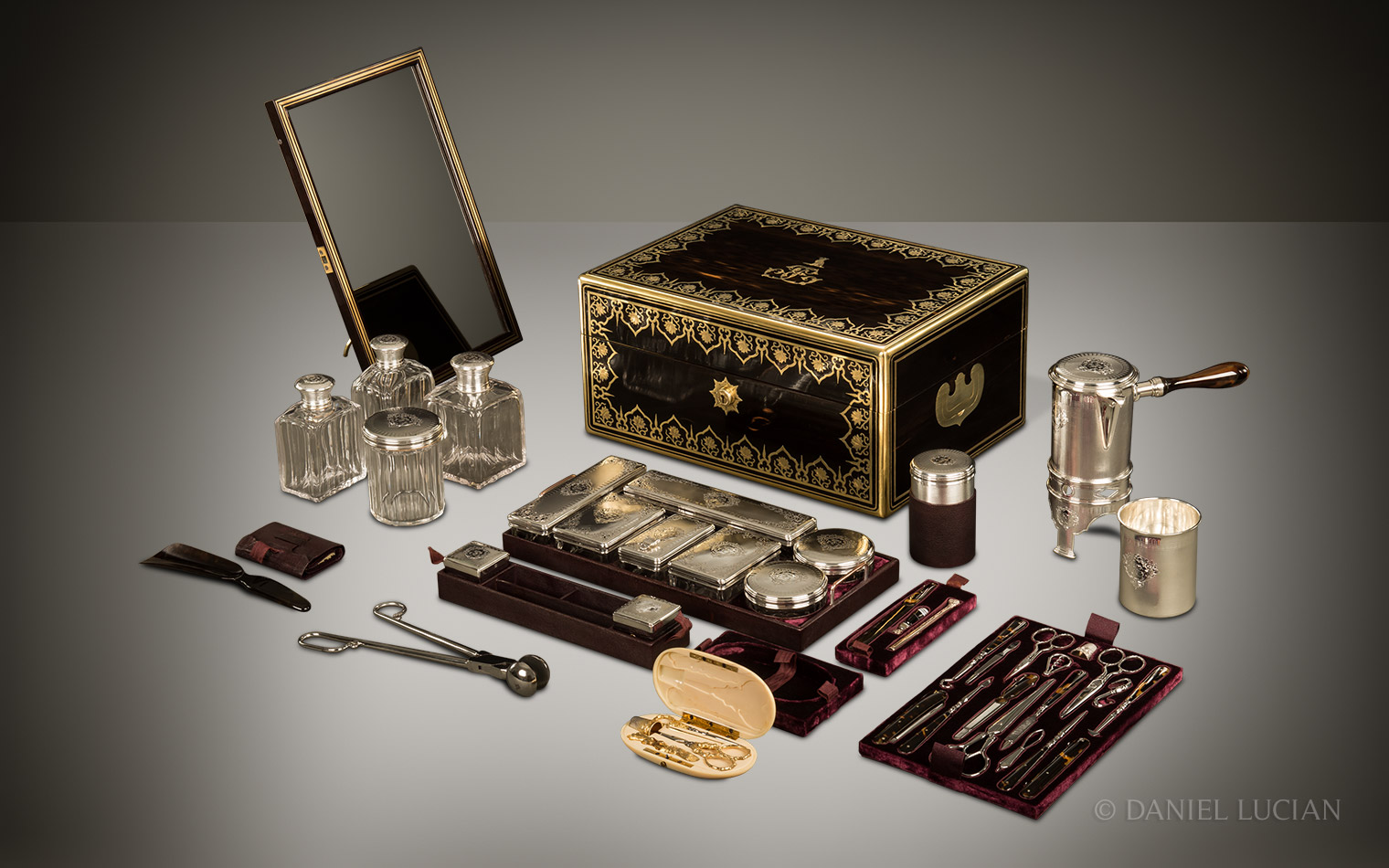
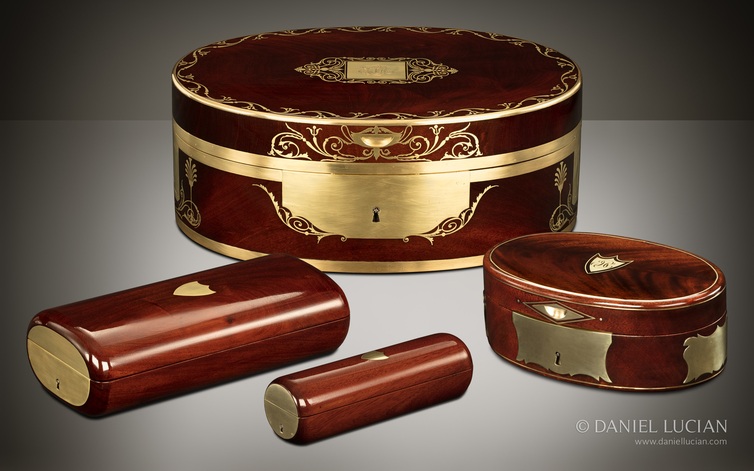
Nécessaires were distinguished by the ingenuity with which large numbers of objects could be arranged within remarkably compact interiors, as well as by the quality and variety of their exterior decoration. In addition to the familiar rectangular form, French makers produced deeper portmanteau-style cases, curved and radial-ended forms, and elliptical or cylindrical examples.
Favoured woods included mahogany, walnut, rosewood, palisander, ebony, elm, kingwood and thuya. These could be further enriched with brass inlay, contrasting woods, engraved metalwork and Boulle work, while their interiors might combine silver or vermeil fittings, crystal, porcelain, leather, silk and other fine materials.
Paris became the principal centre for the manufacture and retailing of these luxury travelling cases. Many important makers and merchants were concentrated around the Palais Royal and the fashionable commercial districts surrounding it, with some operating from the celebrated Galeries du Palais Royal.
According to the Paris Chamber of Commerce’s Statistique de l’Industrie à Paris, compiled for 1847–48, the city had 158 manufacturers of nécessaires employing 980 people: 882 men, 30 women and 68 boys.