History of Dressing Cases
Towards the end of the eighteenth century, dressing cases were produced as portable companions for wealthy travellers. Early examples were generally practical in purpose, but their quality, materials and fittings also reflected the status of their owners at a time when long-distance travel remained largely the preserve of the affluent.
Gentlemen’s dressing cases typically contained bottles and jars for colognes, creams and other preparations, together with shaving, grooming and manicure implements. As travel became more widespread during the nineteenth century, particularly with the development of the railways, demand grew for more sophisticated fitted cases containing a broader range of personal and travelling necessities.
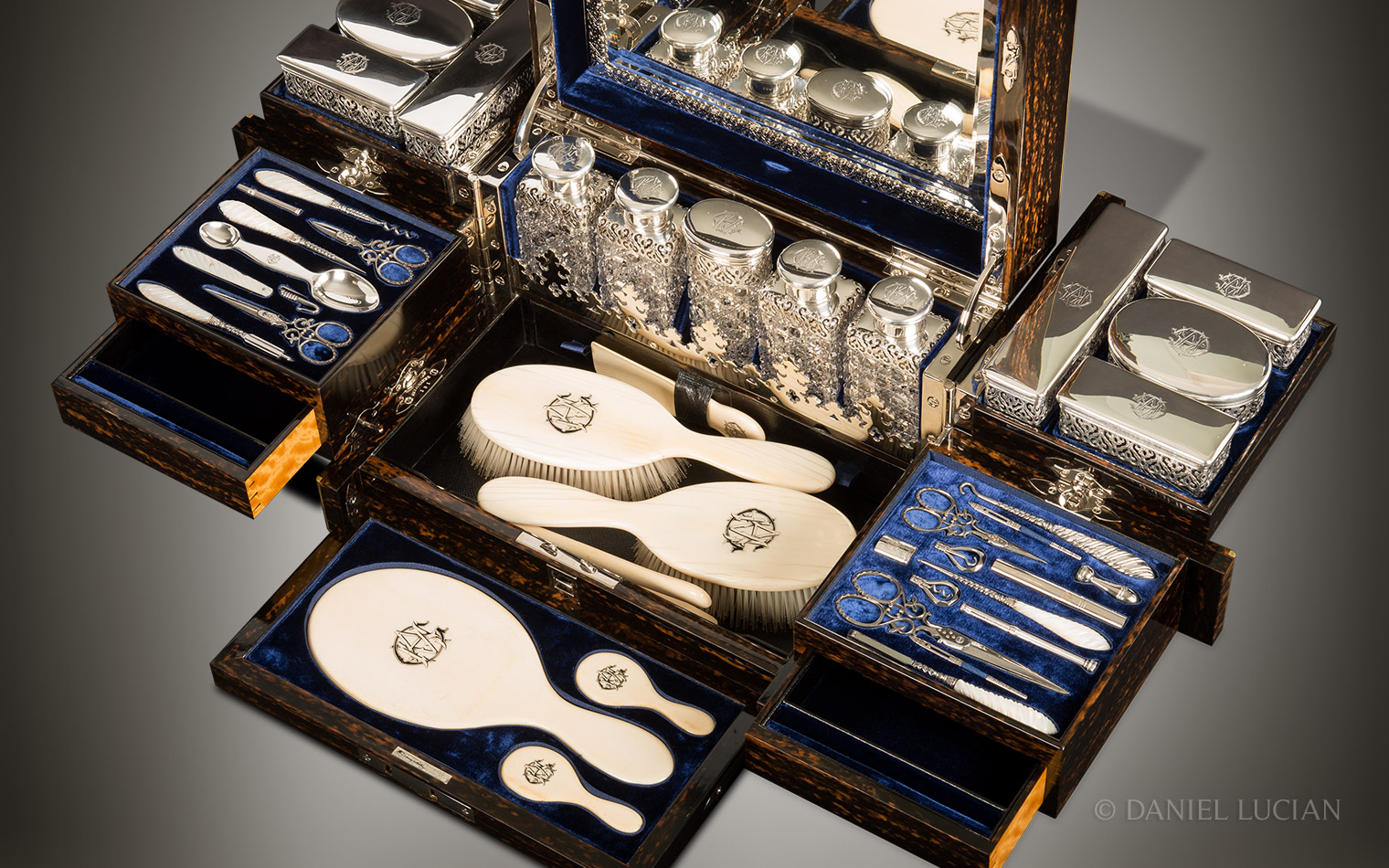
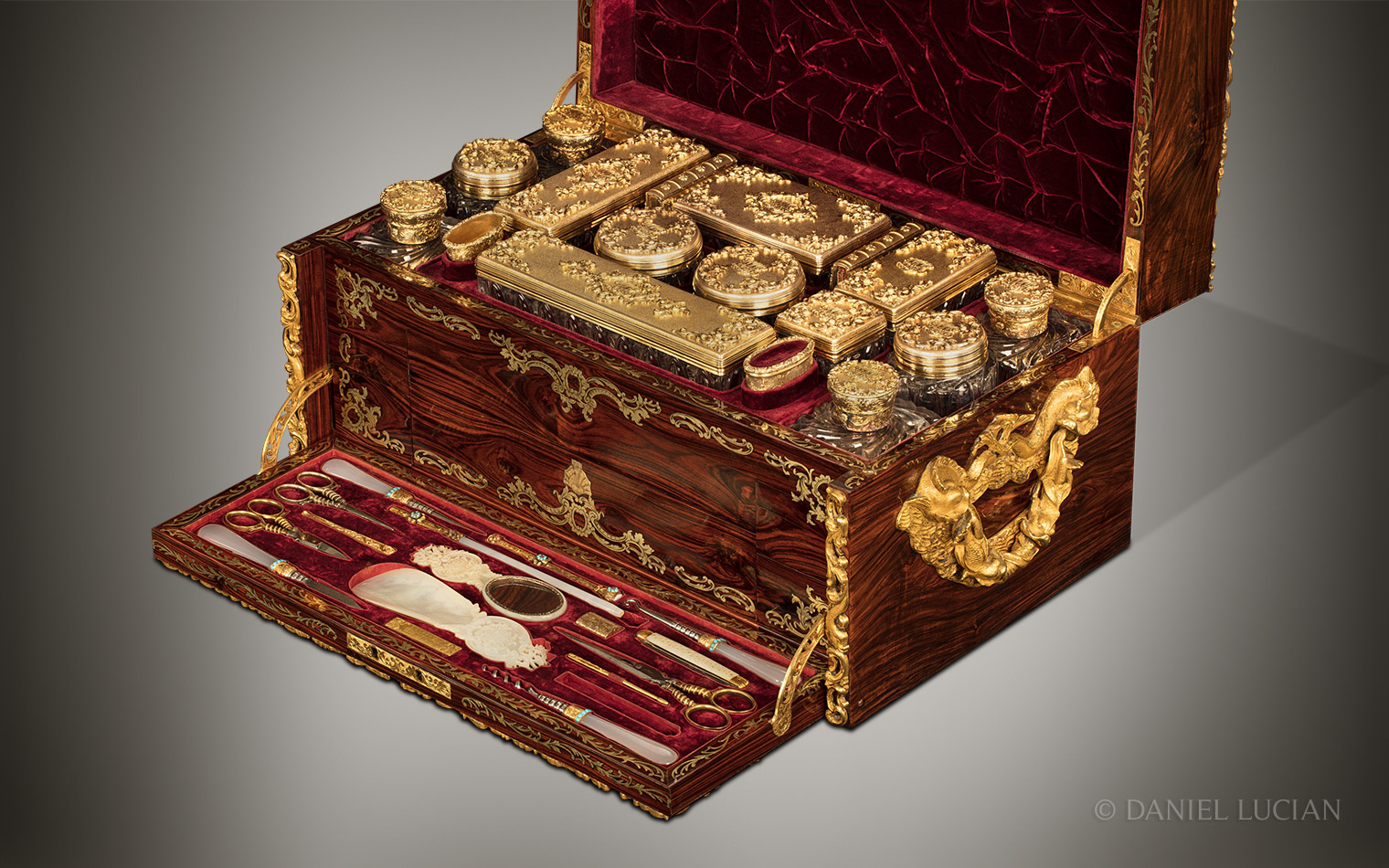
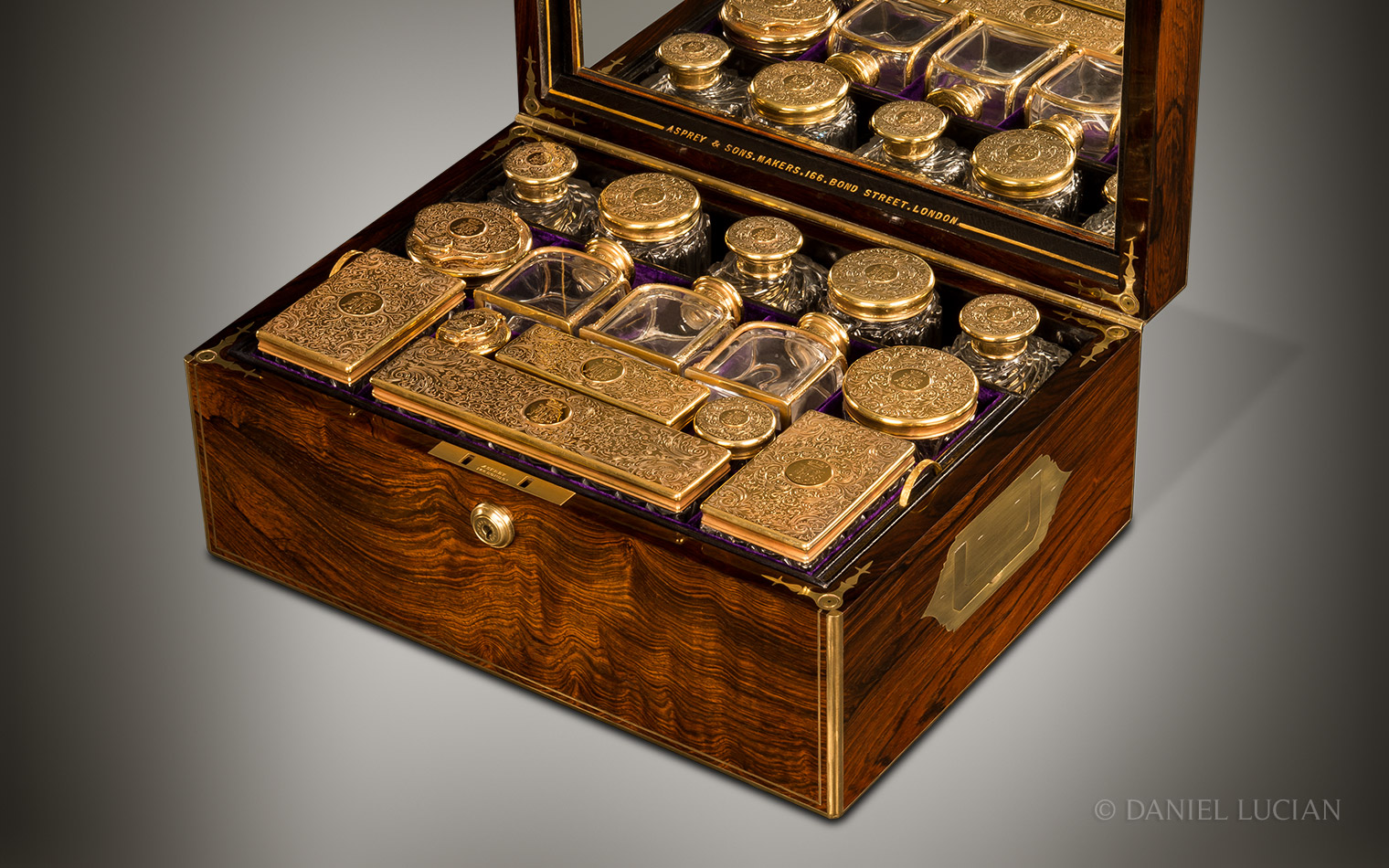
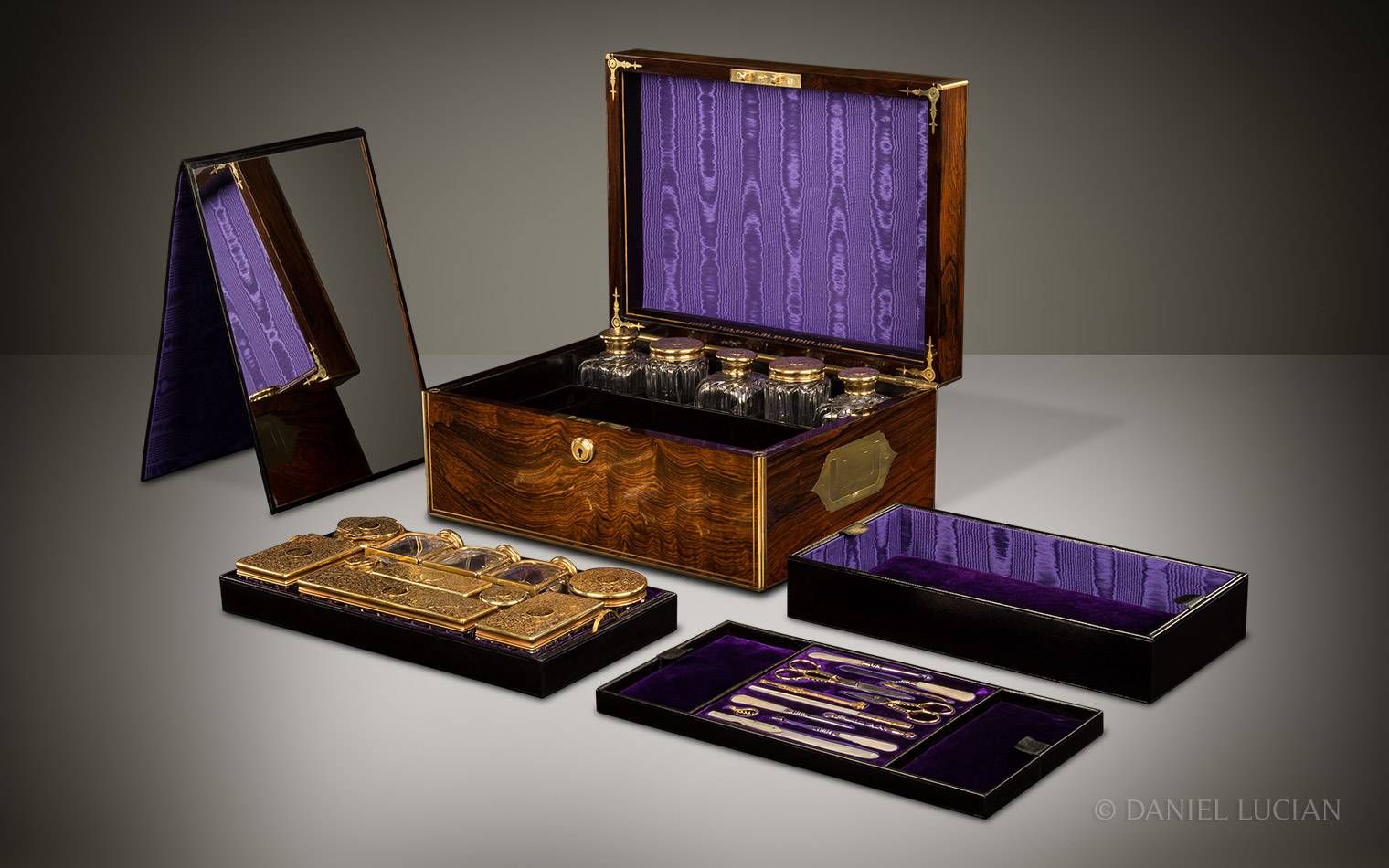
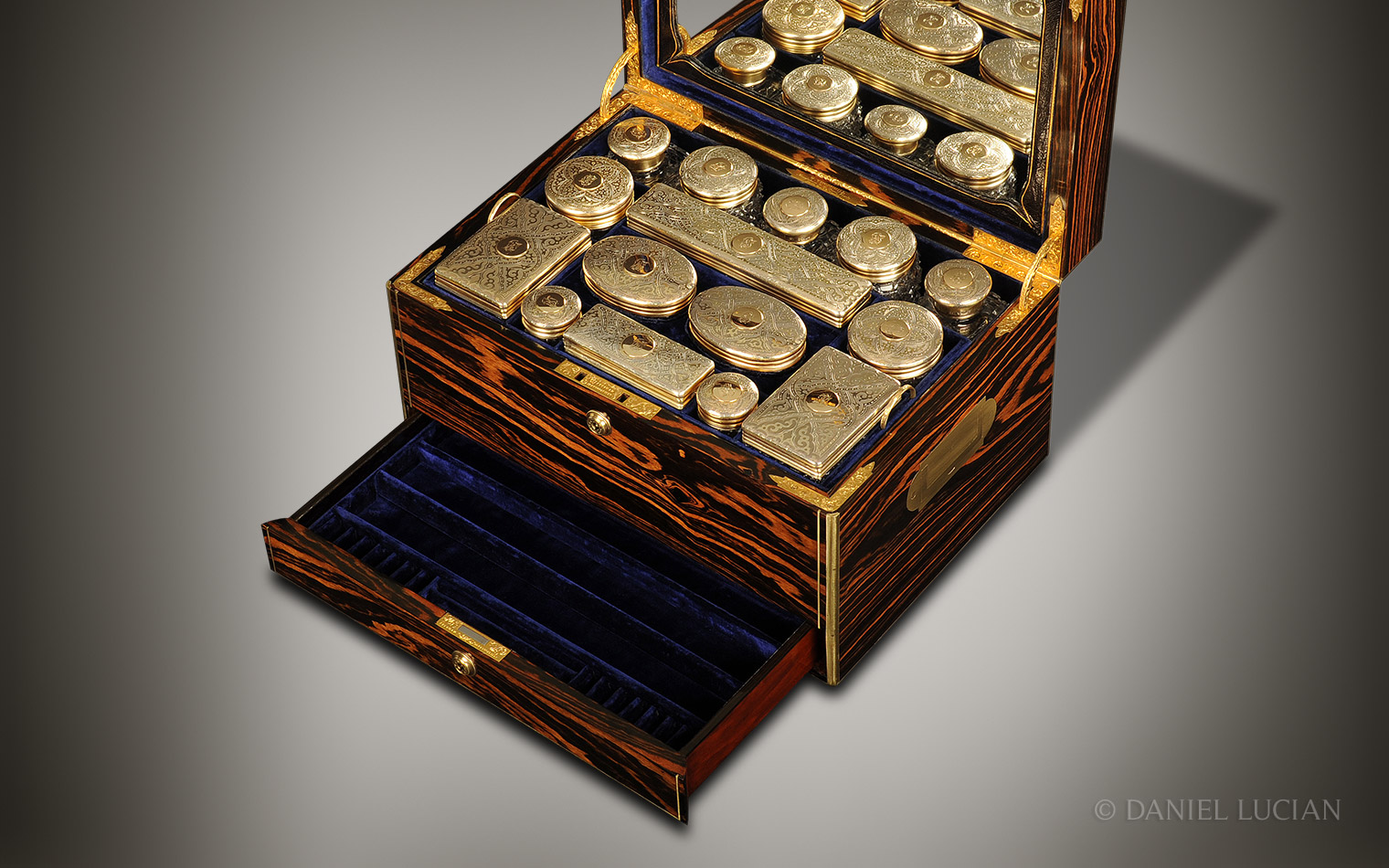
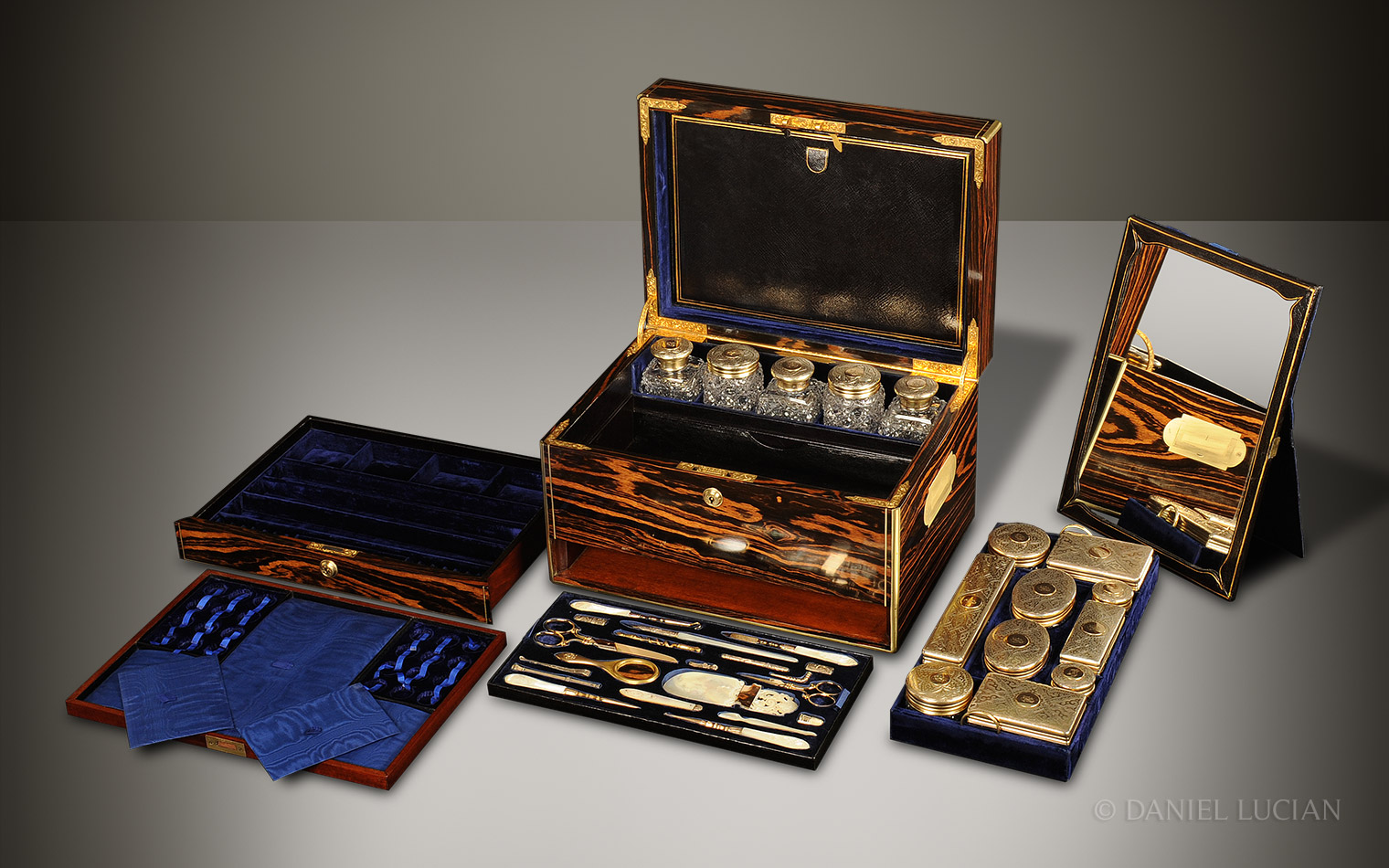
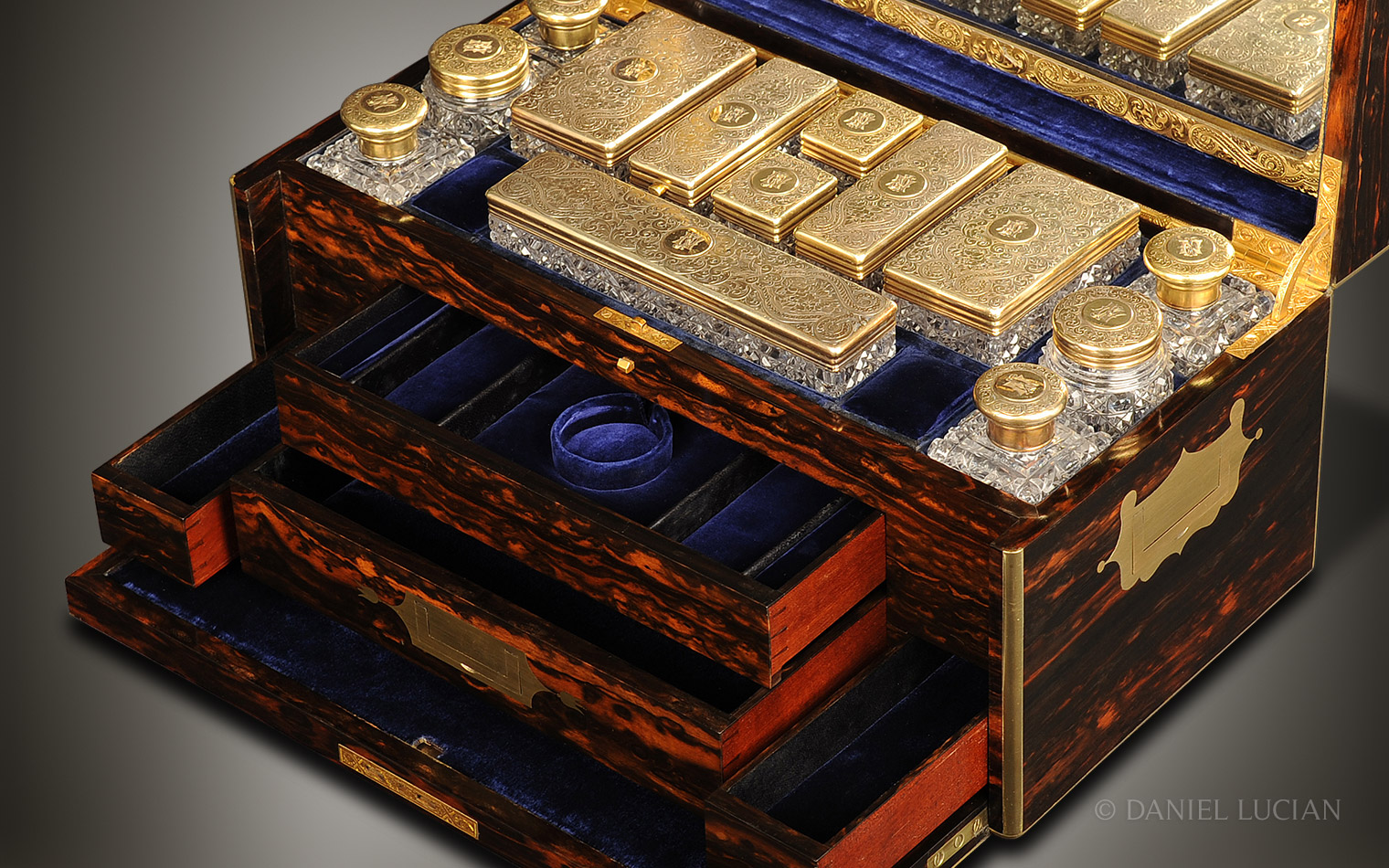
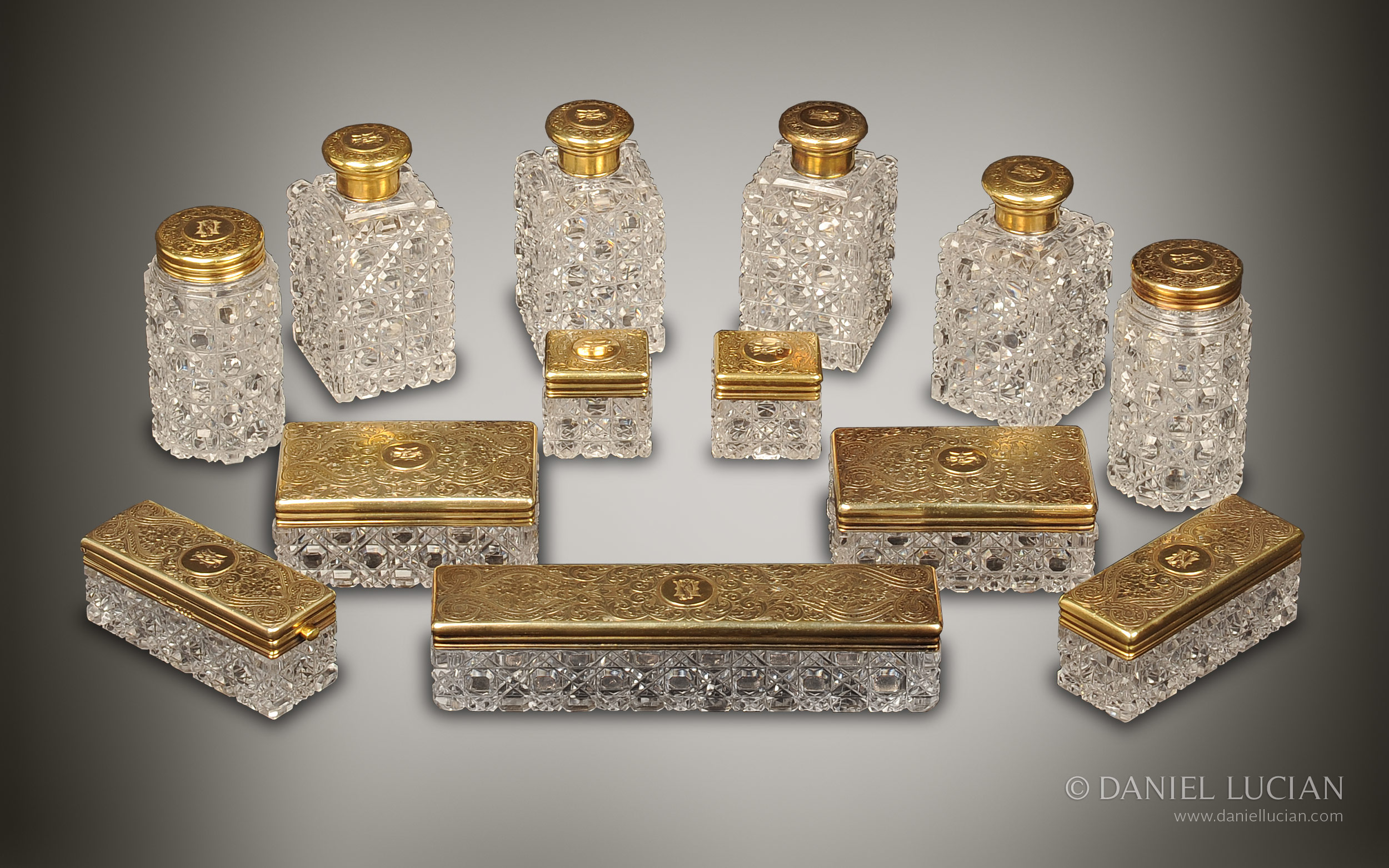
Ladies’ dressing cases also became increasingly elaborate during the nineteenth century, incorporating decorative glass bottles and jars, silver or silver-gilt fittings, sewing and manicure implements, writing accessories and numerous other personal items. The cases themselves became progressively more elaborate, with exteriors veneered in exotic and fancy woods, often further decorated with brass, mother-of-pearl or other materials, while the interiors were lined with velvet, silk and leather.
By the Victorian period, the finest dressing cases had developed far beyond their purely practical origins. Produced by many of the leading cabinetmakers, silversmiths and retailers of the period, they combined sophisticated cabinetmaking with finely fitted interiors, ingenious use of space and increasingly complex mechanisms.
For their wealthiest owners, such cases could serve as much as expressions of taste and status as practical travelling companions, and the finest examples came to be regarded as important decorative objects in their own right.