Martin-Guillaume Biennais
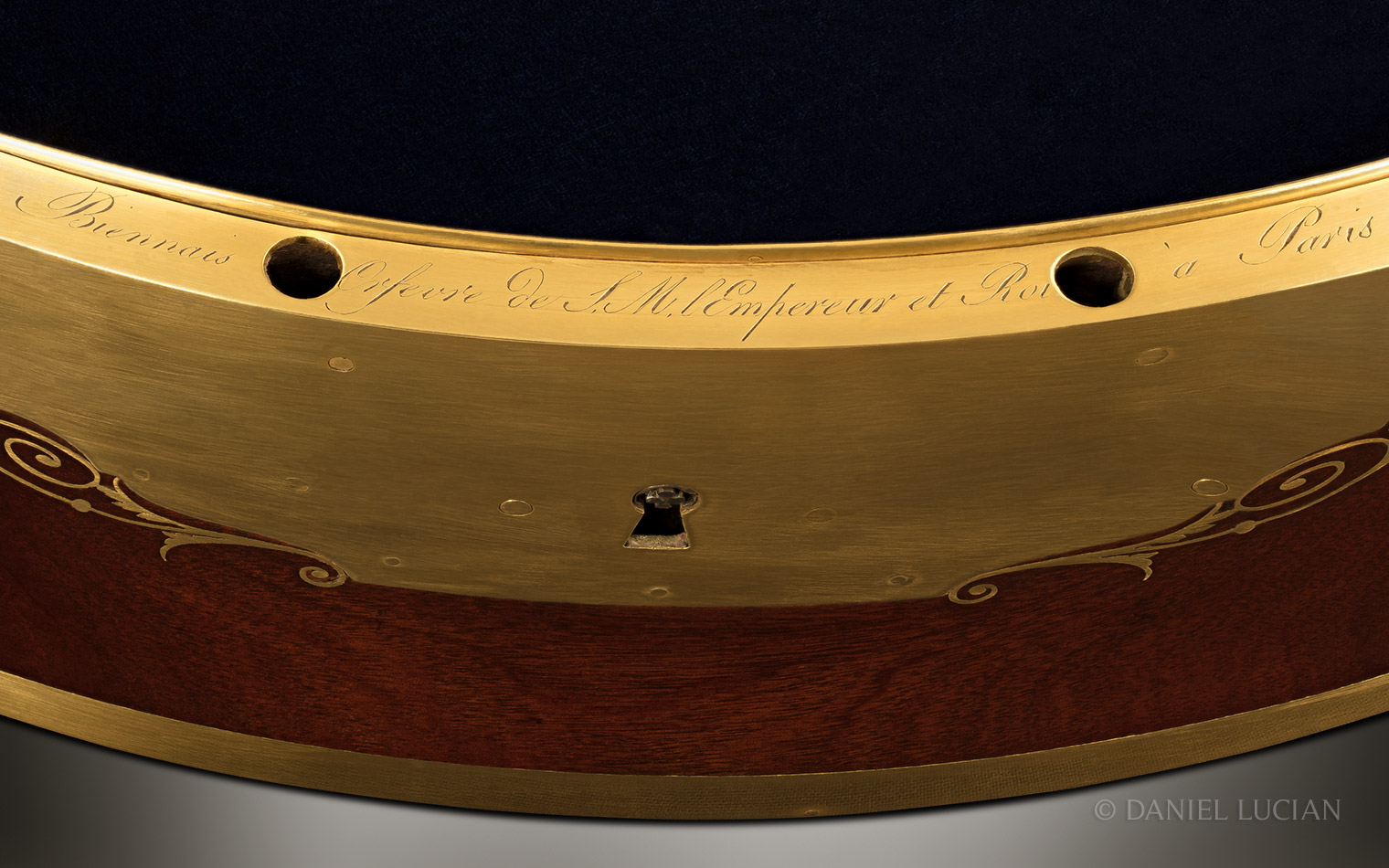
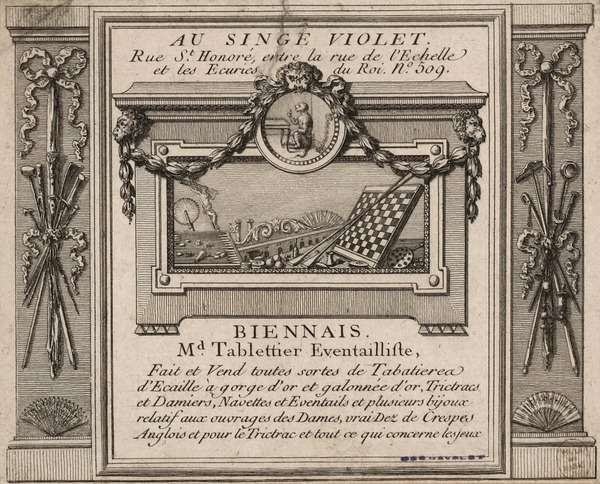
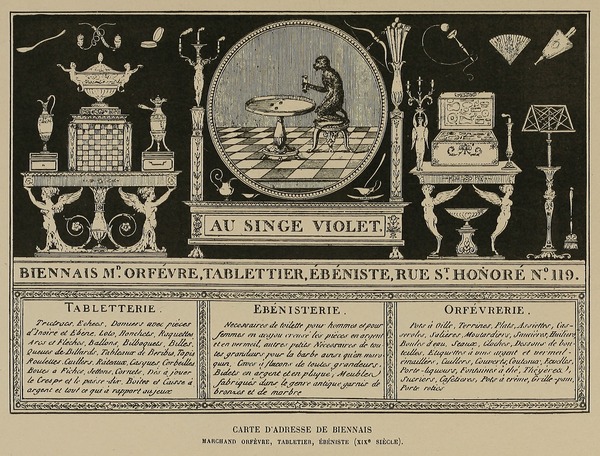
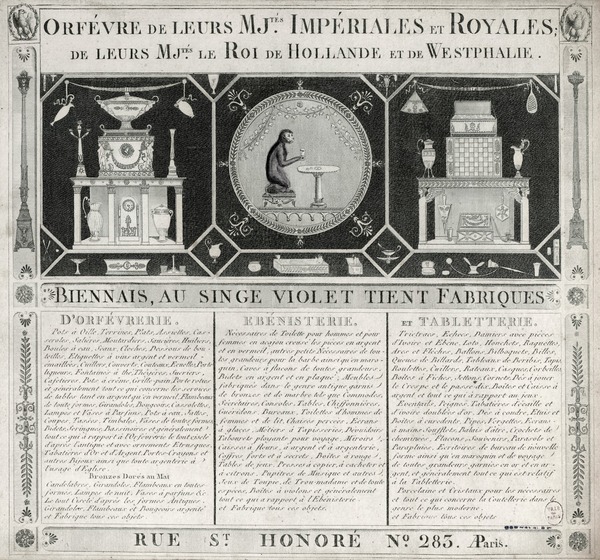
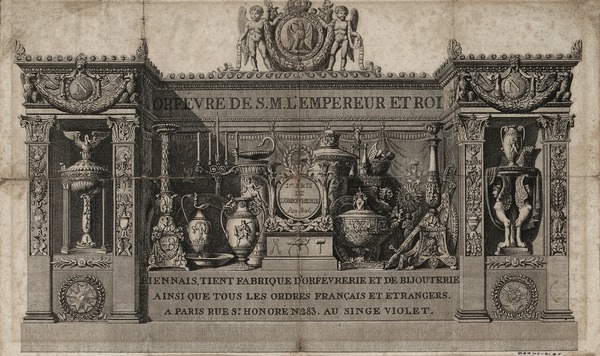
Martin-Guillaume Biennais was born at La Cochère in Normandy in 1764. After training as a craftsman, he moved to Paris and established himself in Rue Saint-Honoré in 1788, trading under the sign Au Singe Violet — ‘At the Sign of the Purple Monkey’. He worked as a tabletier, ébéniste and orfèvre — a goldsmith and silversmith — producing an extensive range of luxury and decorative goods.
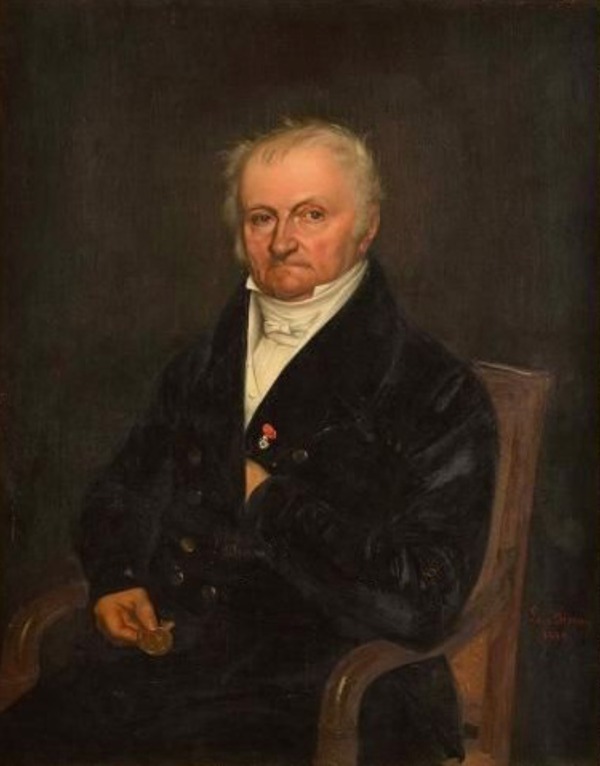
Changes to Parisian street numbering during the Revolutionary and Napoleonic periods mean surviving documents record several numbers for Biennais’ establishment, including 509–511, 118–121 and later 281–283 Rue Saint-Honoré. By 1806, historical trade cards record the business at 283 Rue Saint-Honoré.
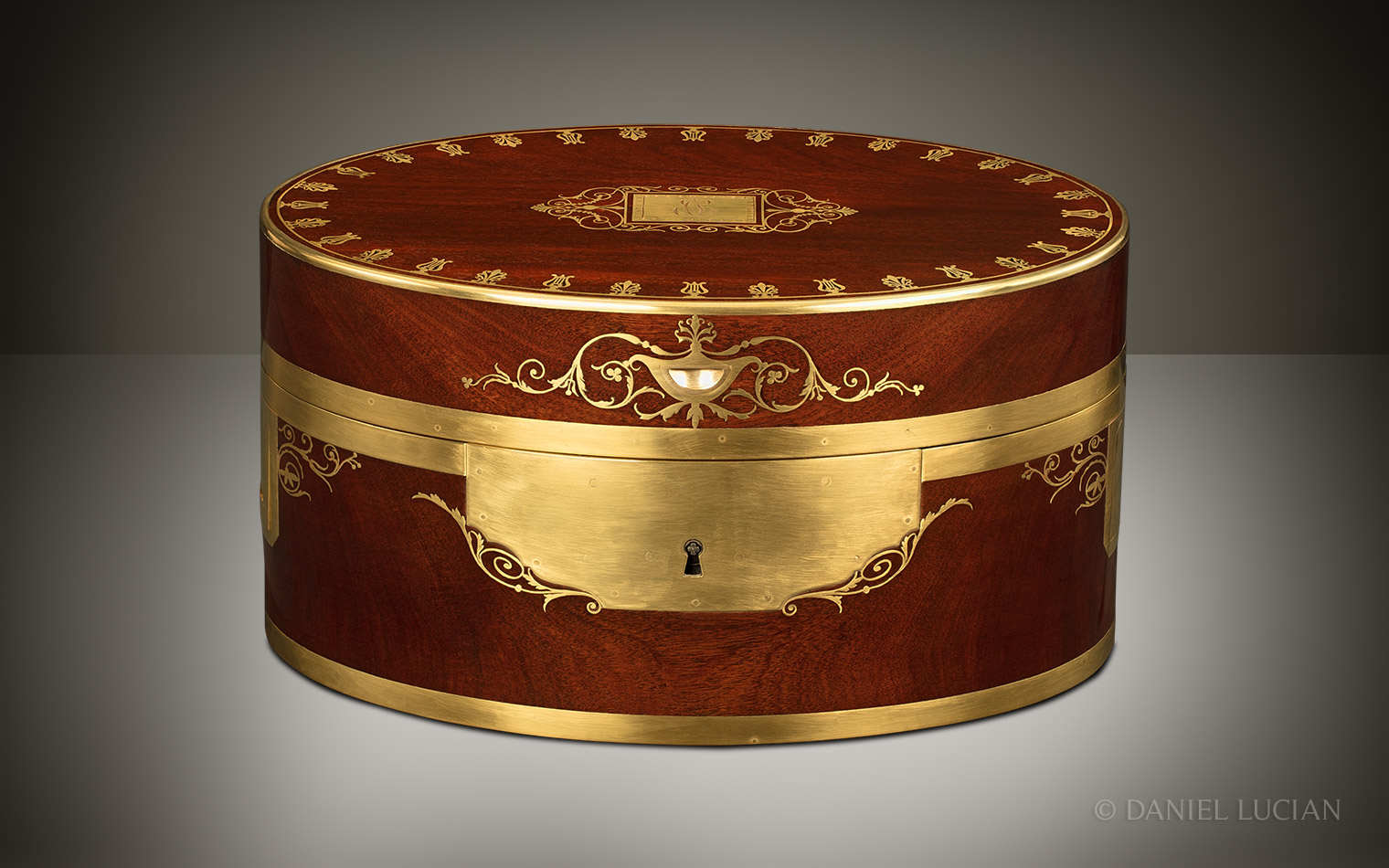
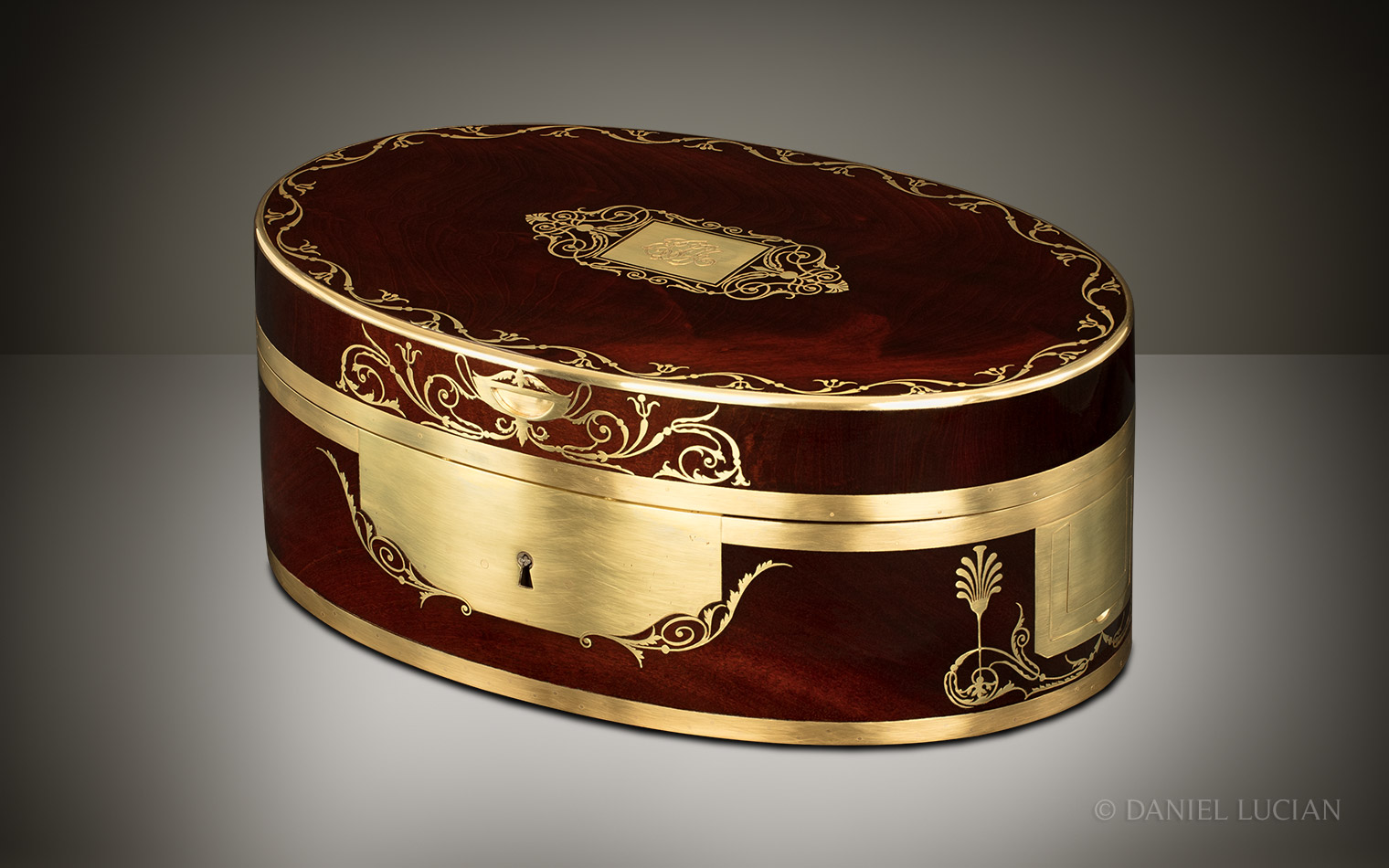
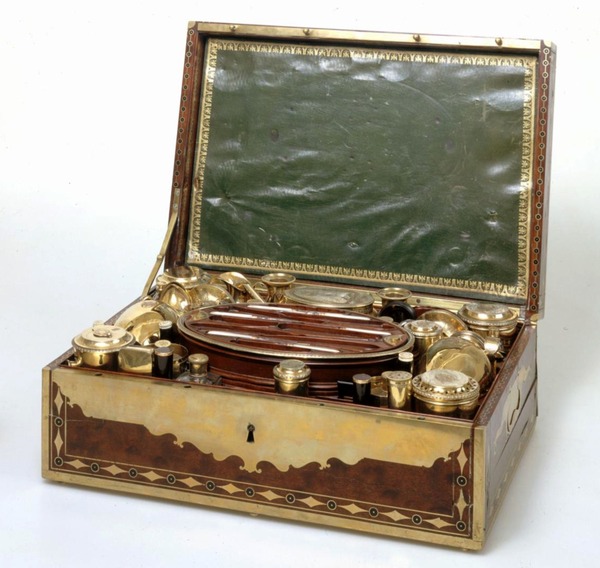
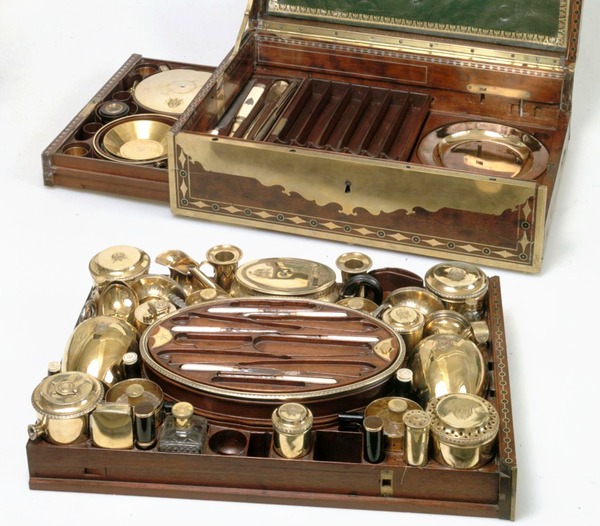
One of Biennais’ particular specialities was the manufacture of travelling nécessaires: finely fitted portable cases designed to contain an extraordinary range of personal, writing, dining and toilet implements. Often constructed from solid mahogany, these cases incorporated the work of specialist craftsmen, including silversmiths responsible for many of the silver and vermeil fittings.
During the French Revolution and the unsettled years that followed, Biennais developed an important clientele amongst military officers. In 1798, shortly before Napoleon Bonaparte’s campaign in Egypt and Syria, Biennais allowed the young general and other officers to acquire travelling nécessaires on credit. Napoleon repaid his debt on his return, and the relationship developed into one of the most important of Biennais’ career.
Under the Consulate and Empire, Biennais’ reputation grew rapidly. From his premises at Au Singe Violet, he supplied Napoleon with travelling nécessaires, silver and other luxury goods, becoming one of the foremost goldsmiths associated with the Imperial Court.
In 1804, Biennais received one of the most prestigious commissions of his career when he was entrusted with the manufacture of much of the imperial regalia for Napoleon’s coronation. His work included the crown, sceptre, hand of justice, orb and grand collar of the Légion d’honneur used during the ceremony at Notre-Dame on 2 December 1804.
At the height of his success, Biennais supplied an international clientele that extended well beyond the French Imperial Court, including members of European royal and princely families. His Rue Saint-Honoré workshops employed a substantial workforce; later accounts place the number as high as 200 workers.
In 1821, Biennais retired from business, transferring the establishment to his former apprentice Jean-Charles Cahier.
Martin-Guillaume Biennais died in Paris in 1843 at the age of seventy-eight.
Today, Biennais’ work survives in major museum, royal and private collections throughout the world, while his travelling nécessaires remain among the most sophisticated examples of French luxury craftsmanship of the Napoleonic period.