French Locks
French box locks of the eighteenth and nineteenth centuries were generally relatively simple in their internal construction, often relying on only one or a small number of levers. Many were designed with a double-throw action: the first full turn of the key engaged the lock, while a second turn extended the bolt still further. This required an elongated internal bolt to accommodate the additional movement.
The precise purpose of this double-throw arrangement is not always clear. Although the second movement increased the travel of the bolt, it did not necessarily make the mechanism itself more sophisticated. It may, however, have provided an additional obstacle to anyone attempting to manipulate the lock without its correct key.
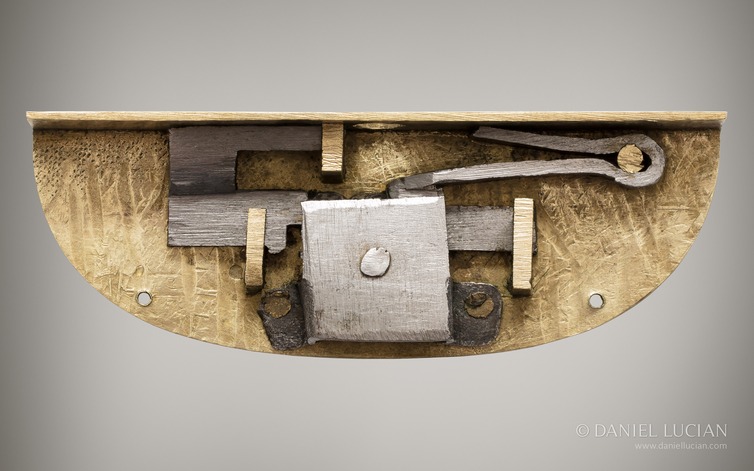
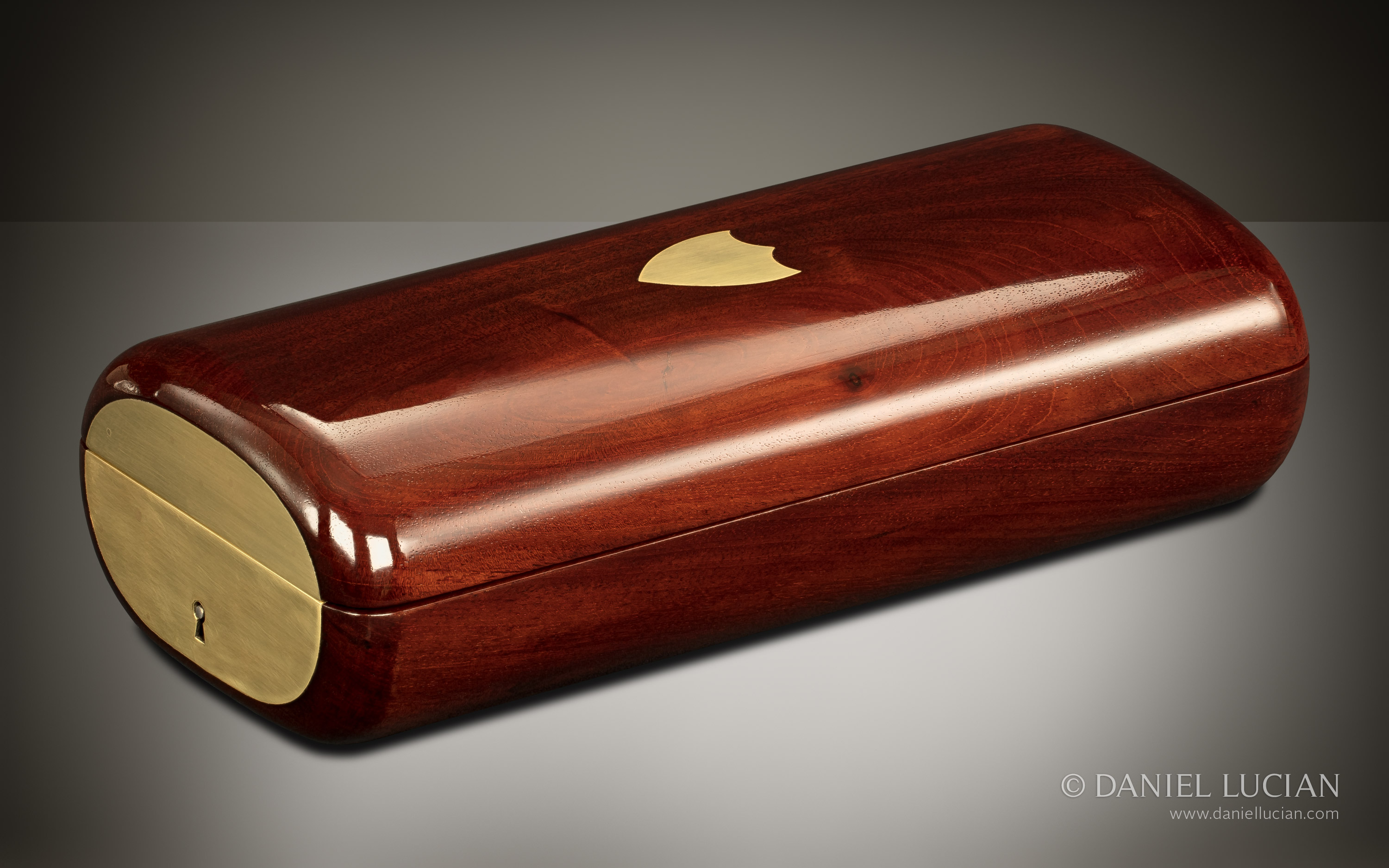
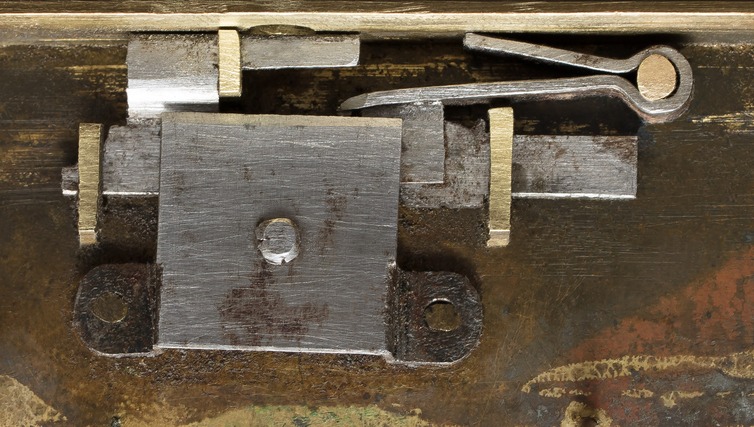
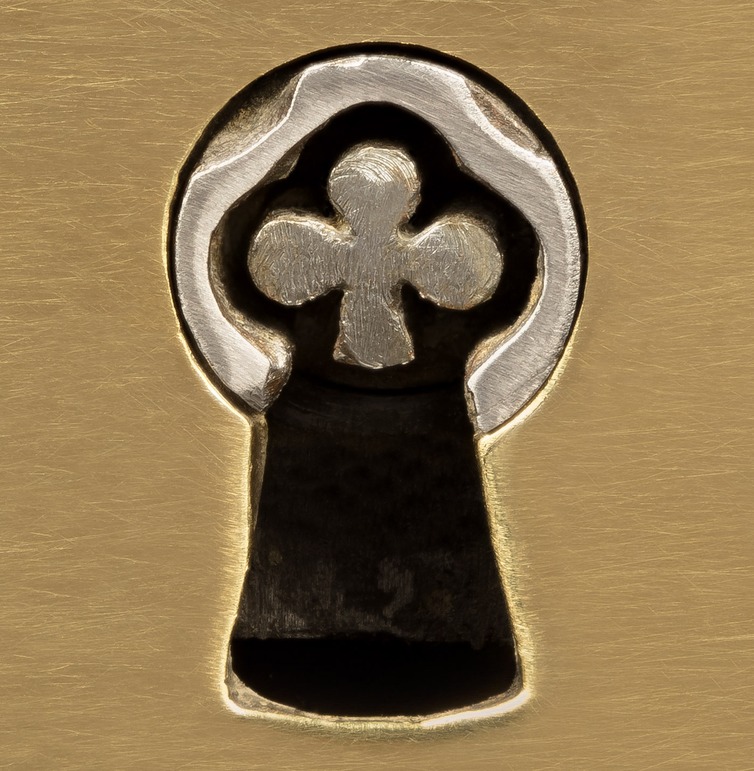
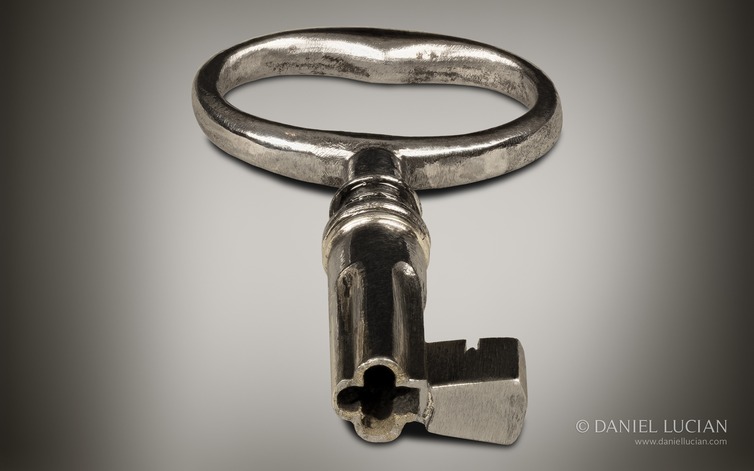
Security was further enhanced by features such as a ‘curtain’ — a rotating metal sheath surrounding the keyhole that restricted access to the internal mechanism — and unusually shaped drill pins. These pins required a correspondingly shaped hollow within the key and could therefore make both lock picking and the manufacture of a replacement key considerably more difficult.
French locks are known with drill pins in the form of hearts, triangles, stars, playing-card spades and cloverleaves.
The cloverleaf form is particularly notable for its appearance on the magnificent French nécessaires de voyage commissioned for Marie Antoinette in 1787 and 1791. Its three-lobed form has sometimes been interpreted as a reference to the Christian Holy Trinity, although the precise significance of its use on these locks remains uncertain.


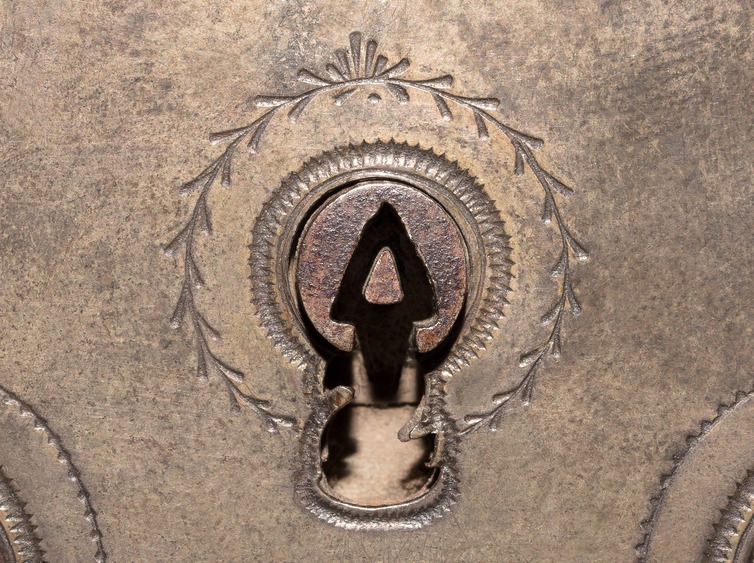
French lock fittings can also often be distinguished externally. The upper lock plate commonly has cylindrical links which engage with circular openings in the main lock housing. British box locks, by comparison, more commonly employ rectangular or cuboid links engaging with correspondingly shaped openings.
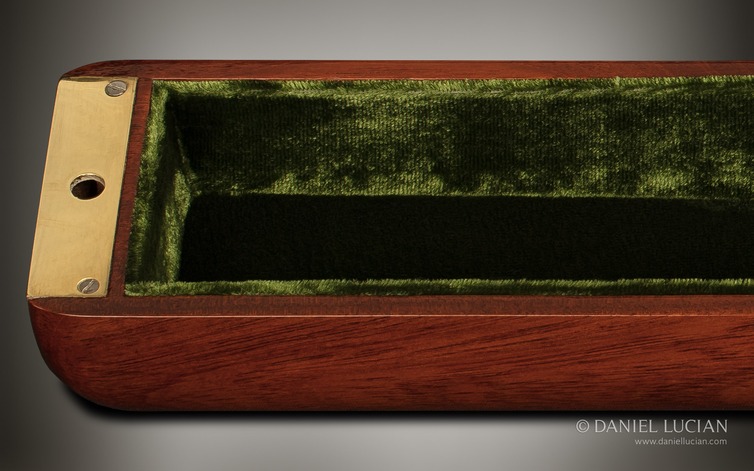


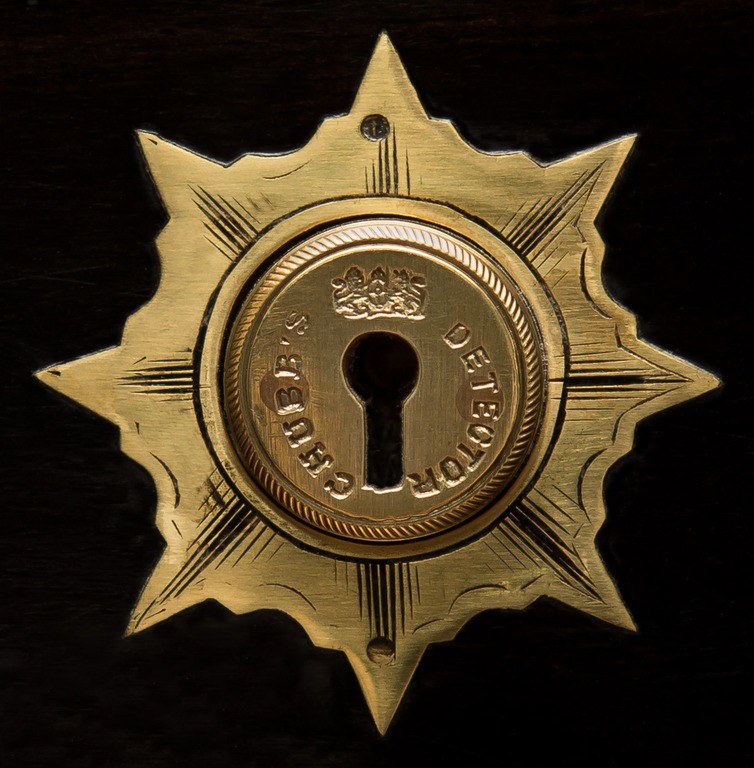
Some French boxes were fitted with English Bramah Patent or Chubb locks. Where these were used, the associated link plates and openings had to be adapted to accommodate the different British lock construction.