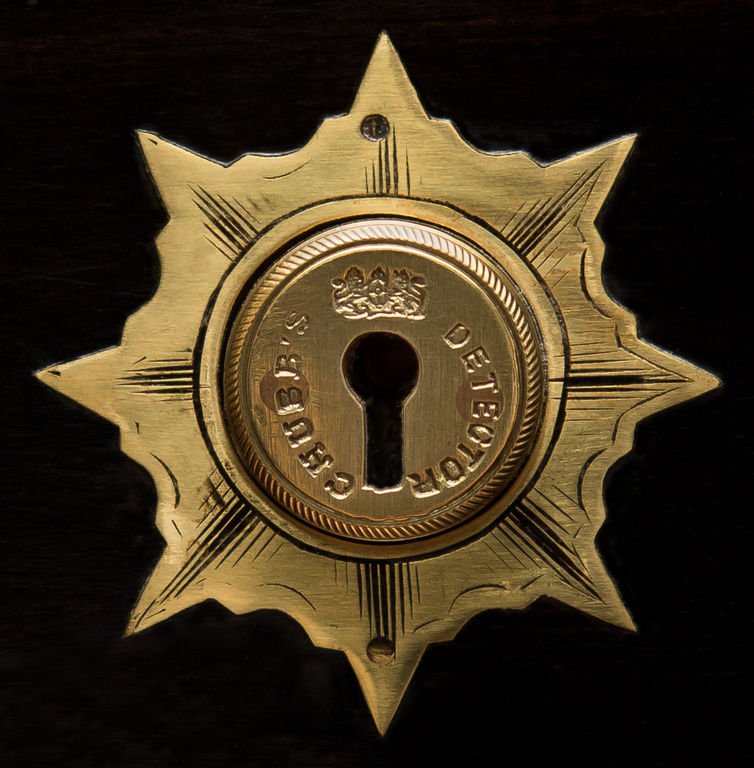
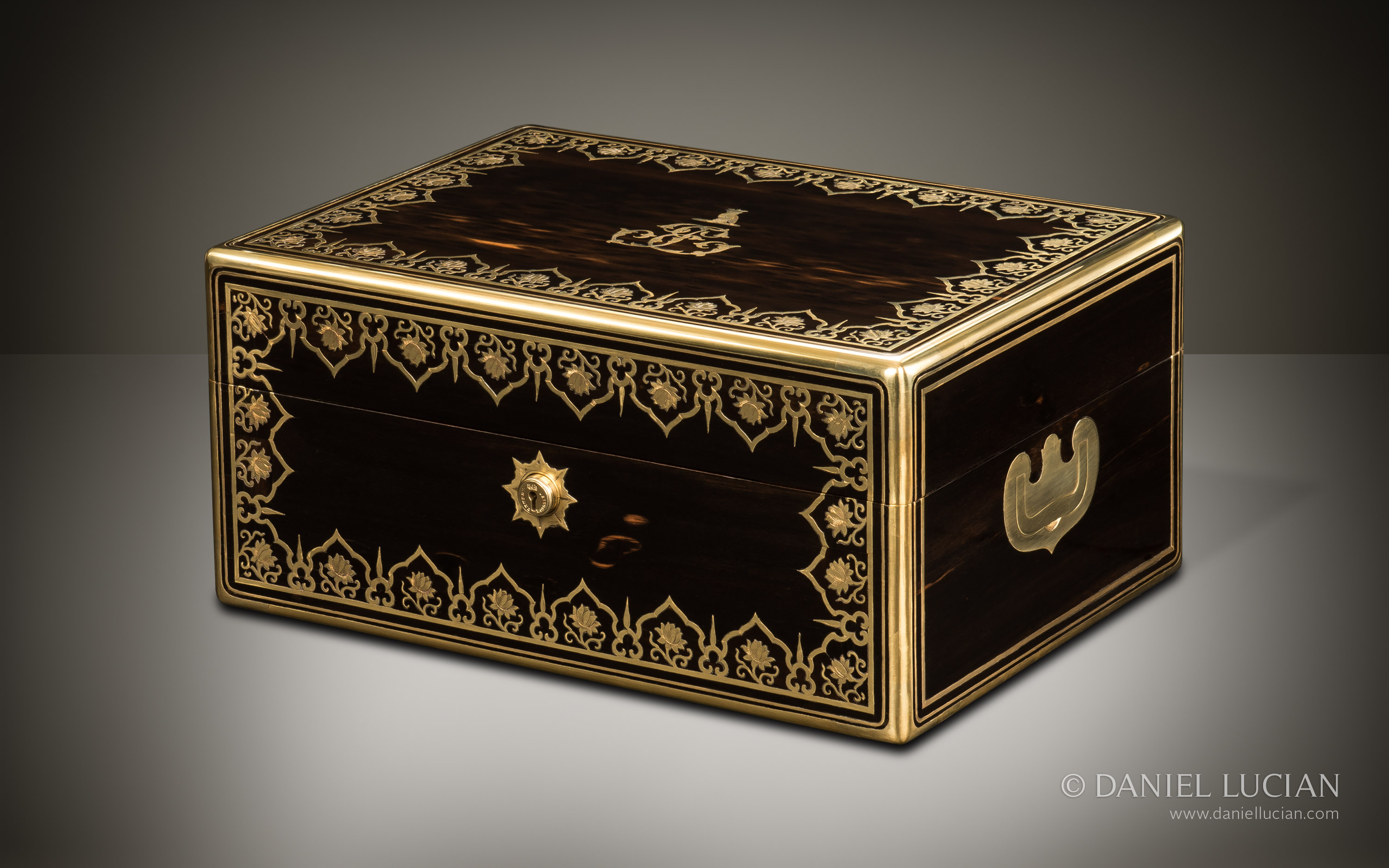
Chubb Detector Lock
Following a burglary at Portsmouth Dockyard in 1817, in which false keys had been used, the British government offered a reward for a lock that could only be opened by its correct key. Jeremiah Chubb responded by developing the Detector lock, patented in 1818, and subsequently received the government reward of £100.
The design was intended not only to resist picking, but also to reveal when an unauthorised attempt had been made. If a lock pick or incorrect key raised any of the internal levers beyond their correct height, the detector lever was lifted simultaneously and became trapped by the detector spring. In this state, the bolt was effectively immobilised.
When the owner subsequently attempted to operate the lock, the key would be prevented from turning normally, indicating that the mechanism had been disturbed. On later versions of the lock, turning the correct key slightly in the opposite direction released the detector spring, reset the detector lever and allowed the lock to operate normally.
The earliest Chubb Detector locks required a separate regulating key to reset the mechanism following an attempted picking. In 1824, the design was improved so that the principal key could perform this function itself. Further developments followed in 1833 and, in 1847, with the introduction of what became known as the ‘Definitive’ Detector lock.
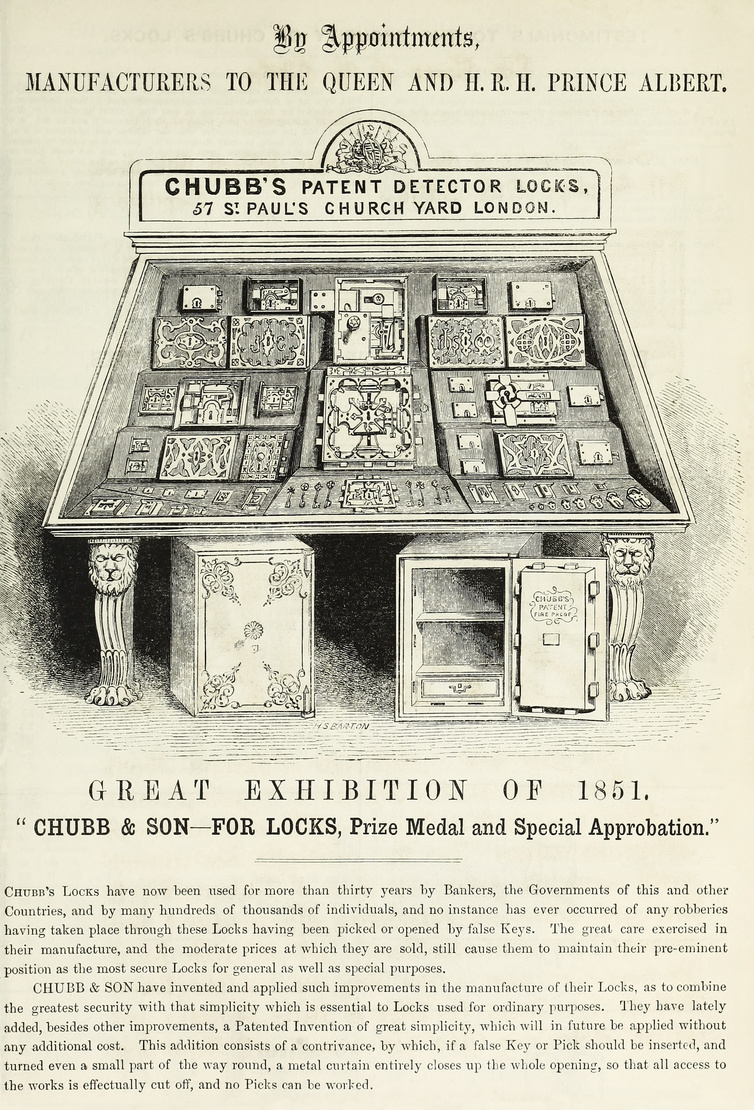
At the time of the Great Exhibition of 1851, the American locksmith Alfred Charles Hobbs announced his intention to defeat one of Chubb’s Detector locks. The lock selected was fitted to an iron vault door at the Depository of Valuable Papers in Westminster. In front of eleven witnesses, Hobbs succeeded in opening the lock in approximately 25 minutes and subsequently relocked it in a further seven minutes without damaging the mechanism.
The demonstration brought Hobbs considerable attention and became part of the wider lock-picking controversy of 1851. He subsequently turned his attention to Joseph Bramah’s celebrated Challenge Lock, which had remained undefeated for more than sixty years.
Chubb concluded that Hobbs had gained an advantage through visual and physical access to the internal levers via the keyhole. The firm subsequently introduced a ‘barrel and curtain’ to the Detector lock. This rotating keyhole assembly, based on a design by locksmith Charles Aubin, restricted access to the internal mechanism while still allowing the correct key to operate it.
Earlier Chubb Detector locks are sometimes found fitted with this later barrel-and-curtain arrangement, suggesting that existing locks could also be upgraded after manufacture.