
Bramah’s ‘Challenge Lock’
If a Bramah lock containing twelve sliders gave only a one-in-479,001,600 chance of reproducing the correct setting without its dedicated key, adding just one more slider increased those odds to approximately one in 6.2 billion. How, then, did someone successfully open the famous Bramah Challenge Lock, which contained eighteen sliders?
The answer lies in one of the most celebrated episodes in nineteenth-century lockmaking: the Great Lock Controversy of 1851.
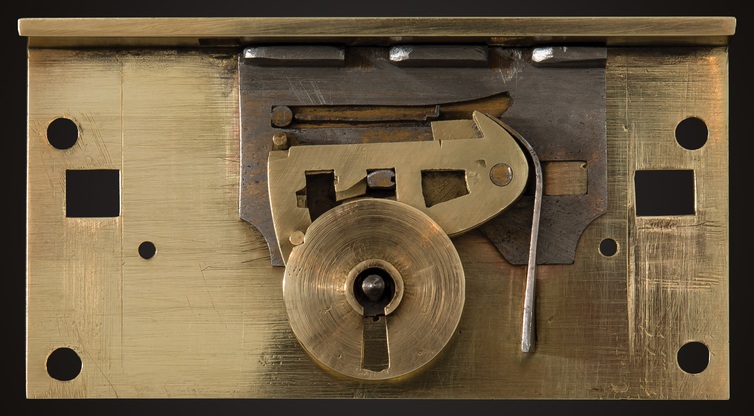
Joseph Bramah established his locksmithing business at 124 Piccadilly, London, in 1784. The technical sophistication of his locks created considerable demand, but their complexity also made them difficult and expensive to manufacture consistently.
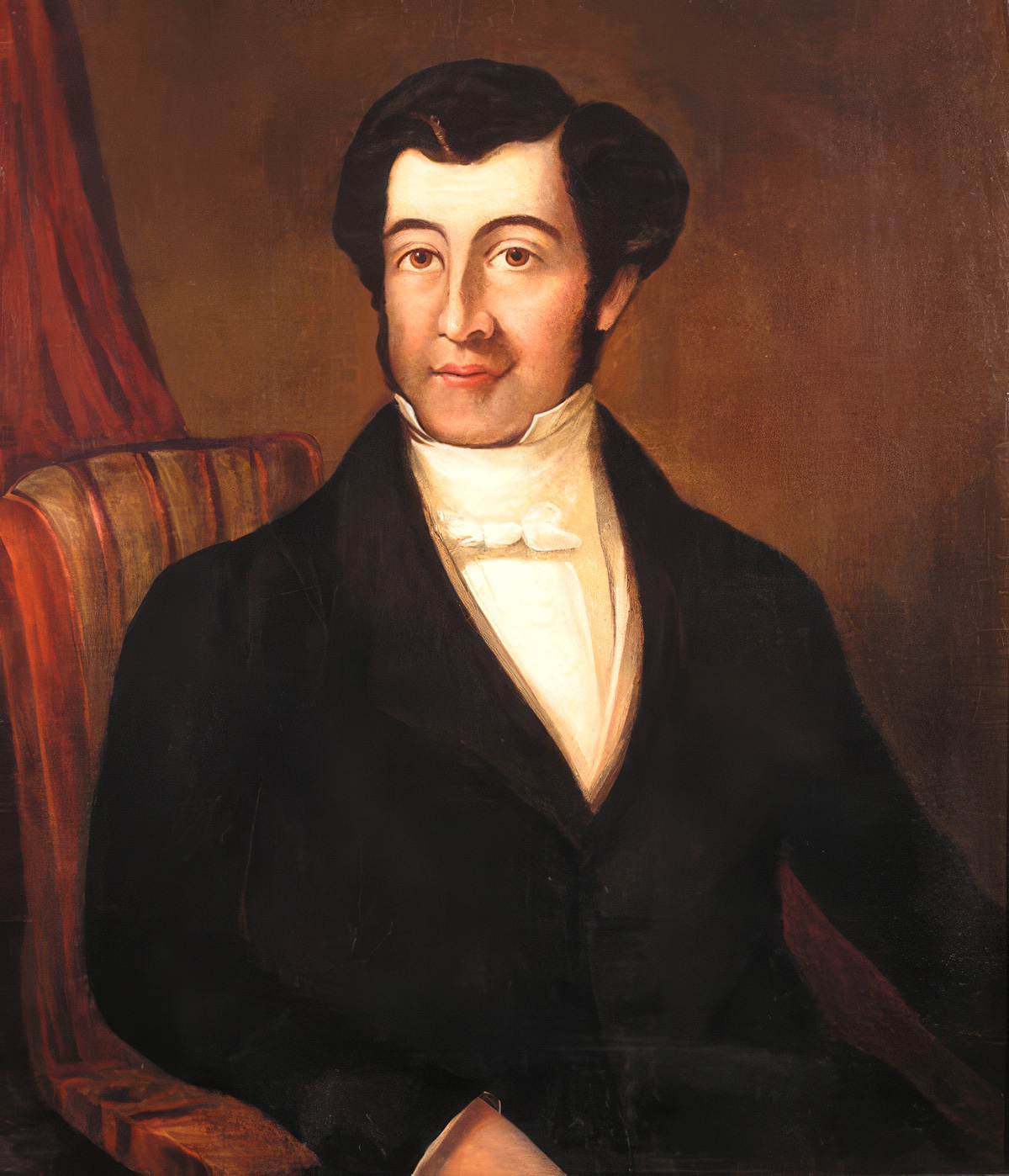
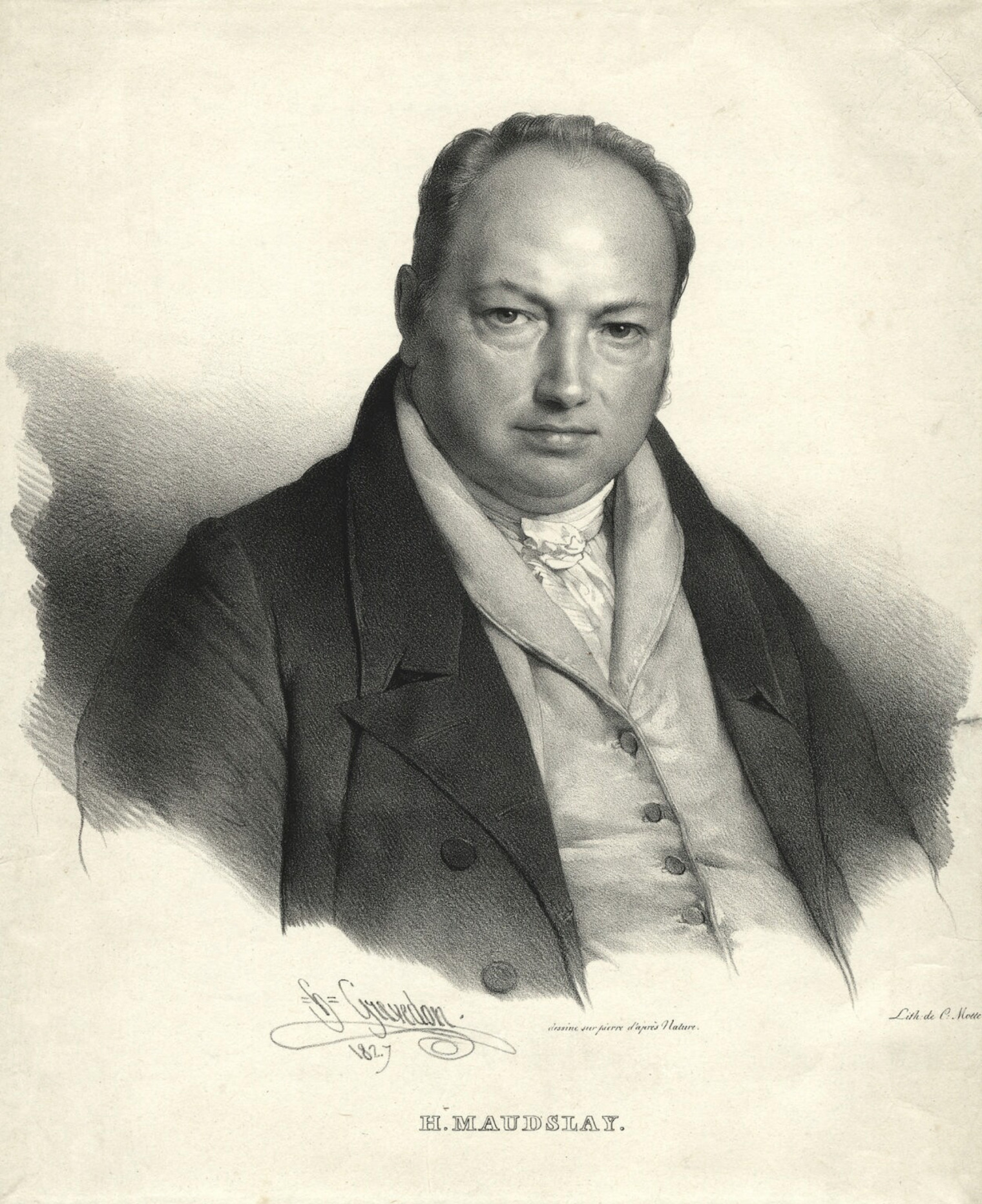
In 1789, Bramah employed the eighteen-year-old Henry Maudslay upon the recommendation of his workforce. Maudslay’s exceptional technical and mechanical ability impressed Bramah to such a degree that he soon became his chief engineer. Together, Bramah and Maudslay developed precision tools and machinery that allowed the intricate components of the locks to be manufactured more accurately, consistently and in greater numbers.
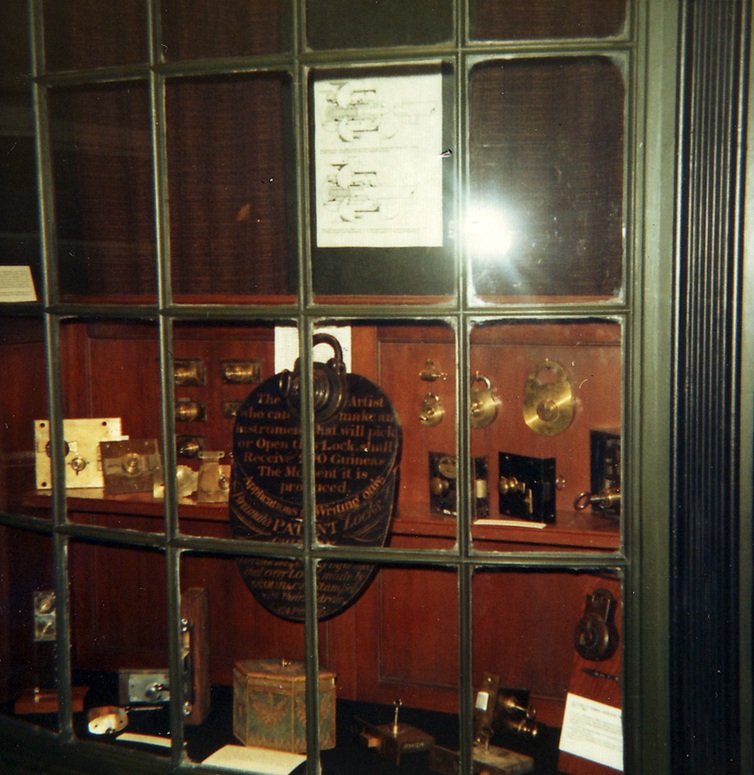
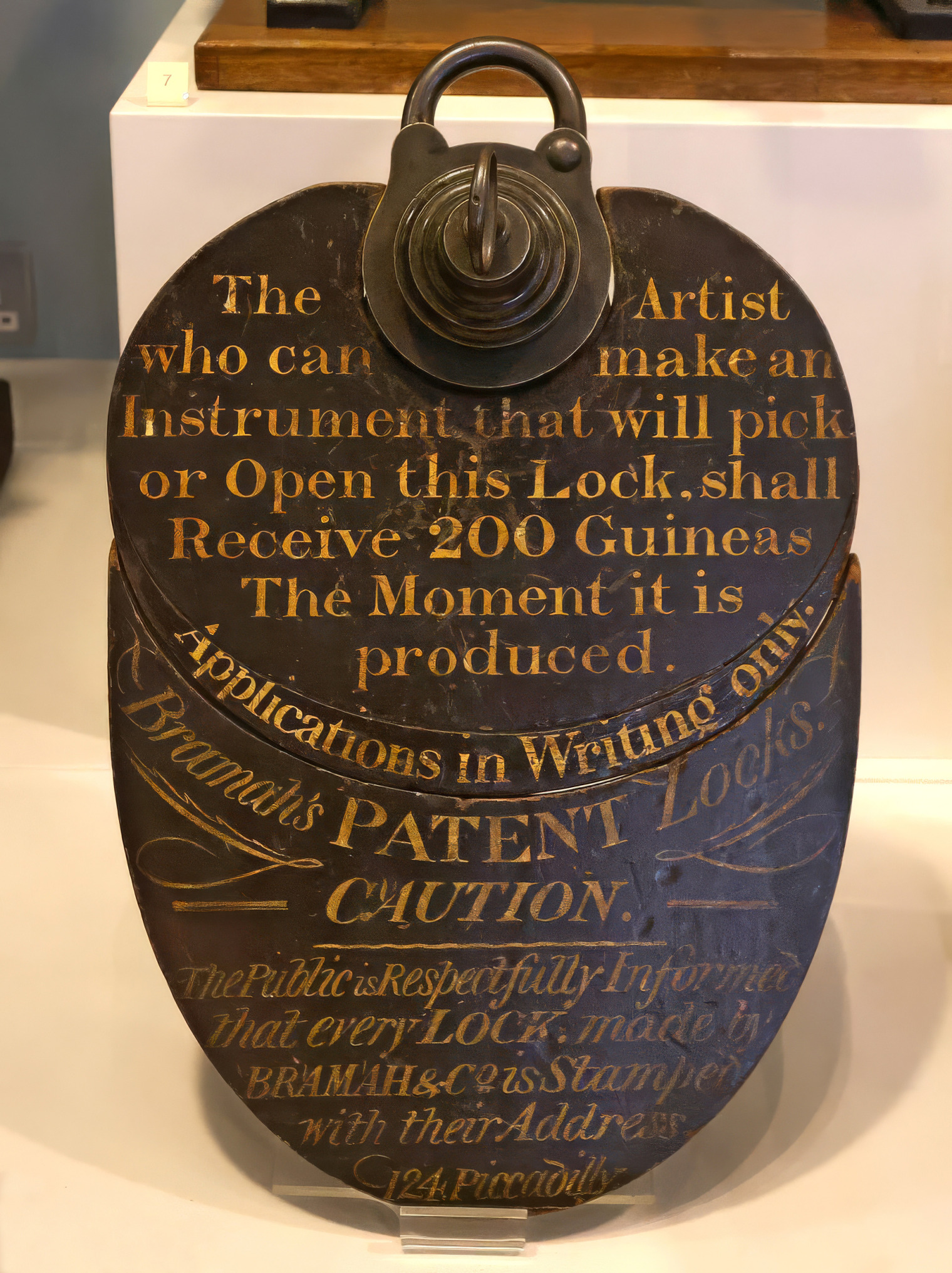
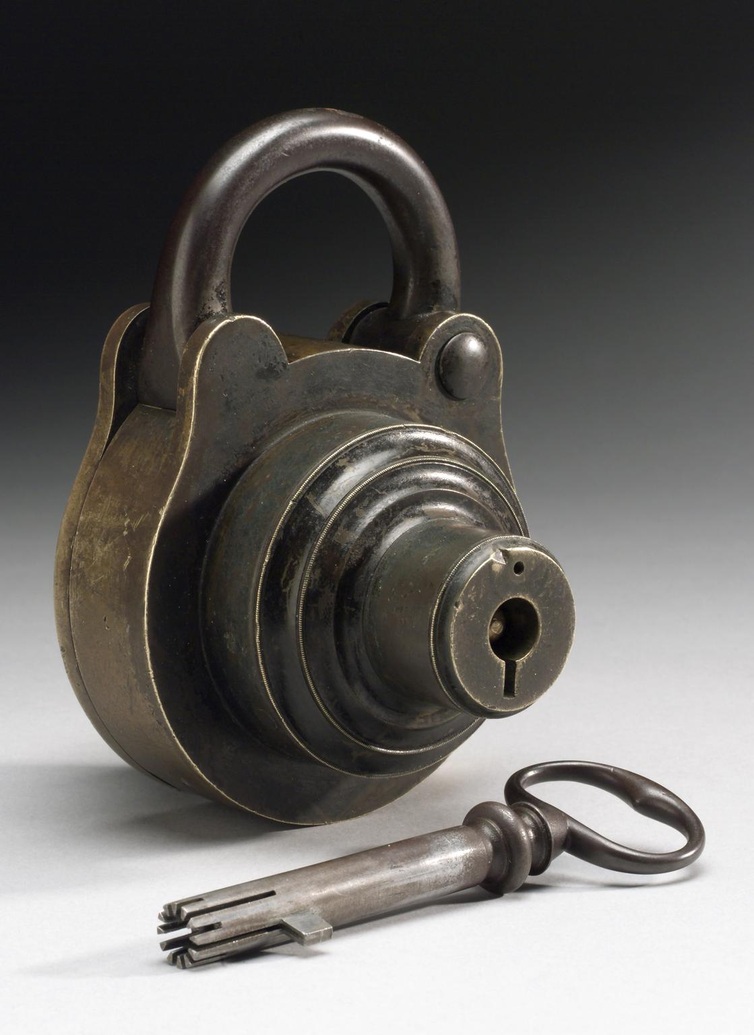
In 1790, Maudslay was instructed to manufacture a padlock of exceptional security, intended to resist opening by any means other than its dedicated key. Bramah displayed the completed lock in the window of his Piccadilly premises beneath a notice offering an extraordinary challenge:
“The artist who can make an instrument that will pick or open this lock shall receive 200 Guineas the moment it is produced.”
The Challenge Lock would remain unanswered for more than sixty years.
Joseph Bramah died in 1814 without seeing his challenge overcome. His son Timothy continued the business, with his brothers Francis and Edward joining during the early 1820s, and the firm subsequently trading as Bramah & Sons. One unsuccessful attempt to open the Challenge Lock was recorded in 1817, but otherwise it remained an imposing fixture in the shop window.
Around this period, however, concerns had begun to emerge over a method of attacking Bramah locks by manipulating the individual sliders. By applying turning pressure to the cylinder and adjusting the sliders one at a time, it was theoretically possible to detect the point at which each approached its correct position.
In 1817, Bramah employee William Russell responded by introducing false notches into the sliders and locking plate. These false positions were intended to mislead anyone attempting to determine the correct setting by feel. All eighteen sliders in the Challenge Lock were fitted with them. At a time when many Bramah box locks contained only four to six sliders, an eighteen-slider lock incorporating false notches presented an extraordinary obstacle.

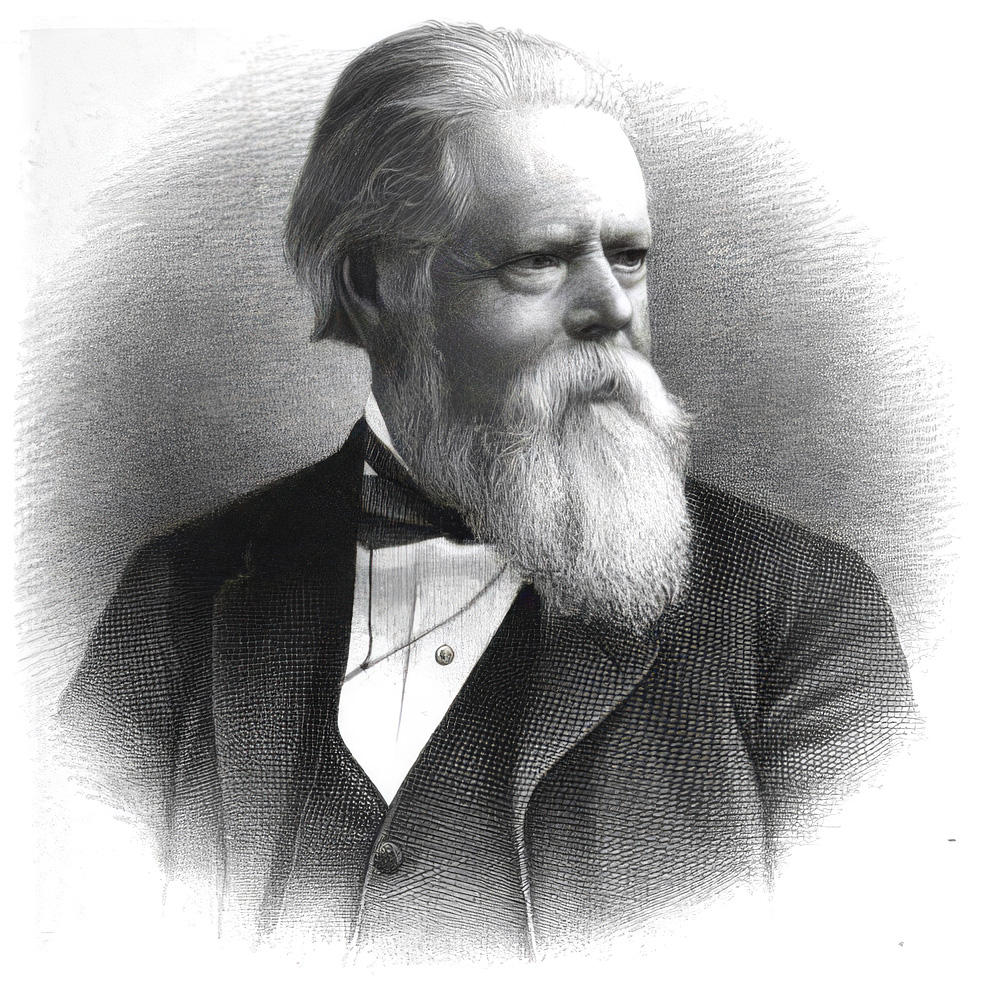
Alfred Charles Hobbs
The Great Exhibition of 1851 brought manufacturers and inventors from around the world to London. Among the American exhibitors was the New York lockmaking firm Day & Newell, represented by Alfred Charles Hobbs, an accomplished locksmith, inventor and exceptionally effective salesman.
Hobbs realised that one of the most effective ways to demonstrate the merits of American locks was to test the security of celebrated British designs.
His first major target was Jeremiah Chubb’s Detector lock. On 21 July 1851 Hobbs informed Chubb that he intended to attempt to open one of their locks the following day. The lock was fitted to an iron strong-room door at the Depository of Valuable Papers in Westminster.
Hobbs opened it in just twenty-five minutes.
He then relocked it in a further seven minutes. The demonstration attracted enormous attention and immediately established Hobbs as one of the central figures in what became known as the Great Lock Controversy.
Only one greater challenge remained: Bramah’s famous padlock.
Hobbs had already contacted Bramah on 2 July 1851 to announce his intention to accept the challenge and requested permission to take a wax impression through the keyhole so that he could prepare suitable instruments.
Three arbitrators were subsequently appointed and, on 19 July, formal conditions were agreed. Hobbs was given thirty days to succeed. The principal conditions were:
- the lock would be secured between two pieces of wood and fixed to a wall so that access was limited to the keyhole and hasp;
- the key was initially to remain with Bramah;
- whenever Hobbs left the lock unattended, the keyhole would be covered by an iron band and sealed;
- if Hobbs succeeded, the original key would subsequently be tried; if it still operated normally, this would demonstrate that the lock had been opened rather than simply forced or destroyed.
To remove any suspicion that the lock might be reset or altered while Hobbs was absent, Bramah subsequently surrendered their right to retain and use the key. It was instead sealed away until the conclusion of the experiment.
On 24 July 1851, the Challenge Lock was removed from the shop window and taken to an upper room in Bramah’s premises. Hobbs began work alone.
The Challenge Becomes a Controversy
As the days passed, Bramah became increasingly uncomfortable with the conditions under which Hobbs was working.
After approximately a week, they asked the arbitrators to attend and inspect his progress. All three were in Paris and declined, questioning what purpose such an inspection would serve. Bramah temporarily prevented Hobbs from continuing until the situation could be clarified.
On 8 August, Bramah again wrote to the committee. They were particularly concerned that the key had not been used to establish whether Hobbs’s work had already damaged the mechanism. Although Bramah had voluntarily surrendered their own right to use the key during the experiment, they had not expected this to prevent the arbitrators from testing it.
A meeting eventually took place on 15 August. Bramah asked that the key be tried and that somebody remain present during the remainder of Hobbs’s work. Both requests were refused. The committee believed the key need only be tested at the conclusion of the challenge and considered continuous supervision unnecessary. They also took the view that, if Hobbs damaged the lock during the attempt, he was entitled to repair it provided he remained within the thirty-day limit.
Hobbs resumed work the following morning.
By 19 August, Bramah felt that the experiment could no longer fulfil the original spirit of their challenge. Nobody was observing Hobbs at work, and therefore nobody could say with certainty what instruments were being used or precisely how the lock was being manipulated. Bramah wrote to the committee expressing these concerns but received no reply.
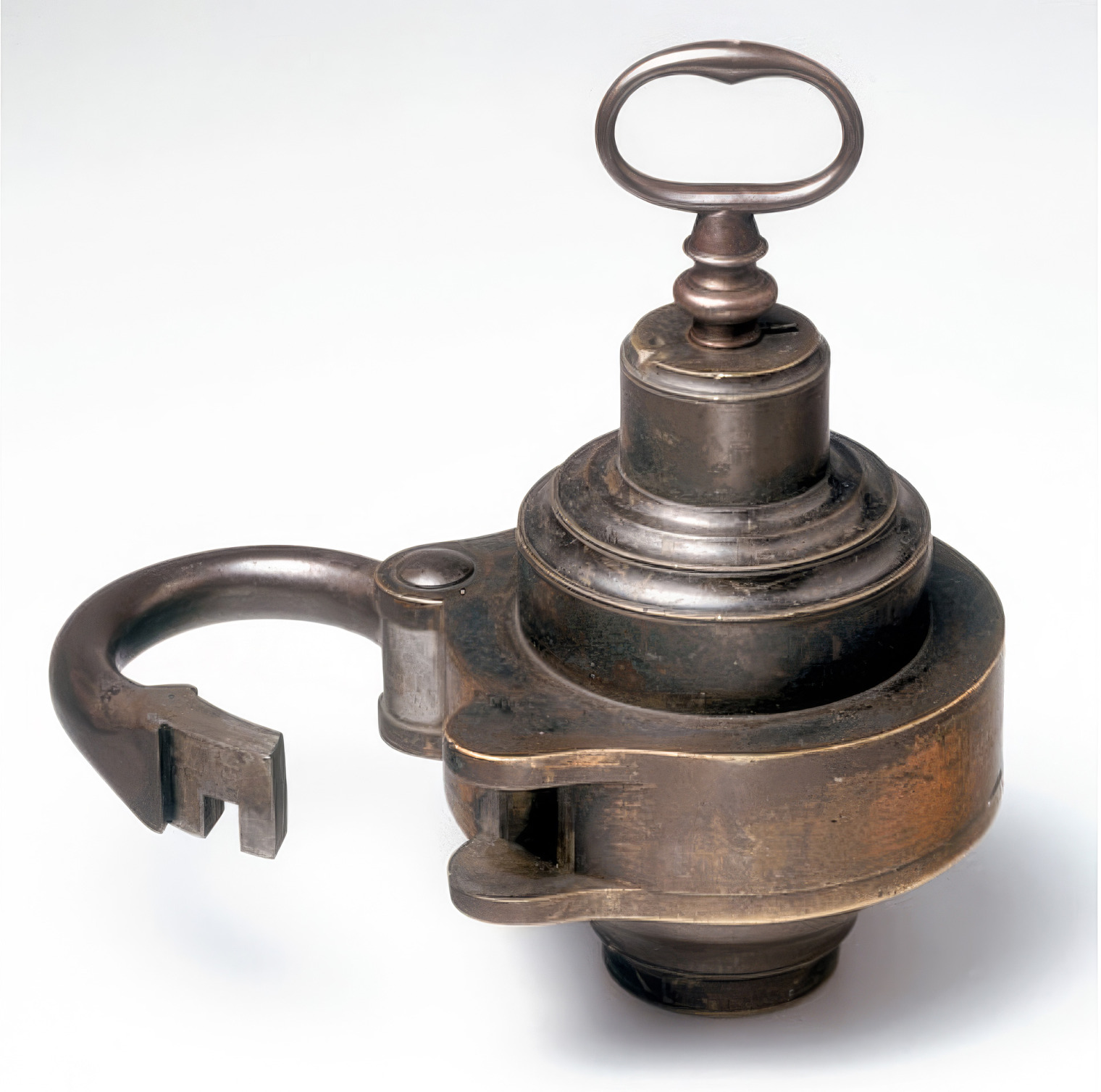
On 23 August, in the presence of two of the arbitrators, Hobbs presented the Challenge Lock with its hasp open and demonstrated the bolt moving backwards and forwards.
He had succeeded.
The task had taken more than 51 hours of work spread across 16 days.
On 29 August, with all three arbitrators and representatives of Bramah present, Hobbs again displayed the lock open. Around it remained part of the apparatus used during the operation: a system fixed to the surrounding wood which kept a steel rod under constant pressure within the keyhole.
Hobbs also produced several smaller tools, including one likened to a stiletto and another resembling a crochet hook.
Bramah immediately requested that the original key be tried. The committee instead allowed Hobbs a further day to return the mechanism to its original condition. On the following day the key was finally inserted and operated the lock successfully.
After the thirty-day period had expired, Bramah dismantled the Challenge Lock. The firm reported that, although there was no serious overall damage to the mechanism, several sliders appeared to have been substantially bent and subsequently straightened, while others had been almost filed through.
This detail is important. Hobbs had undoubtedly opened the lock and the original key still operated it, but the process had involved considerably more intervention than the simple word ‘picked’ might suggest.

The Decision
On 2 September 1851, the committee issued its verdict:
“Mr. Hobbs has fairly picked or opened the lock.”
The arbitrators awarded him the promised 200 guineas.
Bramah acknowledged that the lock had been opened but strongly disputed whether the experiment fulfilled the spirit of their original challenge.
Their objections were substantial. Hobbs had worked without witnesses throughout the critical stages of the operation; the original key had not been periodically used to reset the sliders as it would have been during normal use; he had been permitted additional time before the final key test; and the successful method relied upon fixed apparatus attached to the surrounding structure together with several separate instruments.
Bramah also argued that the purpose of the original challenge had been partly scientific: if someone could demonstrate a practical weakness in the lock, the firm could study the method and improve its design. As nobody had witnessed Hobbs’s complete procedure, they believed relatively little useful information had actually been obtained.
There was also a semantic argument. Bramah’s original challenge offered the reward to anyone who could produce “an instrument” capable of opening the lock. Hobbs had employed several tools together with fixed apparatus. Whether that complied with the precise wording of a challenge issued more than sixty years earlier became part of the dispute.
Nevertheless, Bramah paid.
In the Morning Chronicle of 10 September 1851, the firm announced that it had forwarded a cheque for the 200 guineas to the committee, accompanied by a detailed protest explaining why it disagreed with the arbitrators’ decision.
Hobbs converted his reward into gold sovereigns and displayed them in a glass case on the Day & Newell stand at the Great Exhibition, guarded by a policeman and accompanied by signage explaining how they had been won. Unsurprisingly, the display attracted considerable public attention.
Bramah’s Defence
The episode inevitably damaged the aura of invulnerability surrounding British high-security locks, and Bramah found themselves publicly defending a mechanism that had stood undefeated for more than sixty years.
In October 1851, the firm argued that the Challenge Lock was itself considerably inferior to the locks they were then manufacturing. It had remained in their window for decades and had not been dismantled or modernised before Hobbs accepted the challenge. Once he had announced his intention to attempt it, Bramah considered that altering the lock would have left them open to accusations of preparing a special test mechanism specifically to defeat him.
The firm therefore restored the Challenge Lock using the improvements then incorporated into its current locks and renewed the 200-guinea challenge.
Hobbs did not attempt it again.
There is another way of viewing the result. An exceptionally skilled locksmith, working under almost ideal conditions, required 51 hours spread over sixteen days, purpose-made tools, fixed apparatus and prolonged uninterrupted access to defeat a lock whose fundamental design was already decades old.
Hobbs demonstrated that the Challenge Lock was not literally impossible to open without its key. At the same time, the extraordinary effort required to do so demonstrated just how formidable Bramah’s design remained.
How Did Hobbs Overcome the Odds?
The apparent mathematical improbability remains the most intriguing part of the story.
If a twelve-slider lock could theoretically present hundreds of millions of possible slider settings, an eighteen-slider Challenge Lock appears overwhelmingly difficult.
But Hobbs did not attempt to discover the correct combination by randomly trying possible arrangements.
He extracted information directly from the mechanism itself.
The first difficulty was the powerful spiral spring acting upon the sliders, exerting a pressure estimated at between thirty and forty pounds. Hobbs inserted a thin steel rod through the keyhole and used it to compress the spring and circular disc behind the sliders. A curved support fixed to the wooden structure surrounding the lock then held the rod under constant pressure, freeing the individual sliders from much of the spring force.
He could now manipulate the sliders individually.
A fine steel needle was used to push them inward, while another tool terminating in a small hook allowed a slider to be drawn back if it had travelled too far. Hobbs carefully felt for the notches within each slider and measured their positions using a thin strip of brass. By recording those measurements, he was able to return each morning to approximately the same settings reached the previous day.
At the same time, a small bent instrument maintained turning pressure on the cylinder controlling the bolt.
This pressure was critical.
As Hobbs adjusted the sliders, he could detect subtle changes in resistance transmitted through the cylinder. These provided information about which slider was preventing further rotation. Rather than confronting billions of combinations indiscriminately, he could concentrate on the sliders that the mechanism itself indicated required adjustment.
One by one, he worked towards the true positions.
Russell’s false notches made the process considerably more difficult. A false notch could allow the cylinder to rotate slightly and create the impression that a slider had reached its correct position, only for progress to stop again. Hobbs then had to recognise the false setting and continue searching for the genuine notch.
This resolves the apparent contradiction between the enormous number of possible key settings and Hobbs’s eventual success.
He did not defeat the billions of theoretical combinations. He bypassed them by reading mechanical information from the lock itself.
That achievement was remarkable, but so too was the lock he defeated. More than sixty years after the challenge was issued, Bramah’s mechanism still required one of the most accomplished locksmiths of the period, working under unusually favourable conditions, more than fifty hours to overcome it.