Marquetry, Parquetry and Decorative Inlay
Marquetry, parquetry and decorative inlay allowed cabinetmakers to embellish wooden surfaces with intricate patterns and contrasting materials. Thin wood veneers could be arranged into elaborate floral designs, pictorial scenes or geometric compositions, while ivory, mother-of-pearl and abalone introduced additional colour, texture and lustre.
Marquetry and Its Manufacture
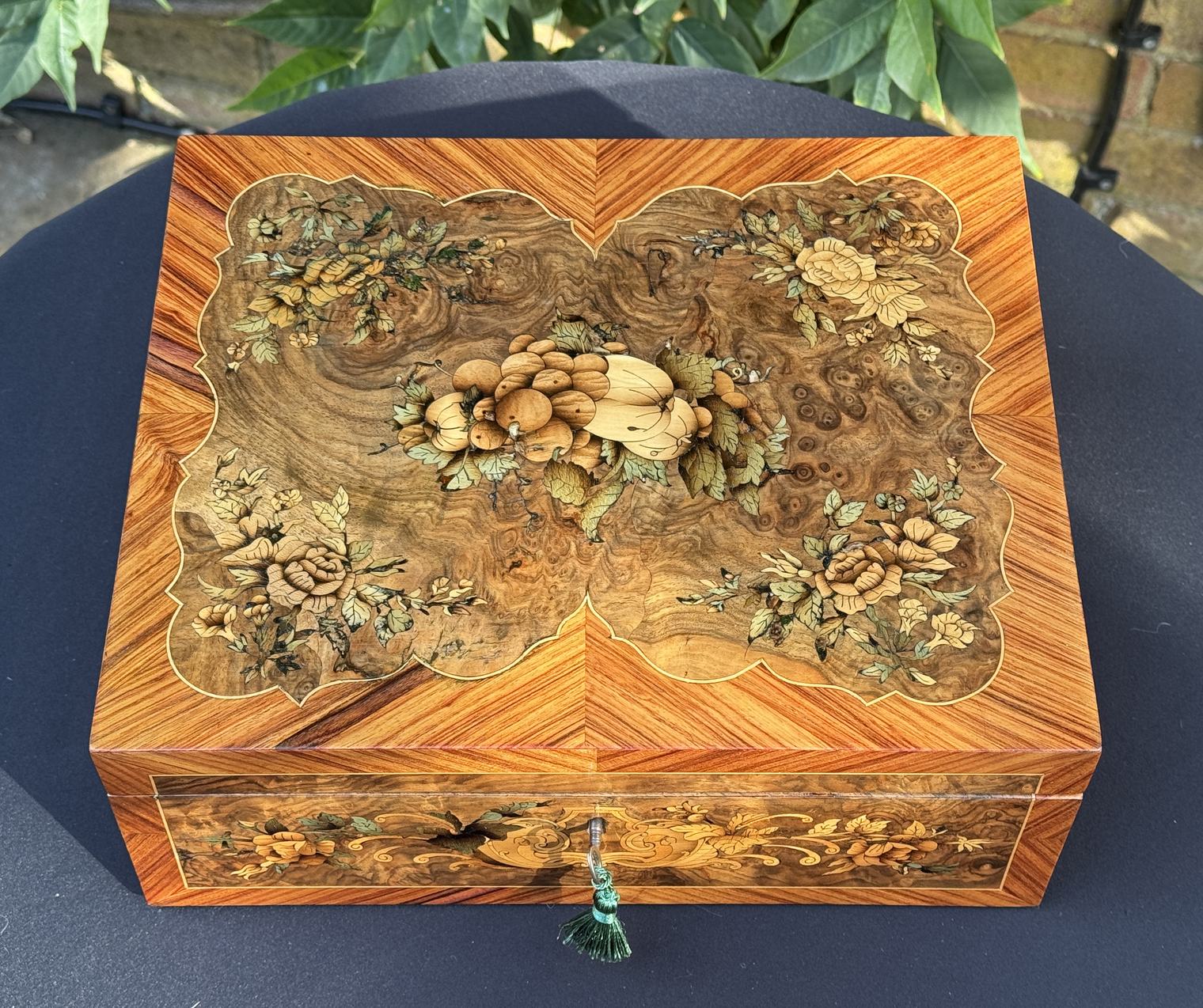
Marquetry is the art of assembling thin pieces of contrasting wood veneers into decorative patterns or pictorial compositions. Established in European cabinetmaking long before the nineteenth century, it allowed craftsmen to create elaborate designs using the natural colours and grain of different timbers.
The veneers were carefully cut using fine saws and specialised tools, then assembled into closely fitted designs before being secured to a wooden foundation. Different woods were selected for their contrasting colours and grain patterns, while some were stained to produce additional shades.
Craftsmen could also introduce subtle shading by briefly placing the edges of individual veneers into heated sand, darkening the wood to create an impression of depth and shadow. The finished surface was carefully levelled and polished to achieve a smooth, continuous appearance.
Parquetry and Geometric Decoration
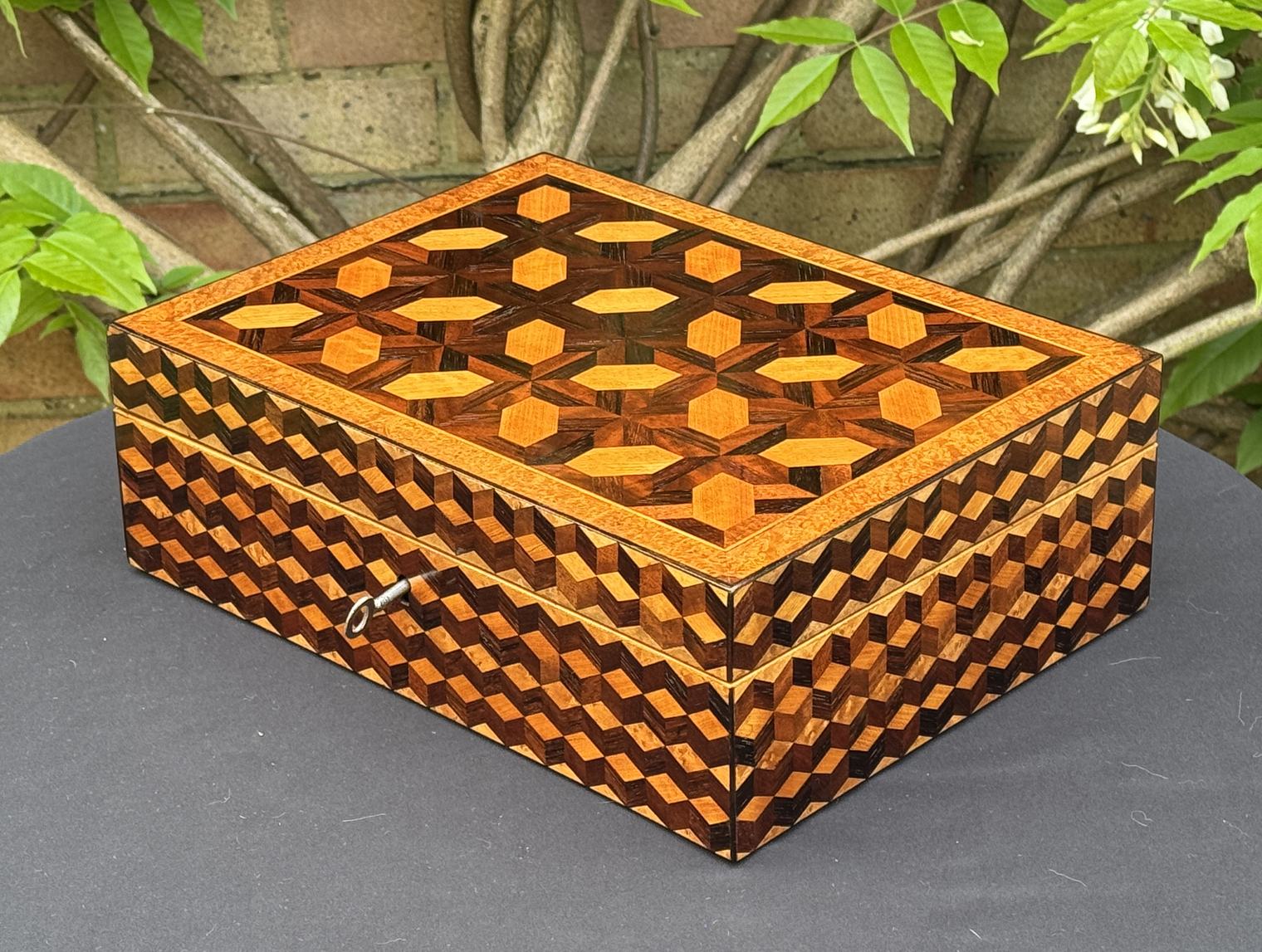
Parquetry is a related form of decorative veneering distinguished by its use of geometric patterns rather than the flowing or pictorial designs commonly associated with marquetry.
Contrasting veneers were arranged into repeated shapes such as squares, diamonds, triangles and lozenges, creating intricate borders, star patterns and interlocking designs. By carefully alternating the colours and grain directions of different woods, craftsmen could even create the illusion of three-dimensional forms.
A related, though distinct, form of decorative woodwork was Tunbridge ware, particularly popular during the nineteenth century. Associated with Tonbridge and Tunbridge Wells in Kent, its characteristic mosaics were produced by assembling numerous tiny pieces of contrasting wood into patterned blocks, from which thin decorative slices could be cut.
Ivory
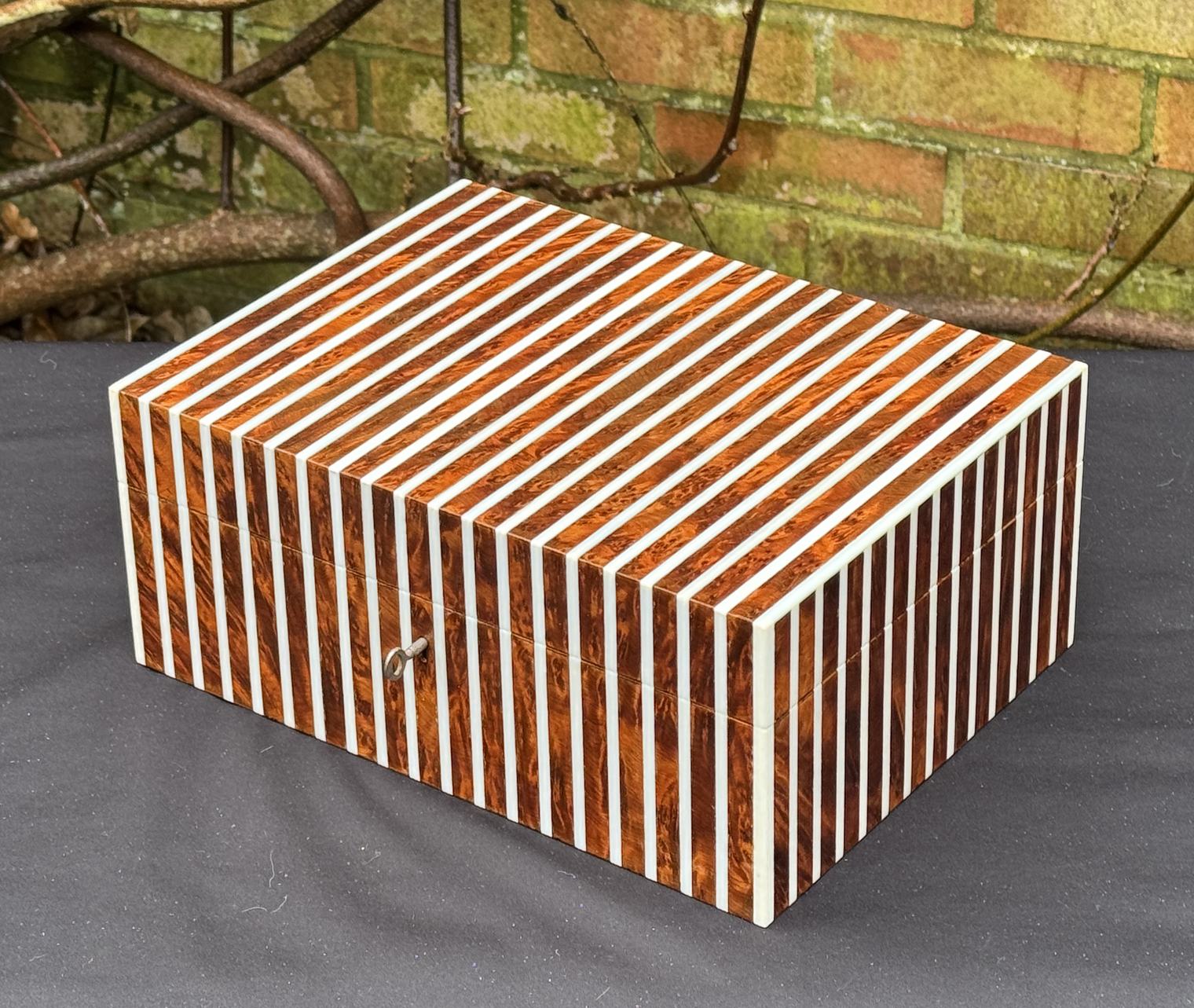
Ivory was valued for its fine texture, creamy-white appearance and ability to be carved, engraved and polished to a smooth finish. Obtained principally from the tusks of African and Asian elephants, it provided a striking contrast against dark timbers such as rosewood, ebony and coromandel. Increasing international demand during the nineteenth century greatly expanded the ivory trade, particularly in East Africa, contributing to extensive elephant hunting.
For decorative inlay, ivory could be cut into thin pieces and fitted into carefully prepared recesses in the surrounding wood. It was also employed as a veneer, covering larger surfaces that could subsequently be engraved with delicate floral motifs, scrolling borders, geometric patterns and other ornamentation.
Engraved details could be enhanced by working dark pigments or coloured compounds into the incised lines and removing the excess, leaving sharply defined decoration against the pale ivory.
Bone was sometimes used as a less expensive alternative, particularly for smaller decorative elements. Generally obtained from domestic livestock, especially cattle, the bones could be cut, bleached and polished for ornamental work. Although similar in appearance to ivory, bone has a different internal structure. Under magnification, it may reveal tiny pores or dark specks associated with its vascular channels, while elephant ivory can display a characteristic pattern of intersecting lines most clearly visible in cross-section.
Mother-of-Pearl and Abalone
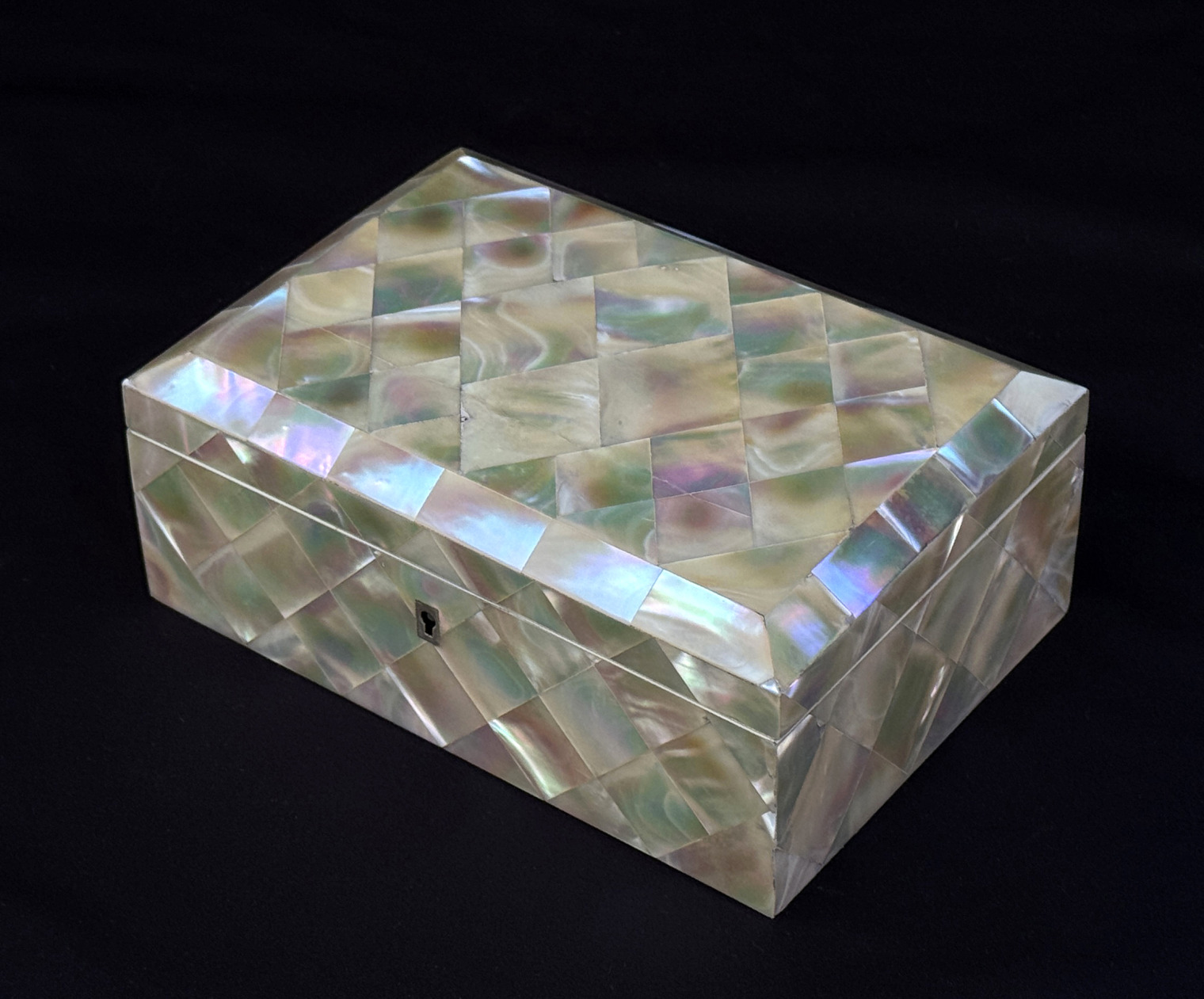
Mother-of-pearl, also known as nacre, is the naturally iridescent inner layer found in the shells of certain molluscs, particularly pearl oysters. During the nineteenth century, much of the material used by British manufacturers was imported from the Indian Ocean and Southeast Asia, with northern Australia becoming an increasingly important source during the latter half of the century. Its lustrous appearance and ability to be cut and polished into intricate shapes made it particularly desirable for decorative inlay and veneering.
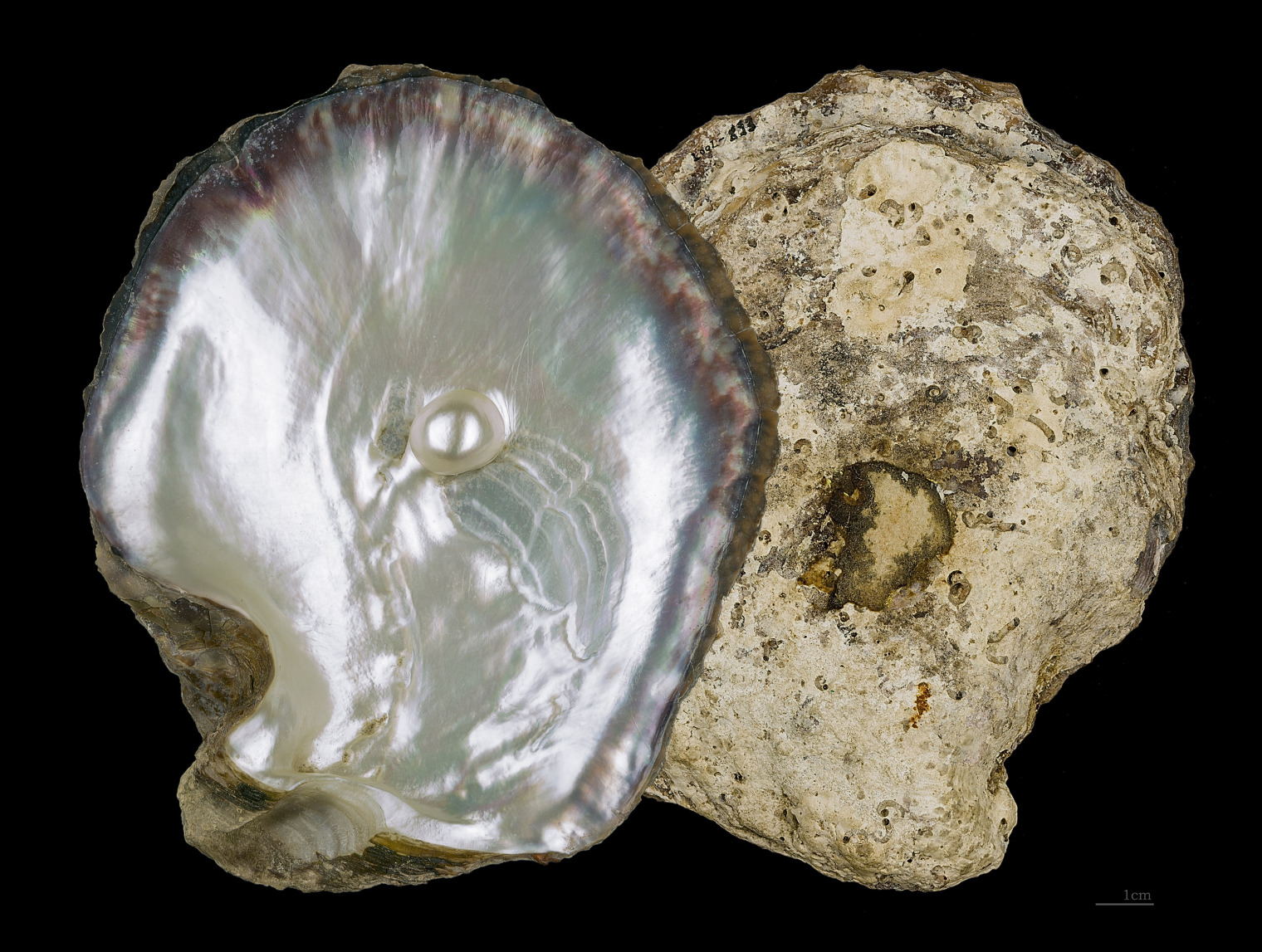
Abalone, a group of marine snails belonging to the genus Haliotis, provided another highly decorative form of mother-of-pearl. Its shells often display more vivid shades of green, blue and purple than those obtained from pearl oysters. Historically known as ear-shells, they were collected from several coastal regions, including the Channel Islands, where the local variety was called the ormer. Nineteenth-century accounts also record the use of imported abalone shells by Birmingham manufacturers for buttons, ornaments and decorative inlay.
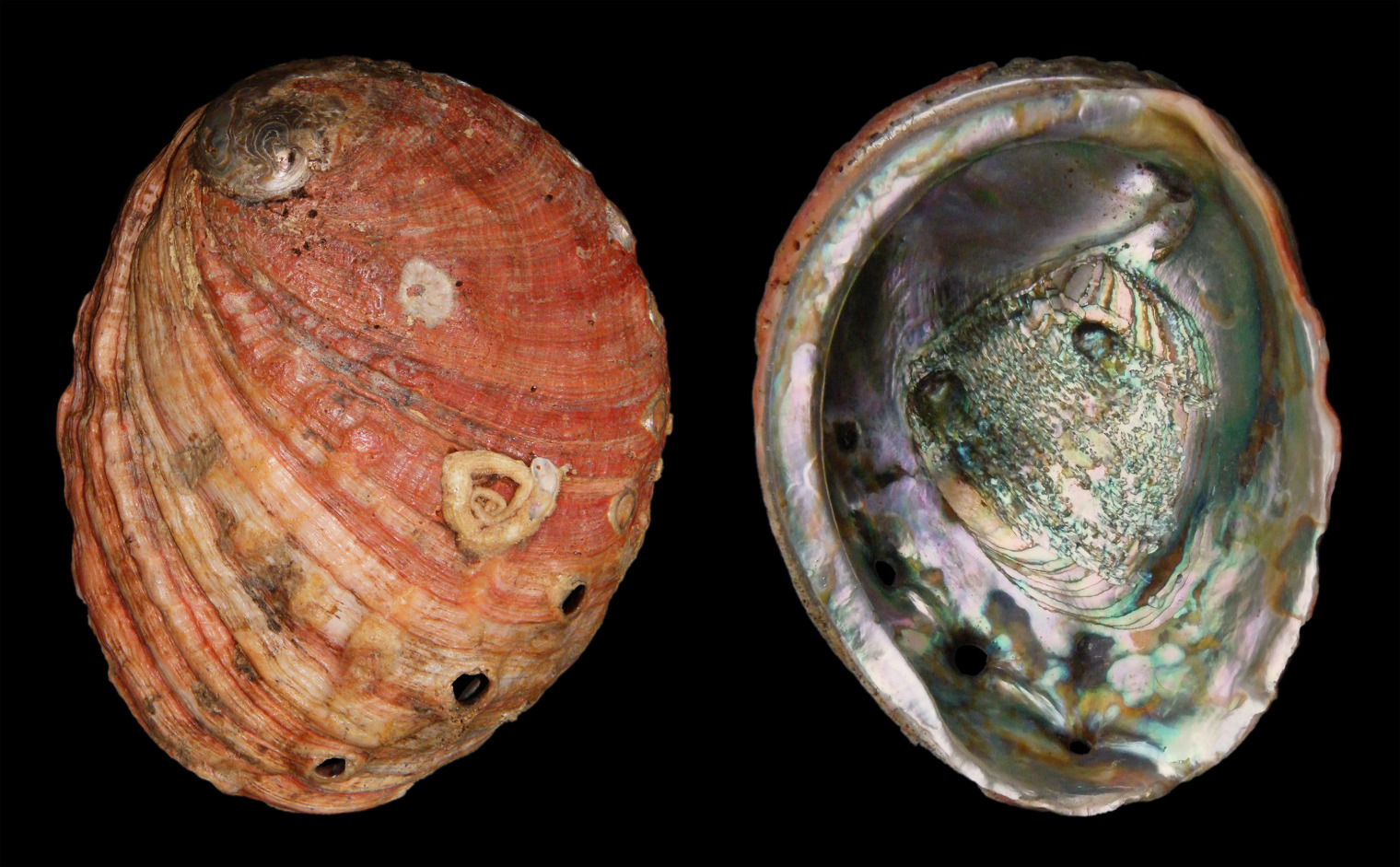
Both materials were especially effective when combined with dark timbers such as rosewood, ebony and coromandel. Pale mother-of-pearl provided a luminous contrast, while the richer iridescence of abalone introduced additional colour and variety.
Decorative Inlay in Nineteenth-Century Boxes
Elaborate combinations of ivory, mother-of-pearl, abalone and contrasting wood veneers were particularly popular in the decoration of nineteenth-century sewing boxes, jewellery boxes and ornamental caskets. Such decoration was less commonly employed on the finest British dressing cases, where brass inlay, stringing, edging and binding were generally favoured.