French Box Design
French ébénistes developed a distinctive reputation for the artistic and decorative treatment of their boxes. Compared with the generally more restrained appearance of many British examples, French boxes often made greater use of elaborate inlay, contrasting materials and unusually shaped cases.
Decoration could include brass and metal inlay, Boulle work, engraved metalwork and combinations of contrasting woods. Mahogany, walnut, rosewood and kingwood were popular in both Britain and France, while palisander, ebony, elm and thuya are particularly associated with many French examples.
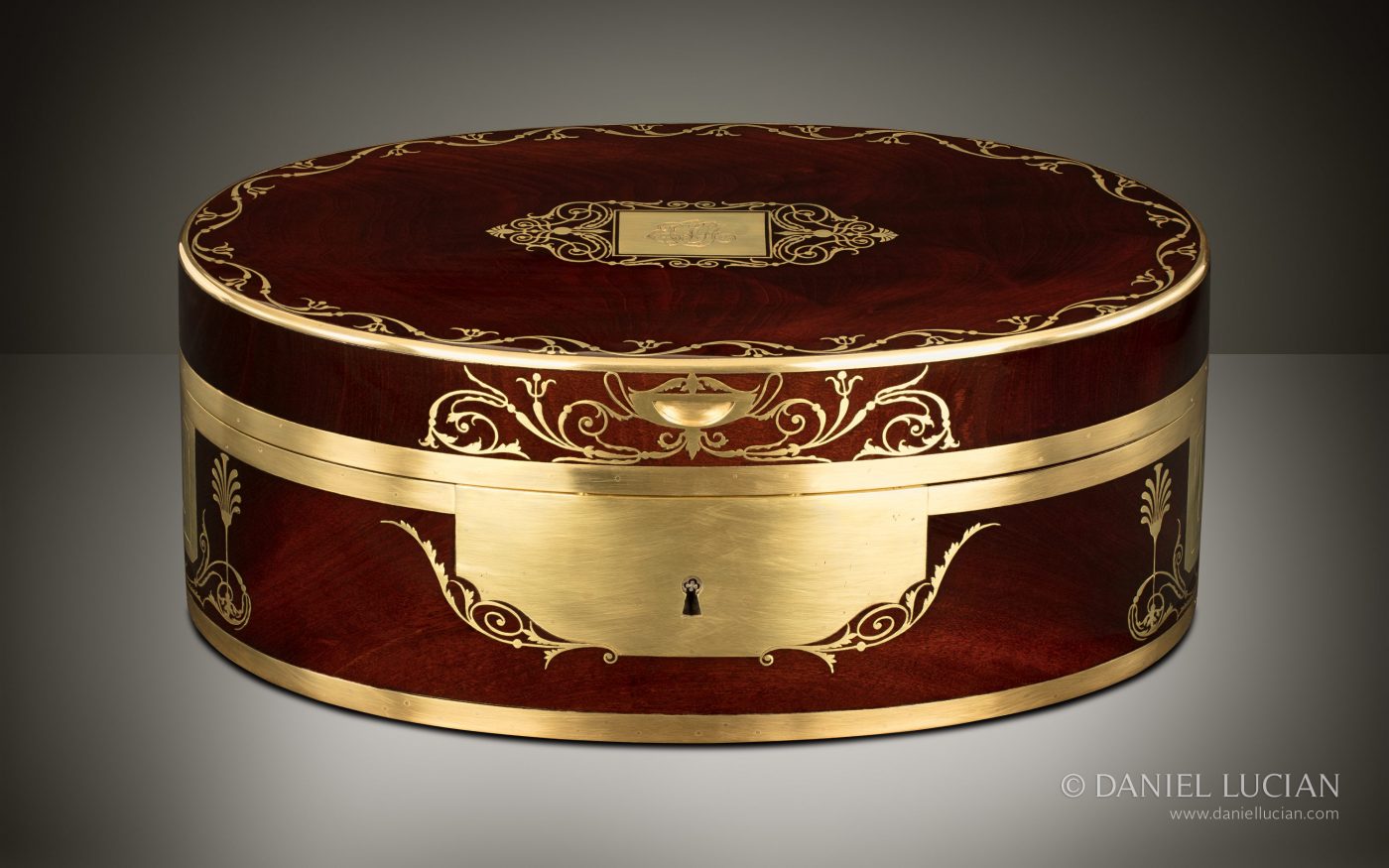


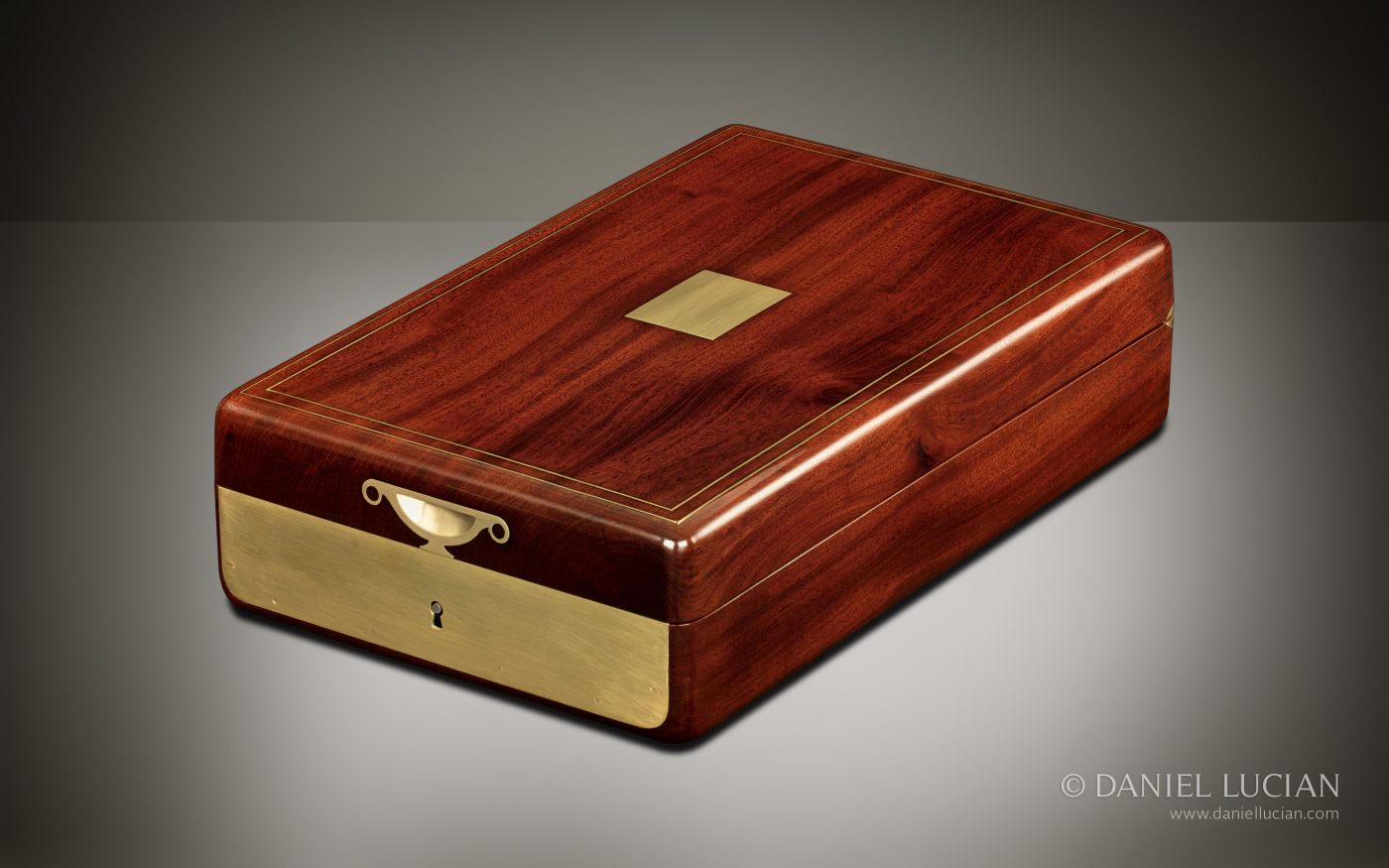
Some early nineteenth-century gentlemen’s travelling cases were made in distinctive oblong, radial-edged cylindrical or elliptical forms, often from solid mahogany. Larger ladies’ nécessaires generally retained a more conventional rectangular form, allowing greater space for their extensive fitted interiors.


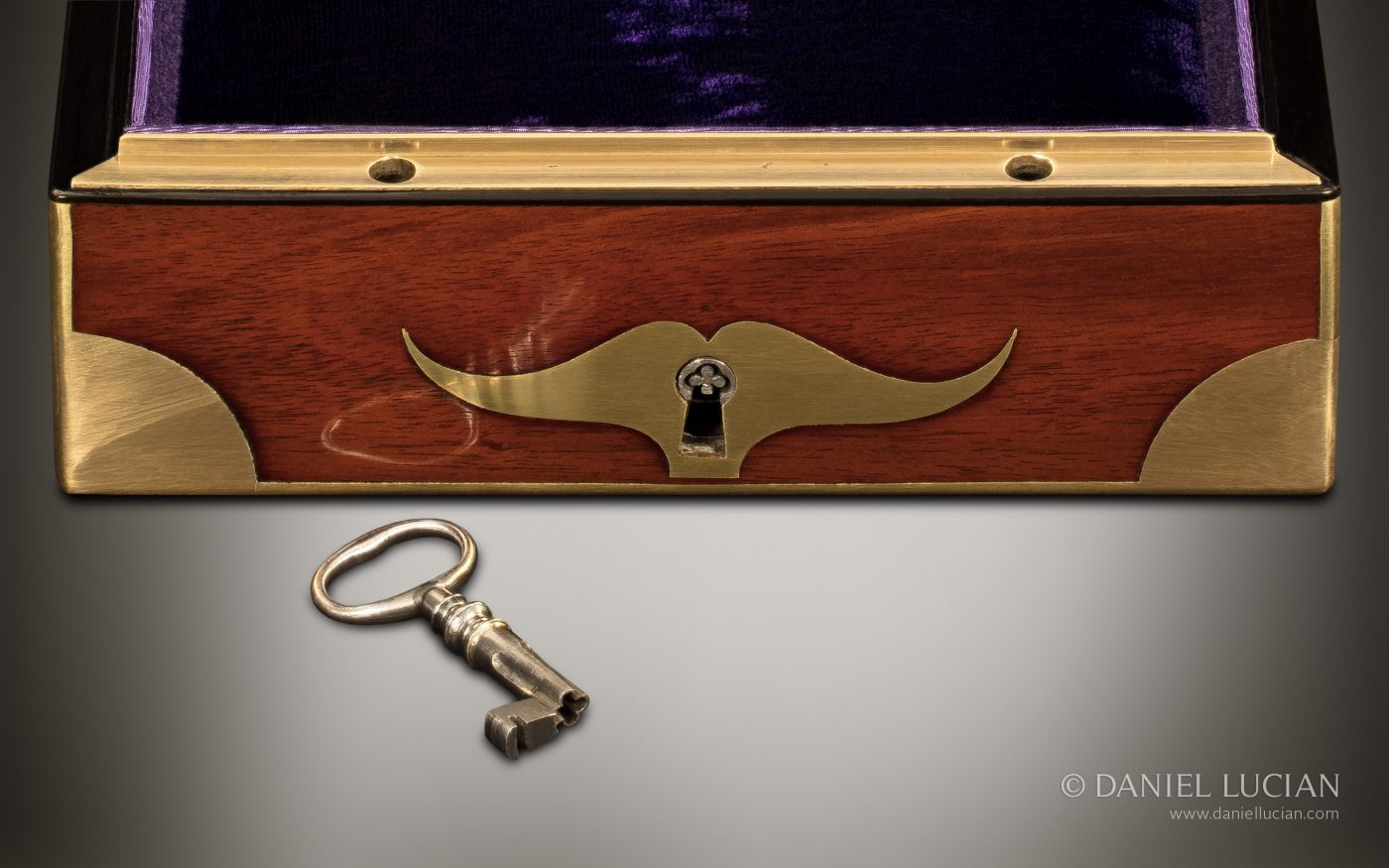
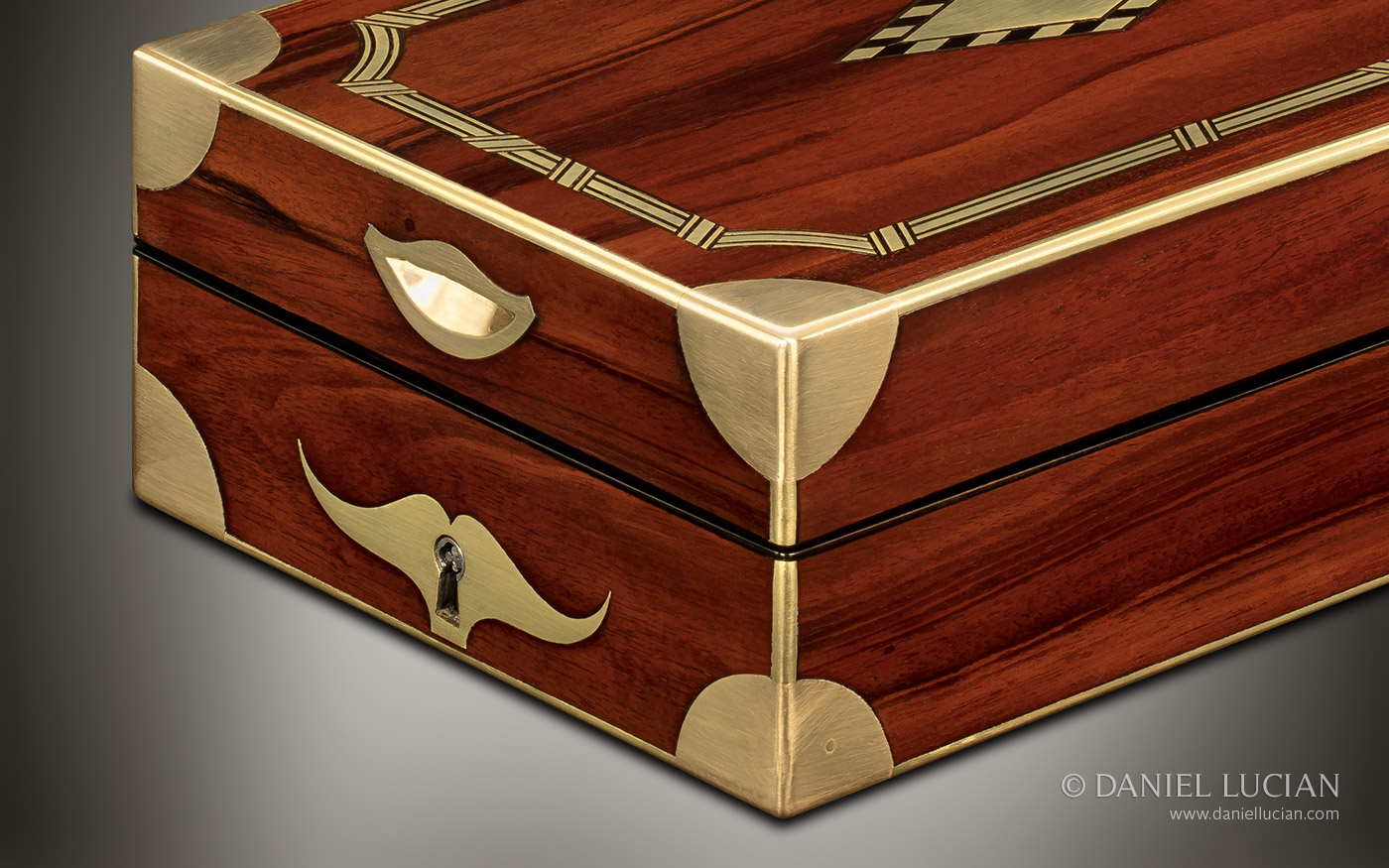
French boxes can also often be distinguished by characteristic lock fittings. These include cylindrical links to the upper lock plate engaging with circular openings in the lock housing, in contrast to the more commonly rectangular fittings found on British boxes. Cloverleaf-shaped lock pins, quadrant-shaped brass corner mounts and inset brass finger plates are also frequently encountered on French examples.