F. L. Hausburg
Friedrich Ludwig Hausburg was born in Berlin, Prussia, in 1817. He began his career working alongside his uncle, August Wilhelm Bernhardt Promoli, at 4 Rue de Boulogne, Paris, specialising in fine jewellery, clocks and a wide range of other luxury goods.
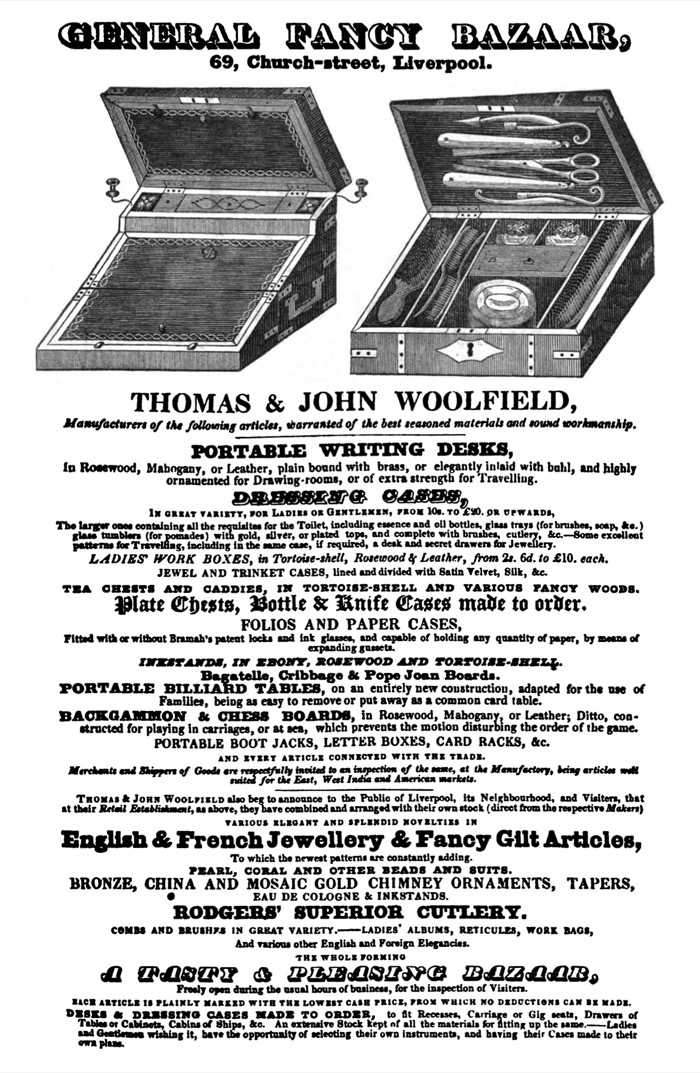
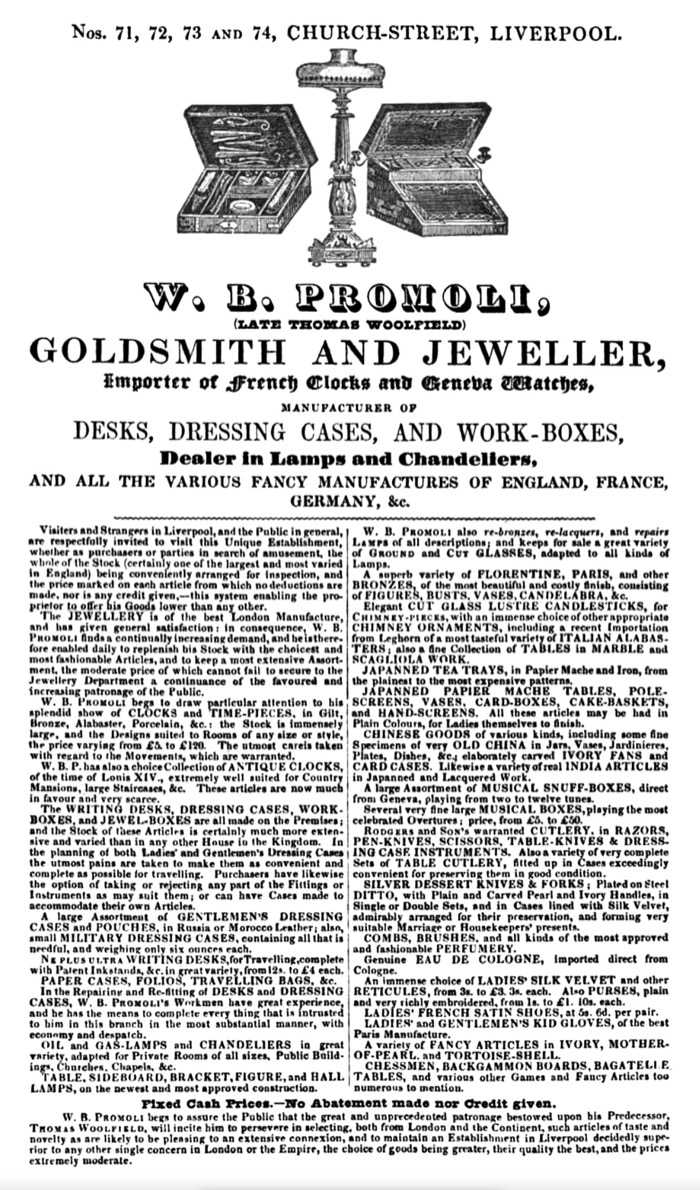
An advertisement in Pigot & Co.’s National Commercial Directory confirms that Promoli had taken over the business of Thomas Woolfield by 1837. Woolfield was the uncle, by marriage, of Hausburg’s wife Catherine Mossop. Predominantly a manufacturer of writing and dressing cases, Woolfield also retailed a vast array of fancy goods. Previously known as Woolfield’s Bazaar and based at 71 & 72 Church Street, Liverpool, the business was now trading as W. B. Promoli and had expanded to occupy 71, 72, 73 & 74 Church Street.
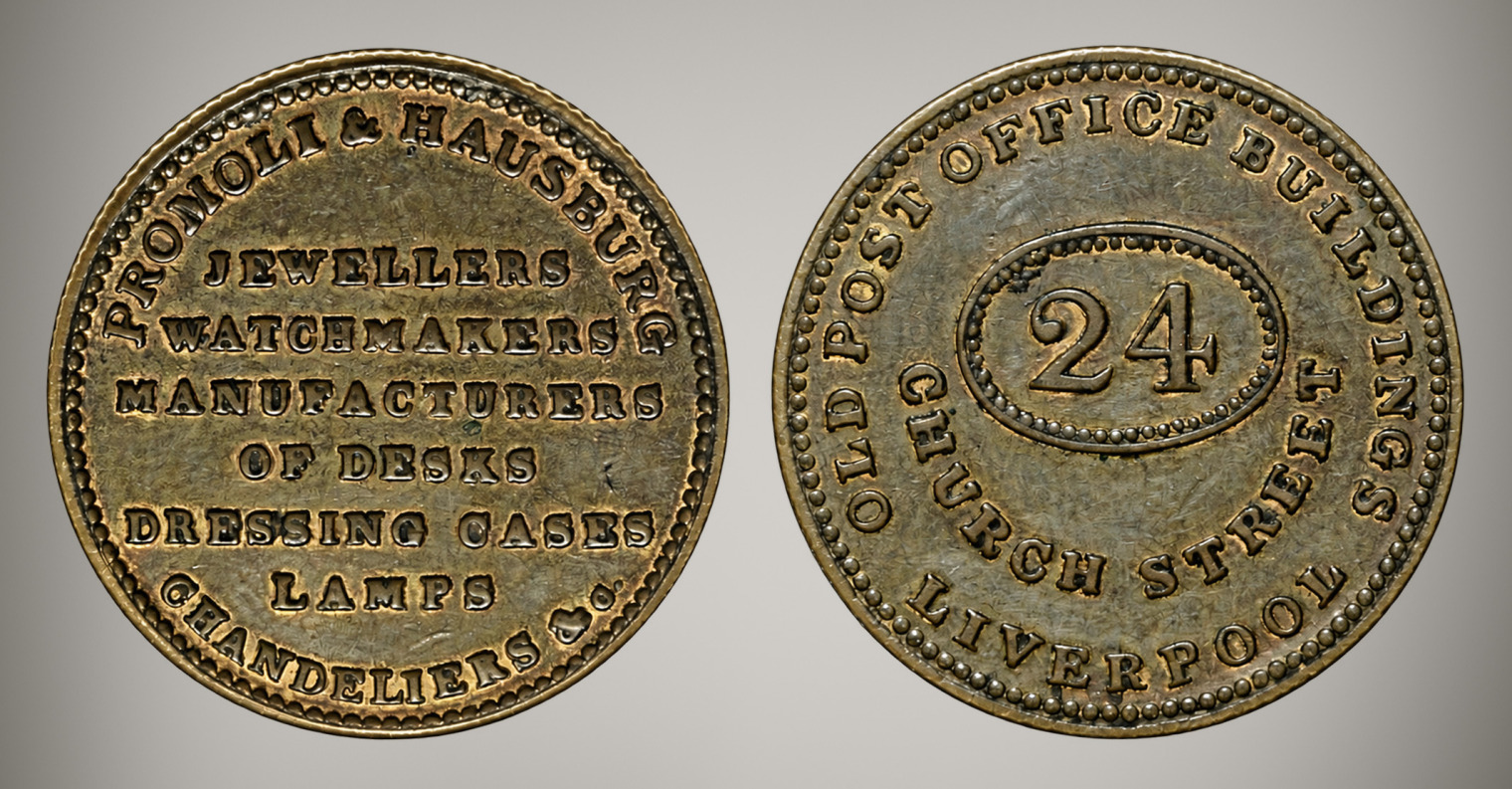
In August 1840, both Hausburg and Promoli were naturalised as British citizens. The Act carried the personal signature of Queen Victoria and, unusually, was passed in just five weeks rather than the usual period of four years. In the same year, the business became known as Promoli & Hausburg, operating from the Old Post Office Buildings at 24 Church Street, Liverpool. Together they advertised themselves as ‘Jewellers, Watchmakers, Manufacturers of Desks, Dressing Cases, Lamps and Chandeliers’.
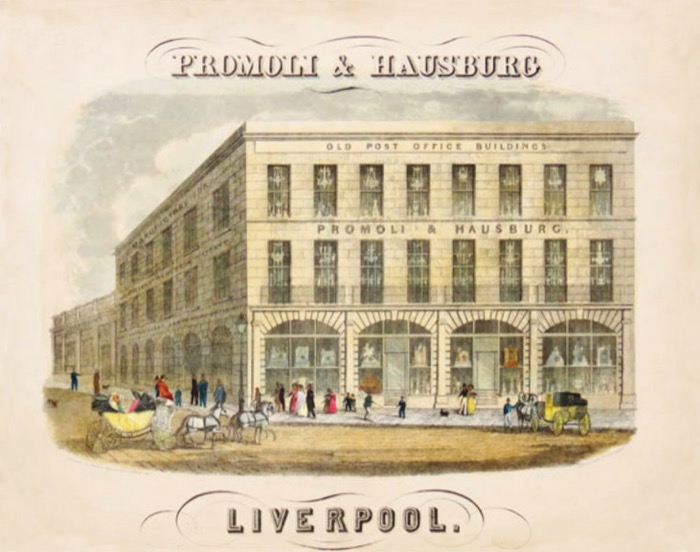
Just a year later, in 1841, the business was solely in the hands of Hausburg, who continued to deal in the same extensive range of luxury goods.
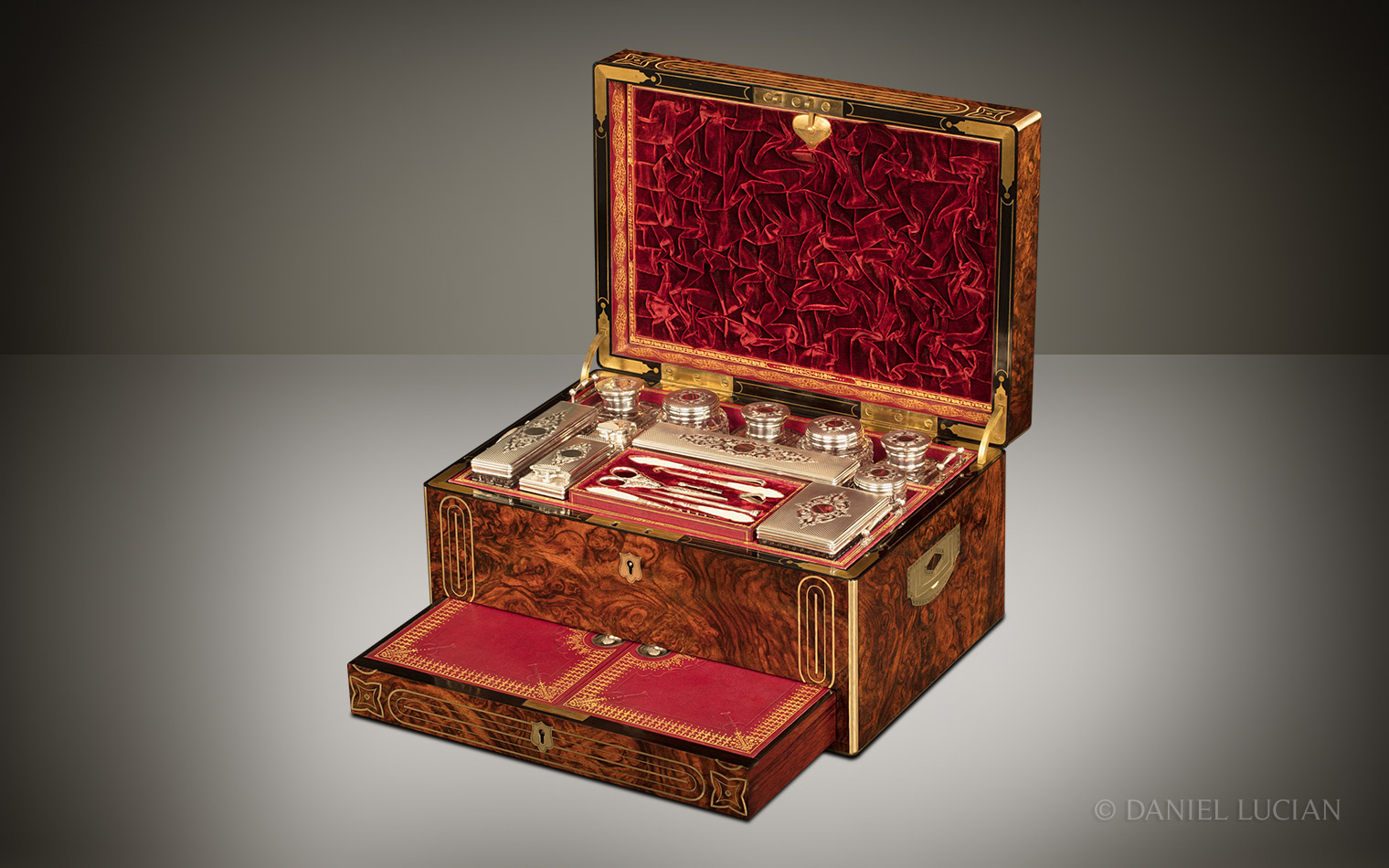
Hausburg’s work clearly demonstrates the French influence of his earlier years in Paris. While equally accomplished in the more restrained British style of exterior case design, many of his pieces display far more lavish and intricate decorative work. He used materials including brass, pewter, ivory, abalone and mother-of-pearl as inlays into fine woods, as well as producing pieces decorated with Boulle work, combining tortoiseshell with brass. These decorative influences were often carried through to the interiors, with elaborately gold-tooled leather used to line walls, floors, trays and other components.

There is a wonderful, if not a little manic, article entitled ‘A Fashionable Shop At Liverpool’ written by a New York journalist, taken from The Merchants’ Magazine and Commercial Review - June 1849, Vol. XX, No. VI; this journalist is in a state of rapture and trying, or rather struggling, to accurately make sense to his readers [and, I must assume, himself] just exactly what he has experienced after having visited Hausburg’s establishment,
“It must not for a moment be confounded with those receptacles of low-priced and slop-manufactured articles, commonly called bazaars, where there is much glitter and show, much tinsel and gay color, but little solid and substantial value. Presenting infinitely more variety than the best or more extensive of the marts just alluded to, it ranks above them in a degree that will not admit of the slightest comparison in the richness, rarity, beauty, and we may, with propriety, say splendor, of the articles offered for inspection. Indeed, I should not have written the word bazaar in connection with it but for the purpose of preventing any mistake or comparison of ideas in the mind of my readers. It bears about the same relation to a bazaar that a costly jewel, tastefully mounted in fine gold, does to a glittering gewgaw of paste set in Dutch metal. It wants an appropriate designation, for it is so completely unique that no ordinary term will serve to convey to the mind any notion of its extent, appearance, or purposes. I cannot call it a shop or a store without conveying an inappropriate image or false impression.I have seen the magnificent shops of London and Paris, and there are some fine shops, too, in Liverpool, but this establishment is so entirely different from them that the designation would be utterly inappropriate. As to ordinary shops, it is as infinitely superior to them as a palace is to a cottage.”
Hausburg retired in 1860 at the age of 43, selling the business to W. H. Tooke, who continued to operate from the same address. When Hausburg died in 1886, his estate was valued at £180,000 (£22 million in today’s money).