PROCESSES & TECHNIQUES

Gold Tooling and Leather Tooling

Gold tooling is the technique of impressing lettering or decorative designs in gold leaf onto leather, most commonly using heated metal tools. Traditionally, high-purity gold leaf was used, often around 22–23 carat. Blind tooling employs the same basic method without gold, leaving the decoration impressed directly into the leather.

Blind tooling has a much earlier history, with examples surviving on Coptic bindings from Egypt from around the seventh and eighth centuries. Gold decoration developed later in Islamic bookbinding and became well established in Egypt and the wider Middle East by the fourteenth century. From there, gold tooling influenced Italian bookbinding, particularly in Venice, before spreading more widely through Europe.

Traditionally, the design was first laid out and often lightly blind-tooled into the leather. An adhesive known as glaire, commonly prepared from egg white, was applied to the areas intended to receive the gold and allowed to dry. Thin gold leaf was then laid over the surface and the heated tool pressed into the original impression. The heat helped fix the gold into the prepared leather, leaving a sharply defined gilded design.

A wide range of brass finishing tools allowed complex decoration to be built up from individual impressions. Lettering tools produced individual letters, numbers and punctuation; pallets and ornaments created lines and decorative motifs; gouges formed curves and sections of circles; while fillets and rolls could produce continuous lines or repeating patterns.

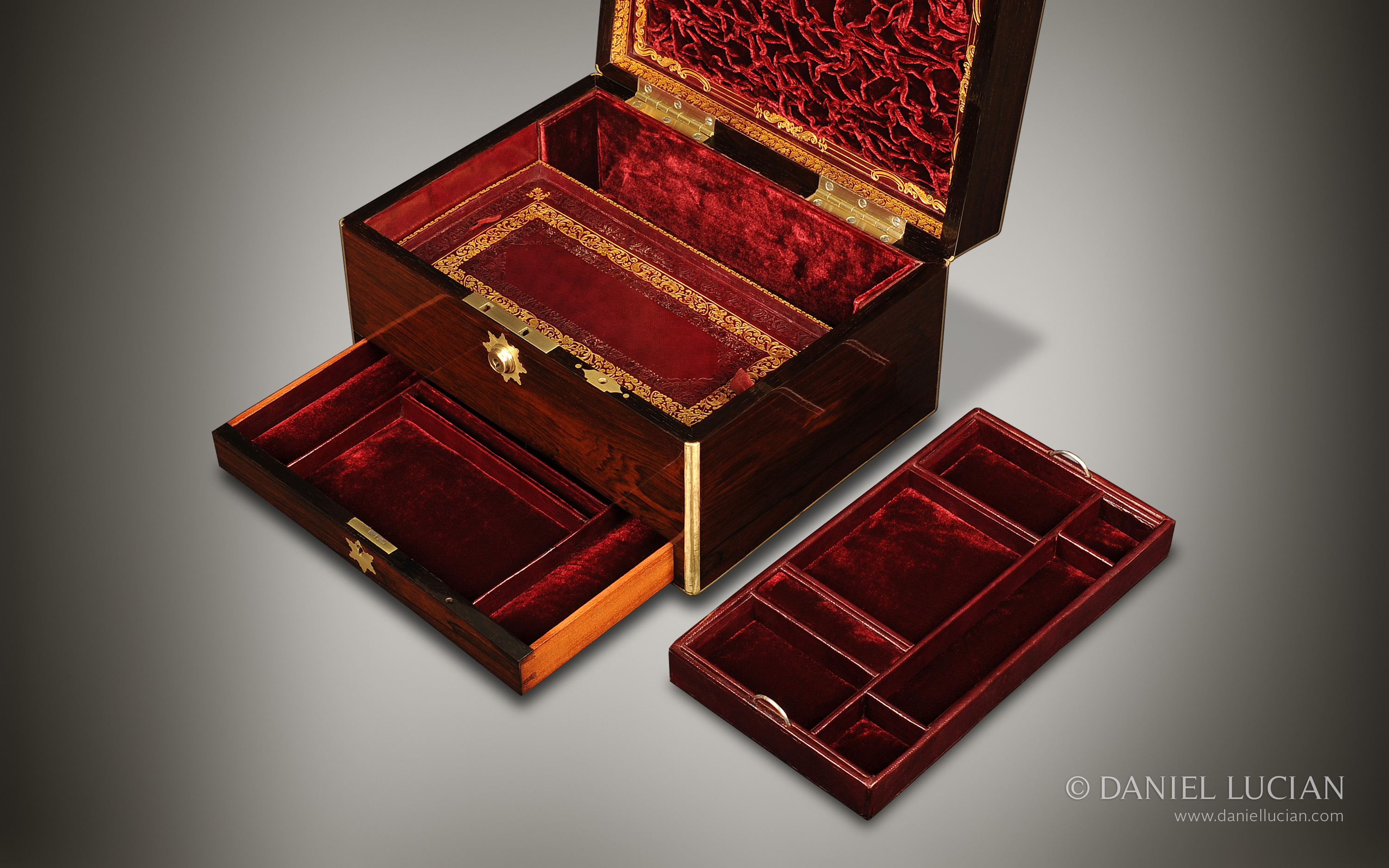
On nineteenth-century boxes, gold and blind tooling were used extensively to decorate leather-lined interiors. They can be found on removable trays, interior walls, mirror frames, concealed letter wallets and writing surfaces, as well as on makers’ and retailers’ marks. The techniques could range from a simple gold line around the edge of a tray to elaborate floral borders, crests, lettering and repeating ornament.

Manufacturers including Asprey, Edwards and Leuchars made extensive use of gold tooling on their boxes.
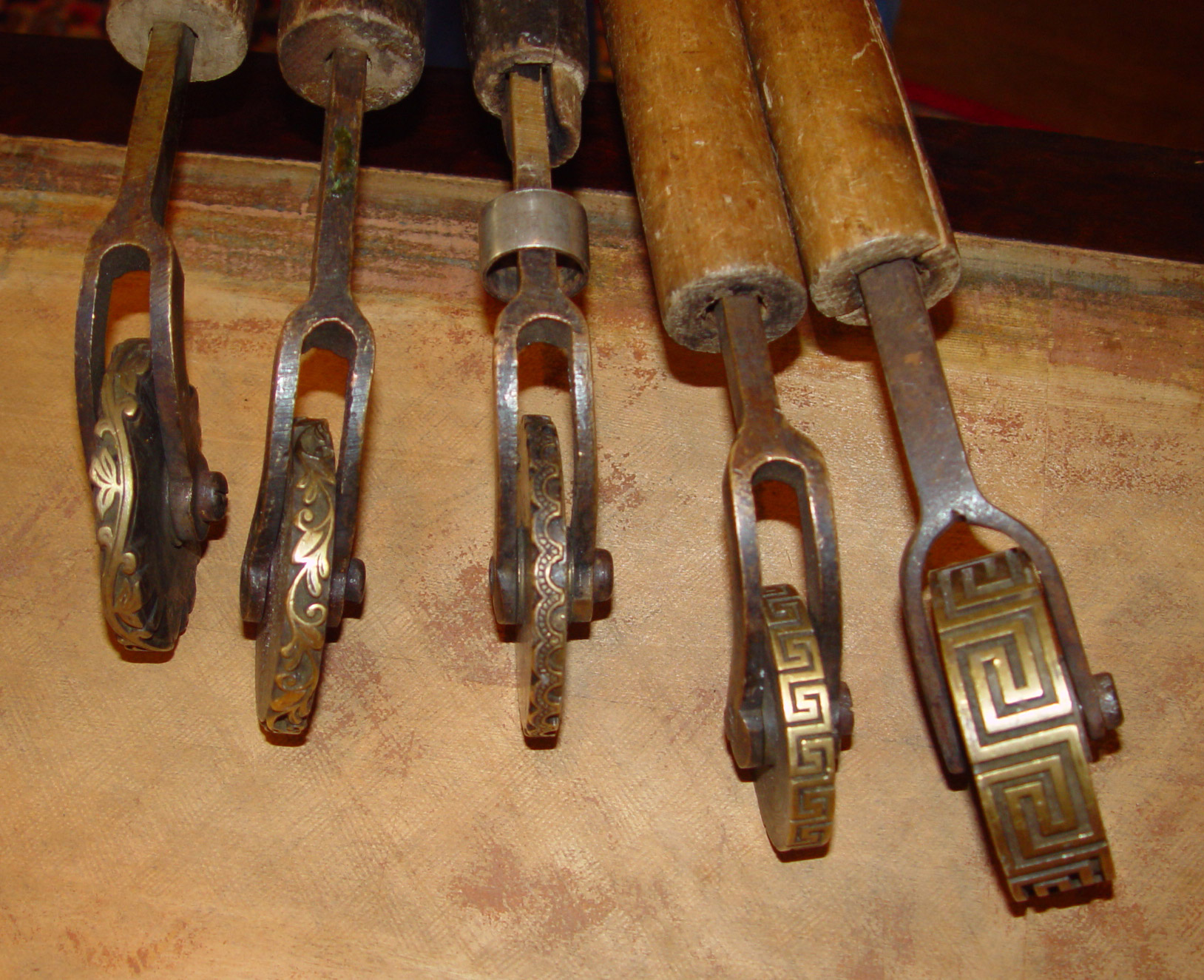
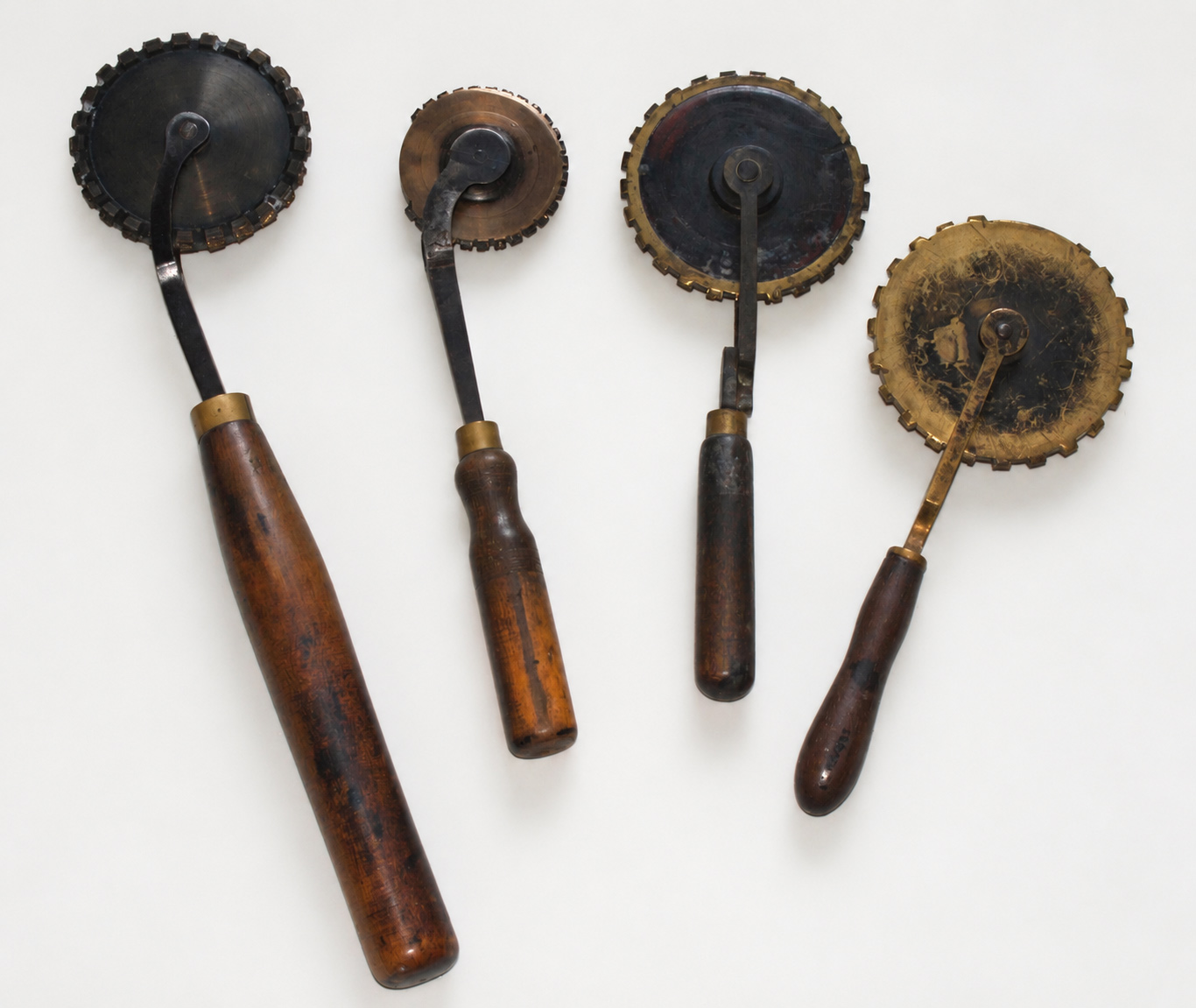
Antique brass finishing rolls engraved with repeating patterns for gold and blind tooling on leather.
Antique brass finishing rolls, engraved with repeating decorative patterns for gold and blind tooling on leather.
Bookbinder’s finishing rolls, used to create continuous decorative borders and repeating patterns in leather, either in gold leaf or as blind tooling.
Paas & Co catalogue from c. 1830 detailing design options from their inventory of roll, pallet, and ornament tools.
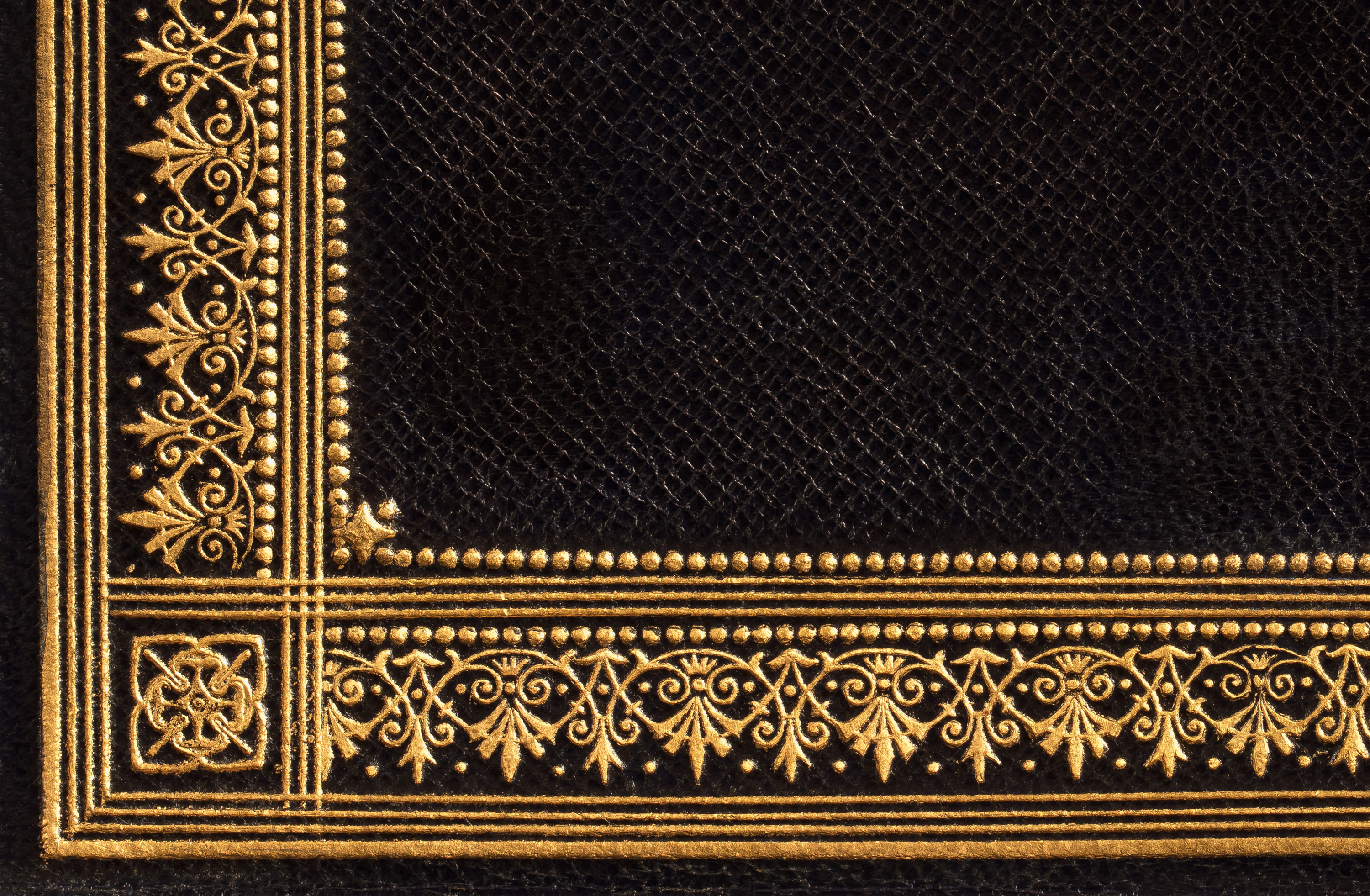
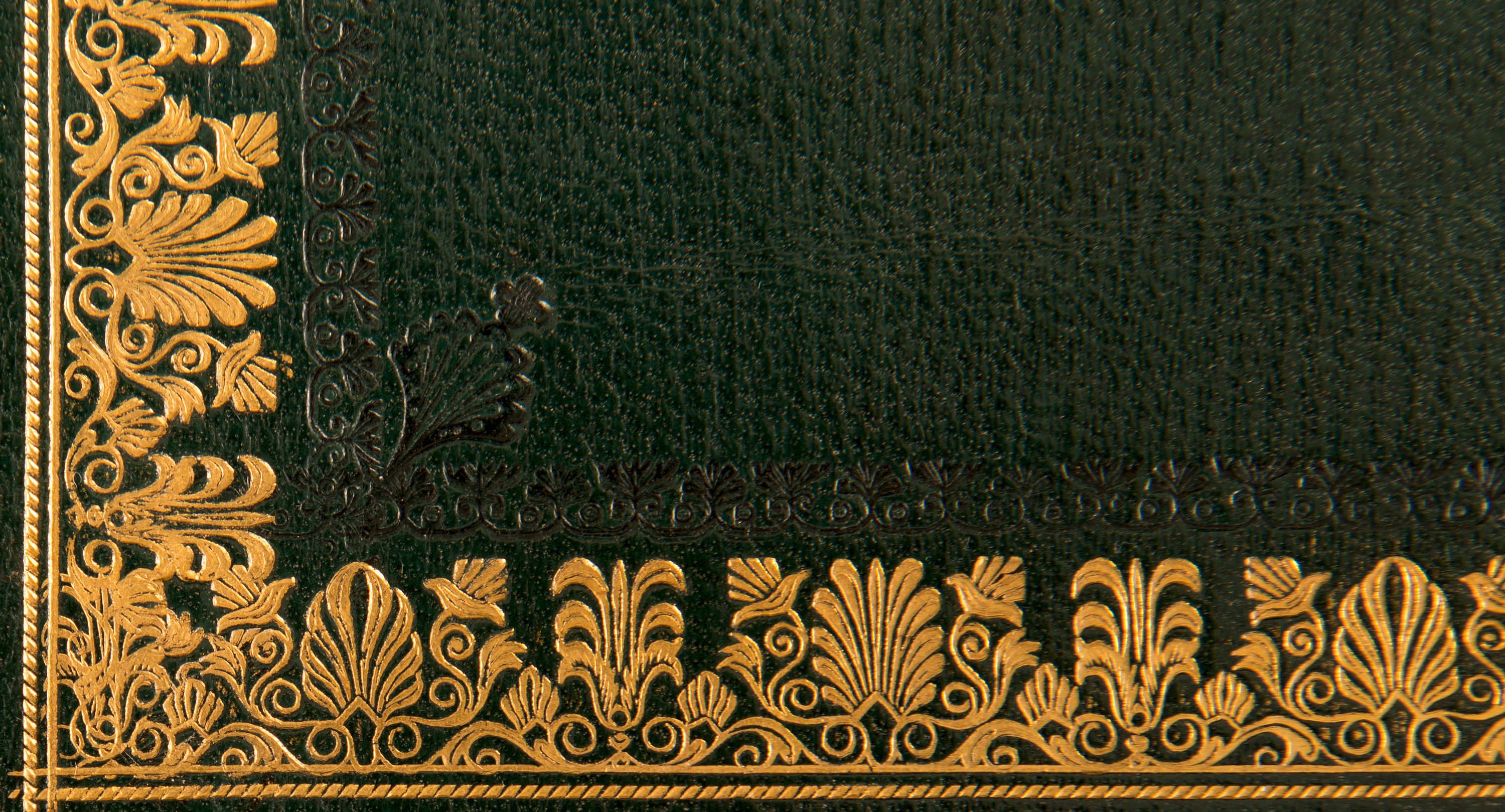
Gold-tooled design on leather from an antique jewellery box in rosewood with foliate brass inlay.
gold-tooled design on leather from an antique jewellery box in rosewood with foliate brass inlay.
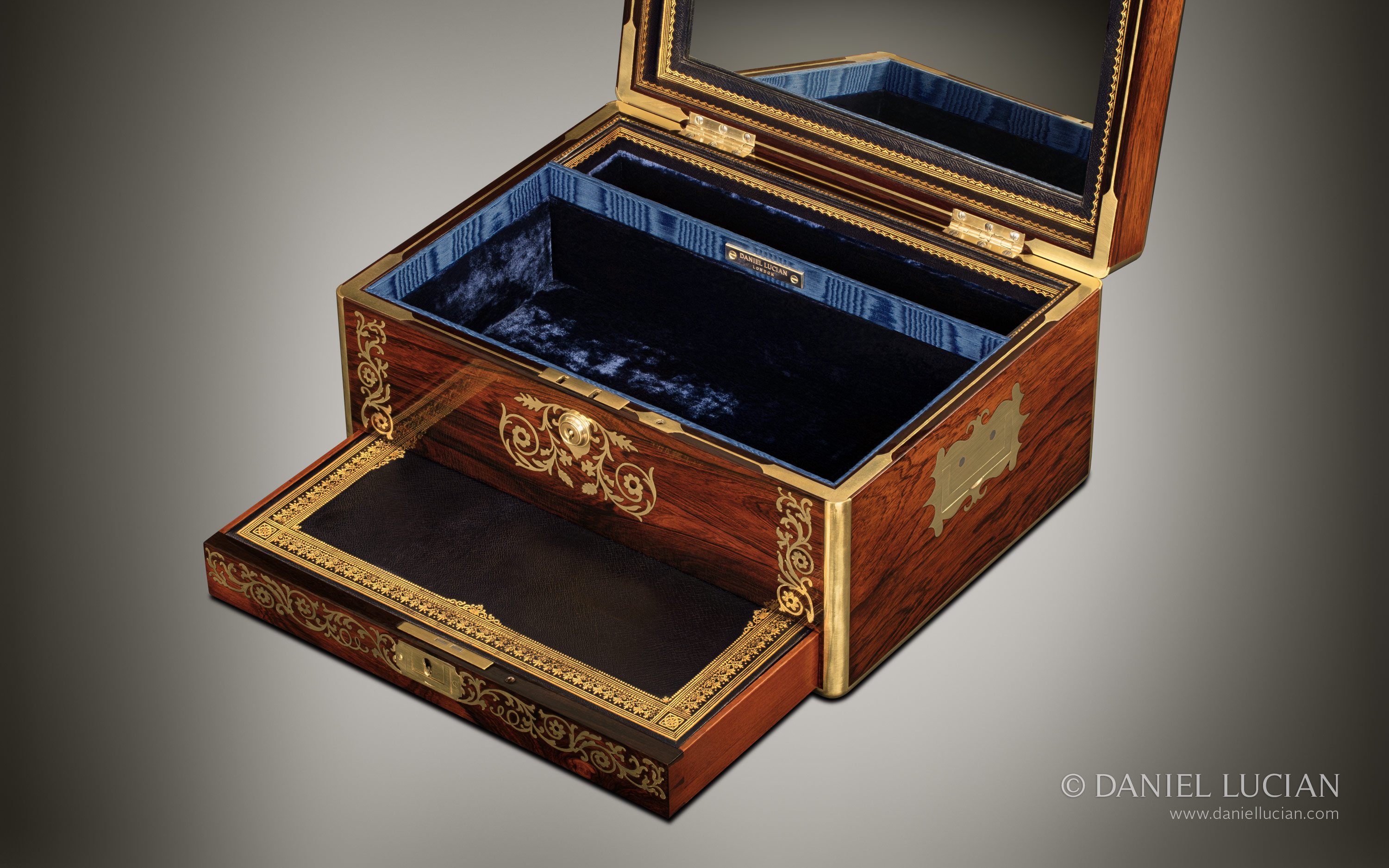
Closer front right interior view of the rosewood jewellery box showing the blue-lined compartments, extended lower drawer and gold-tooled front flap.
Antique Jewellery Box in Rosewood with Foliate Brass Inlay. VIEW THIS BOX →
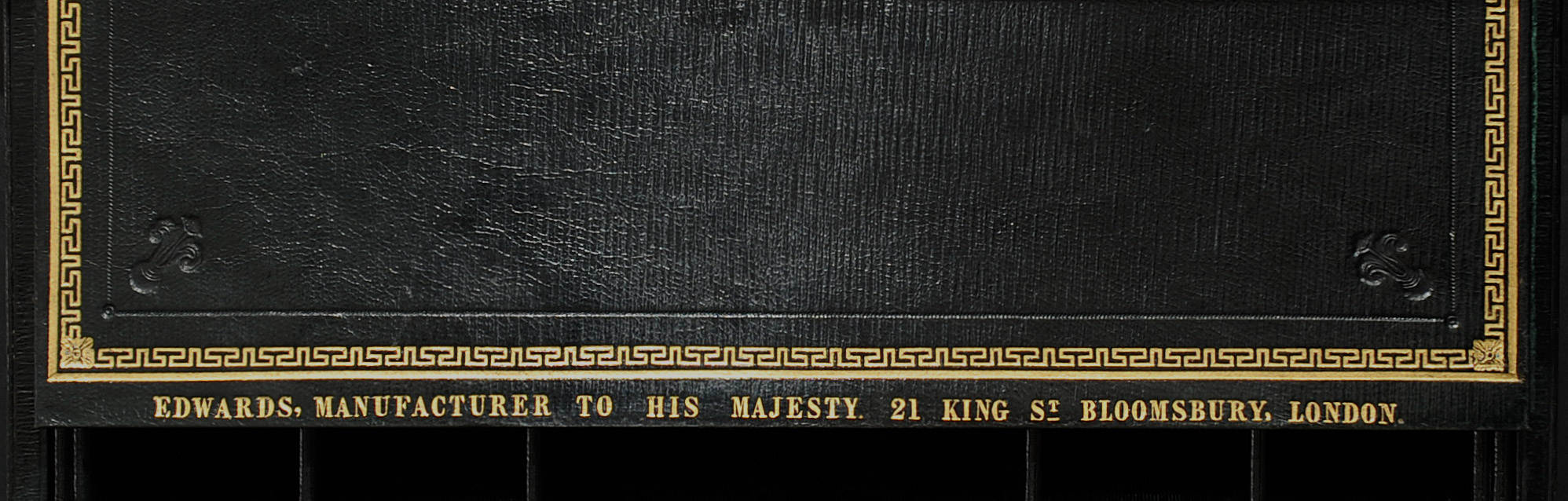
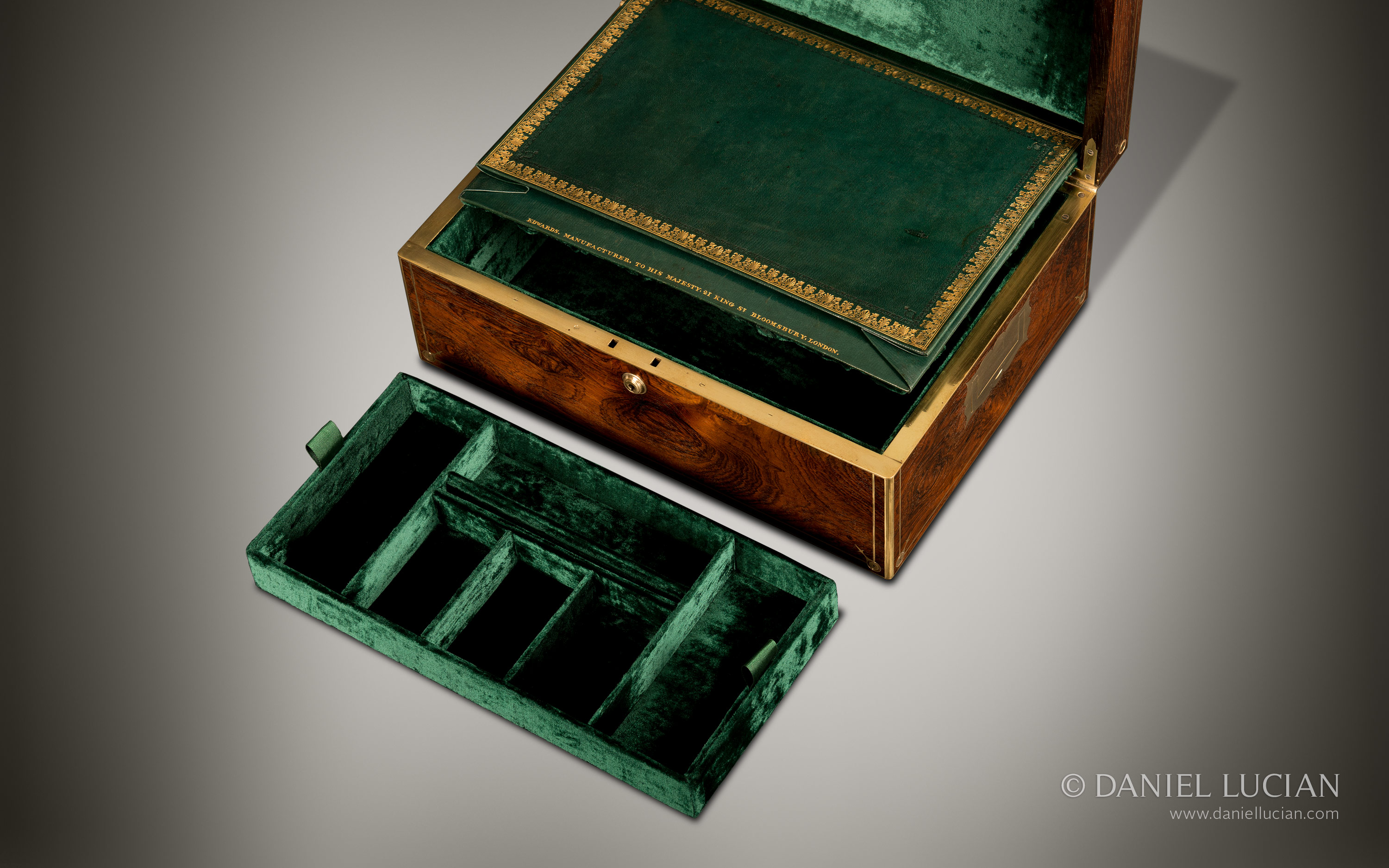
Gold-tooled design. The manufacturer’s mark reads ‘Edwards, Manufacturer to His Majesty, 21 King St, Bloomsbury, London’
Gold-tooled design. The manufacturer’s mark reads ‘Edwards, Manufacturer to His Majesty, 21 King St, Bloomsbury, London’.
Gold-tooled floral design. The manufacturer’s mark reads ‘Edwards, Manufacturer to His Majesty, 21 King St, Bloomsbury, London’
Gold-tooled floral design. The manufacturer’s mark reads ‘Edwards, Manufacturer to His Majesty, 21 King St, Bloomsbury, London’.
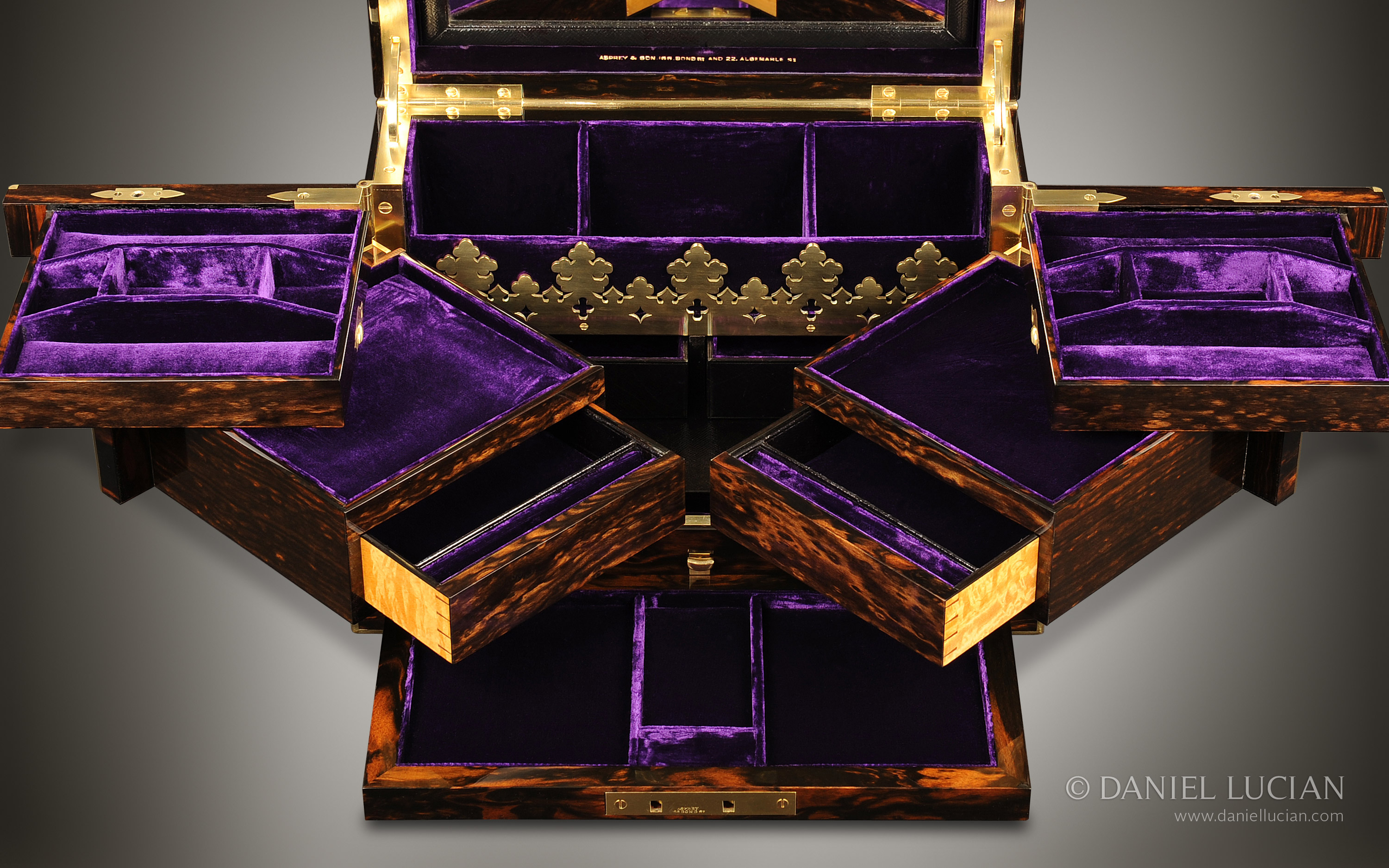
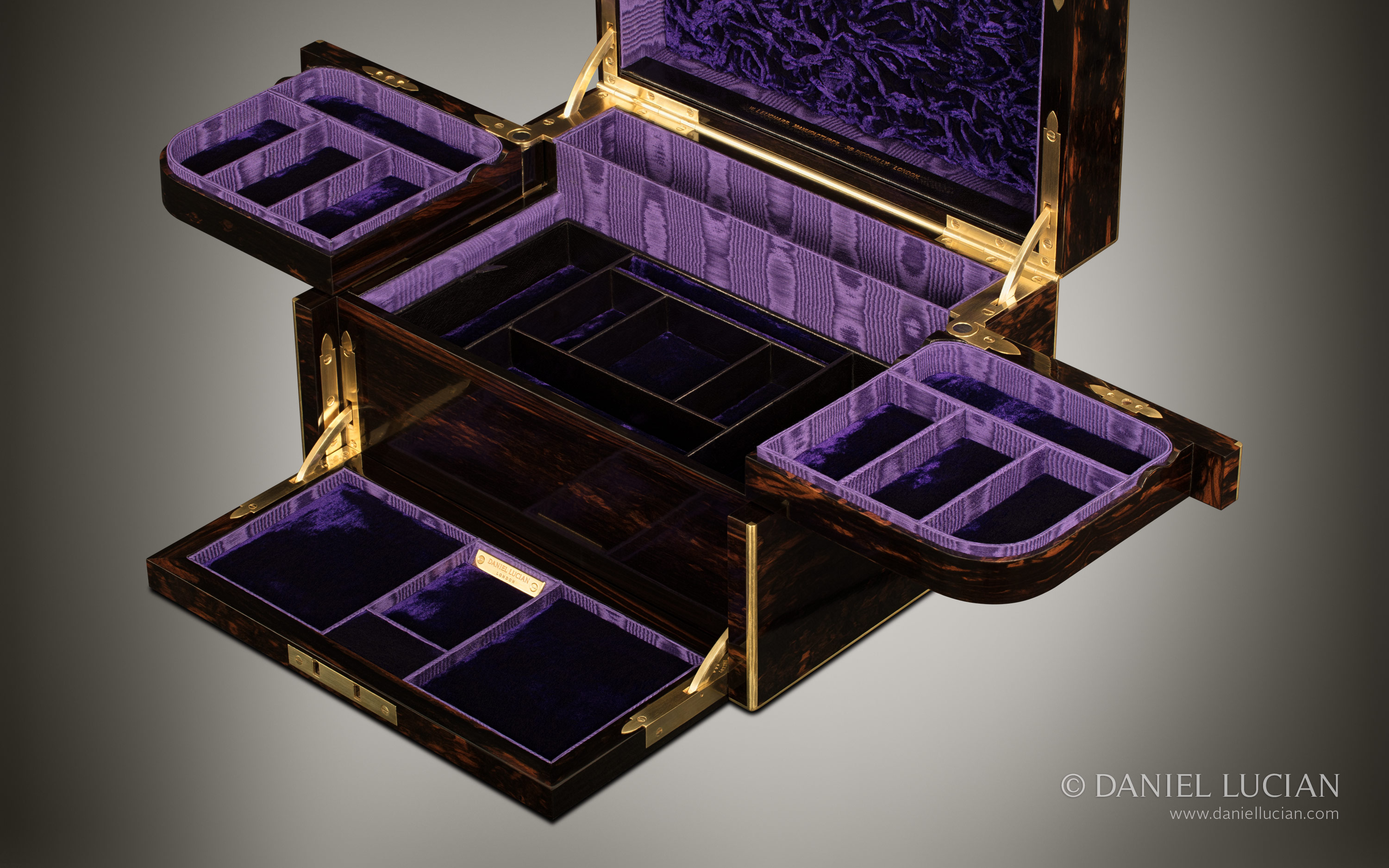
Closer overhead front view of the jewellery box interior showing its purple velvet-lined trays and compartments.
Asprey Antique Jewellery Box in Coromandel with Betjemann Patent Mechanism. VIEW THIS BOX →
Gold-tooled ‘Asprey & Son. 166 Bond St and 22 Albemarle St’ inscription on velvet.
‘Asprey & Son. 166 Bond St and 22. Albemarle St’ gold-tooled into velvet.
Antique jewellery box in coromandel with Betjemann Patent ‘Automatic’ mechanism by William Leuchars.
Antique Jewellery Box in Coromandel with Betjemann Patent ‘Automatic’ Mechanism, by William Leuchars. VIEW THIS BOX →
William Leuchars manufacturer’s mark gold-tooled into leather.
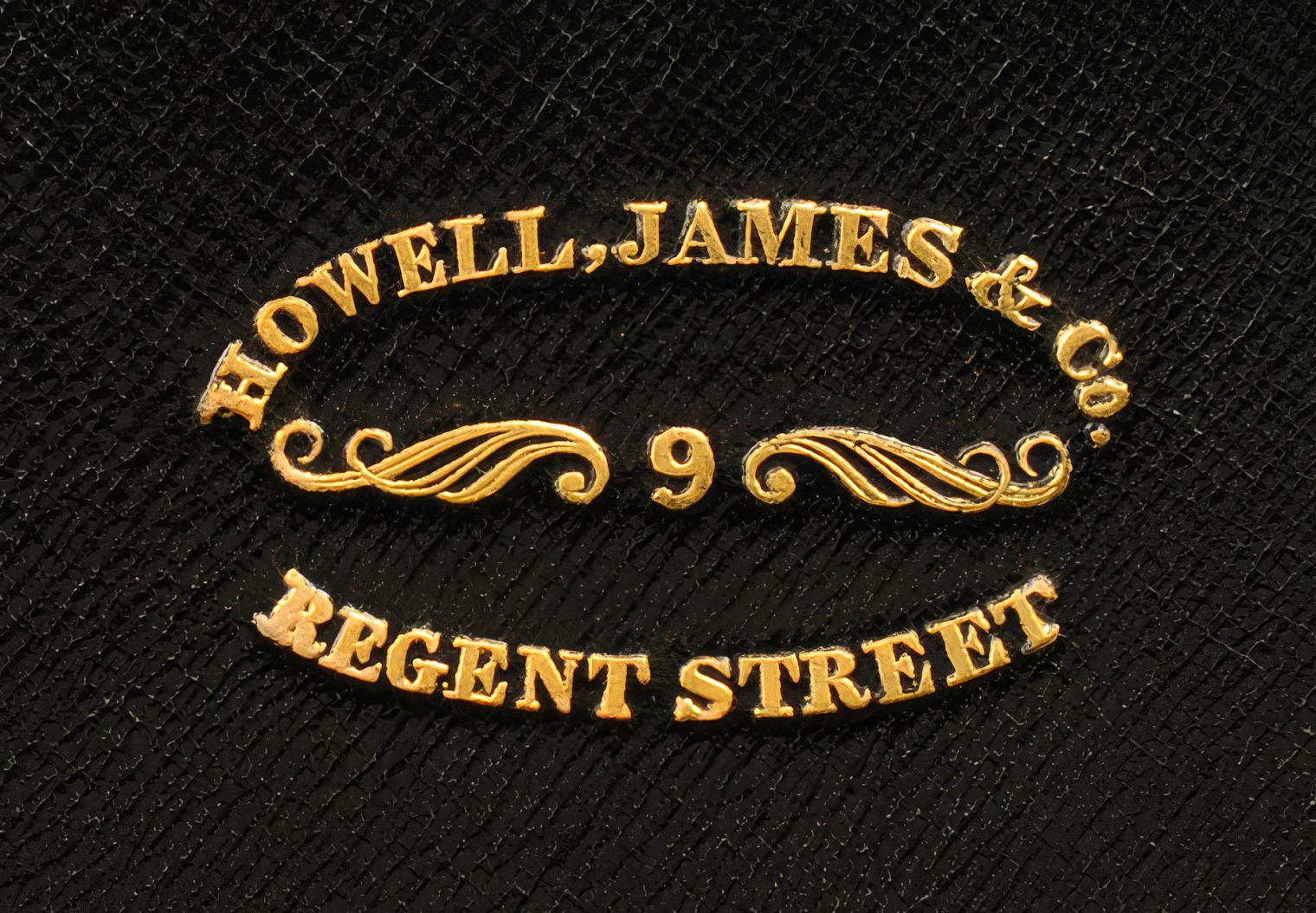
Close-up of the gold-tooled Howell, James & Co. maker’s mark on dark-green leather.
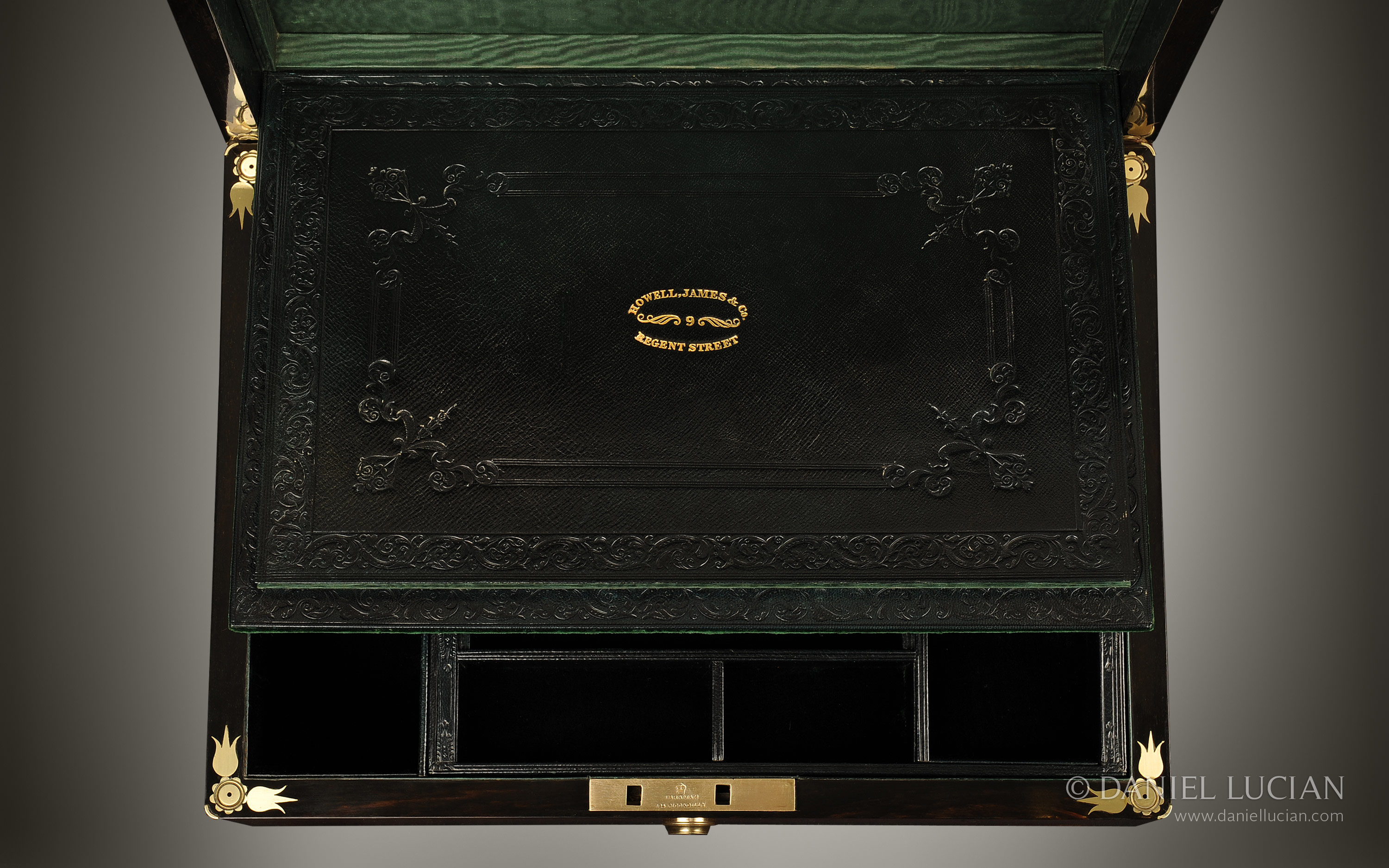
Antique Jewellery Box in Amboyna, by Howell, James & Co. VIEW THIS BOX →
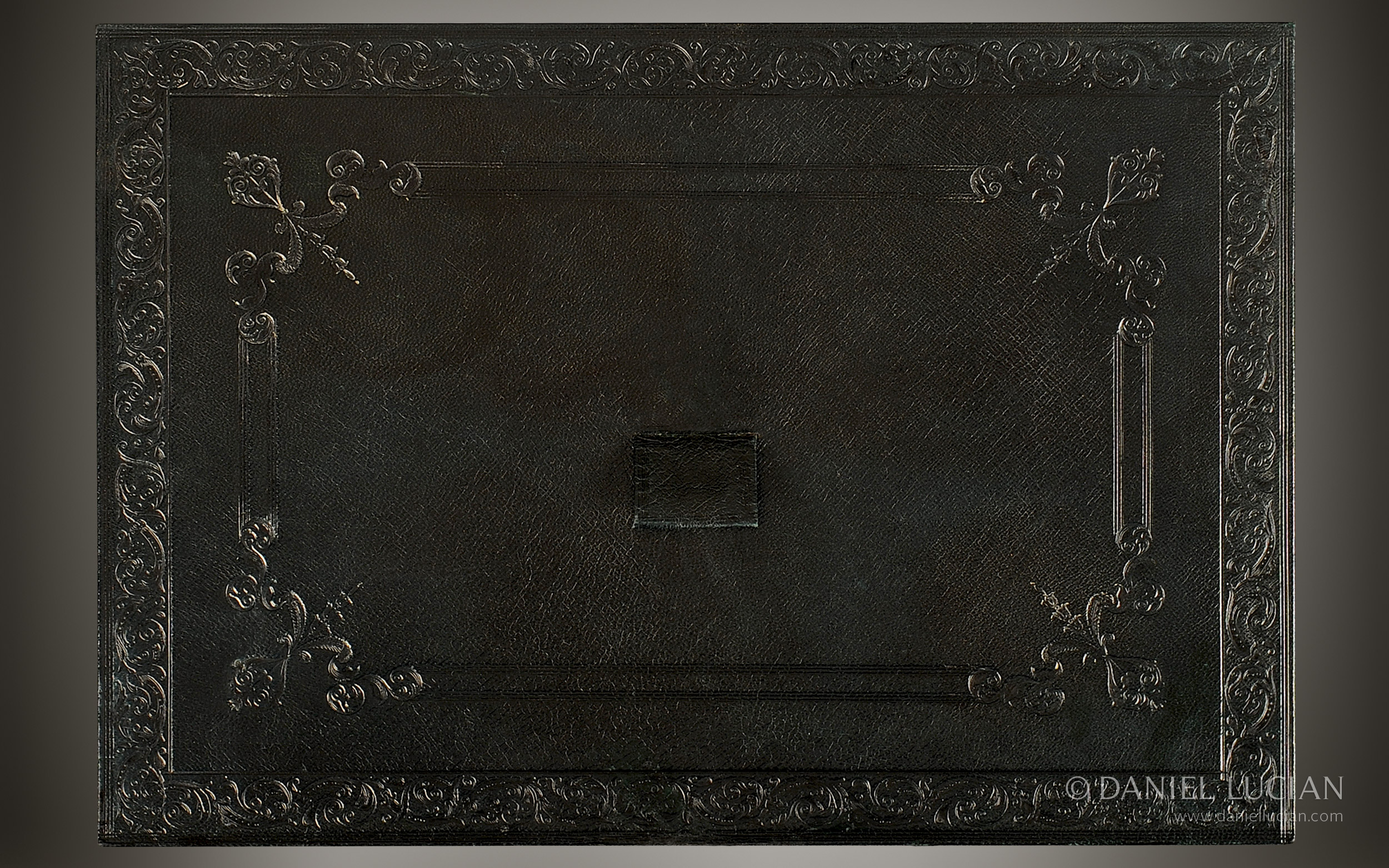
Antique blind tooled leather drawer lid from a jewellery box in amboyna, manufactured by Howell, James & Co.
Howell, James & Co gold-tooled maker’s mark.
‘Howell, James & Co, 9 Regent Street’ gold-tooled manufacturer’s mark from an antique jewellery box in amboyna.
Antique Jewellery Box in Rosewood by William Halstaff.
Antique Jewellery Box in Rosewood by William Halstaff. VIEW THIS BOX →
Gold tooling and blind tooling on a leather-bound tray, by William Halstaff.
Front right interior view with the removable tray displayed outside and the lid panel lowered to reveal the gold-tooled Edwards maker's mark.
Antique Jewellery Box in Rosewood with Duke Insignia by Edwards. VIEW THIS BOX →
Gold-tooled and blind-tooled design from an antique rosewood box by Edwards.

EXPLORE FURTHER