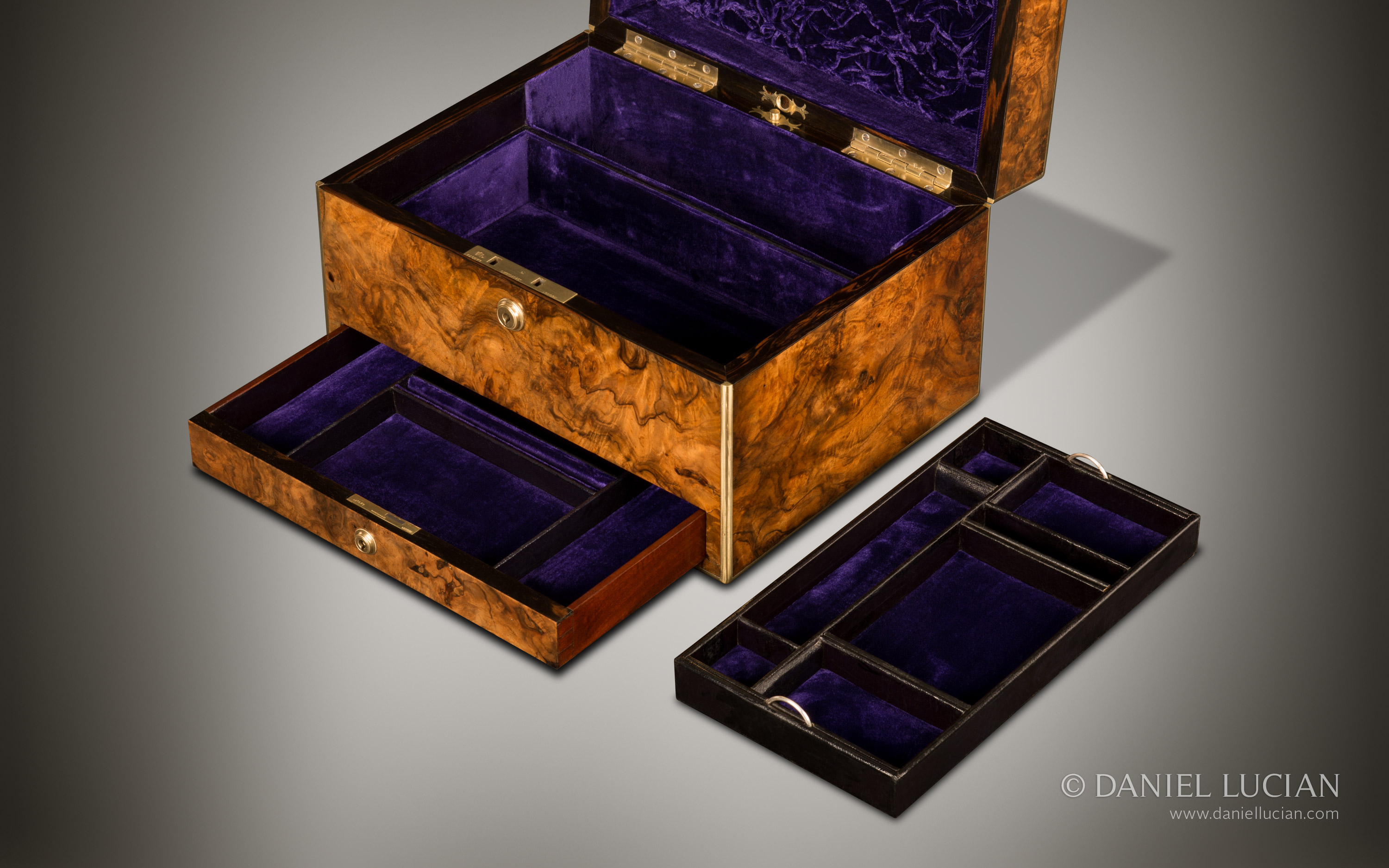
Sampson Mordan & Co
Sampson Mordan was born in 1790. As a young man, he served as an apprentice and assistant to the celebrated inventor and locksmith Joseph Bramah before establishing his own business in 1815.
By 1822, Mordan had entered into partnership with John Isaac Hawkins, and together they patented improvements to pencil holders and pens, including an internal lead-propelling mechanism that would become closely associated with the Mordan name. Their partnership was short-lived, with Mordan subsequently acquiring Hawkins’s interest in the business.
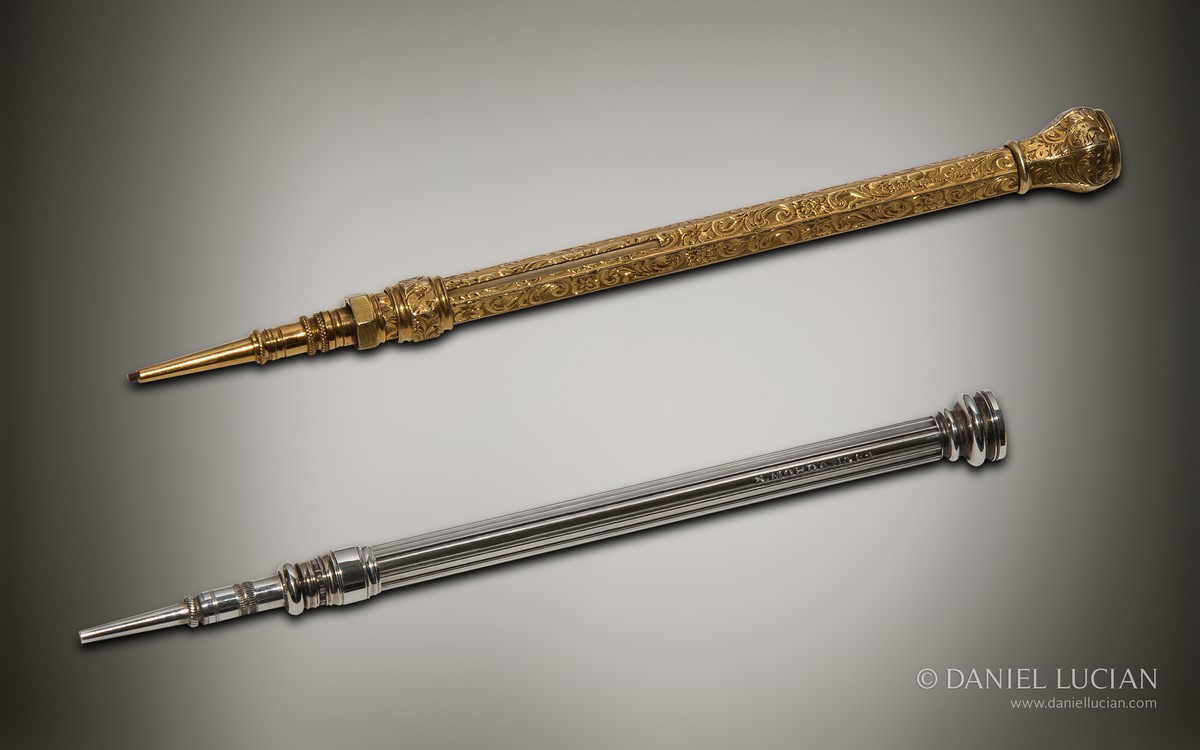
By 1822, Mordan had also entered into partnership with the stationer Gabriel Riddle. Their joint silver mark was registered on 30 April 1824, and the firm traded as S. Mordan & Co from 22 Castle Street, near Finsbury Square, London. The business manufactured and retailed a wide range of writing and stationery goods, becoming particularly renowned for its silver mechanical pencils.
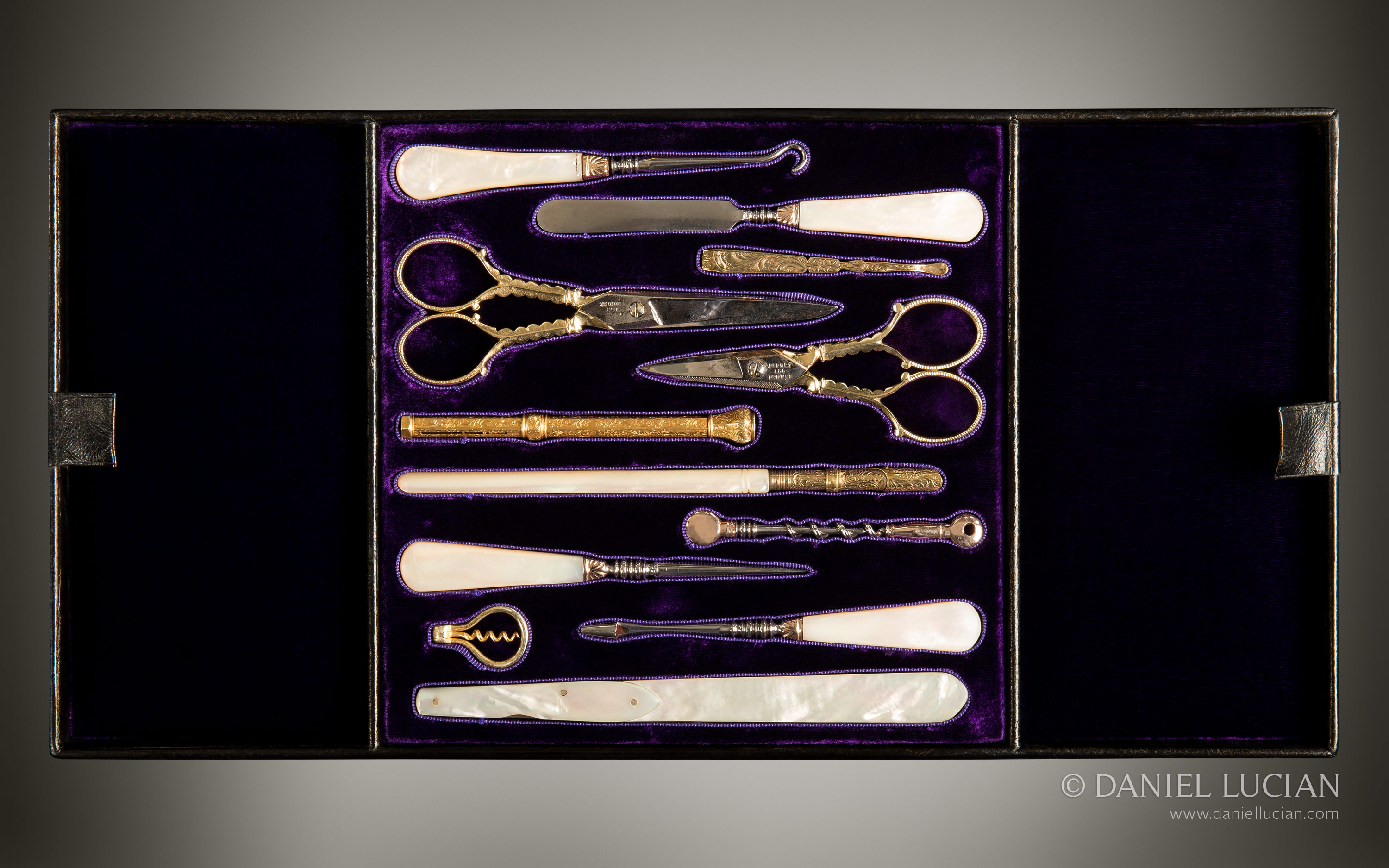
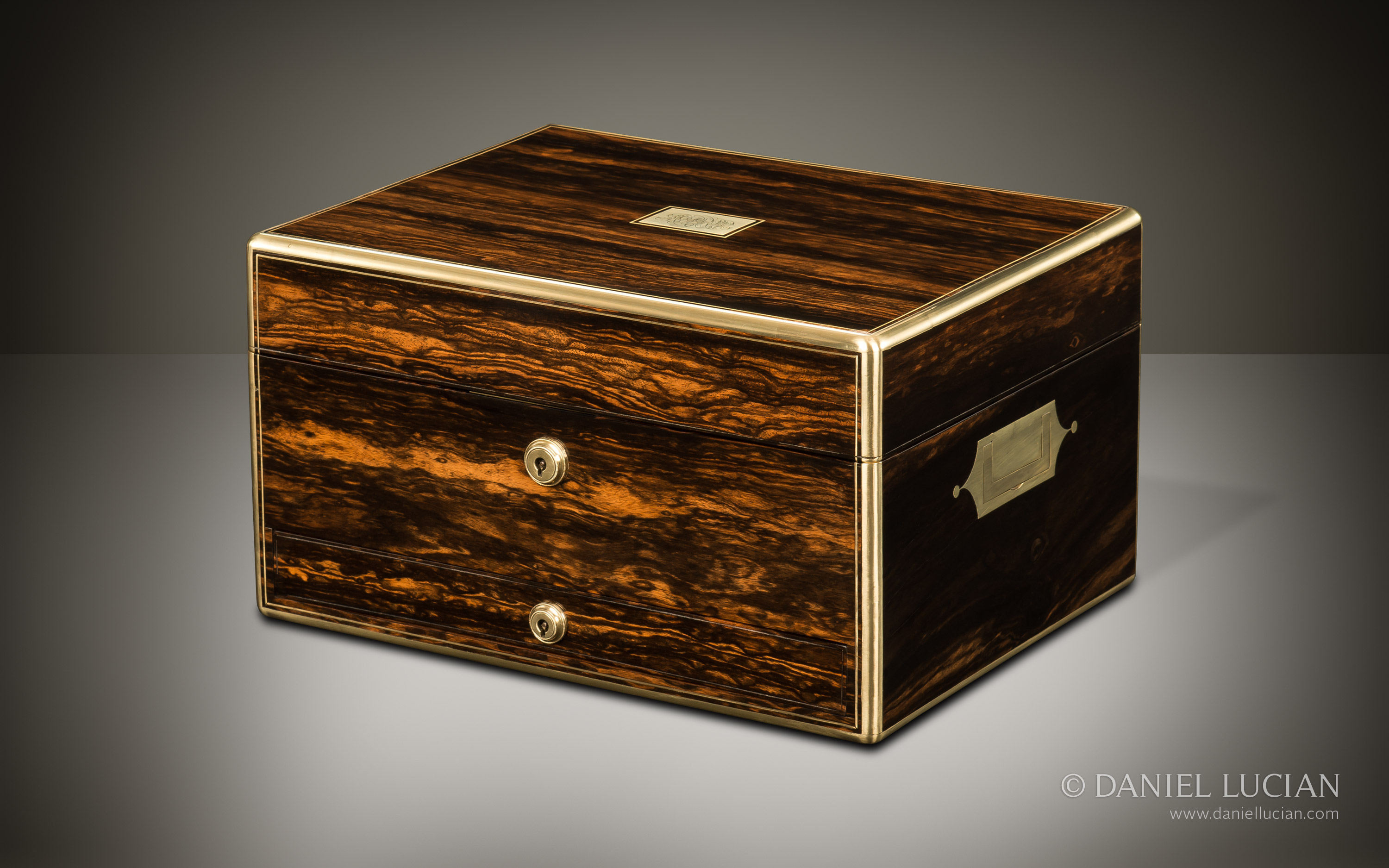
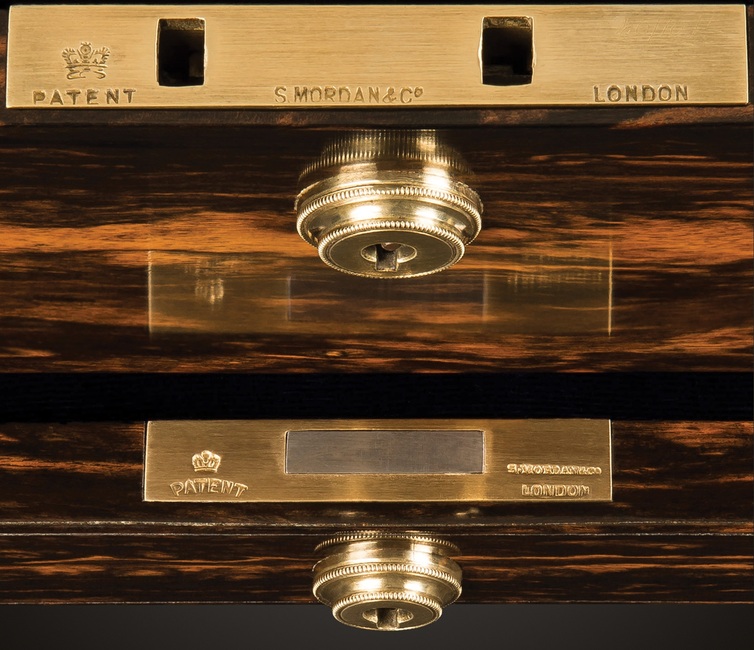
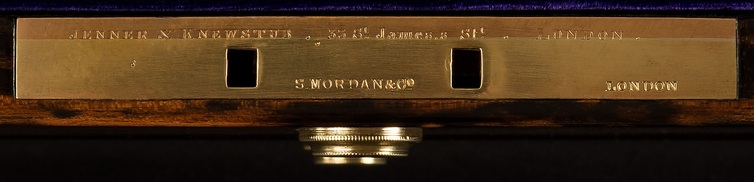
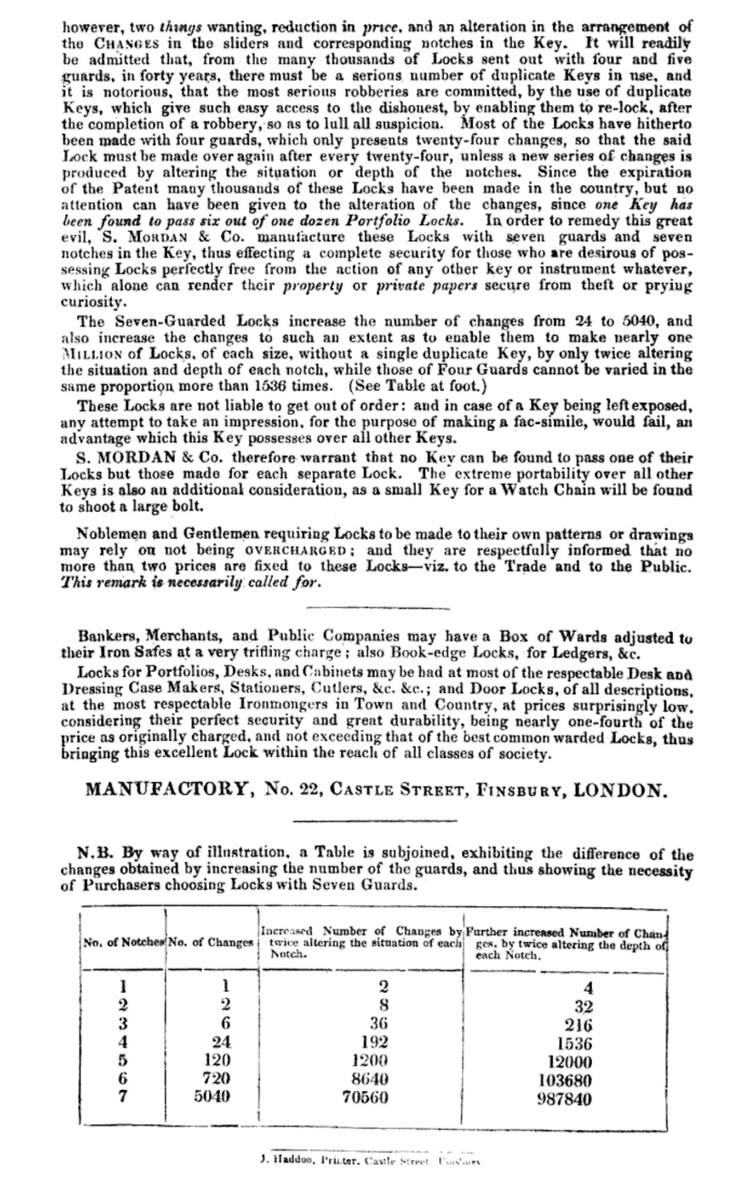
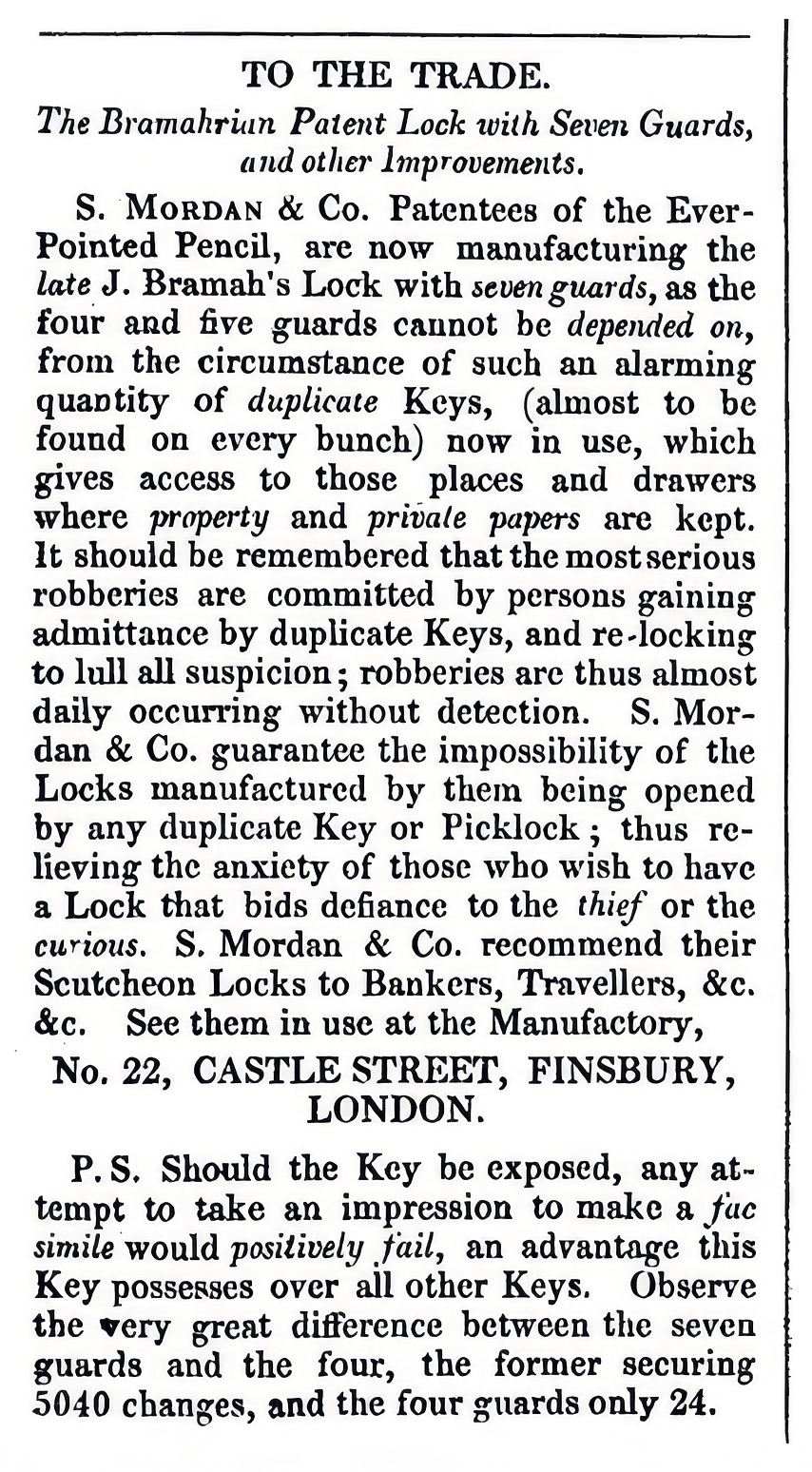
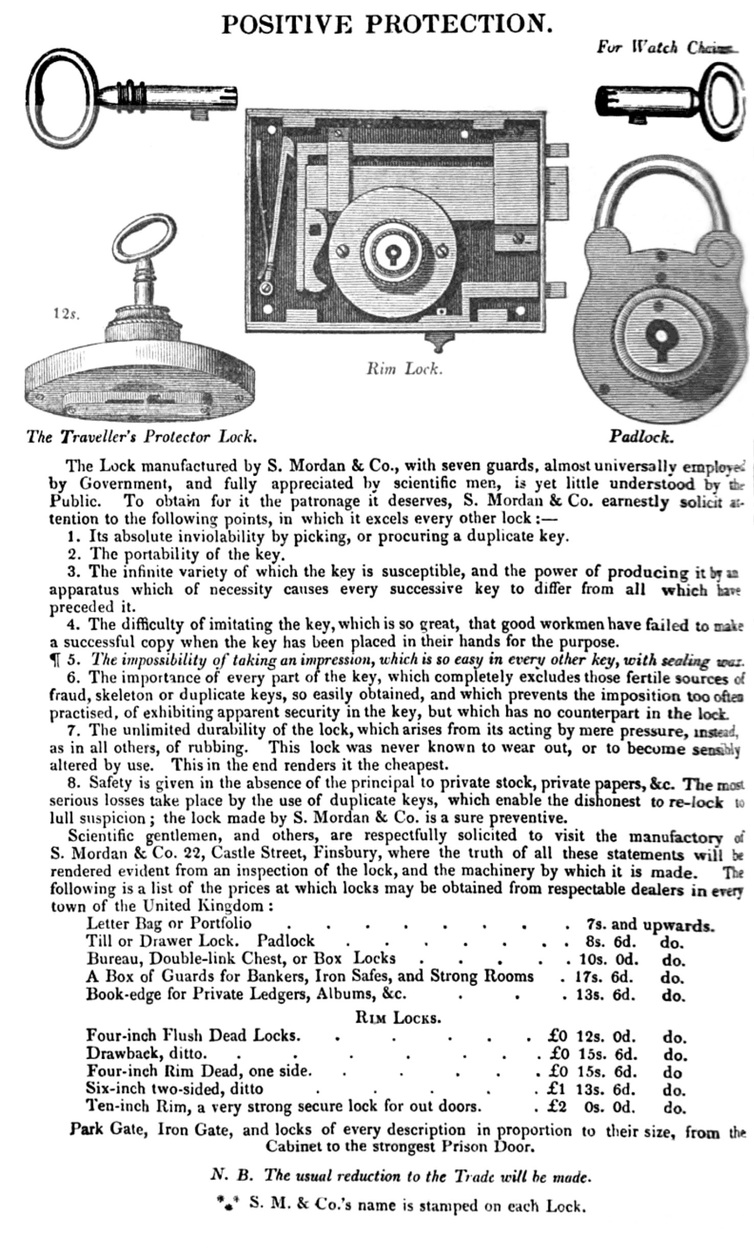
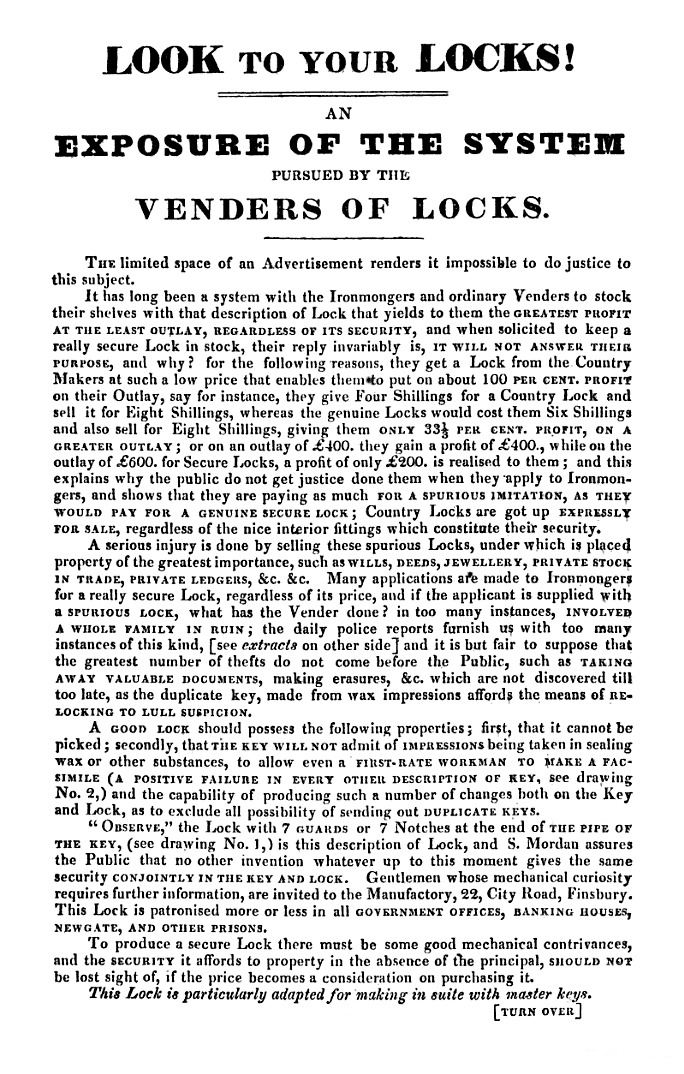
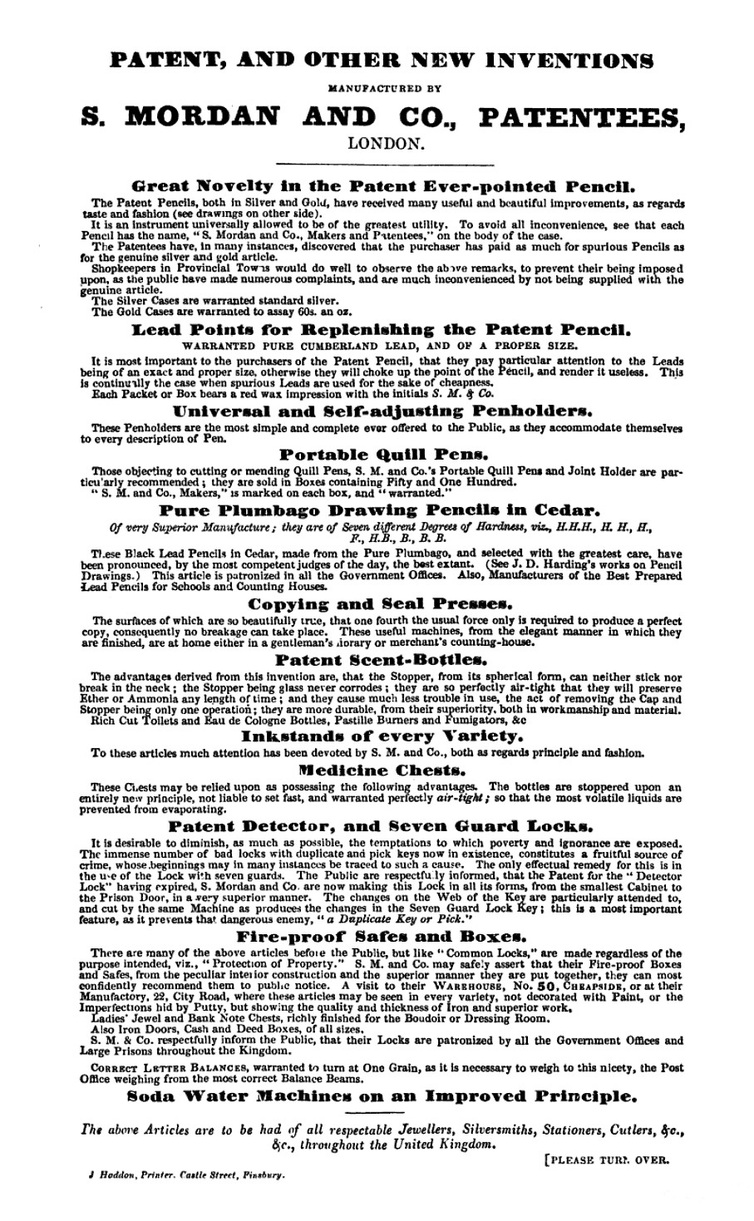
Having trained under Joseph Bramah, Mordan also developed considerable expertise in lockmaking. Following the expiry of Bramah’s patent, S. Mordan & Co began manufacturing locks based upon his established design, which they marketed as the ‘Bramahrian Patent Lock with Seven Guards, and other Improvements’. By increasing the mechanism to seven guards and introducing further variations to the key and internal notches, Mordan claimed to have greatly increased the number of possible combinations, from 24 in a four-guard lock to 5,040 in the seven-guard version.
The firm placed considerable emphasis on the security of these locks, advertising them as resistant to both picking and duplicate keys. Mordan also claimed that even if an original key were exposed and an impression taken in sealing wax, an effective duplicate could not be produced. The locks were manufactured in numerous forms, from small portfolio, desk and cabinet locks to padlocks, safes, strong-room and prison-door locks.
The partnership between Mordan and Riddle was formally dissolved on 20 December 1836, after which Mordan continued the business under the same name. The firm developed an increasingly broad range of practical and luxury goods, and around 1842 opened dedicated retail premises at 50 Cheapside, later renumbered 72 Cheapside.
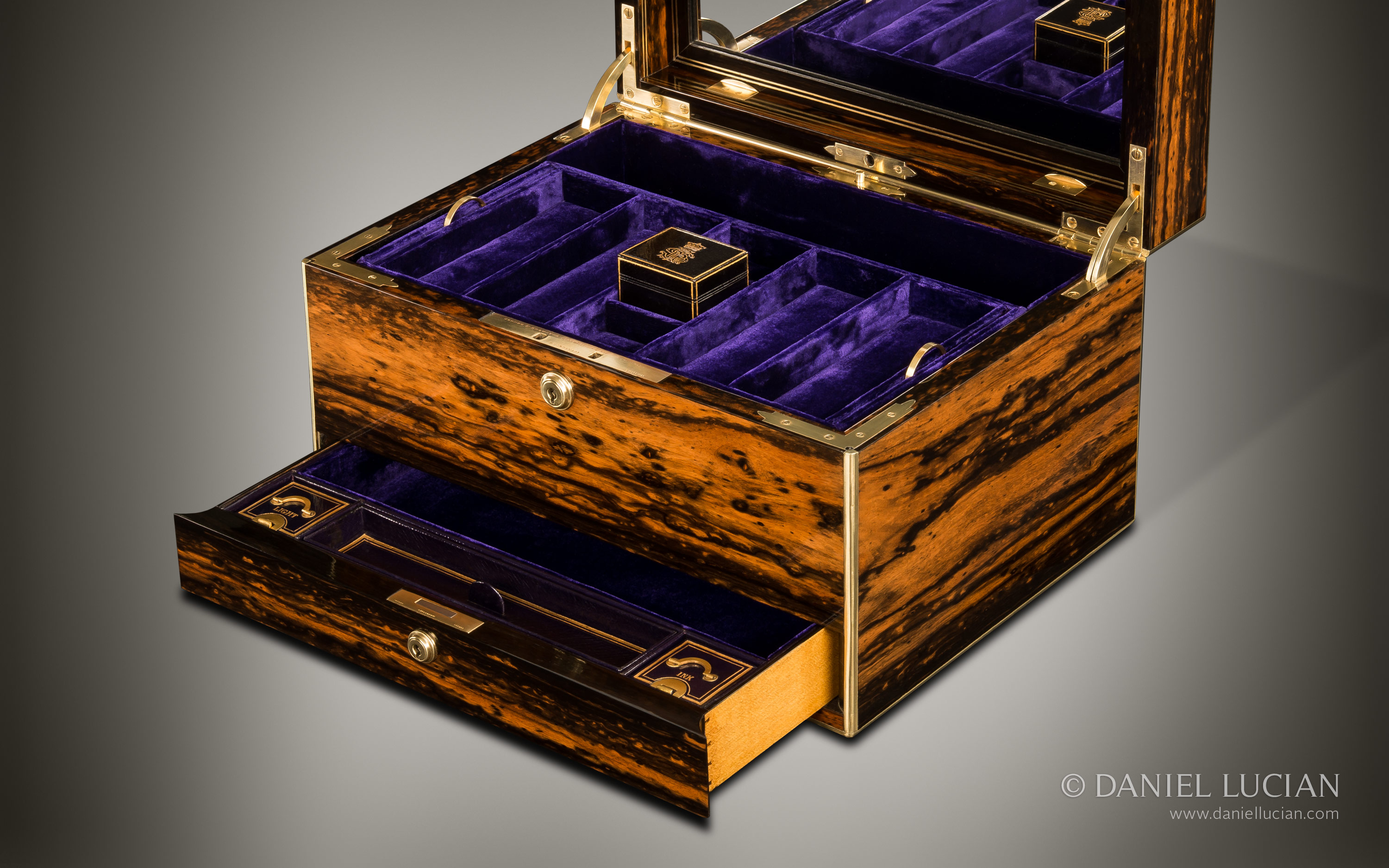
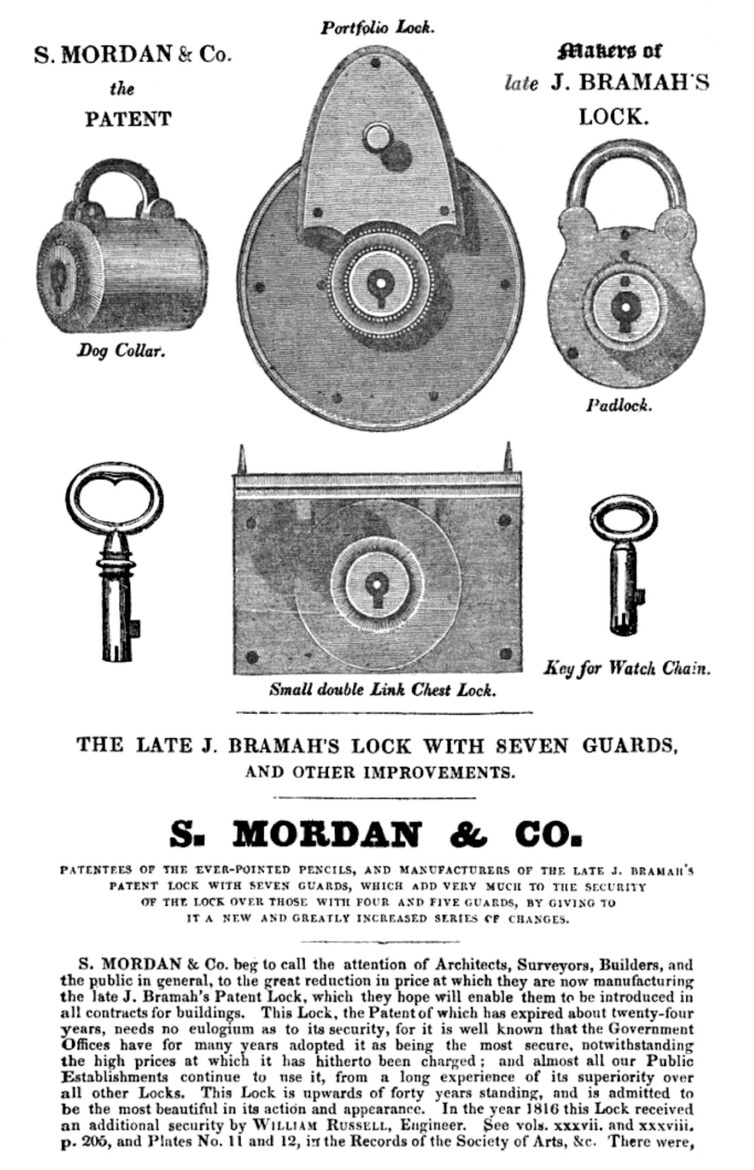
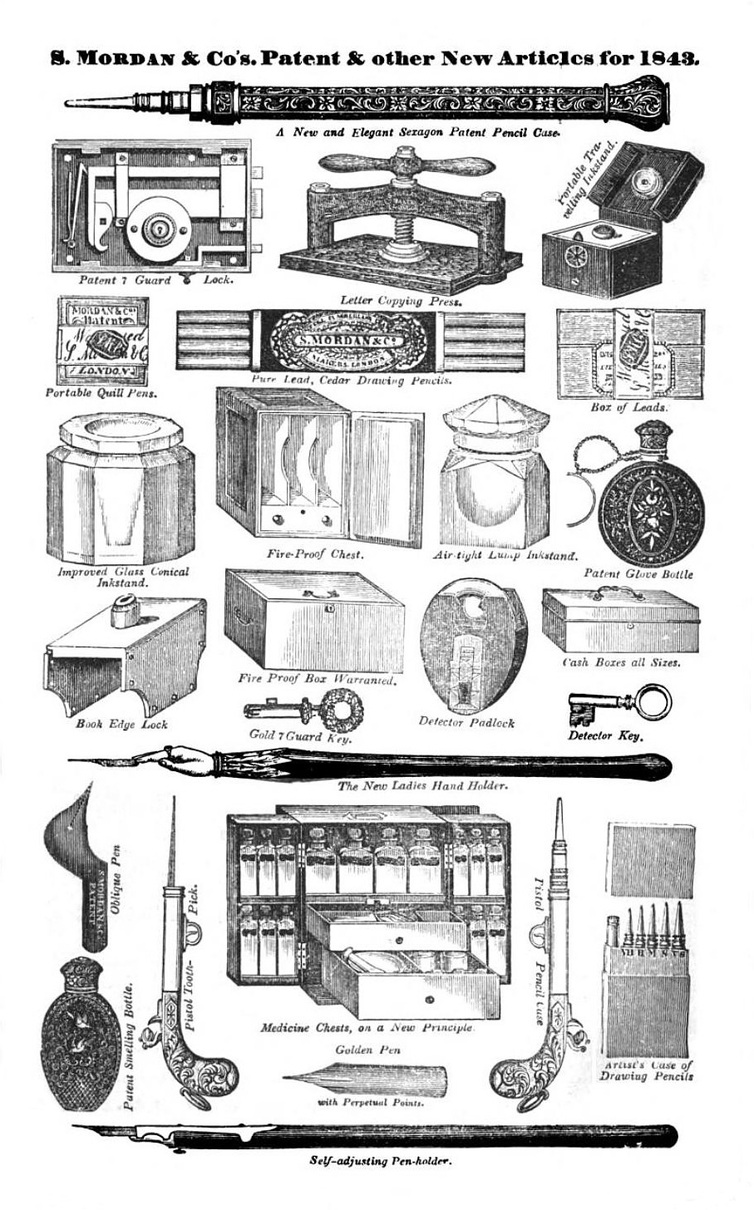
By the early 1840s, S. Mordan & Co’s range extended far beyond pencils and locks to include writing equipment, copying presses, inkstands, medicine chests, fireproof boxes, cash boxes and a wide variety of other patented and practical goods.

Sampson Mordan died in 1843, leaving the business to his sons Sampson Mordan Jr and Augustus Mordan.
By 1864, S. Mordan & Co was operating from 41 City Road, London, with 72 Cheapside continuing as its retail premises. A partnership notice of 1879 records the City Road address as 41, formerly 22A. By 1885, the manufactory had expanded to include No. 43.
By 1879, the partnership consisted of Sampson Mordan Jr, Augustus Mordan, Edmund Johnson and Zachariah Watkins. On 17 April of that year, Watkins retired from the partnership by mutual consent.
Sampson Mordan Jr died in 1881, leaving Augustus as the senior family member associated with the firm. Augustus retired in 1884, after which the remaining partners continued to trade under the established S. Mordan & Co name. During the following years, Harry Lambert Symonds and James Pulley became increasingly prominent within the business.
In 1898, the firm became a limited company under the name S. Mordan & Co Ltd and absorbed the gold and silversmithing business of Johnson, Sons & Edmonds. The following year, the partnership between James Pulley and Harry Lambert Symonds was dissolved, with Symonds continuing as managing director.
Around 1900, the City Road factory was rebuilt and new showrooms were opened at 9 & 11 Warwick Street, London. The company continued to manufacture silverware, writing equipment, mechanical pencils, locks and a wide range of luxury and practical goods into the twentieth century.
S. Mordan & Co Ltd ceased trading in 1941 after its factory was destroyed by enemy action during the Second World War. The company was formally placed into voluntary liquidation in 1952.