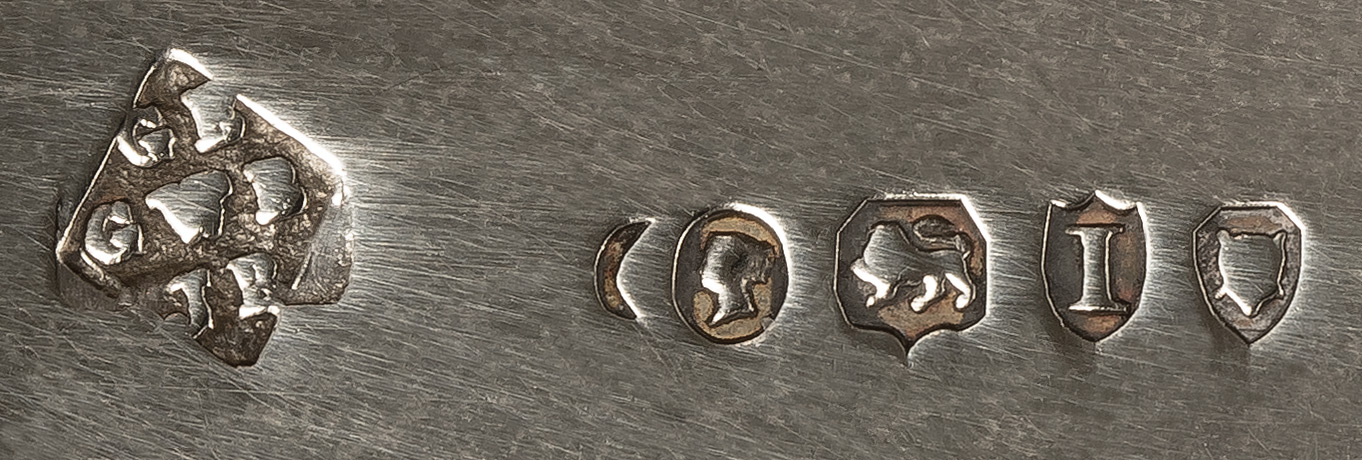
Silver Hallmarks
Hallmarking in England dates back to 1300, when a statute of Edward I required gold and silver to meet prescribed standards of purity and to be tested and marked accordingly. Introduced as a form of consumer protection, hallmarking helped protect buyers against fraud while also safeguarding reputable craftsmen and traders from unfair competition.
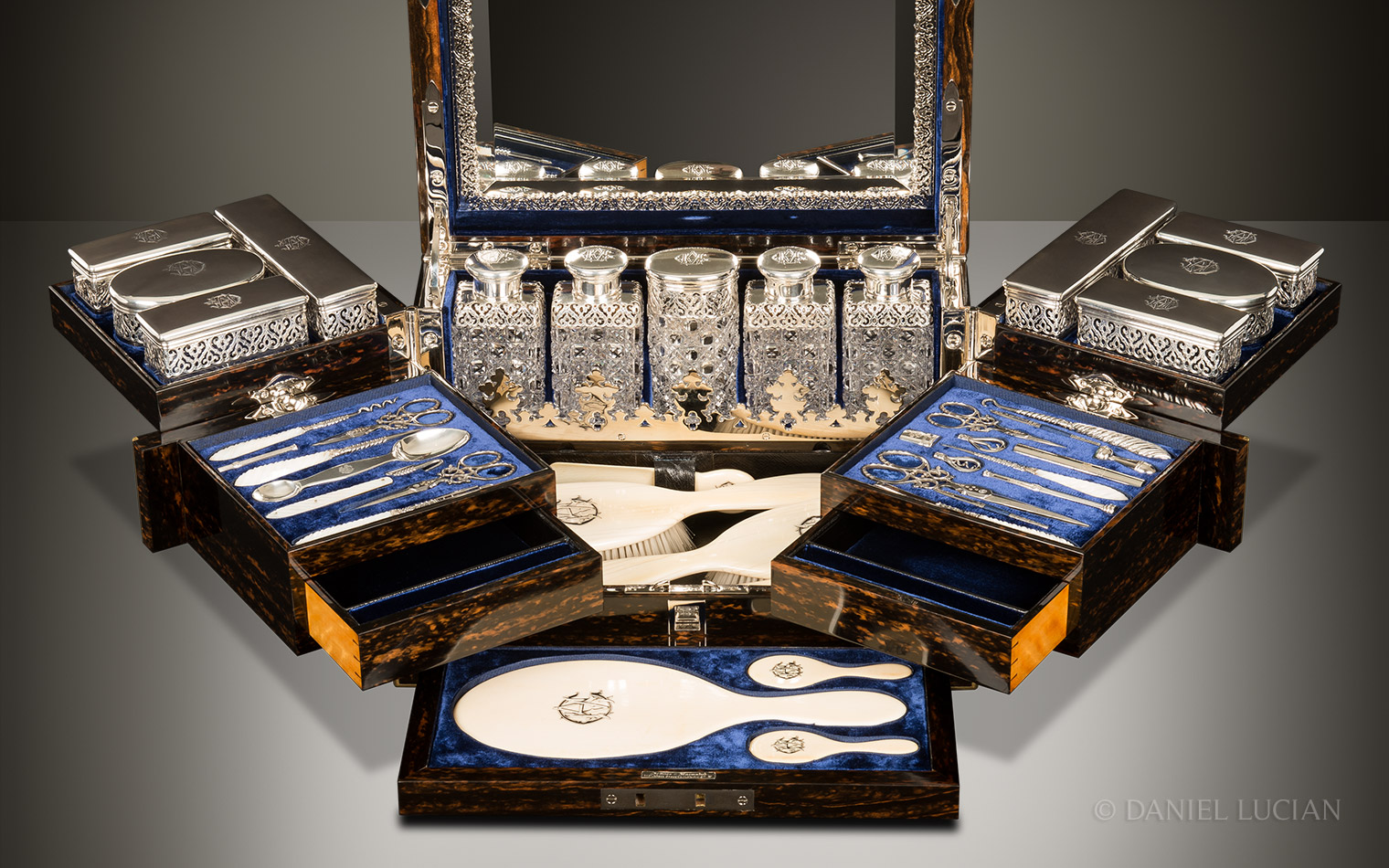
English antique silver is generally identified by a combination of marks. These include the maker’s mark, the assay office or town mark, a standard mark indicating the purity of the silver, and a date letter identifying the year in which the piece was assayed. For sterling silver, the traditional standard mark is commonly the lion passant. Between 1784 and 1890, an additional sovereign’s head, known as the duty mark, was applied to indicate that the required tax had been paid. The mark was discontinued when the duty on silver was abolished in 1890.
See our Index of Silversmiths