Brass Edging and Binding
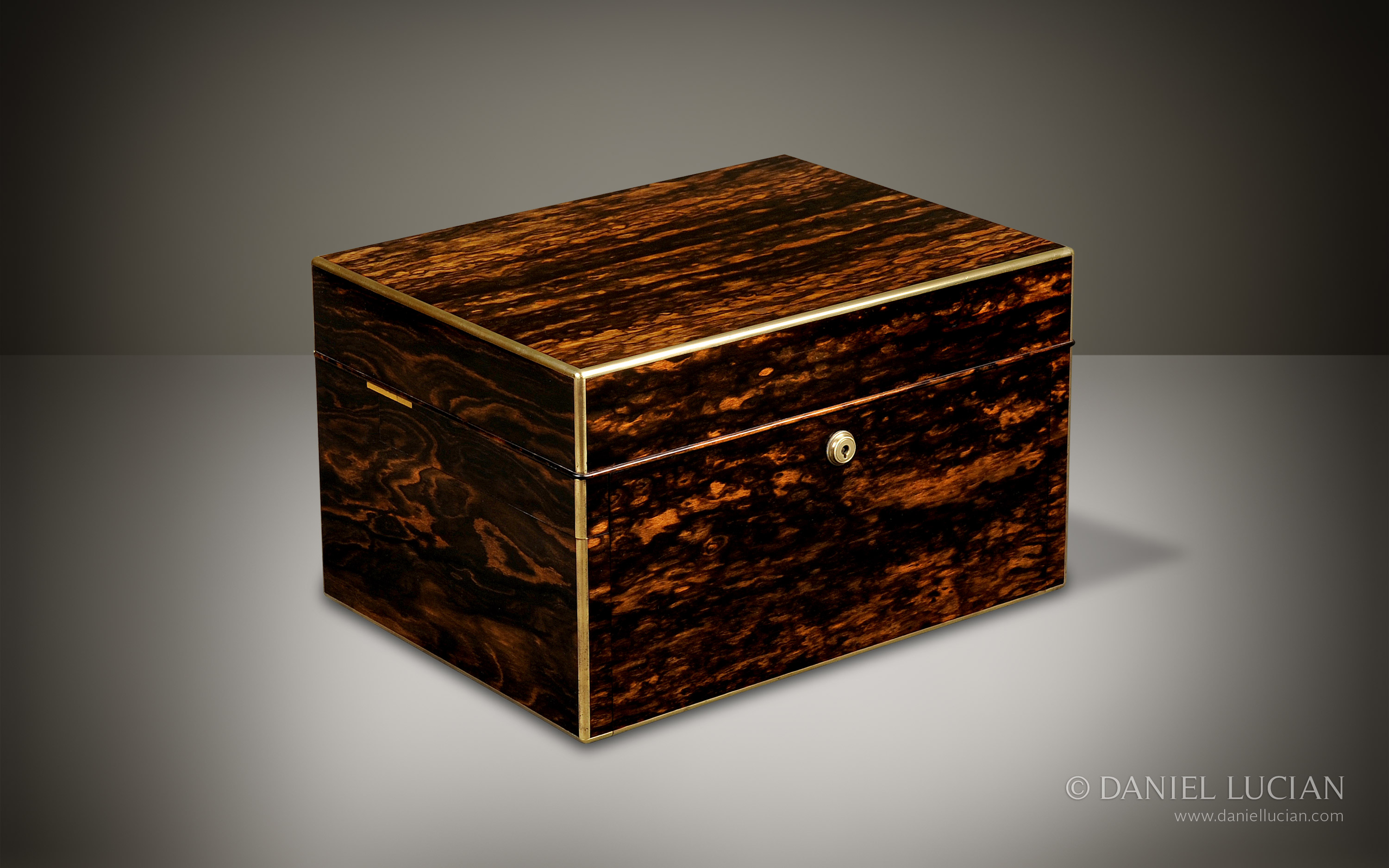
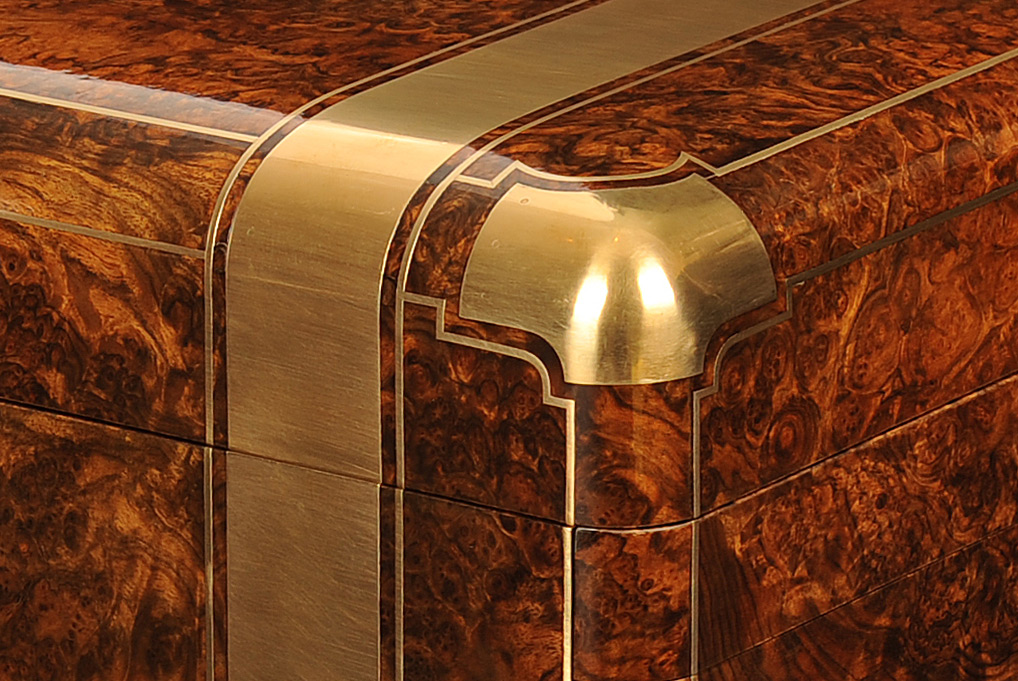
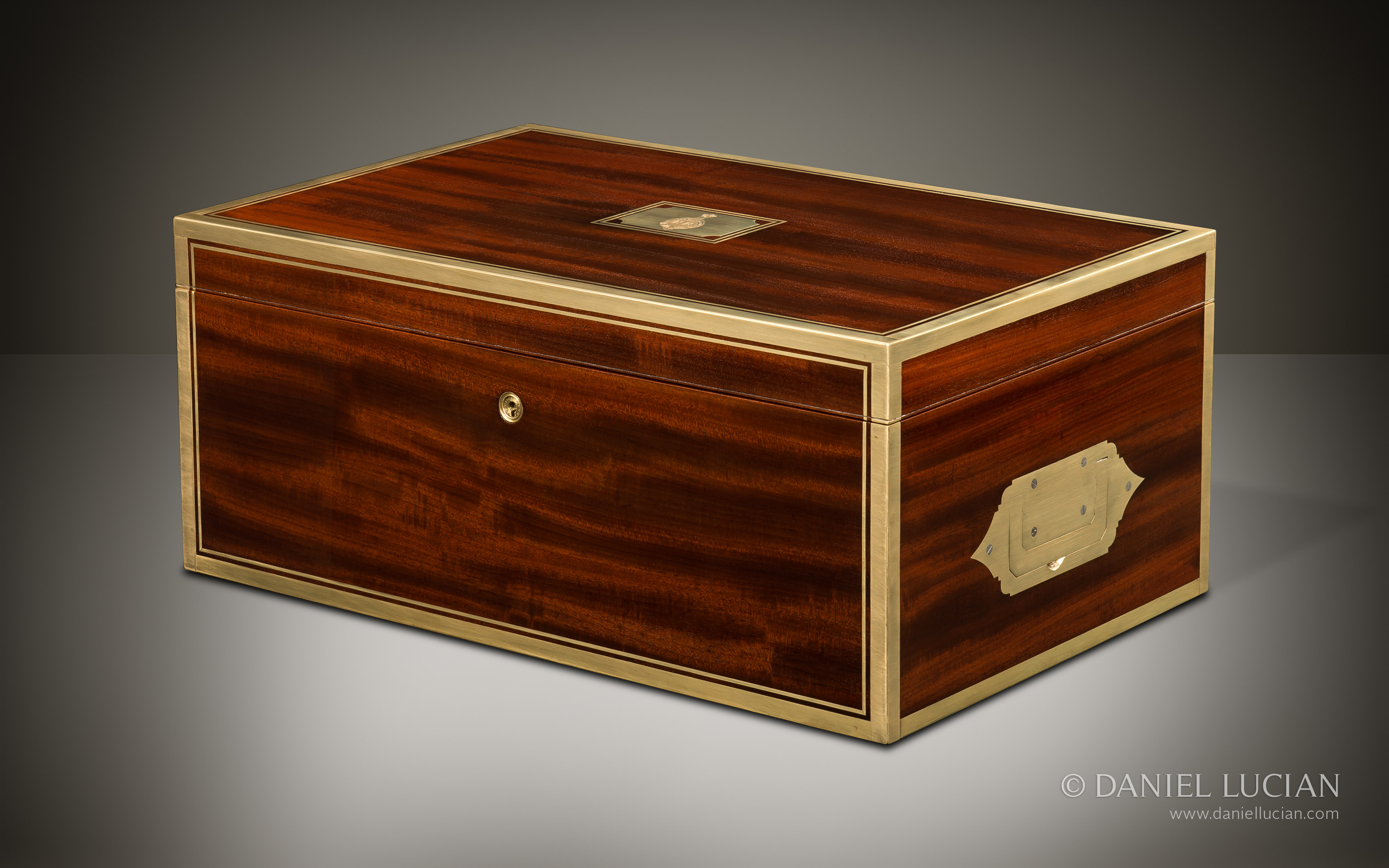
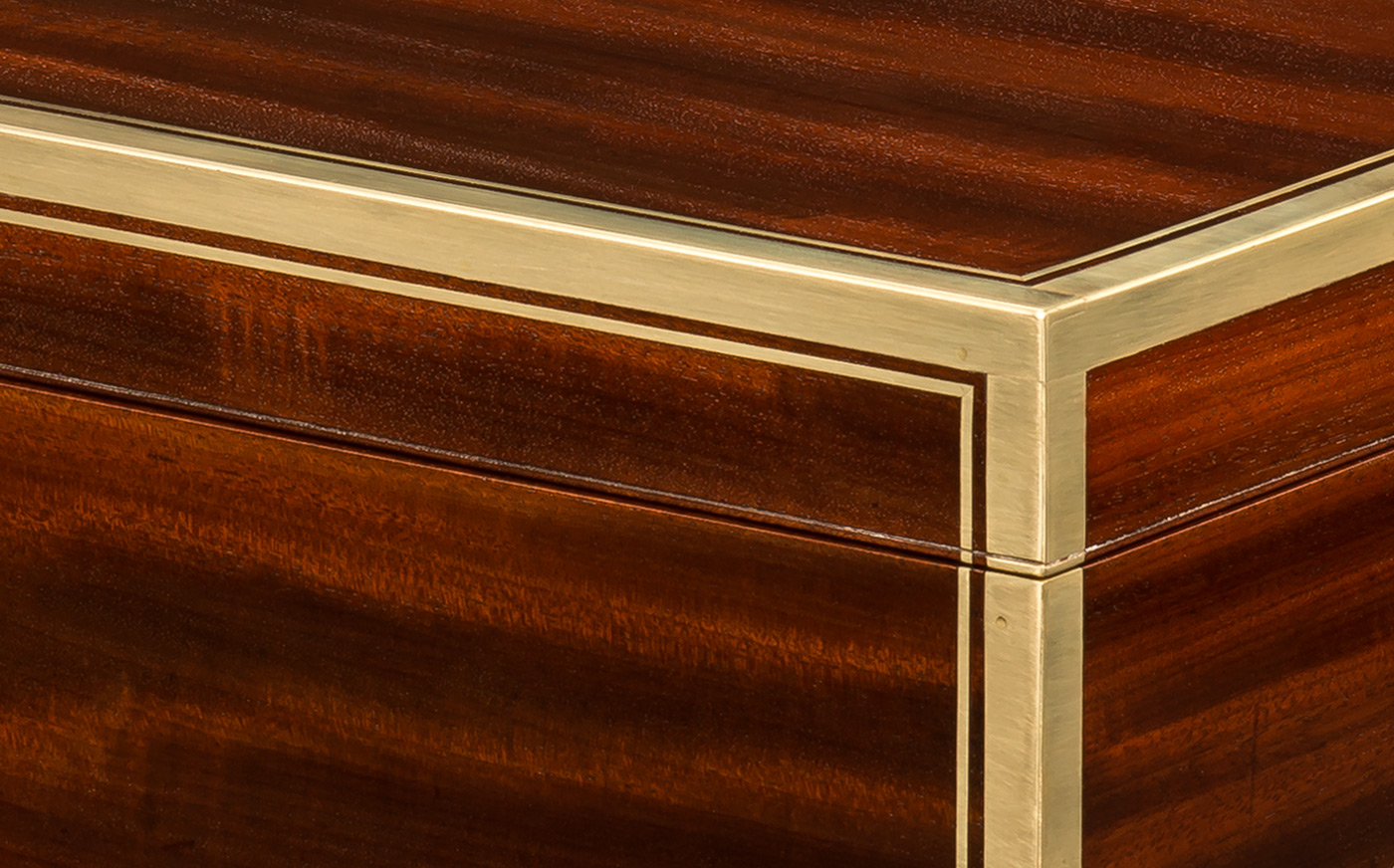
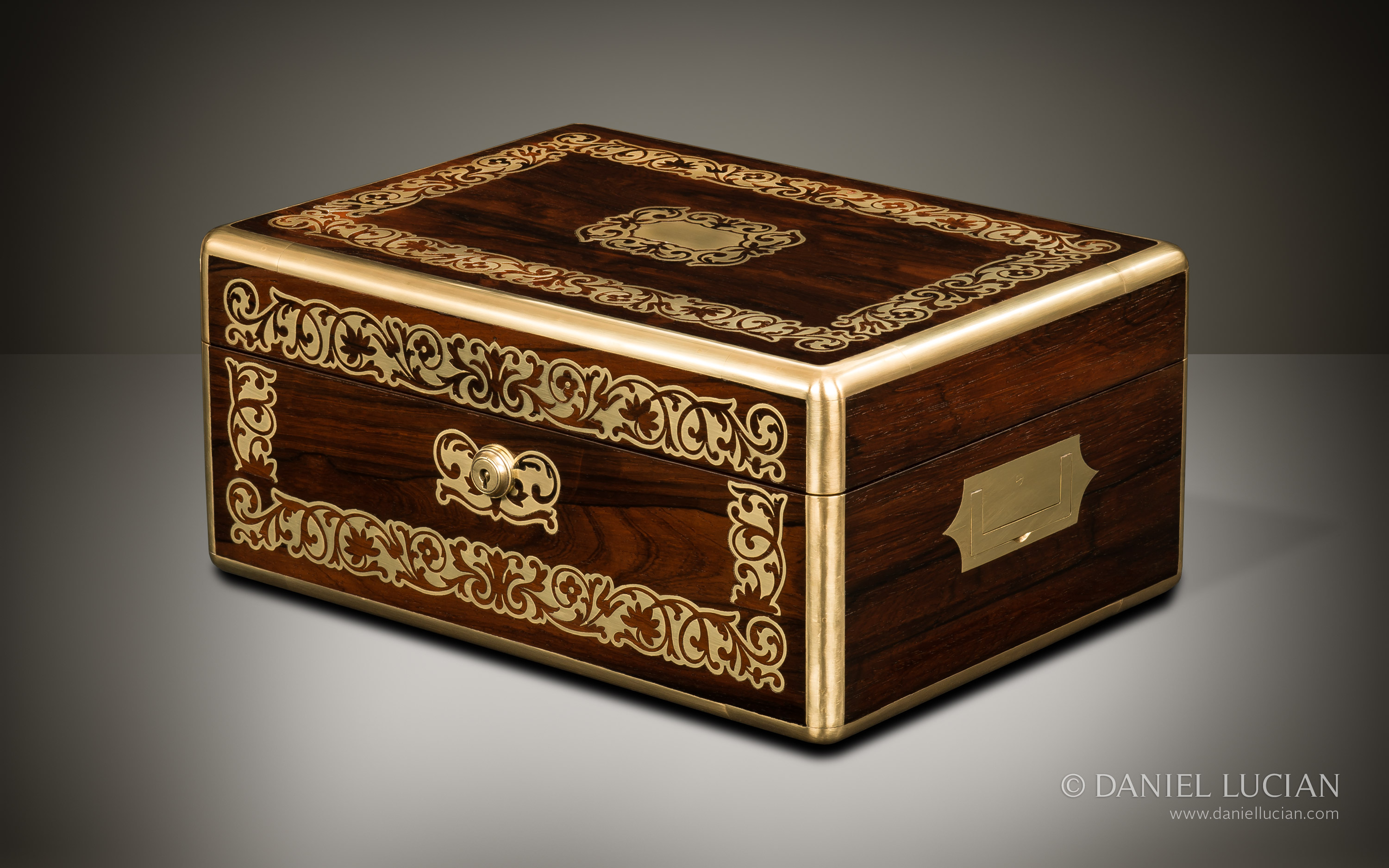
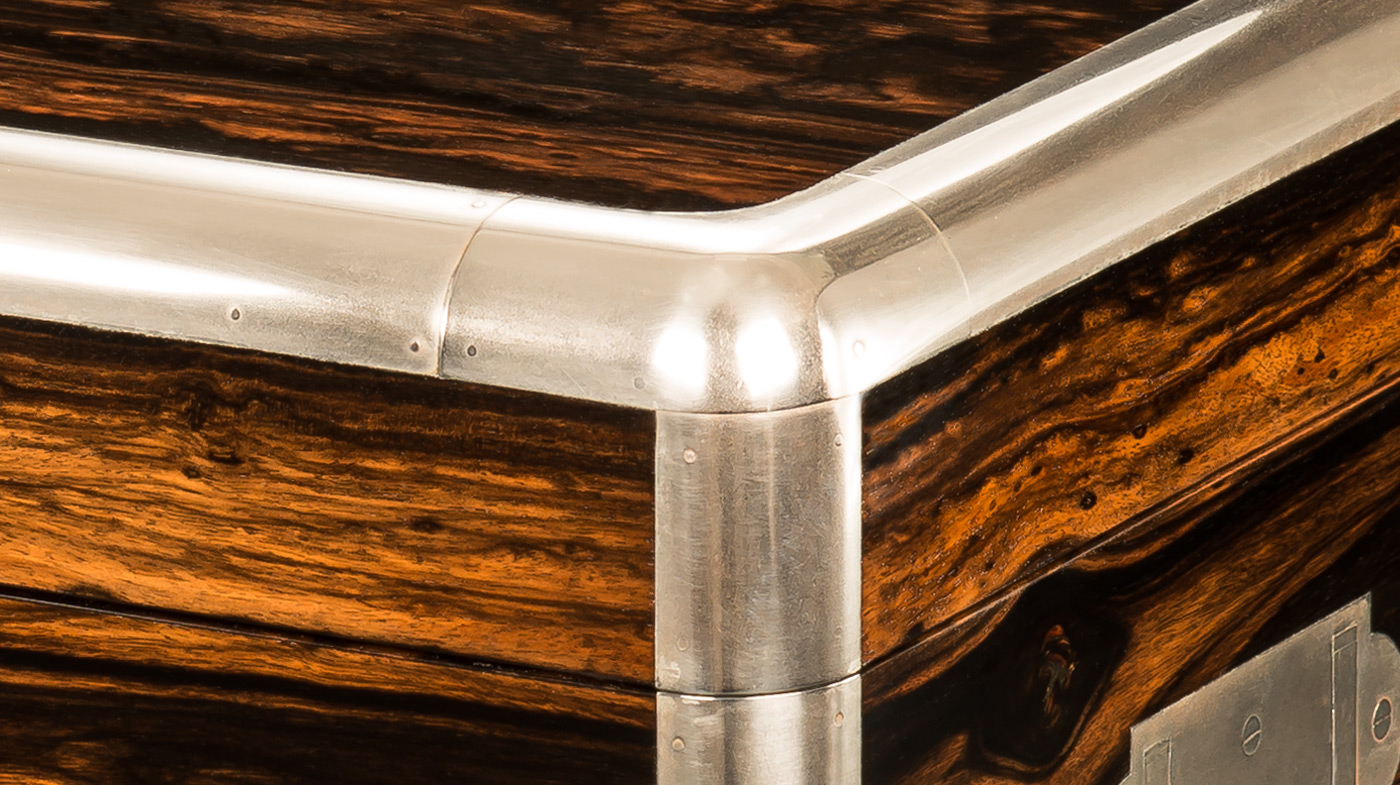
Brass edging and binding served both practical and decorative purposes on boxes. By protecting vulnerable edges and joints, brass could strengthen a case intended to withstand regular handling and travel, while also concealing construction lines and providing a contrasting decorative finish.
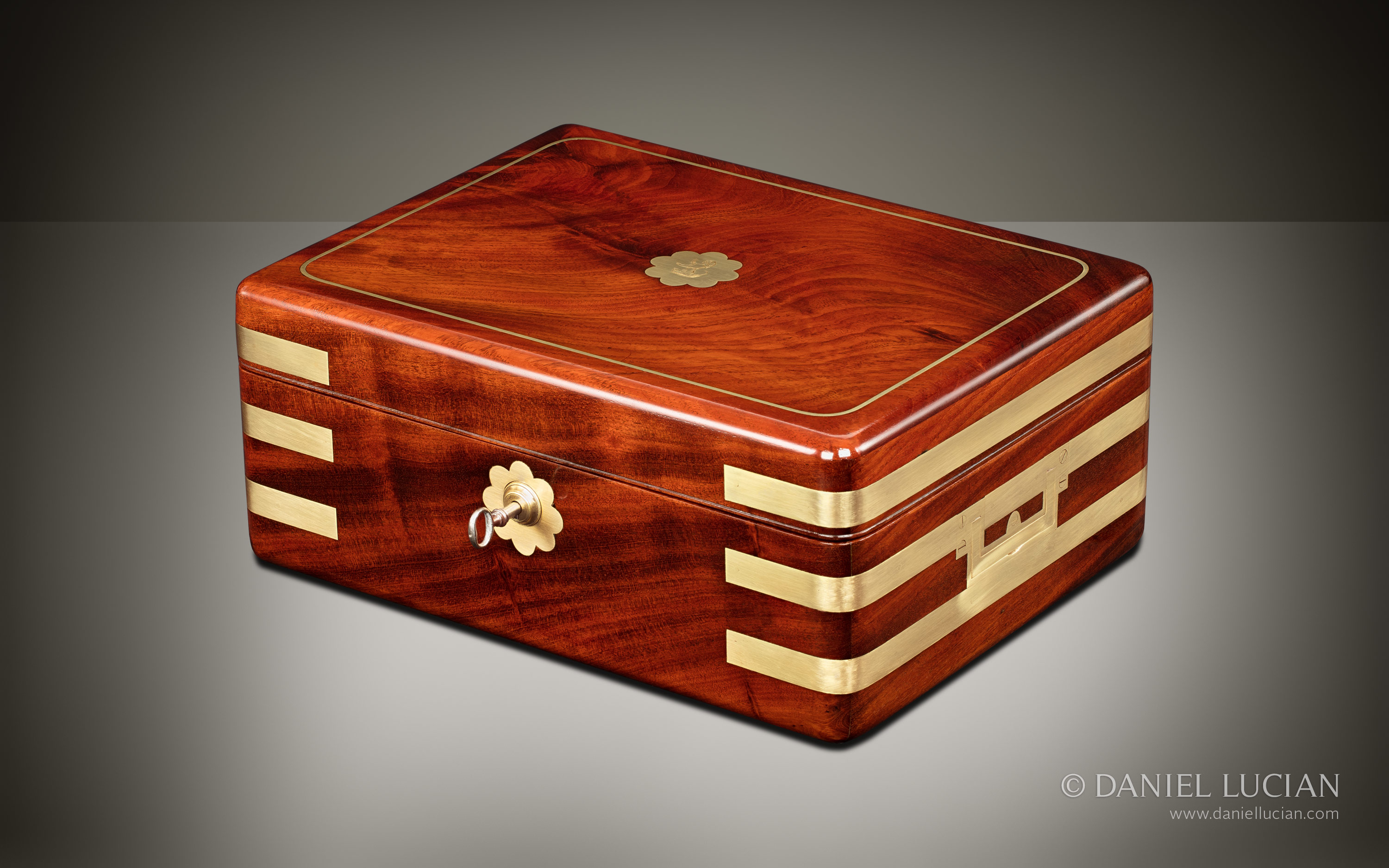
Right-angle brass edging and broader brass straps are particularly associated with boxes of the early 1800s. Their use reflects the practical vocabulary of contemporary campaign and travelling furniture, in which inset brass straps, corner protection and recessed carrying handles were used to reinforce portable cases and furniture. These robust forms of brasswork remained in use beyond this period, although they became less characteristic as other decorative treatments developed.
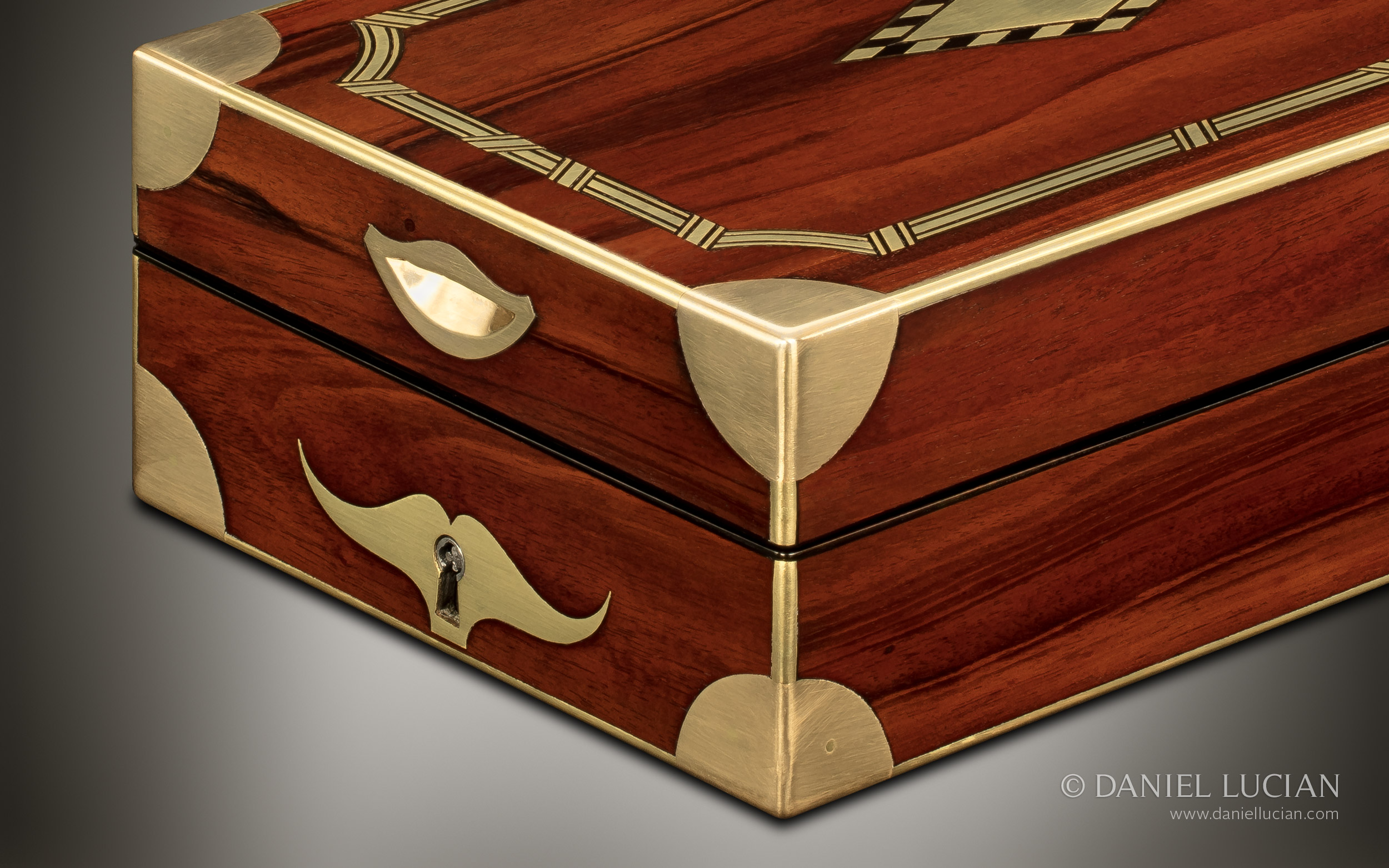
From around the 1820s, more decorative profiles became increasingly fashionable. Quadrant brass edging was especially enduring, appearing on boxes from the George IV period and remaining in use throughout much of the Victorian era, into the 1880s.
Other forms included radial brass edging and variations of broader strapped or bound construction. As with many aspects of box making, the form of the brasswork, its relationship to the construction of the box, and the materials and fittings used alongside it are often more significant than the simple presence of brass edging itself.