Hancock
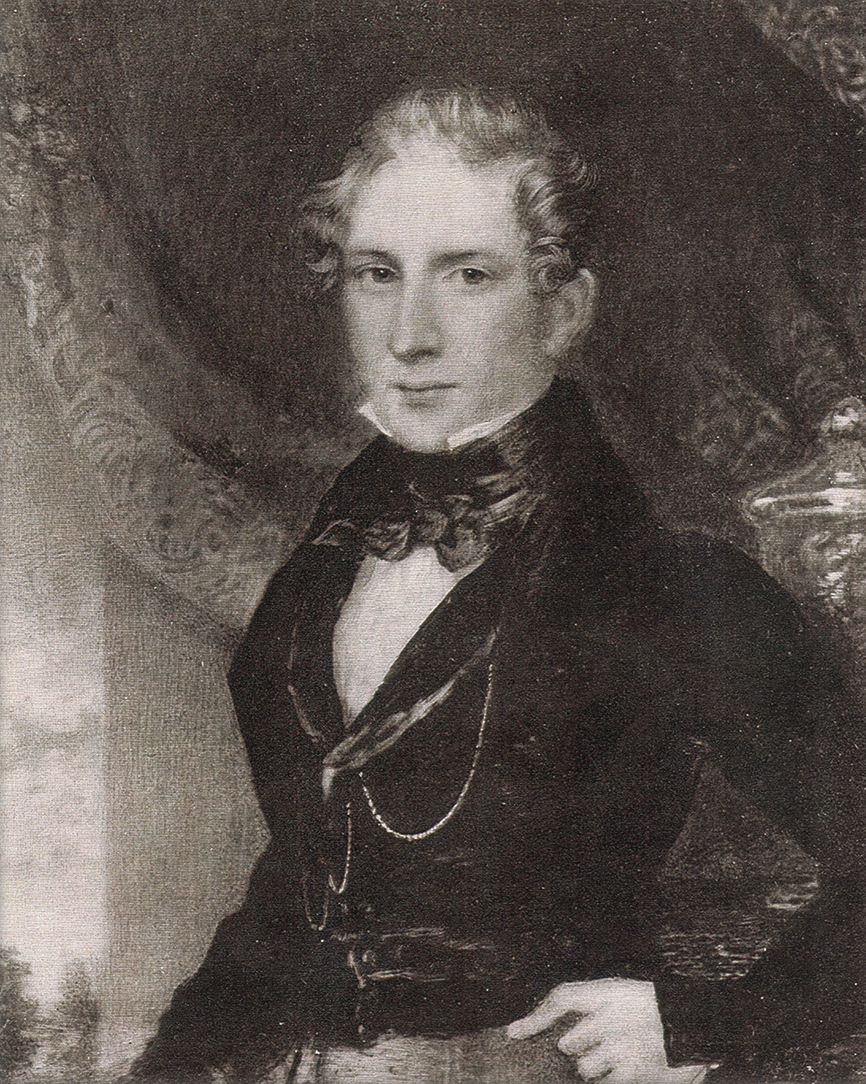
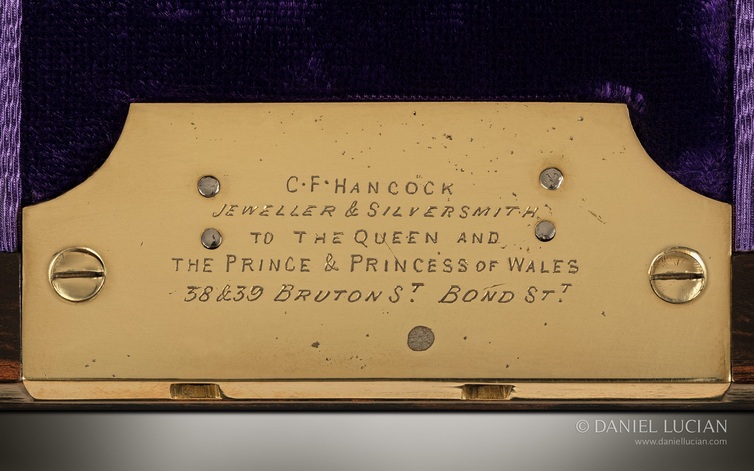
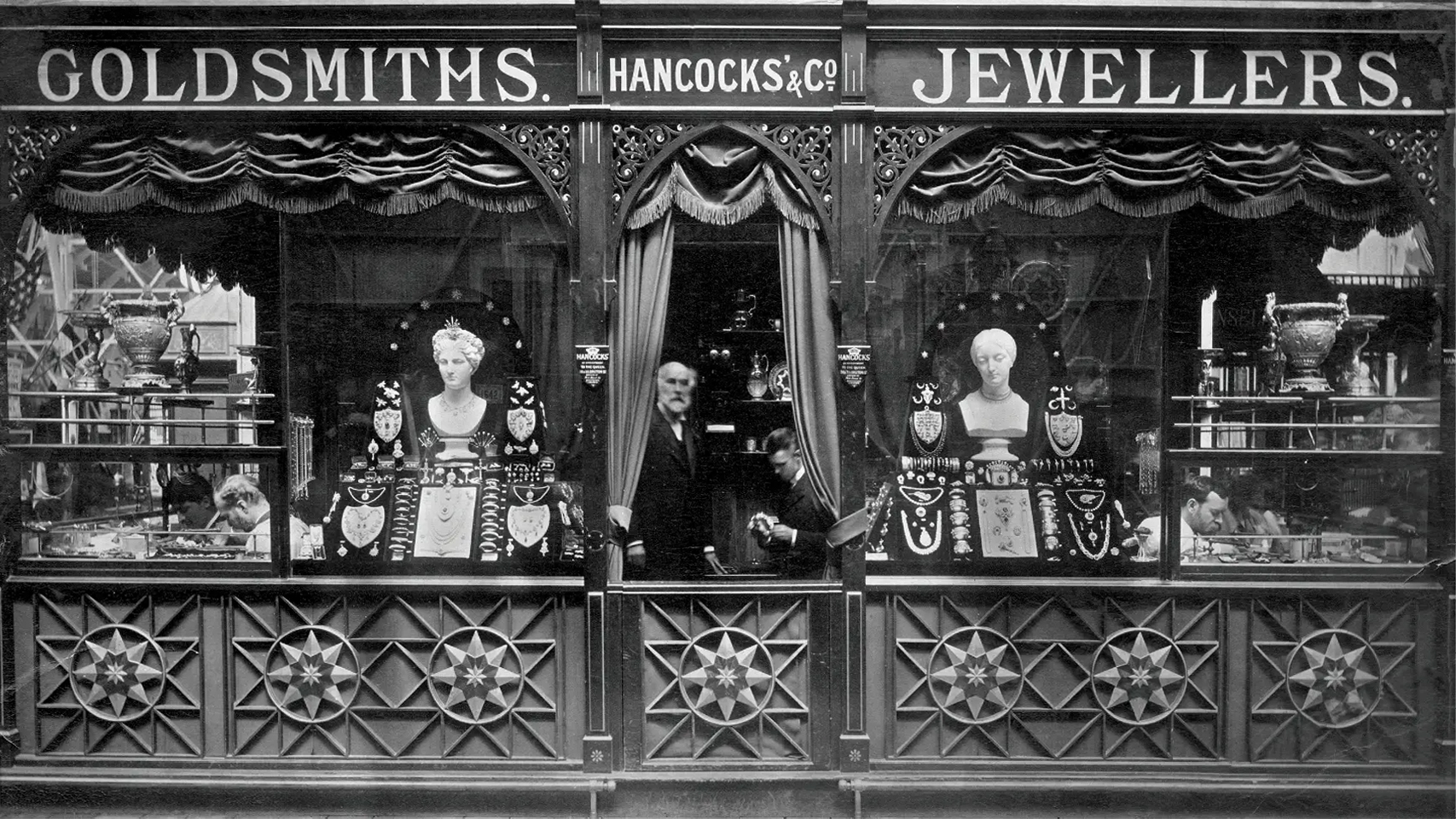
Having previously been a partner in the celebrated firm of Hunt & Roskell, Charles Frederick Hancock established his own business in 1849 at 39 Bruton Street, London. He registered his own silversmith’s mark at Goldsmiths’ Hall in 1850. His abilities and achievements were very quickly recognised, receiving a Royal Warrant of Appointment from Queen Victoria during his first year in business. The firm would subsequently serve the Prince and Princess of Wales and numerous European sovereigns and royal courts.
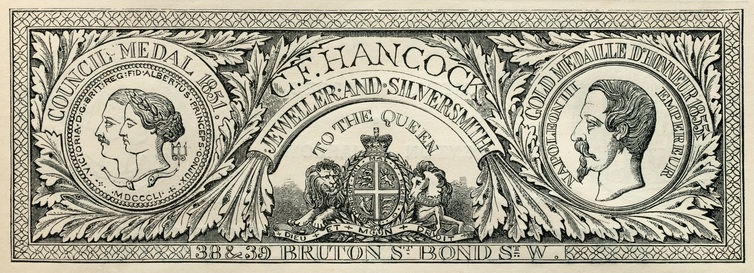
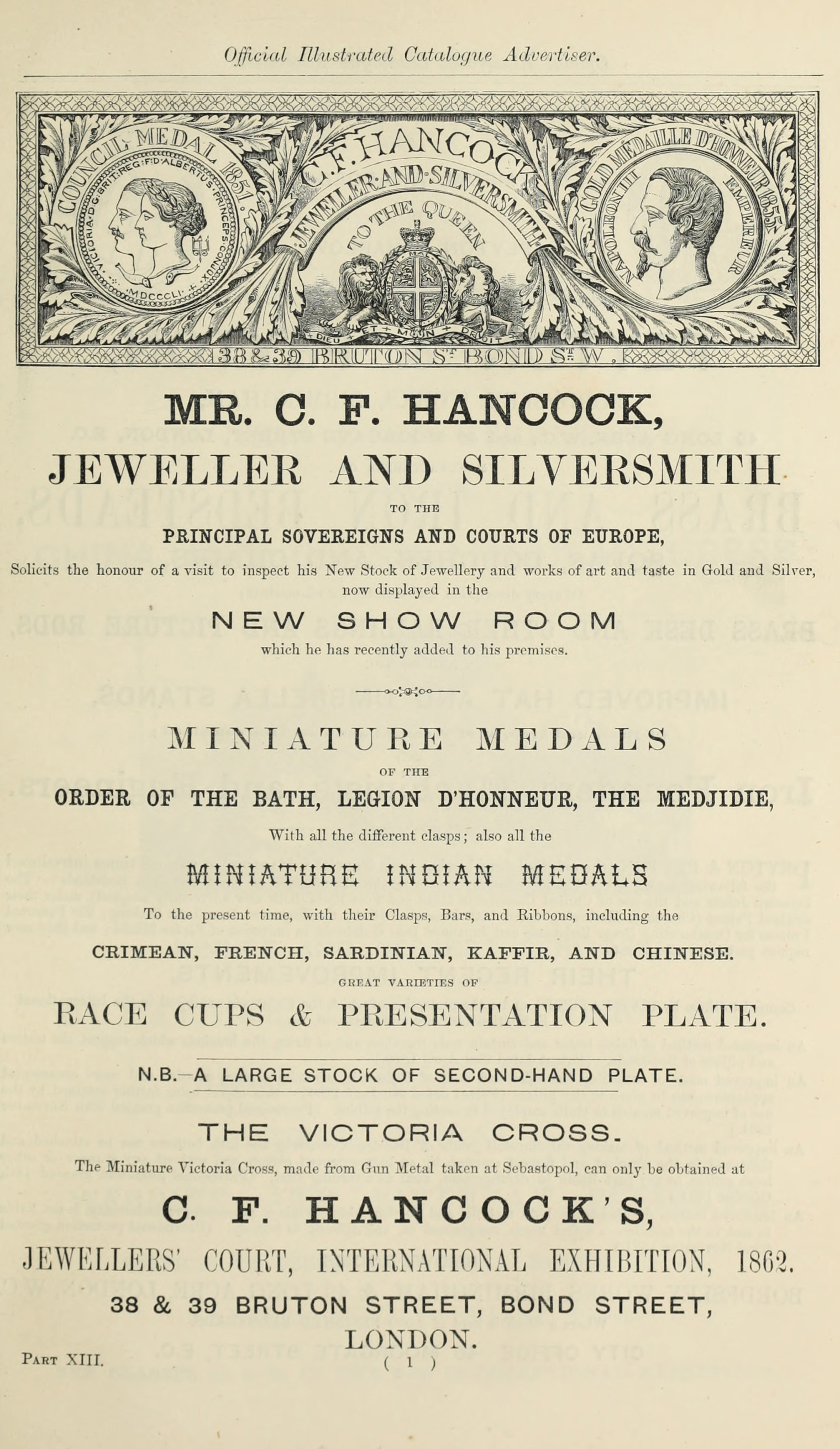
Only two years after establishing the business, Hancock exhibited at the Great Exhibition of 1851, where he was awarded the prestigious Council Medal for “originality and taste.” Significantly, amongst Hancock’s exhibits were a large cigar box and a dressing case, demonstrating that boxes and fitted cases formed part of the firm’s repertoire from its earliest years.
Further international recognition quickly followed. At the Paris Exhibition of 1855, Hancock received the Gold Médaille d’Honneur, while at the International Exhibition of 1862 in London the firm received a Prize Medal for “great excellence of design and manufacture.” Later successes included gold and silver medals at the Paris Exposition Universelle of 1867 and, at the Vienna World’s Fair of 1873, the Emperor’s Gold Medal for Science and Art together with the Prize Medal. These distinctions featured prominently in the firm’s contemporary advertisements and became an important expression of its international reputation.
In 1856, Hancock received a commission for which the firm would become particularly renowned: the manufacture of the newly instituted Victoria Cross medal – the highest and most prestigious award for gallantry in the British and Commonwealth armed forces. To this day, Hancocks remain the sole manufacturer of this medal.
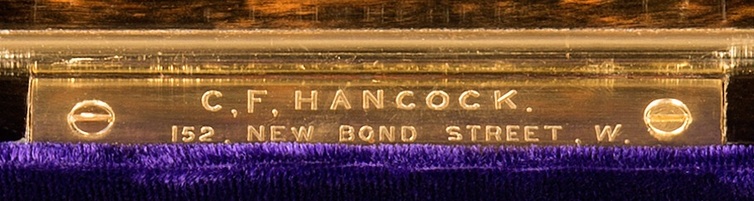
The business continued to expand and, by 1862, Hancock occupied 38 and 39 Bruton Street and 152 New Bond Street, with a manufactory in adjoining Little Bruton Street.
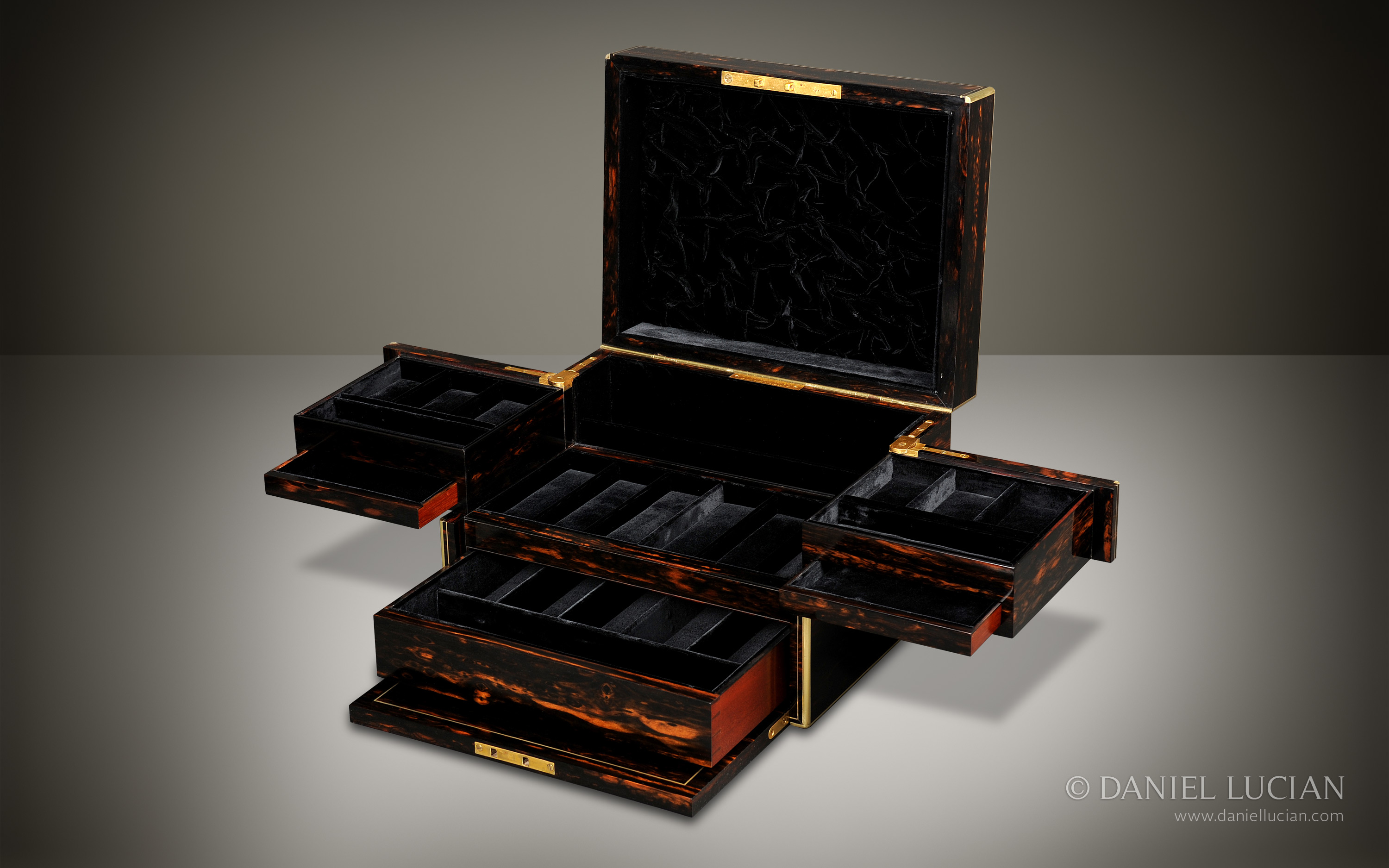
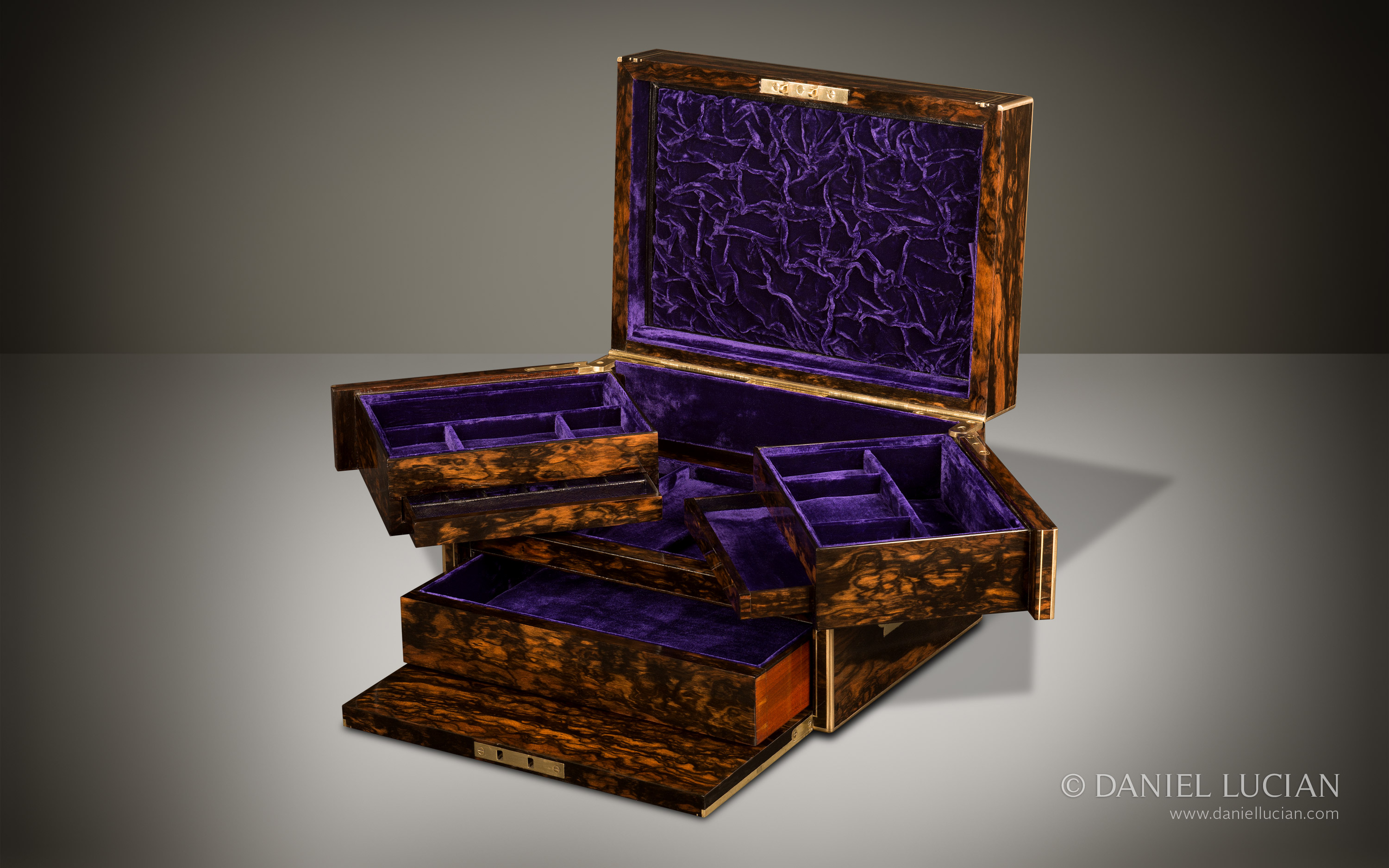
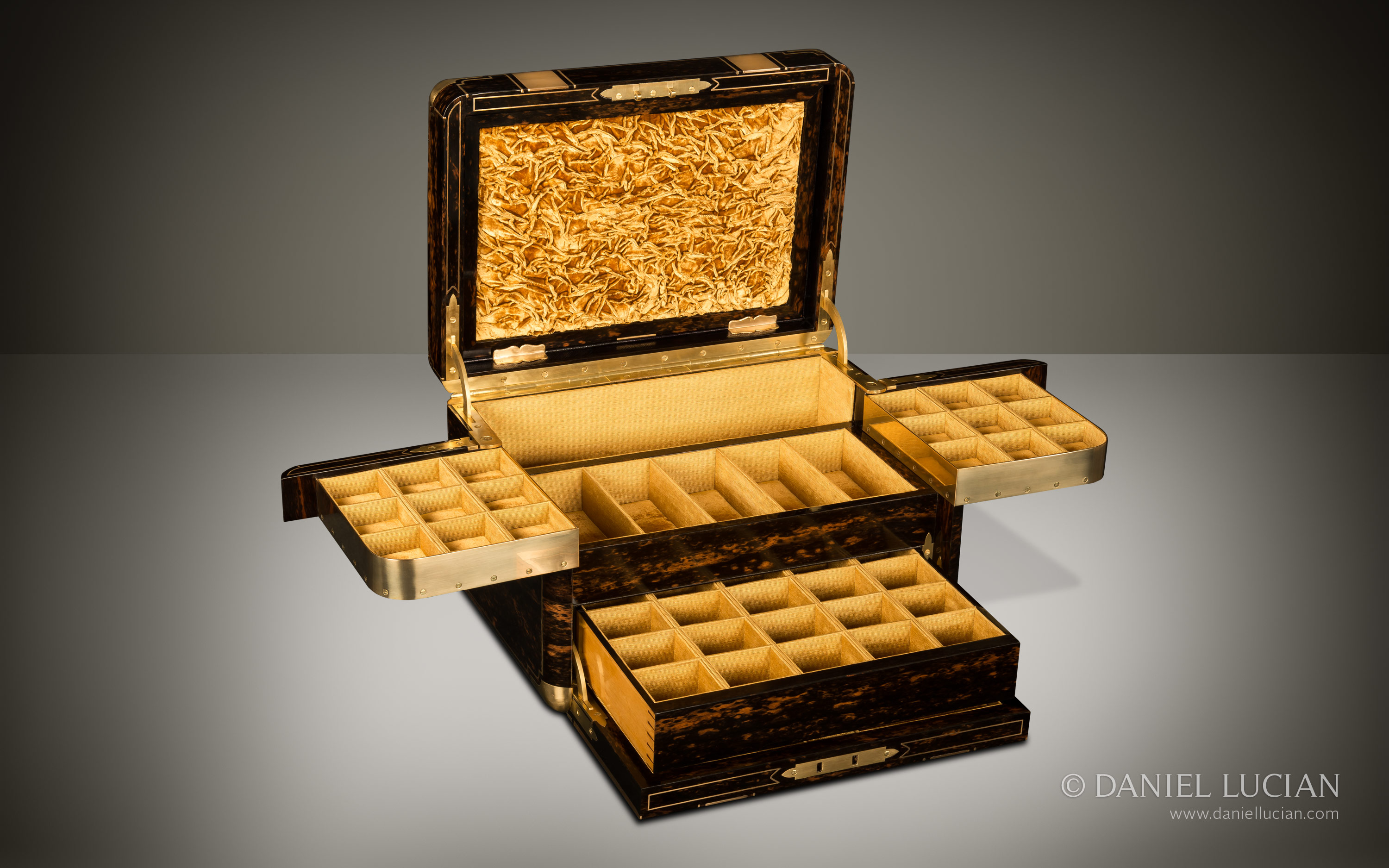
Surviving objects demonstrate that Hancock also retailed work produced by other specialist manufacturers. Consequently, the presence of the Hancock name on a dressing case should not necessarily be understood to mean that Hancock’s own workshops manufactured it in its entirety. The often complicated internal mechanisms and specialist cabinetwork of such cases were likely entrusted to highly skilled cabinetmakers rather than undertaken in-house. One example is the radial-edged, brass-strapped box in coromandel shown below, which was manufactured by George Betjemann & Sons and incorporates their patented automatic opening mechanism.
In 1866, with the partial retirement of Charles and the introduction of Charles’ son Mortimer, along with partners Horatio Stewart and Henry John Dore, the business became known as Hancock, Son & Co. When Charles fully retired in 1870, his other son, Charles Frederick Hancock Jr, became a partner and the business was renamed Hancocks & Co.
Hancocks & Co. remain in business to this day, more than 175 years after Charles Frederick Hancock originally established the firm.